
The 2007 Honda Odyssey is rated at 18 to 19 MPG combined, depending on trim. LX and EX models are rated at 18 MPG combined, while EX-L and Touring models are rated at 19 MPG combined.
If you’re checking your gas receipts and wondering whether your van is normal, that’s the right question to ask first. On this Odyssey, fuel economy isn’t just about what you spend at the pump. A drop in mileage can also point to how the van is running, how safely it responds under load, and whether a maintenance issue is developing before it turns into a bigger problem.
Official EPA Fuel Economy for the 2007 Honda Odyssey
The starting point for any 2007 honda odyssey mpg discussion is the original EPA rating. Honda offered the 2007 Odyssey with a 3.5-liter V6 and two fuel economy profiles depending on trim. According to the EPA listing for the 2007 Honda Odyssey, the higher trims with Variable Cylinder Management (VCM) got the better rating.
Here is the factory baseline:
| Trim Level | Engine Feature | City MPG | Highway MPG | Combined MPG |
|---|---|---|---|---|
| LX | 3.5L V6 | 16 | 23 | 18 |
| EX | 3.5L V6 | 16 | 23 | 18 |
| EX-L | 3.5L V6 with VCM | 17 | 24 | 19 |
| Touring | 3.5L V6 with VCM | 17 | 24 | 19 |
Why the trims differ
The difference comes down to VCM, Honda’s cylinder deactivation system. In EX-L and Touring models, the engine can shut down part of its cylinder operation during light-load cruising. In simple terms, that helps the van use less fuel when you’re moving steadily instead of accelerating hard or creeping in traffic.
That matters because many owners compare their mileage to a neighbor’s Odyssey without checking trim level first. An LX owner expecting EX-L numbers will think the van is underperforming when it may be operating right where it should.
Practical rule: Before diagnosing poor mileage, verify your trim. The expected baseline is different between LX/EX and EX-L/Touring.
What this baseline tells you
These EPA numbers are best used as a reference point, not a guarantee. They tell you what the van was designed to achieve under standardized testing, and they help you judge whether your current results are broadly normal or clearly off.
If your mileage is close to your trim’s rating under mixed driving, that’s usually a sign the van is behaving as expected for its age and design. If it’s well below that baseline for a sustained period, it’s time to look beyond driving habits and start thinking about tire pressure, load, fuel quality, or mechanical faults.
What Owners Actually Report for Real-World MPG
Lab ratings are useful, but day-to-day driving tells the fuller story. Real owners report an average of 18.57 MPG combined for the 2007 Odyssey in Fuelly data collected across hundreds of vehicles and millions of miles, according to this owner-focused discussion summarizing Fuelly results and common complaints.

That average is close enough to the official ratings to show the van was generally honest about fuel use. But owner reports also show a wide spread in actual experience. Some drivers describe mileage that feels acceptable for a V6 minivan. Others report 11 to 13 city MPG even when they believe they’re driving carefully.
Why real-world results vary so much
A 2007 Odyssey isn’t driven in a lab. It’s driven in school pickup lines, stop-and-go Tampa traffic, short errand loops, and highway runs with kids, luggage, and the A/C working hard. Those conditions can keep the van away from the steady cruising where VCM helps most.
Fuel quality and alignment can matter too. Minor issues don’t always trigger a warning light, but they can still drag mileage down enough for an owner to notice at the pump before they notice anything else.
If you’re comparing this Honda to another family vehicle, it helps to also look at how ownership patterns shape reliability and efficiency over time. A broader example is this review of 2014 Mazda CX-5 reliability, which shows how real-world use often tells a different story than official ratings alone.
If your Odyssey is returning slightly less than the sticker estimate, that isn’t unusual. If it’s suddenly far below its normal pattern, treat that as a symptom, not an annoyance.
The useful takeaway
Don’t judge your van off a single tank. Judge it off a pattern. Consistent fuel tracking gives you one of the earliest clues that the vehicle is healthy, drifting, or starting to develop a problem that deserves attention.
Key Factors That Influence Your Odyssey’s Gas Mileage
Many Odyssey owners chase repairs when the primary issue starts with daily use. On this van, fuel economy responds quickly to driving style, weight, tire condition, and road type. Those aren’t glamorous answers, but they’re often the right ones.
Driving style matters more than most owners think
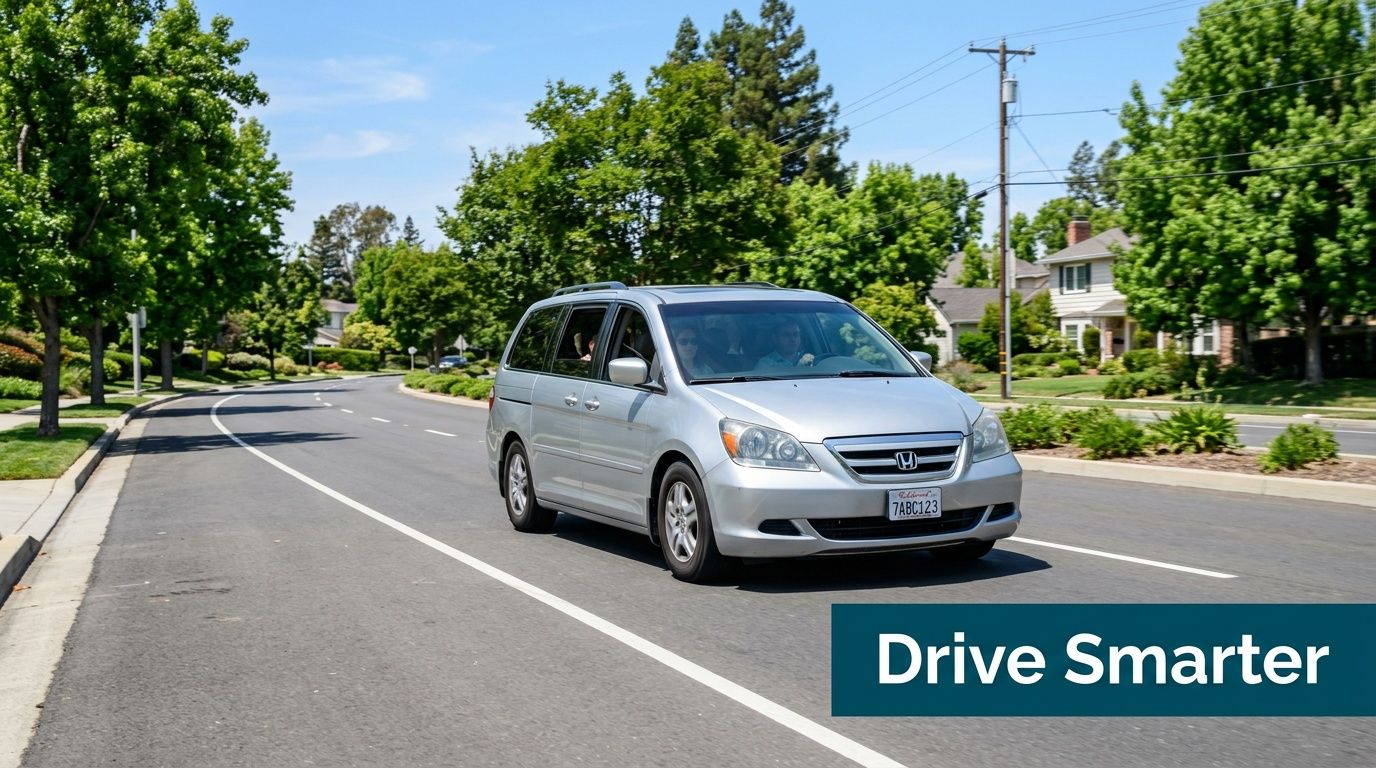
This Odyssey is a heavy family van with a V6. It doesn’t reward aggressive inputs. Hard launches, abrupt braking, and constant speed changes make the engine work against the van’s size instead of smoothly carrying it.
Think of it this way. Smooth driving lets the van jog. Aggressive driving makes it sprint between red lights.
A few habits usually help:
- Gentle throttle application: Smooth acceleration gives the transmission and engine a chance to settle instead of constantly chasing speed.
- Steady cruising: Highway driving tends to be more efficient because the van isn’t repeatedly climbing back up to speed.
- Short-trip awareness: Repeated cold starts and brief trips often hurt fuel economy more than owners expect.
Load and rolling resistance add up fast
Family vans rarely run empty. Passengers, sports gear, tools, strollers, and grocery loads all ask the engine to move more mass. Add a tire that’s slightly off on pressure or alignment, and the van starts wasting fuel even if nothing is technically broken.
That’s one reason tire condition deserves more attention than it gets. If you want a useful primer on how tire design and performance ratings affect real driving behavior, this guide to auto tire ratings is worth reviewing.
A van that feels only “a little heavier” to drive can still burn noticeably more fuel over time.
Conditions you can’t fully control
Some factors are just part of ownership. Traffic density, road grade, weather, and A/C use all change how often the engine stays in its efficient operating range.
What works best is controlling the variables you can:
- Drive with fewer abrupt inputs.
- Remove cargo you don’t need.
- Keep tires properly inflated and in good condition.
- Pay attention to whether the mileage drop is gradual or sudden.
That last point matters. A gradual change often points to use patterns. A sudden drop usually points somewhere else.
Common Mechanical Problems That Tank Your Fuel Economy
When mileage falls off sharply, I stop treating it as a budget issue and start treating it as a vehicle-condition issue. That’s especially true on an older minivan that may still be carrying full family duty. Poor fuel economy can be the first symptom of a problem that also affects drivability, throttle response, or safe merging.

A commonly reported pattern is a drop from a normal 19 to 21 MPG range down to 12 MPG, often linked to a failing oxygen sensor, a clogged catalytic converter, or dirty fuel injectors, as discussed in this breakdown of sudden gas mileage loss on a 2007 Honda Odyssey EX-L.
The usual suspects
Here’s how those problems affect the van in practical terms:
- Oxygen sensor failure: The engine computer gets bad feedback about the air-fuel mixture. That can cause the van to run richer than necessary and waste fuel.
- Clogged catalytic converter: Exhaust flow gets restricted. The engine has to work harder, and the vehicle may feel sluggish under acceleration.
- Dirty fuel injectors: Fuel delivery becomes less precise, which hurts combustion quality and mileage.
These aren’t just efficiency issues. They can change how the van responds when you need power right now, such as merging, crossing traffic, or avoiding a hazard.
Why this matters for safety
A vehicle that runs poorly often gives subtle warnings before it gives obvious ones. Lower mileage, rougher response, hesitation, and a sense that the van feels “off” under load all belong in the same conversation.
That’s one reason maintenance history matters after a crash. If you’re dealing with questions about Odyssey performance, value, or known mechanical concerns, this model-specific overview of the 07 Honda Odyssey provides broader context.
Sudden MPG loss is different from ordinary fluctuation. If the drop is sharp and persistent, assume the van needs diagnosis rather than a different driving technique.
What usually does not fix it
Owners often try premium fuel, fuel additives, or a week of gentler driving and hope the problem disappears. If the drop came on quickly, those moves usually don’t address the root cause. The better approach is to inspect the systems that directly control mixture, airflow, and exhaust flow.
Actionable Tips to Check and Improve Your Odyssey’s MPG
A common ownership pattern looks like this. The van starts needing gas sooner than usual, but nothing feels dramatic, so the change gets written off as traffic, weather, or a heavier week of errands. That is a mistake. On a 2007 Odyssey, a steady drop in fuel economy can be an early warning that the engine, tires, or drivetrain need attention, and some of those issues affect both operating cost and how safely the van responds in traffic.

Start by measuring the problem correctly
Check mileage across several fill-ups using the same method each time. Write down the odometer reading, gallons added, and whether that tank was mostly short-trip driving, highway travel, or stop-and-go family use. A one-tank dip does not prove much. A pattern does.
Then inspect the items that change fuel use and road behavior fastest:
- Set tire pressure to the factory specification: The 2007 Honda Odyssey EX-L specs at J.D. Power list 33 PSI. Low pressure increases rolling resistance, costs fuel, and can reduce braking and stability in wet conditions.
- Check tire condition, not just pressure: Uneven wear can point to alignment or suspension problems. Those problems can drag down MPG and make the van less predictable during braking or lane changes.
- Watch for changes in highway behavior: Honda explains in the 2007 Odyssey owner’s manual at ManualsLib that steady-speed highway driving helps the van operate more efficiently than constant throttle changes. If mileage improves on stable highway trips but falls hard in mixed driving, that pattern can help narrow the cause.
If you are sorting out inflation questions, this guide on whether regular air or nitrogen in tires makes a practical difference gives useful context.
Use driving habits that fit how the Odyssey is built
This van rewards smooth inputs. Aggressive launches, hard braking, and repeated short trips keep fuel use high because the engine spends more time warming up and less time in stable operation.
A few habits usually help:
- Combine errands so the engine does not go through multiple cold starts in one day.
- Hold a steady pace on the highway instead of making constant speed corrections.
- Remove unnecessary cargo if the van is carrying tools, sports gear, or unused seats and storage that stay loaded all week.
- Pay attention to a new vibration, hesitation, or steering pull that appears at the same time MPG drops.
That last point matters more than many owners realize.
If fuel economy falls while the van also feels slower to respond, pulls to one side, or shudders under load, treat it as a mechanical inspection issue, not just a fuel-cost issue. Poor mileage can be the first visible symptom of a condition that affects acceleration, tire grip, or stopping distance.
This short video gives a useful visual refresher on MPG-related maintenance and driving habits:
Better MPG usually comes from consistent maintenance, correct tire pressure, steady throttle use, and diagnosing changes early before they turn into bigger repair and safety problems.
How the 2007 Odyssey Compared to Other Minivans of Its Era
The 2007 Odyssey was efficient enough to stay competitive in its class, but it was never going to behave like a small crossover or a modern hybrid. It was a V6 minivan built to move families, cargo, and long road-trip loads with reasonable fuel use for the time.
According to the Cars.com research page on the 2007 Honda Odyssey, the van’s EPA combined ratings ranged from 18 to 19 MPG, and Consumer Reports noted 19 MPG overall. That put it in a solid position for its era, especially given its size, utility-focused seating features, and family-oriented safety equipment.
The better way to judge this van is against other minivans from the same period, not against today’s smaller and more fuel-focused vehicles. In that context, the Odyssey’s balance of power, space, and mileage was respectable.
For readers who want to see how consumer vehicle evaluations can shape real ownership expectations, this discussion of auto reviews and Consumer Reports adds helpful perspective.
If a crash, insurance dispute, or vehicle performance issue has left you with questions about what happened and why, Martin Hernandez, P.A. represents injured people and families across Tampa and Florida. When mechanical condition, vehicle behavior, or maintenance history becomes part of an injury claim, having a legal team that understands both the road and the records can make a real difference.