
If you’re looking into 2010 Subaru Forester problems, you’ve got good reason to be concerned. This particular model year has a reputation, and unfortunately, it’s not for being trouble-free. We’re not talking about minor annoyances here, but serious mechanical issues like catastrophic engine failures due to bad head gaskets and engines that burn through oil at an alarming rate. These flaws have really defined this Forester’s legacy and triggered a number of safety recalls.
Understanding the Critical Safety Risks

On the surface, the 2010 Subaru Forester looks like a solid, practical choice for a family SUV. Dig a little deeper, though, and you’ll find a troubling pattern of severe, and sometimes dangerous, mechanical failures that have been a nightmare for owners. The problems with this model go way beyond simple inconvenience; they pose real safety risks that can lead to disaster on Florida’s crowded highways.
Consumer Reports didn’t pull any punches, giving the 2010 Forester a rock-bottom reliability score of just 1.0 out of 5.0. That makes it one of the most problematic vehicles in the Forester’s entire history. This isn’t because of a glitchy radio or flimsy interior parts—it’s a direct result of fundamental flaws in the engine and powertrain.
From Annoyance to Accident Risk
The core issues with the 2010 Forester aren’t just a drain on your wallet; they are flat-out dangerous. An engine that suddenly stalls or completely dies isn’t just a hassle. It’s a potentially life-threatening situation.
Think about what it would be like for your engine to cut out while you’re merging onto I-275 in Tampa during rush hour, or losing all power in the middle of a busy intersection. These aren’t just what-if scenarios; they are the reality that many owners have faced. The link between these mechanical failures and a serious car accident is frighteningly clear. When a car gives up without warning, it can easily cause:
- Rear-end collisions when the vehicle suddenly stops in moving traffic.
- T-bone accidents if a driver can’t accelerate through an intersection.
- A total loss of control if the engine seizes up at 70 mph on the highway.
For many 2010 Forester owners, the classic signs a car needs a new engine show up far sooner than they ever should.
It’s crucial to understand that these aren’t just cases of poor maintenance. Many of the most severe 2010 Subaru Forester problems trace back to well-documented design and manufacturing defects, creating a massive burden for owners and a hazard for everyone else on the road.
When a vehicle defect plays a role in a crash, the manufacturer can be held responsible for the injuries that result. This is precisely when you need a vehicle defect attorney. They can dig in and determine if a known problem—like the ones that plague this Forester model—was the root cause of the accident. You can find more information on how these cases are handled under federal and state rules by reading about auto safety recalls. An experienced attorney can help victims here in Florida understand their rights and fight for the compensation they deserve when a carmaker’s negligence causes harm.
The Infamous Subaru Head Gasket Failure
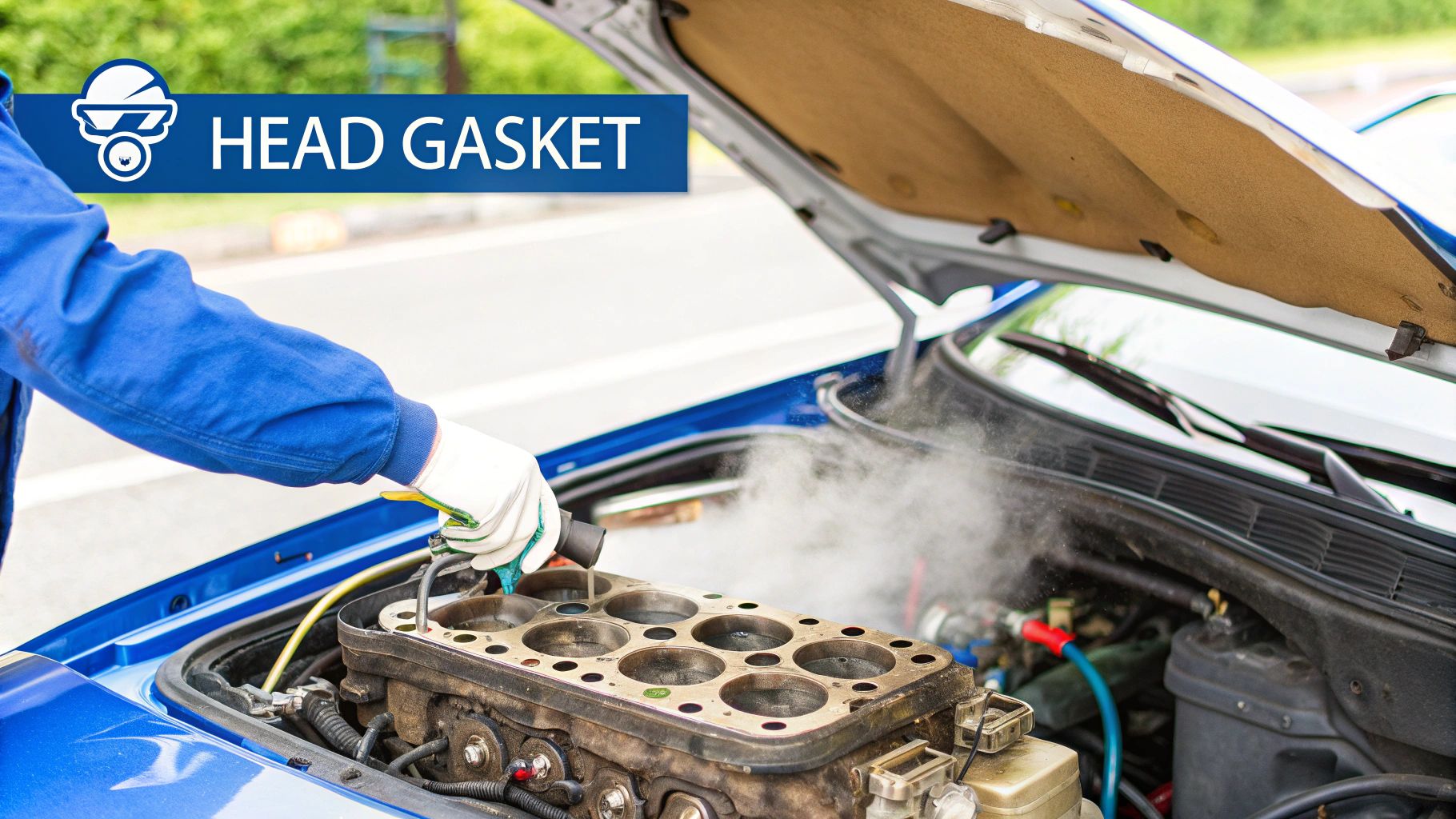
When you talk about 2010 Subaru Forester problems, one issue towers above all others: catastrophic head gasket failure. This single mechanical flaw has practically defined the vehicle’s reputation for trouble, and it’s a huge reason behind its poor reliability scores. We’re not talking about a minor leak here—this is a critical breach deep within the engine’s core.
Think of your engine in two big pieces: the engine block (where the pistons pump up and down) and the cylinder head on top (home to the valves and spark plugs). The head gasket is the high-tech, layered seal smashed between them. Its entire job is to keep three critical things from ever meeting: the intense combustion pressure inside the cylinders, the oil that keeps parts moving smoothly, and the coolant that prevents everything from melting. When that seal fails, it’s absolute chaos for your engine.
The Telltale Signs of a Blown Gasket
A failing head gasket lets those vital fluids mix and leak, kicking off a devastating domino effect. The 2.5-liter non-turbo engine in the 2010 Forester was especially prone to this problem. Knowing what to look for can be the difference between a hefty repair bill and needing a whole new engine.
The symptoms are pretty clear and should never be brushed aside:
- Vanishing Coolant: You find yourself constantly adding coolant to the reservoir, but you never see a puddle on your driveway. That’s a bad sign it’s leaking internally and being burned away.
- Constant Overheating: With coolant levels dropping, the engine can’t keep its temperature in check. You’ll see the temp gauge spike into the red, especially in traffic or when climbing a hill.
- White Exhaust Smoke: If you see thick, sweet-smelling white smoke pouring from your tailpipe, you’re almost certainly burning coolant. It’s essentially steam from coolant seeping into the hot combustion chamber.
- Milky Oil: Pull out the dipstick or look under the oil cap. If you see a creamy, milkshake-like gunk, coolant has gotten into your oil. This sludge destroys the oil’s ability to lubricate, causing rapid and severe engine wear.
These aren’t just minor warnings; they are blaring alarms that your engine’s integrity has been breached. Continuing to drive is a huge risk.
A blown head gasket isn’t just a leak—it’s a fundamental engine failure. When oil and coolant mix, they create a destructive sludge that starves your engine of its lifeblood, guaranteeing severe internal damage if you don’t act fast.
How This Failure Becomes an Accident Risk
The danger of a blown head gasket goes way beyond a big repair bill. This defect is a serious safety hazard on the road, especially on Florida’s high-speed interstates. Picture your Forester suddenly overheating and stalling in the middle of the Howard Frankland Bridge during rush hour. You instantly become a sitting duck in a river of fast-moving traffic.
In a worst-case scenario, the failure can lead directly to engine seizure. As coolant ruins the oil, the engine’s moving parts are no longer properly lubricated. The intense friction and heat can literally weld the pistons to the cylinder walls, bringing the engine to a sudden, violent stop. This can happen at highway speeds without warning, causing a total loss of power and making a catastrophic rear-end collision almost unavoidable.
The 2010 Subaru Forester received one of the worst reliability ratings in the model’s history from Consumer Reports, mostly because of these persistent head gasket failures. These engines were notorious for blowing gaskets anywhere from 50,000 to 100,000 miles, leading to major coolant leaks, overheating, and sometimes total engine destruction. To see how these issues are tracked and rated, you might find our guide on auto reviews and consumer reports helpful for understanding the bigger picture.
Excessive Oil Consumption Leading to Engine Seizure
If the head gasket issues weren’t enough, another serious engine problem haunts the 2010 Subaru Forester: excessive oil consumption. This isn’t your typical slow leak that leaves a few dark spots on the garage floor. We’re talking about the engine literally drinking its own oil at an alarming rate, often without giving the driver any obvious warning signs.
The problem lies deep inside the engine with a tiny but critical part: the piston rings. Think of these rings as a squeegee for the cylinder wall. They’re supposed to scrape oil back down into the crankcase while creating a tight seal for the combustion process happening above.
Unfortunately, in many 2010 Forester engines, these rings just didn’t do their job correctly. They would allow small amounts of oil to slip past and get burned up with the gasoline, slowly but surely depleting the engine’s lifeblood.
The Silent Danger of a Thirsty Engine
What makes this one of the most dangerous 2010 Subaru Forester problems is how sneaky it is. An engine can burn through a lot of oil without puffing out that tell-tale blue smoke from the tailpipe, at least not at first. The real danger is that the oil level can drop to a critical point long before your next scheduled oil change.
This became a well-documented issue, with some owners reporting they were losing a quart of oil every 1,000 miles. The problem was so widespread it triggered class-action lawsuits and forced Subaru to extend warranties. This defect, tied to the faulty piston rings in the 2.5X engine, created a recipe for disaster on busy Florida roads like I-4 or the Veterans Expressway, where a sudden engine failure can be catastrophic.
To make matters worse, the dashboard’s low-oil light is often the last to know. It typically doesn’t light up until the oil level is already dangerously low—so low, in fact, that serious internal damage might already be underway.
From Low Oil to Total Engine Failure
Running an engine without enough oil is like asking a marathon runner to finish the race without any water. It’s a complete breakdown of the system. Oil is there to lubricate, cool, and clean. When it’s gone, things go from bad to worse in a hurry.
Here’s the chain reaction that leads to destruction:
- Skyrocketing Friction and Heat: Without a lubricating film, metal grinds directly against metal. This creates an incredible amount of friction and heat.
- Warping and Breaking Parts: The intense heat can cause critical parts like bearings and pistons to warp, crack, or completely shatter.
- Catastrophic Engine Seizure: Eventually, the friction and heat get so extreme that moving parts—like the crankshaft—can literally weld themselves together, bringing the engine to a sudden, violent stop.
An engine seizure from oil starvation is one of the most absolute and destructive failures a car can suffer. It’s not a slow decline. It is an instant, total shutdown that can happen at any speed, leaving you powerless.
This goes way beyond a simple repair bill; it’s a massive safety crisis. Imagine you’re cruising at 70 mph on I-4 and the engine suddenly locks up. You instantly lose power steering and your power brake assist. Your Forester effectively becomes a 3,000-pound unguided missile in a sea of high-speed traffic, creating an enormous risk for a devastating rear-end collision.
These kinds of sudden failures can also lead to other hazards. To learn more, check out these crucial tips for preventing car fires, which can sometimes occur after severe mechanical damage. For owners, the financial hit is just as brutal, often requiring a full engine replacement costing thousands of dollars—the very issue that sparked multiple lawsuits against Subaru.
The Dreaded Check Engine Light and Exhaust System Meltdown
For many 2010 Subaru Forester owners, engine trouble sets off a frustrating—and expensive—domino effect. It often starts with a problem deep inside the engine but ends with that persistent, glowing check engine light on your dashboard. That light is usually just the messenger for a much bigger issue that has worked its way into the vehicle’s exhaust system.
When the engine starts burning oil or leaking coolant where it shouldn’t, those contaminants have to go somewhere. They get pushed out with the exhaust, coating and essentially poisoning the high-tech components that are supposed to keep your car running clean. This is where things get ugly for two critical parts: the oxygen sensors and the catalytic converter.
How an Engine Problem Wrecks Your Exhaust
Think of your oxygen sensors as the engine’s “nose.” They’re constantly sniffing the exhaust to tell the car’s computer how to mix the air and fuel for the best performance and efficiency. The catalytic converter is more like the engine’s liver, working to clean up harmful pollutants before they ever leave the tailpipe.
But when unburned oil and coolant get into the exhaust, they act like a thick, toxic sludge. This goo smothers the oxygen sensors so they can’t get an accurate reading. At the same time, it clogs the delicate, honeycomb-like structure inside the catalytic converter, effectively choking it off. The damage triggers a whole new set of performance problems.
A code that 2010 Forester owners know all too well is P0420, which means “Catalyst System Efficiency Below Threshold.” This is a direct signal that the catalytic converter has given up, almost always because it’s been contaminated by the engine’s internal failures.
In fact, this issue is so widespread that a check engine light caused by a failed catalytic converter is the number one complaint for the 2010 Forester. There are 373 documented cases of this specific problem, which almost always trace back to excessive oil consumption or leaking head gaskets. You can find more details about these documented Forester problems on RepairPal.
The Steep Costs and Serious Safety Risks
When these exhaust parts go bad, you’ll feel it right away. Your Forester will likely start getting terrible gas mileage, feel sluggish when you step on the gas, and idle roughly. More importantly, it will instantly fail any emissions test. And the repair bill? It’s a big one, often climbing over $2,000 to replace a catalytic converter.
But this is more than just a financial headache; a failing exhaust system is a real safety hazard. A clogged catalytic converter essentially puts a cork in the engine’s exhaust pipe. This blockage can cause a sudden, dangerous loss of power right when you need it most.
Picture yourself trying to merge onto a busy Florida highway like I-75. You hit the gas to get up to speed with traffic, but the car just hesitates and bogs down. Being unable to accelerate out of a dangerous spot creates a huge risk for a serious crash. When that check engine light comes on, it’s a clear warning. Getting proper auto diagnostic services can uncover the real problem before it puts you in a dangerous situation on the road.
What to Do If a Defect Caused Your Florida Accident
After a car crash, everyone’s first instinct is to blame a driver. But what if the driver wasn’t at fault? With a vehicle like the 2010 Subaru Forester, known for sudden and severe mechanical failures, the real cause might be a defective part.
If you suspect a mechanical problem led to your accident in Florida, what you do next is absolutely critical. Your actions in the hours and days following the crash can make or break your ability to get fair compensation.
The single most important step is to preserve the evidence. This means you must do everything in your power to stop the vehicle from being repaired, scrapped, or even touched. That car is the primary piece of evidence in any potential case against the manufacturer.
Understanding Product Liability in Florida
Florida’s product liability laws are designed to protect consumers. They hold manufacturers, distributors, and sellers accountable when they put a defective product on the market that ends up hurting someone.
This isn’t about normal wear and tear. It’s about a fundamental flaw in the vehicle’s design or manufacturing.
For the 2010 Subaru Forester, this could look like:
- An engine suddenly seizing up on the highway due to its known oil consumption defect.
- A head gasket blowing, causing the engine to stall right in the middle of traffic.
- A clogged catalytic converter that cuts engine power just as you’re trying to merge or accelerate.
When these well-documented 2010 Subaru Forester problems cause a crash, you may have a powerful claim against Subaru for putting a dangerous vehicle on the road.
This infographic shows how a single internal issue, like a small oil leak, can set off a domino effect that ends with a complete loss of power.
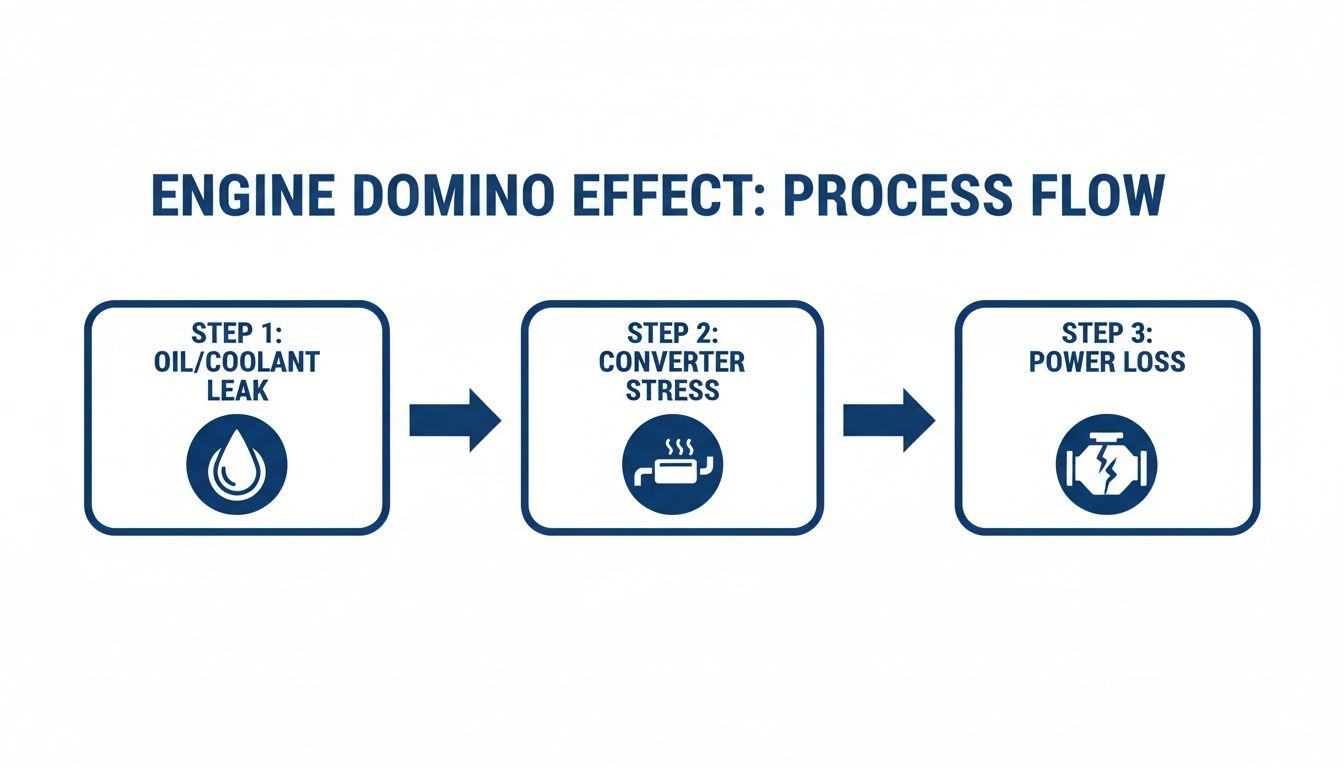
It’s easy to see how a seemingly minor leak can quickly escalate into a catastrophic failure that puts everyone on the road at risk.
Why You Must Speak to an Attorney First
After an accident, the insurance adjuster will likely call you very quickly. It is vital that you do not speak with them or sign anything before you’ve talked to an attorney who handles vehicle defect cases. The adjuster’s job is to protect the insurance company’s bottom line, which means paying you as little as possible.
They might push for a recorded statement to twist your words later or dangle a quick, lowball settlement that won’t even begin to cover your medical bills and other losses. An attorney works for you. Their job is to protect your rights and fight for the full compensation you are owed.
In a vehicle defect case, the fight is not just with another driver’s insurance—it’s often with a massive automotive corporation. These companies have powerful legal teams dedicated to defending their products, and you need an experienced advocate on your side to level the playing field.
A skilled law firm will act immediately to secure your vehicle and launch a proper investigation—something you can’t do alone. For more on this, take a look at our guide on hiring a personal injury lawyer.
Building a Strong Vehicle Defect Case
Proving a specific mechanical failure caused your crash is a complex job. It requires a much deeper investigation than a typical car accident claim.
A firm like Martin Hernandez, P.A. will bring in a team of experts to meticulously build your case. This usually involves:
- Automotive Engineers: These specialists will examine the vehicle component by component to find the exact point of failure. They can identify design flaws, manufacturing defects, or shoddy materials that led to the breakdown.
- Accident Reconstructionists: This team analyzes the crash scene, police reports, and vehicle data to prove how that mechanical failure directly caused the collision. They can show, for example, how a sudden engine stall made the accident completely unavoidable.
This expert team works together to create a powerful, evidence-based case that connects the defect in your 2010 Forester directly to your injuries. They will document everything from medical bills and lost wages to the future costs of your recovery, fighting to hold the manufacturer accountable for the harm their product caused.
Answering Your Questions About 2010 Forester Problems
If you’re dealing with a 2010 Subaru Forester, you’ve probably got some questions, especially with its reputation for mechanical troubles. Let’s tackle some of the most common concerns head-on.
Is the 2010 Subaru Forester a Reliable Car?
Plain and simple, no. The 2010 model year is widely seen as one of the least reliable Foresters ever made. It’s not just a few quirks we’re talking about; Consumer Reports hammered it with a rock-bottom reliability score of just 1.0 out of 5.0.
The reason for that abysmal rating comes down to major, widespread engine problems. These aren’t just minor annoyances—they’re fundamental flaws that often lead to catastrophic and wallet-draining failures. While people love the Forester for its AWD system and practicality, this specific model year is a notorious exception plagued by serious mechanical defects.
What Is the Most Common Problem With the 2010 Subaru Forester?
The single biggest headache is, without a doubt, head gasket failure. The 2.5-liter non-turbo engine, in particular, was famous for this issue. The gasket, which is the seal between the engine block and the cylinder head, would fail and let coolant and oil mix. That’s a recipe for disaster, causing the engine to overheat quickly and suffer severe internal damage.
Running a close second is the excessive oil consumption problem, which was traced back to faulty piston rings. Owners were stunned to find their engines burning through a quart of oil every 1,000 miles. This often ended with a seized engine when the oil level dropped dangerously low without any warning. These two engine-killers are the core of the 2010 Subaru Forester problems.
How Much Does It Cost to Fix a 2010 Forester Head Gasket?
Brace yourself, because this is not a cheap fix. A head gasket job is a big, labor-intensive surgery for your engine. Most owners find themselves looking at a repair bill somewhere between $2,000 and over $4,000, depending on how bad the damage is and your local shop’s labor rates.
And that’s the best-case scenario. If you don’t catch it in time, the internal damage can be so severe that you’re looking at a complete engine rebuild or replacement. When that happens, the cost can easily jump past $5,000—often more than the car is even worth.
A head gasket repair isn’t like changing your spark plugs. It requires a mechanic to tear down a huge part of the engine. The high cost comes from the sheer complexity of the job and the many hours it takes to do it right.
Can I Sue If a Defect Caused My Accident in Florida?
Yes, absolutely. If a known defect in your 2010 Forester played a role in causing a car crash in Florida, you could have a solid product liability case against Subaru. Florida law is clear: manufacturers are responsible for the harm their defective products cause.
For instance, imagine your engine seizes on the interstate because of the oil consumption defect, causing another car to slam into you from behind. In that situation, Subaru could be held liable for your injuries and damages. Acting fast is key—you need to preserve the car as evidence and consult with an attorney right away. There are strict legal deadlines for filing these types of claims. You can get a clearer picture by reading our guide on the statute of limitations for a car accident in Florida. A skilled lawyer can dig into the connection between the defect and the crash to protect your rights.
If a vehicle malfunction left you or a family member injured, you need a legal team that knows how to build a case against a major manufacturer. At Martin Hernandez, P.A., we have the experience and resources to take on these complex claims and fight for accountability. Contact us for a free, no-pressure consultation to talk about your situation at https://injurylawyersoftampa.com.