
Yes, there are a few important 2012 Chevrolet Equinox recalls that every owner should be aware of. These aren’t just minor suggestions from the factory; they are official safety campaigns to fix known defects in the tire pressure sensors, seat stability, and emissions systems. The best part? The dealership will handle the repairs completely free of charge.
Understanding the 2012 Chevrolet Equinox Recalls

Getting a recall notice in the mail for your 2012 Chevrolet Equinox can definitely be unsettling. But it’s crucial to understand what a recall is—and what it isn’t. It’s a formal alert from either the manufacturer (General Motors) or the National Highway Traffic Safety Administration (NHTSA) flagging a safety defect or a failure to meet federal standards.
Think of it as a mandatory, free repair program. GM has already identified the problem, engineered a fix, and is providing the parts and labor to make your vehicle safe, all at no cost to you. Ignoring that notice can put you, your passengers, and everyone else on the road at risk.
Why Recalls Matter for Your Safety
A safety defect doesn’t always mean something dramatic will happen, but the potential is there. The issues behind the 2012 Chevrolet Equinox recalls affect critical systems you depend on every time you drive. For example, a faulty tire pressure sensor might not warn you about a dangerously underinflated tire, which drastically increases the risk of a blowout and losing control of the SUV.
Another recall involves the driver’s seat, where a piece of hardware could fail and cause the seat to shift or drop suddenly in a crash. This could completely undermine the life-saving protection of your seatbelt and airbags. These are not small inconveniences; they are serious safety hazards that need your immediate attention. Taking care of recalls is a core part of responsible vehicle ownership and a huge factor in overall new car safety.
A vehicle recall is the manufacturer’s way of taking responsibility for a known defect. It’s an admission that a part or system failed to perform as expected, and the free repair is the remedy designed to protect consumers from potential harm.
A Quick Look at the Key Issues
The recalls for the 2012 Equinox focus on three distinct areas. We’ll dive into the specifics of each one later on, but here’s a quick overview of the problems GM identified.
- Tire Pressure Monitoring System (TPMS): The system could fail to alert the driver when a tire’s pressure is critically low.
- Power Seat Height Adjustment: A key bolt in the driver’s seat mechanism could break, causing the seat to drop without warning.
- Emissions System Defect: An issue with the oxygen sensor could not only increase vehicle emissions but also lead to poor engine performance.
Each of these defects carries a different kind of risk, from an unexpected mechanical failure to failing to meet environmental laws. This guide will walk you through all of these 2012 Chevrolet Equinox recalls, explaining the exact risks, the necessary fixes, and exactly how you can get them taken care of.
A Detailed Breakdown of Each Recall
Alright, let’s get into the nuts and bolts of the official 2012 Chevrolet Equinox recalls. It’s one thing to know a recall exists; it’s another to understand what it actually means for you when you’re behind the wheel. Translating the technical jargon from a recall notice into real-world risk is what matters most.
We’re going to walk through the three key recalls that affect this model year. For each one, we’ll cover what exactly broke, the danger it creates, and how General Motors is stepping up to fix it. This isn’t just about getting a free repair—it’s about knowing your vehicle inside and out so you can have a smart conversation with the dealership and feel confident on the road.
Records from the National Highway Traffic Safety Administration (NHTSA) and trusted consumer sites like Cars.com confirm at least three formal recalls for this SUV. They cover everything from the driver’s seat to the tire pressure system, so let’s dig in.
Power Seat Height Adjustment Bolt Failure
This first one sounds minor, but it’s a big deal. The recall, officially listed as NHTSA Campaign Number 14V266000, zeroes in on a single bolt in the driver’s power seat that could have massive consequences in a crash.
The problem is simple: the bolt holding the height adjuster mechanism can break and fall out. If that happens, the seat could suddenly plummet to its lowest setting. Imagine that happening while you’re merging onto the highway—it’s a recipe for distraction and panic.
Even worse, think about what it means in an accident. Your seat’s position is critical for your seatbelt and airbags to work properly. If the seat drops, you’re no longer in the right spot, which dramatically increases the risk of serious injury. Sadly, we see firsthand the devastating results of failed safety systems in cases involving airbag injuries.
The fix is straightforward. GM dealers will replace the weak bolt with a much stronger one, at no cost to you. This simple swap restores the seat’s integrity and ensures your safety equipment is positioned to do its job.
Tire Pressure Monitoring System Noncompliance
The next recall, NHTSA Campaign Number 11V580000, targets the Tire Pressure Monitoring System (TPMS). This system is supposed to be your early warning for a dangerous tire problem, but a software glitch could leave it silent when you need it most.
Essentially, a calibration error in the vehicle’s body control module means the TPMS might not trigger the dashboard warning light, even when a tire is dangerously underinflated. You could be driving on a tire that’s about to fail without having a clue.
Driving on a severely underinflated tire is incredibly risky.
- Poor Handling: The SUV might pull to one side or feel sluggish and unresponsive when you steer.
- Increased Stopping Distance: It will take you longer to brake, which can be the difference between a close call and a collision.
- Tire Blowout: An underinflated tire can overheat and blow out, causing a sudden and complete loss of control.
The remedy is a quick software update. Dealers will recalibrate the body control module so the TPMS works as intended, giving you the critical warning you need to pull over safely.
A malfunctioning Tire Pressure Monitoring System is a silent danger. It removes a crucial layer of safety, leaving drivers unaware of a potential tire failure until it’s too late. This recall addresses that hidden risk directly.
Emissions System Oxygen Sensor Defect
The third campaign, tracked as N192268180, is a voluntary emissions recall that also impacts how your Equinox drives. This one focuses on a faulty oxygen sensor in the exhaust system, specifically on models with the 2.4L engine.
The problem starts with chromium contamination building up on the sensor, causing it to send bad information to the engine’s computer.
When the computer gets the wrong data, a few things can happen. Your vehicle might start producing emissions that exceed federal standards, which is bad for the environment. On a more personal level, you’ll likely see the “Check Engine” light pop on and might notice rough idling or worse gas mileage.
To correct this, GM’s solution is to reprogram the engine control module to account for the potential sensor drift. If the sensor has already failed, the dealership will replace it entirely. This fix helps your Equinox run cleaner and more efficiently, just as it was designed to. Making sure each of these 2012 Chevrolet Equinox recalls is addressed is a vital part of being a responsible owner.
Putting These Recalls Into Perspective
It’s completely normal to feel a bit rattled when you find out your car has a recall. You might wonder if you just picked a lemon. But it’s important to understand that the 2012 Chevrolet Equinox recalls weren’t just isolated problems with one model. They were part of a much bigger, more complicated story for General Motors in the 2010s.
During that decade, GM was under a microscope, facing intense pressure from the public and federal safety regulators. The company launched some massive recall campaigns that pulled in millions of vehicles from nearly every brand they sold. Seeing the Equinox issues in this light helps you realize they were symptoms of a company-wide push to fix widespread safety and quality control issues that had built up over time.
A Tough Decade for General Motors
The 2010s were a turbulent time for GM. The automaker was in the headlines constantly for issuing some of the largest recalls in automotive history, catching the eye of safety groups and concerned drivers everywhere. These weren’t just for minor cosmetic flaws; they involved critical parts like faulty ignition switches and defective airbags.
This context is crucial. It shows that the problems with the 2012 Equinox weren’t strange one-offs. Instead, they mirrored the larger challenges GM was grappling with in its manufacturing and quality control departments. The company was working hard to get things right, but the sheer scale of the effort was staggering—notifying millions of owners, shipping countless parts to dealerships, and training technicians to fix an unprecedented number of cars.
The national recall system, overseen by the NHTSA, is a consumer’s best friend. It makes car companies publicly own up to their mistakes, gives owners a free and organized way to get repairs, and holds automakers accountable for the safety of the cars they sell.
So, when you look at the recalls for the 2012 Equinox, remember what was happening at the time. GM was announcing enormous recall campaigns, sometimes covering millions of vehicles at once. For instance, in July 2014 alone, the company recalled over 822,000 vehicles in six separate campaigns. The 2012 Chevrolet Equinox recalls were simply part of this massive wave of corrective actions.
The True Scale of the Effort
Let’s think about the numbers for a moment. The emissions recall alone affected more than 300,000 vehicles, including the Equinox. A recall of that size isn’t a simple fix; it’s a massive logistical operation. It takes incredible coordination between the manufacturer, all its parts suppliers, and the entire nationwide network of dealerships to make sure every single one of those cars gets repaired.
This huge undertaking explains why the recall process can feel slow, but it also shows how seriously these issues are taken. Every notice mailed out is a promise from the carmaker to fix a known defect. It’s a system designed to put your safety first, even years after the car was built. When you think about all the things that make a car safe, you can see why these recalls are so important. If you’re shopping for a vehicle, our guide on crucial safety features to look for when buying a car can help you know what to look for.
At the end of the day, viewing the 2012 Chevrolet Equinox recalls within this larger history helps owners see the full picture. Yes, the defects were serious, but your vehicle was one of millions being addressed by one of the world’s biggest automakers in a massive, top-to-bottom effort to make things right.
How to Check Your VIN and Schedule a Free Repair
Knowing about the 2012 Chevrolet Equinox recalls is one thing, but taking action is what really keeps you safe. The good news is that finding out if your specific SUV is on the list and getting it fixed is a simple process—and it won’t cost you a penny.
Think of your Vehicle Identification Number (VIN) as your car’s unique fingerprint. It’s a 17-character code that unlocks its entire history, including any outstanding recalls.
Where to Find Your VIN
You can find your VIN in a few easy-to-spot places. It’s always in the same spots on just about every car, so it only takes a second to locate.
- On the Dashboard: Glance through the windshield on the driver’s side. You’ll see the VIN on a small metal plate right where the dashboard meets the glass.
- On the Driver’s Door Jamb: Open the driver’s door and look at the sticker on the car’s frame. The VIN is usually printed there, sometimes near a barcode.
- On Your Paperwork: Your vehicle registration and insurance cards will always have the VIN clearly listed.
Once you’ve jotted down that number, you’re all set to check your vehicle’s recall status.
Using Official Online Tools
The quickest and most reliable way to check for recalls is to use the official online databases. Both the National Highway Traffic Safety Administration (NHTSA) and Chevrolet provide free, instant VIN lookup tools.
- NHTSA Recall Website: Head over to the NHTSA’s official recall page and type your 17-digit VIN into the search box. The site will immediately pull up any open recalls for your vehicle, no matter the manufacturer.
- Chevrolet’s Recall Center: You can also go straight to the source. Chevrolet runs its own recall lookup tool on its website, which gives you the same accurate information specifically for GM vehicles.
It’s federal law: All safety recall repairs must be performed by an authorized dealership completely free of charge. You should never have to pay for parts, labor, or anything else related to a recall fix.
Scheduling Your Free Repair
If your search turns up an open recall for your Equinox, the next step is simple: call your local Chevrolet dealership to schedule the repair.
Just ring up their service department, let them know you have an open recall for your 2012 Equinox, and give them your VIN. They’ll confirm the details and book an appointment for you.
While most dealerships handle this process without a hitch, it pays to be prepared. If you get any pushback or someone tries to charge you, stand your ground and politely remind them of the federal law. Since some defects can pose a serious risk, it’s also a good idea to review some basic tips for preventing car fires while you wait for your appointment. Taking these steps puts you in control and helps get these safety issues resolved quickly and confidently.
What To Do After an Accident Caused by a Defect
One moment you’re driving, the next a sudden vehicle malfunction turns a normal day into a nightmare. If you suspect one of the 2012 Chevrolet Equinox recalls caused your crash here in Florida, the steps you take right after are critical for protecting your health and your legal rights. The scene of an accident is chaotic, but a clear head and a few focused actions can make all the difference.
Your top priority, no matter what, is your health and the safety of your passengers. Get medical attention immediately, even if you feel okay. Adrenaline is a powerful painkiller and can easily hide serious injuries, and a trip to the doctor creates an official record of any harm you suffered—something that will be vital down the road.
Preserving Critical Evidence at the Scene
Once you’ve made sure everyone is safe, your focus needs to shift to preserving evidence. You have to think of your Equinox and the crash site as the primary evidence in your case. If you let someone fix it or tow it away without a plan, you could be erasing the very proof needed to show a defect was the root cause.
What you do in these first few hours can lay the groundwork for a potential legal claim. It’s all about documenting everything exactly as it is, before anything gets moved, cleaned up, or repaired.
This flowchart walks you through the general process of checking your vehicle’s recall status.
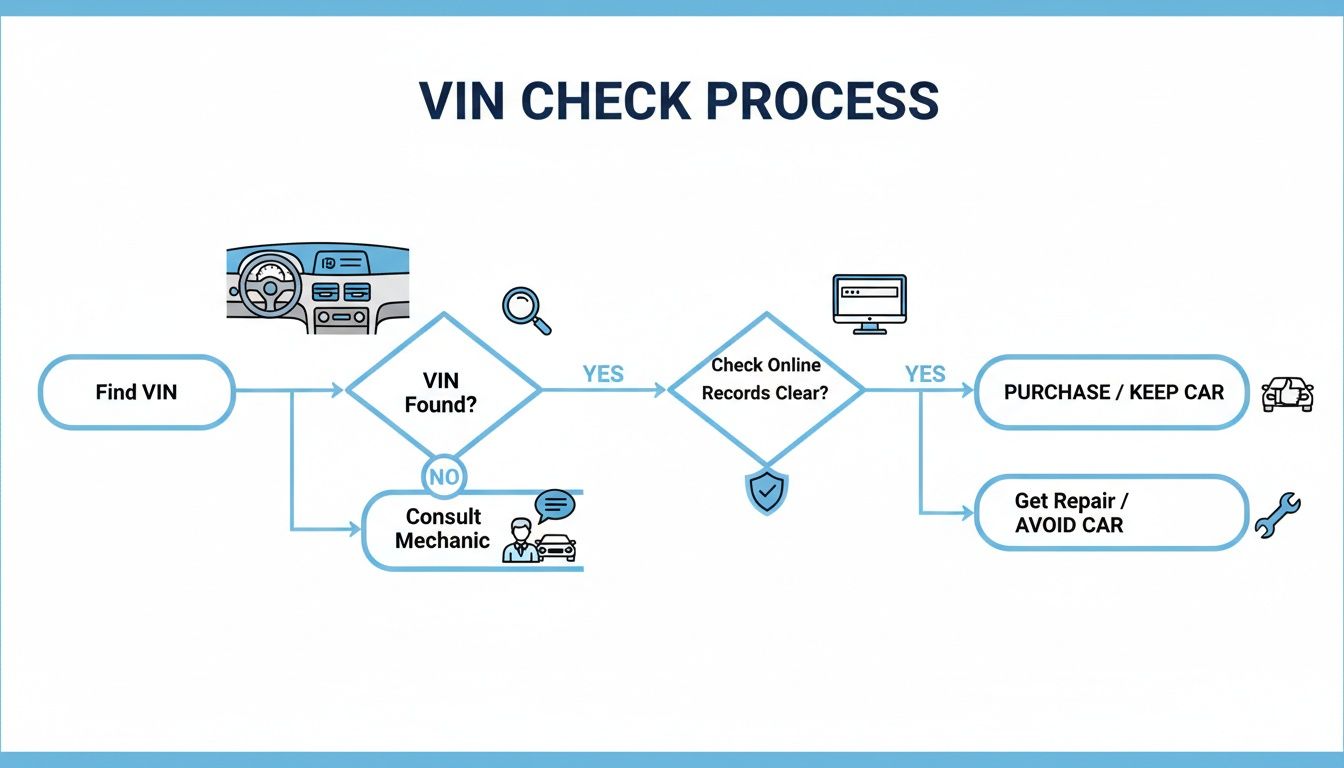
While this shows how to find and fix a recall, it’s a different story once a crash has already happened. The vehicle itself becomes evidence.
Your Post-Accident Checklist
To protect your rights, follow these steps as closely as you can. This list will help you gather what you need while the details are still fresh.
- Do Not Repair the Vehicle: This is the most important thing you can do. Do not give anyone permission to repair your 2012 Equinox. The SUV must be kept in its post-accident condition so an expert can inspect it for signs of the defect.
- Take Lots of Photos and Videos: Use your phone to document everything. Get pictures of the whole scene, damage to all cars involved (from every angle), skid marks, and any close-ups of the part you think failed.
- Gather Witness Information: If anyone saw what happened, get their name and phone number. An independent witness can be incredibly powerful in backing up your version of events.
- Get the Official Police Report: The police report is an objective, third-party account of the crash. Make sure to get a copy as soon as it becomes available.
After a defect-related crash, your car is the most important piece of evidence you have. Resisting the urge to get it repaired right away is absolutely crucial. It allows experts to prove a manufacturer’s failure—not driver error—caused the accident.
Notifying the Right Parties
After you’ve handled immediate medical needs and secured evidence at the scene, it’s time to start an official record. This means formally notifying both the dealership and General Motors about the accident. Let them know you believe it was caused by a known recall issue.
Sending a written notice, like an email or a certified letter, to both GM and the dealer creates a paper trail. This proves you alerted them to the situation, which is an important step for both your insurance claim and any future legal action.
Of course, knowing how to file an auto insurance claim is another key step after any accident. By carefully documenting the incident and preserving the evidence, you not only strengthen a potential product liability case but also make the process with your own insurer much smoother. These methodical steps build a strong foundation for holding the right people accountable.
Navigating Your Legal Options in Florida
When a known defect from one of the 2012 Chevrolet Equinox recalls causes an accident and you get hurt, the situation changes dramatically. It’s no longer just about getting a free repair from the dealer. This is where product liability law comes into play, a legal framework designed to hold companies like General Motors accountable for the harm their products cause.
Simply put, if a manufacturer releases a product that proves to be dangerous and injures someone using it correctly, that company can be held responsible for the aftermath. This principle applies directly to vehicle recalls where a known safety hazard was the root cause of a crash.
Understanding Product Liability in Florida
Florida law gives victims a path to seek compensation when they’re injured by a defective product. To have a solid case, you typically need to prove three things: the product had a defect, that specific defect caused your injury, and you suffered real damages because of it.
This isn’t just about the crash itself. It’s about drawing a clear line from the failure of a specific component—like that faulty power seat bolt—directly to the injuries you sustained.
For example, if the driver’s seat suddenly dropped because of that recalled bolt, making you lose control of the Equinox and crash, the manufacturer could be on the hook for the injuries that followed.
In a product liability case, the focus shifts from driver error to manufacturer negligence. It’s about holding a corporation accountable for releasing a vehicle with a known safety defect that ultimately caused injury.
Taking on a major automaker is no small feat. Their legal teams have vast resources dedicated to minimizing payouts. This is precisely why having an experienced attorney in your corner is so critical. As you consider your legal options in Florida, it’s also absolutely essential to be aware of the deadlines for filing a lawsuit by understanding the statute of limitations for personal injury.
Seeking Fair Compensation for Your Injuries
If you’ve been hurt, the compensation you deserve goes well beyond the cost of car repairs. The goal is to cover all the losses you’ve suffered because of the accident, making you as whole as possible. These damages are typically broken down into a few main categories:
- Medical Expenses: This includes everything from the ambulance ride and ER bills to ongoing physical therapy, future surgeries, and prescription medications.
- Lost Wages: If your injuries keep you out of work, you can claim the income you’ve already lost as well as what you’re projected to lose in the future.
- Pain and Suffering: This is compensation for the physical pain, emotional trauma, and overall loss of quality of life resulting from the crash and your injuries.
Properly calculating these damages is a detailed process that requires careful documentation and sometimes expert testimony from medical and financial professionals. A good attorney makes sure every single loss is accounted for. To get a better sense of what’s involved, you can learn more about how to file a personal injury claim from our comprehensive guide.
At Martin Hernandez, P.A., our Tampa team has handled these exact kinds of cases for years. We know how to investigate accidents caused by defective parts, gather the right evidence, and build a strong case against massive corporations. We’re here to guide our clients through every step, letting them focus on what truly matters: their recovery.
Answering Your Top Questions
When you find out your car has a recall, it’s natural to have a lot of questions. Let’s clear up some of the most common ones we hear about the 2012 Chevrolet Equinox recalls so you know exactly what to expect.
Do Safety Recalls Ever Expire?
Nope, they don’t. A safety recall is good for the entire life of the vehicle. It doesn’t matter how old your Equinox is, how many miles are on the odometer, or if you’re the second, third, or fourth owner. The manufacturer is required by law to perform the repair for free, forever.
What If I Already Paid for a Recall Repair?
This happens more often than you’d think. If you paid a mechanic to fix a problem that later became part of an official recall, you can likely get your money back from the manufacturer. You’ll need to gather your proof of payment—like the invoice or receipt from the repair shop—and submit it directly to General Motors for reimbursement.
Keep in mind that recalls aren’t always just for safety. For example, GM issued a voluntary emissions recall in October 2020 for certain 2012 Equinox models with the 2.4L engine. This single campaign impacted around 327,328 vehicles in the U.S. You can read the details on this emissions campaign notice from the NHTSA.
Can an Open Recall Affect My Car’s Value?
Absolutely. An unresolved recall can definitely hurt your vehicle’s trade-in or resale value. Many dealerships won’t even take a car with an outstanding safety recall, and private buyers will be understandably wary. Getting all recall work done is the smartest way to protect your car’s value.
If a defect in your 2012 Chevrolet Equinox caused an accident that left you or a loved one injured here in the Tampa area, you shouldn’t have to carry the burden alone. Reach out to the experienced team at Martin Hernandez, P.A. for a free, no-obligation consultation to discuss your rights. Let us help you figure out the best path forward.
You can learn more and get in touch with us at https://injurylawyersoftampa.com.