
The 2012 Ford Focus recall is one that every owner should know about. It’s not about a minor trim issue or a finicky radio—we’re talking about serious safety defects that can cause the engine to cut out at highway speeds or the steering to completely fail. These aren’t just hypotheticals; they’re real manufacturing flaws that have put drivers, especially here in Florida, in incredibly dangerous situations.
Uncovering Critical 2012 Ford Focus Safety Flaws
If you own a 2012 Ford Focus, you might be driving a car with a couple of ticking time bombs under the hood and in the steering column. This particular model year has been hit with several recalls for some genuinely scary defects, leaving thousands of owners wondering if their car is safe to drive.
Let’s cut through the technical jargon and get straight to the two most alarming problems. These aren’t just minor annoyances; they are catastrophic failures in the engine and steering systems that can lead to a total loss of control, often with no warning whatsoever.
The Most Dangerous Defects
The first major issue, and the one that got the most attention, is a defect that can cause the engine to stall and completely shut down while you’re driving. Picture this: you’re merging onto I-4 during rush hour, and your car just dies. No power, no acceleration. That terrifying scenario is exactly what countless Ford Focus drivers have experienced, turning a daily commute into a life-threatening emergency.
The second defect is just as frightening. It’s a flaw in the steering system where the wheel can suddenly lock up, making it impossible to turn the car. This can happen right after you start the engine or, even worse, while you’re on the move. It’s an immediate and severe hazard to you, your passengers, and everyone else on the road.
“A recall notice itself can be a powerful piece of evidence, demonstrating that the manufacturer was aware of a dangerous defect.”
This all came to a head in 2018 when Ford finally issued a massive recall for about 1.5 million Ford Focus sedans spanning the 2012-2018 model years. The culprit for the engine stalling was identified as a faulty canister purge valve. When this small part gets stuck open, it can create a powerful vacuum in the fuel system, literally deforming the gas tank and starving the engine of fuel until it stalls.
You can dive deeper into the NHTSA’s investigation and Ford’s response to this dangerous issue. For owners who have dealt with this problem, understanding this history is crucial. And if you’re curious about how this compares to other vehicles from the same era, our guide on the 2012 Chevrolet Equinox recalls provides some additional context.
Understanding the Engine Stall Defect
The biggest issue with the 2012 Ford Focus—the one that truly put drivers at risk—was the engine stall defect. It’s a frightening problem, and it all boils down to a small, seemingly minor part called the canister purge valve. This little valve is part of your car’s emissions system, and its job is to manage fuel vapors.
Think of it like a carefully controlled valve on a pressure cooker. It’s supposed to open and close at just the right times, letting fuel vapors from the gas tank travel to the engine to be burned off. But in these specific Ford Focus models, the valve had a nasty habit of failing and getting stuck wide open.
When that happens, it creates a powerful, non-stop vacuum in the fuel system. We’re not talking about a gentle pull; this vacuum is strong enough to literally crush the car’s plastic fuel tank inward. Once the tank is deformed, the fuel pump can’t do its job, starving the engine of gasoline. The result? The engine stalls out of nowhere, often while you’re on the highway.
This timeline shows just how long it took for the full scope of the problem to be addressed.
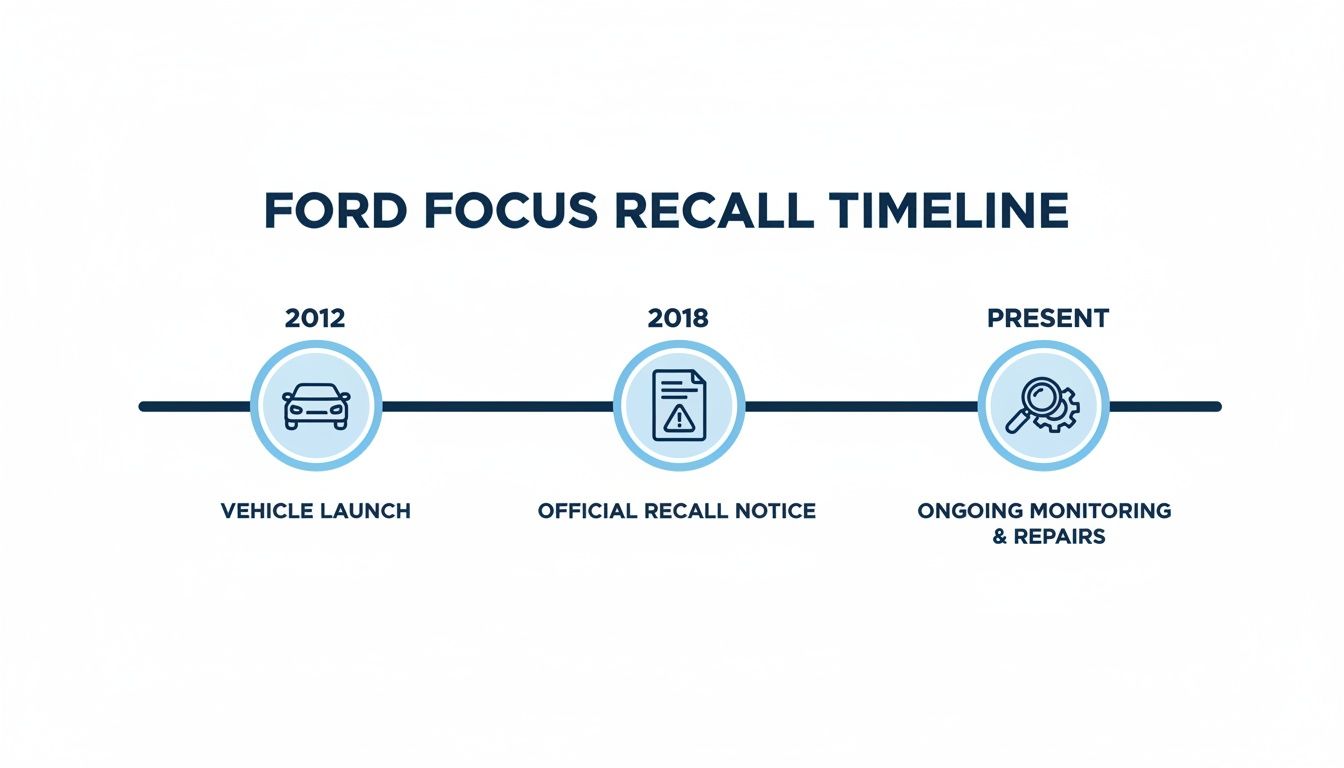
As you can see, there was a significant gap between the car’s launch and a recall that actually worked, leaving many drivers in a dangerous situation for years.
The Timeline of a Flawed Fix
Ford’s path to fixing this was not a straight line. It took a couple of tries to get it right. Their first attempt came in 2018, when they recalled 1.5 million vehicles. The problem was, their “fix” was just a software update. They hoped tweaking the engine’s computer would solve it, but this did nothing to address the faulty valve itself.
Unsurprisingly, the problems continued. This led to a second, more serious recall in July 2019. This time, the solution was what it should have been from the start: a hands-on repair. Dealers were instructed to reprogram the main computer, check for fault codes, and, if needed, replace the canister purge valve entirely. They also had to inspect and potentially replace the carbon canister, the fuel tank if it was already deformed, and the fuel delivery module.
Identifying the Symptoms
Knowing the warning signs of a failing canister purge valve can keep you safe. If your Focus starts acting strangely, a professional car diagnostic test is the best way to know for sure, but here are the common red flags:
- The check engine light pops on.
- The engine idles roughly or is hard to start.
- Your gas mileage suddenly gets worse.
- You hear a loud “whoosh” when you unscrew the gas cap—a dead giveaway of a strong vacuum.
The fact that the initial software-only fix failed so completely really highlights how serious the mechanical problem was. It’s a classic example of how one small part can trigger a massive system failure, a theme we saw in other vehicles from that time period.
This whole situation is a powerful reminder for car owners to pay close attention to recalls. The Focus had its unique set of troubles, but it wasn’t alone. For instance, drivers of other popular models from that era might be interested in reading about the common problems found in the 2012 GMC Acadia.
While the engine problems got most of the headlines, another serious issue was brewing under the radar for 2012 Ford Focus owners: a faulty and unpredictable steering system. The engine stalls eventually triggered a massive recall, but this equally dangerous steering flaw was often overlooked by Ford, putting countless drivers at risk.

This wasn’t just a handful of isolated incidents. The problem became so common that it landed the 2012 Ford Focus on the Vehicle Watch List from the Center for Auto Safety—a respected national consumer advocacy group—not once, but twice. The sheer number of complaints about steering failures was just too high to ignore.
Drivers reported some truly terrifying situations. One of the most common and frightening was the steering wheel completely locking up, sometimes right after starting the car. Imagine getting in, turning the key, and discovering the wheel is frozen solid. The car is undrivable, and you could be stuck in a dangerous spot.
This steering defect exposes a major gap in manufacturer responsibility. It’s a critical point for anyone who’s had steering trouble with their Focus, because even without an official recall, a car company can still be held liable for injuries caused by a known design flaw.
A Danger Without a Recall
What’s so troubling about this steering issue is the lack of a formal, widespread recall. Despite the clear danger, Ford never launched a full-scale campaign to fix every affected vehicle. This left many owners completely in the dark, unaware of the risk they were taking every time they drove.
The gravity of the situation became obvious as complaints flooded in. The Center for Auto Safety’s initial report noted dozens of injuries linked to the vehicle’s power steering problems. One particularly chilling complaint detailed how a driver’s steering wheel locked just after starting the car, with the owner writing about their fear of a fatal accident. You can learn more about how steering issues put the Focus on the safety watch list.
This all goes to show how important it is to stay informed through independent safety reports, not just manufacturer notices. For more information on vehicle safety, feel free to browse our collection of auto reviews and consumer reports.
How to Check If Your Ford Focus Has an Open Recall
So, you’re wondering if your 2012 Ford Focus is one of the vehicles caught up in these recalls. The good news is, finding out is surprisingly simple. It all boils down to one critical piece of information: your Vehicle Identification Number, or VIN.
Think of the 17-character VIN as your car’s unique fingerprint. No two are alike. This code is the key to unlocking the entire history of your specific vehicle, including any safety issues that need to be addressed.
You can find your VIN in a few easy-to-spot places. Look for a small metal plate on the driver’s side of the dashboard, right where it meets the windshield. You can also find it on a sticker inside the driver’s side door jamb. If you can’t get to your car, just check your vehicle registration or insurance card—it’s listed there, too.

Using Your VIN for an Instant Recall Check
Once you’ve got your VIN, there are two fantastic, official resources you can use to get a straight answer, completely free of charge.
- The National Highway Traffic Safety Administration (NHTSA) Website: As the government’s official hub for vehicle safety, this is my go-to recommendation. Their database is comprehensive and covers all automakers.
- Ford’s Official Recall Site: You can also go straight to the source. Ford has its own lookup tool that lets you check for recalls specific to your car.
Just pop your 17-digit VIN into the search tool on either site, and you’ll get instant results. The system cross-references your vehicle against every safety recall issued in the last 15 years. It’s the fastest way to cut through the noise and know for sure.
Understanding the Recall Results
After you run the search, you’ll see one of a few results. Ideally, you’ll get the all-clear: “0 unrepaired recalls.” That’s fantastic news.
But if the search flags a 2012 Ford Focus recall for your car, don’t panic. The report will give you the important details—what the defect is, the safety risks involved, and what Ford is doing to fix it.
Pay close attention to the recall’s status. It might say something like “Remedy Not Yet Available.” This just means Ford has acknowledged the problem but is still working out the logistics of the repair for its dealerships. It doesn’t mean you should ignore it.
If your Focus has an open recall, your next step is to call your local Ford dealership right away to schedule the repair. Remember, all work related to a safety recall is done absolutely free of charge. It’s the law. Don’t put it off, because these aren’t minor issues; they’re about keeping you and your passengers safe.
Navigating vehicle defects can feel overwhelming. If you want to learn more about your rights and what to expect during this process, you can find more information about auto safety recalls.
Know Your Legal Rights in Florida After a Recall-Related Accident
If you were injured in a crash caused by a defect in your 2012 Ford Focus, you need to understand your rights. This goes far beyond a simple car repair; it’s about holding a major corporation accountable for putting a dangerous vehicle on the road. The legal concept that covers this is called product liability.
Simply put, product liability law protects consumers like you. It says that when a manufacturer’s carelessness or a defective product causes harm, the company is on the hook for the damages. This is especially powerful when a known issue, like those covered in the 2012 Ford Focus recall, is the direct cause of an accident.
Think of an official recall notice from Ford or the NHTSA as a key piece of evidence. It’s essentially the company admitting they knew about a dangerous flaw in the car. That admission can be a cornerstone for building a solid product liability case here in Florida.
Types of Damages You Can Claim
When a faulty car part leads to a crash, the fallout can be immense, impacting every area of your life. Florida law allows victims to pursue compensation—legally known as “damages”—to cover these wide-ranging losses. The goal is to help you get back on your feet financially and acknowledge the physical and emotional trauma you’ve been through.
You may be able to seek compensation for:
- Medical Expenses: This covers everything. The ambulance ride, the ER visit, ongoing physical therapy, future surgeries, and even the cost of prescription medications all fall under this category.
- Lost Wages and Earning Capacity: If you can’t work because of your injuries, you can claim the income you’ve lost. If the injuries are permanent and impact your long-term ability to earn a living, you can also be compensated for that future loss.
- Pain and Suffering: This is compensation for the non-financial toll of the accident—the physical pain, the mental anguish, and the overall loss of enjoyment in your life.
A recall notice doesn’t give a car manufacturer a free pass. If they knew about a defect and dragged their feet or failed to issue an effective fix, their responsibility for the harm caused is even greater.
The Importance of Preserving Evidence
After an accident you suspect was caused by a vehicle defect, acting quickly to preserve evidence is non-negotiable. The success of your case hinges on proving the car’s flaw caused the crash. The most crucial piece of evidence? The car itself. It needs to be kept safe from repairs or being sold for scrap so that an expert can perform a thorough inspection.
You should also hang on to every piece of paper related to the incident. This means the police report, all your medical records and bills, and any recall notices you received from Ford about your 2012 Focus. Each document helps tell the full story of what happened and how it has affected you.
Don’t wait to take action. Florida has strict deadlines for filing personal injury claims, which you can read about in our guide on the statute of limitations for car accidents in Florida. Moving quickly protects your legal rights and gives your attorney the best shot at gathering fresh evidence to build the strongest case possible for you.
When you’re up against a massive company like Ford after an accident, it can feel like a David vs. Goliath situation. At Martin Hernandez, P.A., we step in to even the odds for people right here in the Tampa Bay area who have been hurt because of problems tied to the 2012 Ford Focus recall. You shouldn’t have to face this fight alone.
It all starts with a simple conversation. We offer a completely free, no-strings-attached case evaluation where you can tell us your story. This is a chance for you to understand your legal standing without any pressure or cost. We’ll listen to what you’ve been through and give you straight, honest advice about your options.
Putting Together a Rock-Solid Claim
Simply pointing to a recall notice isn’t enough to prove a vehicle defect caused your crash. It takes a deep dive into the evidence, and that’s where we excel. Our firm has built relationships with top-tier automotive experts and accident reconstruction specialists who can forensically analyze what went wrong.
These experts are the key to connecting the dots—showing exactly how a faulty canister purge valve or a failing steering gear led directly to the accident that injured you. Their analysis and testimony can be the most powerful tool in proving your case.
We dig deep to document the full extent of your losses—not just the medical bills and missed paychecks, but the real, human impact on your life. Our mission is simple: to fight for the full and fair compensation you are owed.
Our No-Fee Guarantee
We firmly believe that your financial situation should never be a barrier to getting justice. That’s why we work on a contingency fee basis. It’s a straightforward promise: you owe us nothing unless we win your case.
This means we take on all the risk. We invest our own time, resources, and expertise into building your claim because we believe in it. It allows you to focus on what truly matters—your recovery—while we take care of the complex legal battle.
Common Questions About the Ford Focus Recall
When your car is part of a major recall, you’re bound to have questions. It’s a stressful situation. Let’s walk through some of the biggest concerns owners have about the 2012 Ford Focus recall and get you the clear answers you need.
What to Do in an Emergency
If your Focus suddenly stalls on the road, your first move is safety. Get a firm grip on the steering wheel; losing the engine means losing power steering, and turning will feel incredibly heavy.
Signal immediately and start working your way to the shoulder. Once you’re safely out of traffic, turn on your hazard lights. It’s tempting to keep trying the ignition, but it’s best not to. Repeatedly trying to restart the engine could make a bad situation worse.
Is the Car “Fixed” After a Recall Repair?
A recall repair is targeted. It’s designed to fix one specific, known problem. While that absolutely makes your car safer by solving that issue, it doesn’t mean the entire vehicle has been given a clean bill of health. Think of it like a surgeon fixing a broken bone—it doesn’t mean you won’t ever catch a cold.
Keep up with your regular maintenance schedule and always pay attention to how your car feels, sounds, and drives. New symptoms are your car’s way of telling you something might be wrong.
Your Legal Rights After a Repair
What happens if you got the recall work done, but you still ended up in an accident? You might still have a case.
If the repair itself failed or was performed incorrectly, the manufacturer could still be on the hook for any resulting damages or injuries. The critical part is being able to connect the dots and prove that the original defect—or the botched repair—was the direct cause of the crash.
In Florida, you’re up against a clock. The statute of limitations for filing a product liability or personal injury claim is typically four years from the date you were injured. If you wait too long, you could lose your right to seek compensation forever. Time is of the essence.
If a defect in your 2012 Ford Focus led to an accident that hurt you or someone you care about, you shouldn’t have to carry the burden alone. Reach out to Martin Hernandez, P.A. for a free, no-obligation consultation to discuss your situation and understand your legal options. You can find us at https://injurylawyersoftampa.com.