
The 2012 GMC Acadia, a common sight on Florida roadways, offered families a blend of space and style. However, many owners have discovered that this popular SUV harbors a range of significant mechanical and safety flaws. A decade later, these persistent issues continue to surface, creating not only expensive repair bills but also dangerous situations on the road. Understanding the most common 2012 GMC Acadia problems is crucial for anyone who owns, or is considering buying, this model year.
This guide provides a detailed, comprehensive breakdown of the most frequently reported defects. We will move beyond simple descriptions to offer a practical resource for owners. You will learn to recognize specific symptoms, understand potential repair costs, and, most importantly, grasp the safety implications of each issue. From sudden transmission failures that can leave you stranded on I-4 to power steering loss in a busy Tampa intersection, these are not minor annoyances. These are serious defects that can compromise your safety and the safety of your passengers.
For Florida drivers, especially those who have experienced an accident, knowing whether a vehicle defect was a contributing factor is critical. This listicle will equip you with the knowledge to identify these problems, take preventative action, and understand your rights if a mechanical failure leads to an accident or injury. We will cover transmission failures, engine stalling, electrical glitches, and other critical issues, providing the clear, actionable information you need to protect yourself and your family.
1. Transmission Failure and Shifting Problems
One of the most significant and widely reported 2012 GMC Acadia problems involves its 6-speed automatic transmission. Owners have frequently documented a range of troubling symptoms, from jarring shifts and delayed gear engagement to complete transmission failure, which can create extremely hazardous driving conditions. This issue is not merely an inconvenience; it poses a direct threat to driver and passenger safety.
A failing transmission can result in a sudden and unexpected loss of power while driving. Imagine merging onto a busy Tampa highway like I-275, only to have your vehicle lose acceleration without warning. This dangerous scenario can leave you stranded in high-speed traffic, significantly increasing the risk of a rear-end or multi-vehicle collision.
Symptoms and Diagnosis
Recognizing the early warning signs is crucial for preventing a catastrophic failure. Common symptoms include:
- Harsh Shifting: The vehicle may jerk or lurch when shifting between gears.
- Delayed Engagement: A noticeable lag when shifting from Park to Drive or Reverse.
- Gear Slipping: The engine may rev up, but the vehicle fails to accelerate as if it is stuck in neutral.
- Unusual Noises: Whining, clunking, or humming sounds coming from the transmission area.
- Check Engine Light: The dashboard warning light may illuminate, often with transmission-specific trouble codes.
If you experience these symptoms, a certified mechanic should perform a diagnostic check immediately. They will likely scan the vehicle’s computer for error codes (like P0700 or P0716) and inspect the transmission fluid for signs of burning or metal shavings, which indicate internal damage.
Legal and Financial Implications
The prevalence of these transmission defects has led to significant consequences, including numerous consumer complaints filed with the National Highway Traffic Safety Administration (NHTSA) and class-action lawsuits against General Motors. For those involved in an accident in Florida, a malfunctioning transmission can become a critical factor in determining liability. If a vehicle defect contributed to a crash, the manufacturer could be held partially responsible. This is a complex area of law, mirroring issues seen in other vehicles from the same era; for instance, you can learn more about similar GM recall challenges with the 2012 Chevrolet Equinox.
Actionable Tip: If you’re in an accident and suspect your Acadia’s transmission failed, insist that the vehicle be preserved for a mechanical inspection. This evidence could be vital for your personal injury claim.
To better protect yourself, maintain meticulous service records, especially for transmission fluid changes every 30,000 to 50,000 miles. Understanding the common reasons why transmissions fail can also help you identify problems early. If a failure leads to an accident, consulting with a Tampa-based personal injury attorney is a critical step to ensure your rights are protected and all contributing factors are investigated.
2. Engine Stalling and Loss of Power
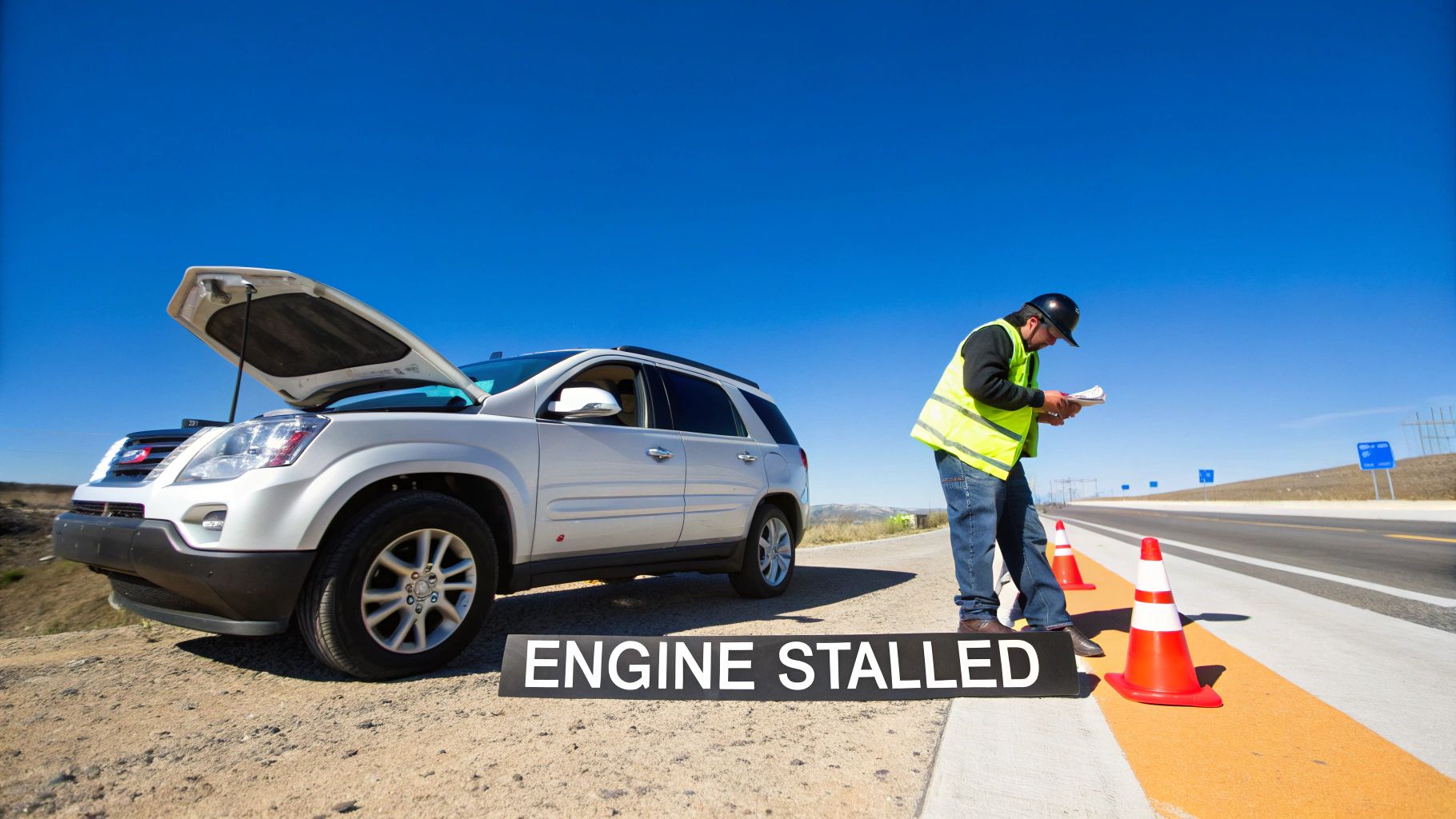
Another critical safety concern among the reported 2012 GMC Acadia problems is the tendency for the engine to suddenly stall while driving. Owners have filed numerous complaints describing terrifying incidents where the vehicle loses all power without warning, disabling essential functions like power steering and power brakes. This abrupt shutdown makes the vehicle incredibly difficult to control and maneuver to safety, especially at high speeds.
This dangerous defect is often linked to failures within the electrical system, specifically a faulty fuel pump relay or related wiring. When the engine stalls on a busy Florida thoroughfare, such as Dale Mabry Highway in Tampa, it instantly transforms the vehicle into a stationary obstacle. This creates a high-risk scenario for a severe rear-end collision or a chain-reaction crash, as following drivers may not have enough time to react.
Symptoms and Diagnosis
The signs of an impending stall can be subtle or nonexistent, which is what makes this issue particularly hazardous. However, some precursors may appear:
- Sudden Loss of Power: The most common symptom is the engine shutting off completely while the vehicle is in motion.
- Stuttering or Hesitation: The engine may sputter or hesitate during acceleration moments before stalling.
- Electrical System Malfunctions: The dashboard lights may flicker, or the radio might turn off just before the engine cuts out.
- Check Engine Light: The warning light may illuminate, indicating a fault within the engine control or fuel delivery systems.
A qualified mechanic should immediately investigate any stalling incident. Diagnosis typically involves checking the fuel pump’s operation, testing the fuel pump relay, and inspecting the related electrical circuits for shorts or corrosion. Reviewing the vehicle’s computer for diagnostic trouble codes can also help pinpoint the exact cause of the power loss.
Legal and Financial Implications
The sheer volume of NHTSA complaints about engine stalling highlights the widespread nature of this defect. In a Florida accident investigation, if evidence shows that a vehicle stalled due to a known manufacturing defect, liability could extend beyond the drivers involved to include General Motors. Proving this requires a thorough investigation into the vehicle’s history and the specific cause of the failure. This legal principle isn’t unique to this model; you can explore similar manufacturer liability issues in other consumer auto reviews.
Actionable Tip: If your Acadia stalls and causes an accident, do not authorize any repairs until an independent expert has inspected the vehicle. Preserving the state of the fuel pump relay and electrical system is crucial evidence for a personal injury claim in Florida.
Always keep detailed records of any stalling events, noting the date, time, speed, and road conditions. If an accident occurs due to this defect, providing these records and your vehicle’s maintenance history to a Tampa-based personal injury lawyer can strengthen your case and help ensure all responsible parties are held accountable.
3. Electrical System Failures
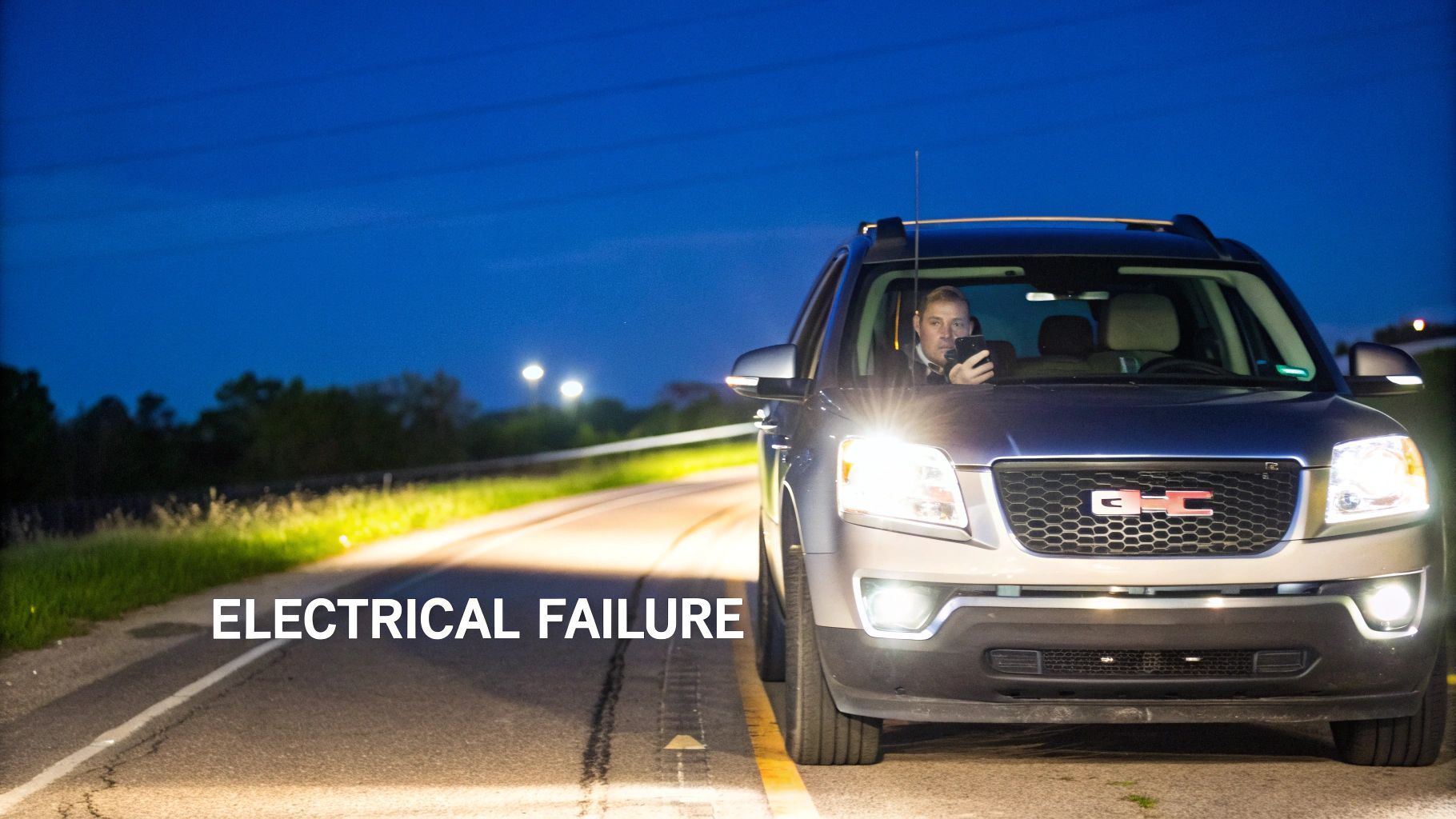
Another of the critical 2012 GMC Acadia problems stems from its notoriously unreliable electrical system. Owners have reported a wide array of issues, from parasitic battery drains and faulty alternators to complete system shutdowns while the vehicle is in motion. These aren’t minor glitches; they represent severe safety hazards that can leave drivers powerless and vulnerable.
A total electrical failure can disable essential safety components instantly. Imagine driving home from an evening event in downtown Tampa when your headlights, instrument panel, and power steering all shut off simultaneously on the Selmon Expressway. This terrifying scenario leaves you in the dark, unable to signal, and struggling to control the vehicle, dramatically increasing the risk of a devastating collision.
Symptoms and Diagnosis
Identifying electrical issues early can prevent a dangerous roadside emergency. Key warning signs to watch for include:
- Dimming or Flickering Lights: Headlights or interior lights that pulse, dim, or flicker are a classic sign of an alternator or wiring problem.
- Difficulty Starting: The engine struggles to turn over or requires multiple attempts to start, indicating a weak battery or charging system issue.
- Erratic Electronics: The radio, power windows, or dashboard gauges behave unpredictably or stop working altogether.
- Battery Warning Light: An illuminated battery icon on the dashboard signals a problem with the charging system.
- Frequent Dead Battery: The battery dies repeatedly, even after being charged or replaced, suggesting a parasitic drain.
A qualified mechanic can diagnose these issues by performing a full electrical system test. This involves checking the battery’s health, testing the alternator’s output, and performing a parasitic draw test to find any components that are drawing power when the vehicle is off.
Legal and Financial Implications
Electrical failures are frequently cited in consumer complaints and accident reports involving the 2012 Acadia. If an electrical system malfunction, such as sudden headlight failure, contributes to an accident in Florida, it can become a crucial element in a personal injury claim. Proving that a vehicle defect caused or worsened the collision can shift liability toward the manufacturer.
This requires a thorough investigation, similar to those involving other vehicle systems. Navigating the claims process and dealing with insurance companies can be complex, especially when a defect is a factor. Understanding your rights and responsibilities is essential, and you can get valuable insights by reviewing some key Florida auto insurance tips.
Actionable Tip: If you’re in a crash and suspect an electrical failure occurred, inform the responding officer and insist that the vehicle’s electrical components be preserved for an expert forensic analysis. This evidence can be indispensable for proving your case.
To mitigate risks, have your electrical system checked annually and keep a set of jumper cables and an emergency roadside kit in your vehicle. If a failure leads to an accident, consulting with a Tampa personal injury lawyer is a vital step to investigate the cause and protect your legal rights.
4. Brake System Issues and ABS Failures
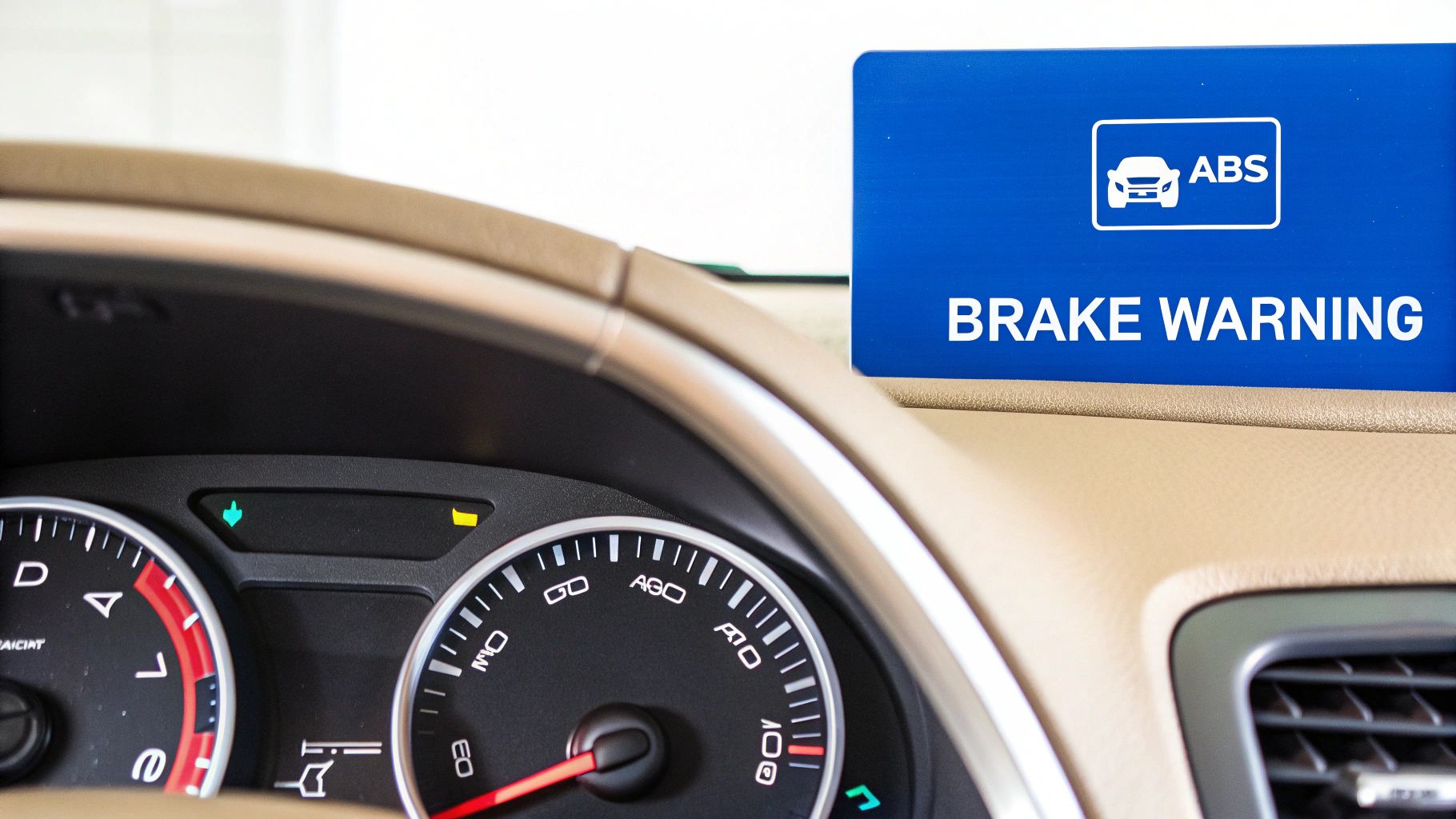
Another of the most dangerous 2012 GMC Acadia problems centers on its brake system and the frequent failure of its Anti-lock Braking System (ABS). Owners have reported numerous terrifying incidents, from a soft or “spongy” brake pedal that sinks to the floor to a complete and sudden loss of braking power. These defects directly compromise the vehicle’s most critical safety feature, dramatically increasing the risk of a catastrophic accident.
Imagine you are driving in heavy stop-and-go traffic on the Howard Frankland Bridge. A vehicle ahead stops suddenly, but when you press the brake pedal, it feels unresponsive, and your Acadia fails to slow down as expected. This terrifying scenario can lead directly to a violent rear-end collision, placing you and others in immediate peril.
Symptoms and Diagnosis
Identifying brake system issues early is essential for your safety. Watch for these common warning signs:
- Spongy or Soft Brake Pedal: The pedal feels mushy or goes down further than usual before engaging the brakes.
- ABS and Brake Warning Lights: The illumination of these lights on the dashboard signals a fault in the system.
- Increased Stopping Distance: The vehicle takes longer to come to a complete stop than it should.
- Unusual Noises: Squealing, grinding, or clicking sounds when applying the brakes.
- Pulling to One Side: The vehicle may veer to the left or right during braking.
If you notice any of these symptoms, your vehicle needs immediate professional attention. A certified mechanic can diagnose the problem by checking the brake fluid level and condition, inspecting the master cylinder and brake lines for leaks, and using a diagnostic scanner to retrieve fault codes from the ABS control module.
Legal and Financial Implications
Brake failure is a common cause of serious accidents, and numerous complaints have been filed with the NHTSA regarding the 2012 Acadia’s braking system. If a defective brake component leads to a crash in Florida, the vehicle’s manufacturer could be held liable for the resulting injuries and damages. This is similar to other safety-related issues that can lead to investigations and recalls, and you can discover more about how Florida handles auto safety recalls to understand the legal landscape.
Actionable Tip: If you are involved in a collision and suspect brake failure was a factor, it is crucial that the vehicle is not repaired or destroyed. Preserving the vehicle allows for a forensic inspection to document the brake system’s pre-accident condition, which can serve as powerful evidence in a personal injury claim.
To stay safe, never ignore brake warning lights. Always maintain a safe following distance, especially if you suspect an issue, and keep meticulous records of all brake service and repairs. If an accident occurs, contacting a Tampa-based personal injury attorney can ensure a thorough investigation is conducted to hold all responsible parties accountable.
5. Water Leaks and Interior Mold
Beyond mechanical failures, another one of the more frustrating 2012 GMC Acadia problems is its susceptibility to persistent water leaks. Owners frequently report water entering the cabin through faulty seals around the sunroof, doors, liftgate, and even the roof rack mounting points. This intrusion leads to saturated carpets, damp upholstery, and a musty odor that signals a growing mold problem. While not an immediate mechanical danger, this issue can cause significant secondary damage and health concerns.
The consequences of unchecked water leaks can be severe. Imagine discovering standing water in your vehicle’s footwell after a typical heavy Florida downpour. This moisture can seep into critical electronic components housed under the dashboard or seats, leading to short circuits and costly electrical failures. Furthermore, the persistent dampness creates an ideal breeding ground for mold and mildew, which can compromise the cabin’s air quality and potentially trigger respiratory issues for occupants.
Symptoms and Diagnosis
Identifying a water leak early is key to preventing widespread damage. Be vigilant for these common signs:
- Damp Carpets or Headliner: Feel for moisture in the floorboards, especially after rain, or look for water stains on the headliner.
- Musty or Mildew Odor: A persistent unpleasant smell inside the vehicle is a strong indicator of mold growth.
- Visible Water Dripping: You may see water actively leaking from the sunroof area, interior lights, or grab handles during a storm.
- Foggy Interior Windows: Condensation that is difficult to clear from the inside of the windows points to high humidity levels within the cabin.
- Electrical Gremlins: Unexplained issues with the radio, power windows, or dashboard lights can sometimes be traced back to water damage.
To diagnose the source, a technician may perform a water test, using a hose to systematically spray different areas of the vehicle while an assistant checks for leaks inside. Clogged sunroof drain tubes are a very common culprit and are often the first place a professional will inspect.
Legal and Financial Implications
Water damage can significantly diminish your vehicle’s resale value and may not be fully covered by standard auto insurance. If the leak has led to a pervasive mold issue, professional remediation can be expensive. For Florida drivers, understanding how to address this is critical. If your vehicle’s ventilation system has been compromised, learning about proper air duct cleaning and mold removal can provide helpful context for tackling the problem. In an accident scenario, pre-existing water damage can complicate the vehicle valuation process with the insurance company.
Actionable Tip: If you are selling or trading in an Acadia with a history of water leaks, be transparent and provide all repair documentation. In the event of a crash, ensure your insurance adjuster is aware of any pre-accident interior damage to avoid disputes during the claim settlement.
Regularly cleaning out sunroof drains and checking weather stripping can help prevent leaks. If a leak occurs, address it immediately and use a dehumidifier to thoroughly dry the interior. Should you get into an accident, a Tampa personal injury attorney can help navigate complex valuation issues, ensuring you receive a fair settlement that accurately reflects your vehicle’s condition before the collision.
6. Suspension and Steering Problems
Another area of concern among the many 2012 GMC Acadia problems relates to its suspension and steering systems. Owners have reported issues ranging from unsettling noises and poor handling to a dangerous loss of steering responsiveness. For a large crossover SUV often used for family transport, these problems compromise the vehicle’s stability and can turn a routine drive through Tampa traffic into a hazardous ordeal.
A compromised steering or suspension system directly affects the driver’s ability to control the vehicle, especially during emergency maneuvers. A sudden need to swerve on a busy road like Dale Mabry Highway could be disastrous if the steering wheel has excessive play or fails to respond immediately. This lack of control significantly elevates the risk of a single-vehicle or multi-vehicle accident, jeopardizing the safety of everyone inside.
Symptoms and Diagnosis
Identifying steering and suspension issues early is key to maintaining vehicle safety. Common symptoms that warrant immediate attention include:
- Clunking Noises: Audible clunks or pops, particularly when driving over bumps or turning, often point to failing struts, ball joints, or sway bar links.
- Excessive Steering Play: A noticeable looseness or “dead spot” in the steering wheel where turning it does not immediately affect the vehicle’s direction.
- Pulling to One Side: The vehicle drifts to the left or right without steering input, suggesting an alignment issue or a problem with suspension components.
- Uneven Tire Wear: Rapid or uneven wear on your tires is a classic sign that the suspension is not holding the vehicle’s alignment correctly.
- Vibrations: Feeling unusual vibrations through the steering wheel, especially at higher speeds.
If you notice any of these signs, a qualified mechanic should perform a thorough inspection of the entire steering and suspension system. They will check components like the power steering rack, tie rods, struts, and the steering intermediate shaft for wear or damage. Proper wheel alignment checks can also help diagnose underlying problems.
Legal and Financial Implications
Steering and suspension failures can be a direct cause of a loss-of-control accident. In Florida, if a mechanical defect like a failed tie rod or a faulty steering rack contributes to a crash, the vehicle manufacturer could be held liable for resulting injuries. Proving this requires a detailed investigation of the vehicle’s condition immediately following the accident.
Actionable Tip: If you are in an accident and suspect a steering or suspension failure played a role, do not allow the vehicle to be repaired or scrapped. Preserving the vehicle as evidence is crucial for a potential product liability claim.
Properly functioning safety systems are vital in any collision, and it is important to understand how they protect occupants. You can learn more about the role of a vehicle’s restraint systems and why they matter in a crash. Maintaining meticulous service records of all steering and suspension repairs will strengthen your position if you need to file a claim. If an accident occurs due to a handling issue, consulting with a Tampa personal injury attorney is a critical step to investigate all contributing factors and protect your rights.
7. HVAC System Malfunctions
Another common area of frustration among the 2012 GMC Acadia problems involves the heating, ventilation, and air conditioning (HVAC) system. Owners frequently report a host of issues ranging from a complete loss of air conditioning to erratic blower motor behavior. While often viewed as a comfort and convenience feature, a malfunctioning HVAC system in Florida’s intense heat can quickly escalate into a serious health and safety concern.
In a climate like Tampa’s, a reliable AC is not a luxury; it is a necessity. A failed compressor or blower motor can leave passengers, especially vulnerable individuals like children and the elderly, exposed to dangerously high cabin temperatures. This scenario is not just uncomfortable on a long family trip down I-4; it can pose a significant health risk, potentially leading to heat exhaustion or heatstroke if stranded after an accident.
Symptoms and Diagnosis
Identifying HVAC issues early can prevent more costly repairs and ensure occupant safety during hot weather. Be alert for these common symptoms:
- Weak Airflow: Air from the vents is weak even when the fan is on its highest setting, often pointing to a failing blower motor or resistor.
- No Cold Air: The system blows air, but it is not cold, which typically indicates a refrigerant leak, a failed compressor, or a faulty clutch.
- Strange Odors: A musty or mildew smell from the vents can signal mold growth in the evaporator core.
- Unusual Noises: Grinding or clicking sounds when the AC is activated often mean the compressor or its clutch is failing.
- Inconsistent Temperature: The system may switch between hot and cold air unexpectedly, which could be due to a faulty blend door actuator.
A qualified mechanic can diagnose these issues by checking refrigerant levels and pressures, inspecting the compressor and belts for damage, and testing the electrical components that control the system. They may also check for error codes related to the climate control module.
Legal and Financial Implications
While an HVAC failure is less likely to directly cause a collision, its malfunction can be relevant in the aftermath of an accident. If an injured party, particularly someone recovering from significant injuries, is left in a vehicle with no air conditioning for an extended period awaiting emergency services, it can exacerbate their medical condition and discomfort. This factor can become part of the overall assessment of damages in a personal injury claim.
The cost to repair these systems can be substantial, with compressor replacements often exceeding $1,000. These frequent failures add another layer of financial burden to owning a 2012 Acadia and underscore the vehicle’s overall reliability issues.
Actionable Tip: If involved in an accident, make a note of the vehicle’s HVAC status. If the system was non-functional and you or your passengers were exposed to extreme temperatures for a prolonged time, inform your attorney. This detail could be relevant to your pain and suffering damages.
To mitigate these issues, have your Acadia’s AC system professionally inspected and serviced annually before the peak summer months. Regular checks can catch small refrigerant leaks before they lead to catastrophic compressor failure, saving you money and ensuring your family’s comfort and safety.
8. Paint Peeling and Clear Coat Failure
While not as mechanically critical as engine or transmission flaws, another of the well-documented 2012 GMC Acadia problems involves premature paint and clear coat failure. Owners have reported significant cosmetic issues where the paint begins to peel, bubble, or delaminate, often starting on the roof, hood, and liftgate areas. This goes beyond normal wear and tear, suggesting a potential defect in the factory paint application or materials used.
Though primarily a cosmetic issue that degrades the vehicle’s appearance and resale value, it can have financial implications, especially after an accident. If your Acadia is involved in a collision in Florida, an insurance adjuster’s valuation of your vehicle could be negatively impacted by pre-existing paint damage. This can complicate the claims process and reduce your potential settlement for property damage.
Symptoms and Diagnosis
Identifying paint failure early can help you take steps to mitigate further damage. The signs are typically visual and straightforward:
- Clear Coat Peeling: A hazy or flaky appearance on the top layer of paint, which may begin to peel away in sheets.
- Bubbling or Blistering: Small bubbles forming under the paint surface, often a precursor to peeling.
- Fading and Oxidation: The paint color, particularly on darker vehicles, may look dull, chalky, or faded in large patches.
- Exposed Primer or Metal: In advanced stages, the color and clear coat may flake off entirely, exposing the primer or bare metal underneath, which can lead to rust.
Diagnosis is a simple visual inspection. Look for these signs in areas with high sun exposure, like the horizontal surfaces of the vehicle. Documenting the condition with dated photographs can be useful for insurance or resale purposes.
Legal and Financial Implications
While a class-action lawsuit for paint is less common than for safety-related defects, the financial impact is real. An appraiser valuing your vehicle for a trade-in or an insurance settlement will deduct significantly for poor paint condition. Following a Tampa-area accident, it’s crucial to distinguish between pre-existing cosmetic issues and damage caused by the crash to ensure a fair assessment.
Many owners have pursued claims through dealerships or filed complaints, but resolving cosmetic defects outside of the warranty period is often difficult. The cost to repaint a single panel can be hundreds of dollars, while a full repaint can cost several thousand, often exceeding the value the repair adds to an older vehicle.
Actionable Tip: If your Acadia is damaged in an accident, clearly document the pre-accident condition of your paint with any available photos. Instruct the insurance appraiser to separate the collision damage from any prior, unrelated cosmetic flaws to prevent them from undervaluing your property damage claim.
To protect your vehicle’s finish, regularly apply a quality wax or ceramic coating and use covered parking whenever possible to shield it from harsh Florida sun. If a dispute arises over your vehicle’s value after a crash, consulting with a personal injury attorney can help ensure you receive fair compensation for all damages sustained.
Navigating Your Next Steps: When a Defect Causes an Accident
Understanding the extensive list of potential 2012 GMC Acadia problems is more than an academic exercise for owners; it’s a critical component of road safety. We’ve detailed how issues ranging from sudden transmission failure and unexpected engine stalling to faulty steering systems can manifest. While proactive maintenance and vigilant monitoring are essential tools for any driver, they cannot always prevent a catastrophic failure inherent in a vehicle’s design or manufacturing process.
The real-world consequences of these defects extend far beyond inconvenient repairs and surprise expenses. When a known issue like a complete loss of power on a busy Tampa highway or a steering lock-up during a turn in St. Petersburg leads to a collision, the situation transforms from a mechanical problem into a serious legal matter. Victims are often left with significant injuries, mounting medical bills, and emotional trauma, all while facing the daunting task of proving what caused their accident.
From Mechanical Failure to Legal Liability in Florida
In the aftermath of a crash, Florida’s legal framework provides a path for victims to seek justice, but it is a complex journey. Establishing that a vehicle defect was a direct cause or a substantial contributing factor to an accident is a highly technical challenge. It’s not enough to simply state that your 2012 GMC Acadia stalled; you must definitively link that specific failure to the resulting collision and your injuries.
This process involves several key steps:
- Preserving Critical Evidence: The vehicle itself is the most important piece of evidence. It’s crucial that it is preserved in its post-accident state and not repaired or scrapped before a qualified expert can perform a thorough inspection.
- Expert Analysis: Proving a product liability claim often requires testimony from automotive engineers and accident reconstruction specialists. These experts can analyze the vehicle’s onboard data recorder (the “black box”), examine failed components, and reconstruct the sequence of events to demonstrate how the mechanical failure led to the crash.
- Navigating Negligence Laws: In Florida, liability can be shared. Even if another driver was partially at fault, the vehicle manufacturer (in this case, General Motors) could also be held responsible if a known defect contributed to the severity of the accident or your inability to avoid it. For instance, if a brake system failure prevented you from stopping in time, both the other driver and the manufacturer could share liability.
Key Insight: A successful product liability claim requires more than just showing a defect existed. You must prove the defect was present when the vehicle left the manufacturer, that it caused the accident, and that the accident directly resulted in your damages (injuries, lost wages, etc.).
Why You Shouldn’t Face This Alone
Attempting to take on a massive automotive corporation while recovering from an injury is an overwhelming prospect. Manufacturers and their insurance companies have vast legal resources dedicated to minimizing their liability and discrediting claims. They may argue that the issue was due to poor maintenance, driver error, or normal wear and tear rather than a manufacturing defect.
This is precisely where specialized legal guidance becomes invaluable. An experienced Tampa personal injury attorney who understands the nuances of automotive defect cases can level the playing field. They can handle the intricate investigation, hire the necessary experts, and build a compelling case that connects the documented 2012 GMC Acadia problems directly to your accident and injuries. By understanding your rights and the complexities of Florida law, you can ensure you are positioned to secure the full and fair compensation you deserve for your medical treatment, lost income, and pain and suffering.
If a defect in your 2012 GMC Acadia contributed to an accident that injured you or a loved one in the Tampa Bay area, you need a legal team with the experience to prove it. The attorneys at Martin Hernandez, P.A. specialize in complex auto accident and product liability cases and have the resources to take on major manufacturers. Contact us for a free, no-obligation consultation to understand your legal options at Martin Hernandez, P.A..