
If you own a 2013 Nissan Rogue, you’ve probably heard some unsettling news about safety recalls. One of the biggest issues is a serious fire risk, and it’s completely understandable to be concerned. This isn’t just a minor glitch; it’s a defect that could put you and your passengers in danger.
Navigating The 2013 Nissan Rogue Recalls
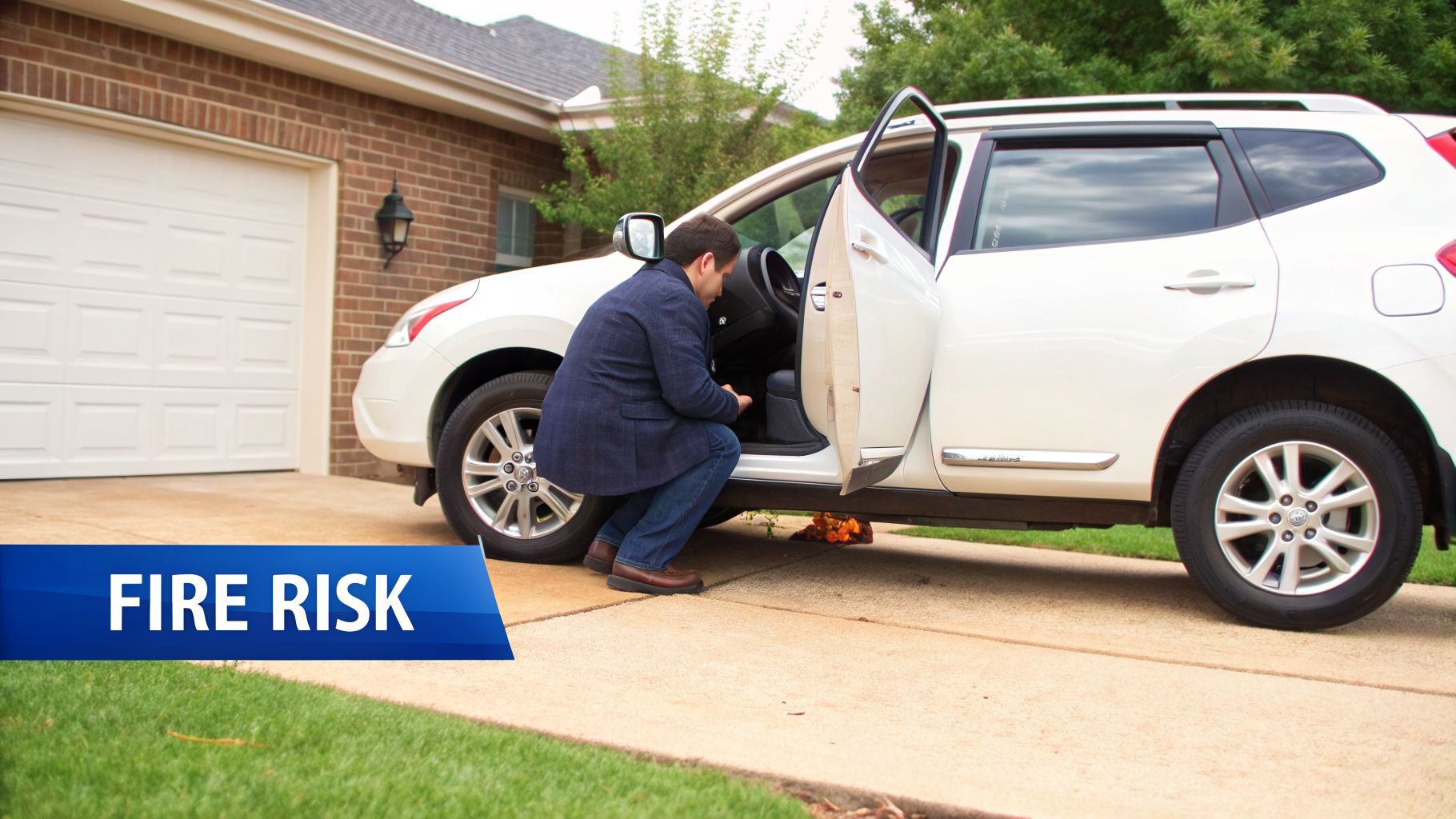
Let’s cut through the technical jargon and get straight to what you need to know. We’ll break down the most serious 2013 Nissan Rogue recalls, explain the real-world dangers, and walk you through exactly what to do next. Knowing the facts is the first step toward getting this fixed and ensuring your vehicle is safe to drive.
The Root of the Fire Risk: A Simple Design Flaw
So, what’s causing this problem? It all comes down to a design flaw that lets moisture get where it shouldn’t. Think about a rainy day or tracking in snow and slush—that water can seep through the carpet on the driver’s side.
Tucked away in the kick panel right there is an electrical wiring harness connector. When water and salt get to this connector, it starts to corrode. Over time, that corrosion can create an electrical short.
An electrical short is the trigger. It can heat up the wiring and surrounding materials, sparking a fire without any warning. This is why this recall is so critical.
The National Highway Traffic Safety Administration (NHTSA) took this very seriously. On January 26, 2015, they issued a massive safety recall under campaign ID 15V032000. This wasn’t a small-scale issue; it affected a staggering 468,815 vehicles, including the 2013 Rogue. The recall directly targets this corrosion-prone wiring harness. You can find more details about this Nissan recall over at KBB.com.
Why Florida Drivers Should Pay Close Attention
Here in Florida, our humid climate and heavy downpours create the perfect environment for this problem to develop. All that moisture in the air and on the roads increases the odds of water finding its way into your vehicle’s cabin and starting the corrosion process.
This guide will show you how to check if your Rogue is part of this recall and how to get the necessary repairs done—which should be completely free of charge.
More importantly, if this defect has already led to an accident or injury, you have legal rights. We’ll cover what you need to do, from documenting everything to knowing when it’s time to speak with an experienced attorney. For more general information, you can also review our helpful tips for preventing car fires.
The Critical Fire Risk Recall: What Every 2013 Rogue Owner Must Know
Of all the recalls issued for the 2013 Nissan Rogue, one is particularly alarming, especially for those of us dealing with Florida’s heat and sudden downpours. It’s the one you absolutely can’t ignore: NHTSA Campaign ID 15V032000. This recall targets a critical fire risk that starts from something you’d never expect—a damp floor mat.
Here’s how it happens. Tucked away under the carpet in the driver’s side footwell is a key wiring harness connector. The problem is, it’s not properly waterproofed. Think about hopping in your car during a rainstorm or tracking in moisture from wet shoes. The carpet and padding underneath can soak up that water like a sponge.
Over time, this trapped moisture works its way into the electrical connector, causing it to rust and corrode. That corrosion can create an unintended path for electricity, triggering an electrical short. And a short circuit is all it takes to potentially ignite the surrounding carpet and insulation, starting a dangerous vehicle fire.
From A Weird Smell To A Real Emergency
This isn’t just a “what if” scenario. Rogue owners have experienced very real warning signs that you need to be aware of. Catching these early can be the difference between a simple repair and a disaster.
It often starts subtly. You might notice a faint burning smell coming from the driver’s footwell or see a little wisp of smoke from under the dash. Don’t dismiss it. These are urgent red flags that an electrical component is seriously overheating.
Other symptoms are directly linked to the wiring harness itself. You might suddenly find that:
- The driver’s side power window stops working or becomes erratic.
- Your power seat adjustments no longer respond.
- The car battery drains unexpectedly, even when it’s turned off.
These aren’t just frustrating quirks; they’re direct evidence that the connector is failing and the fire risk is growing.
The Scope of the Recall
The sheer number of vehicles with this defect was staggering. Nissan recalled 468,815 units under NHTSA recall number 15V032000, announced on January 25, 2015. This recall covered a wide range of Rogues, including models built between March 7, 2007, and November 26, 2013.
The core of the problem—an electrical short caused by water and salt seeping into the driver’s side carpet—is the kind of thing that could leave a Tampa driver stranded on Dale Mabry Highway during rush hour, or worse. You can find more details about the scope of this recall on Cars.com.
This is a serious, life-threatening risk. The potential for a fire breaking out while you’re driving is not something to take lightly. It makes the inconvenience of a trip to the dealership for a free repair seem pretty small in comparison.
When you understand how a simple design flaw—an exposed electrical part in a spot that gets wet—can turn your daily commute into a genuine hazard, it’s clear why acting on this recall is non-negotiable. If you own a 2013 Nissan Rogue, you need to treat this with the urgency it deserves.
A Pattern Of Problems In Nissan Rogue Models
The serious electrical flaw in the 2013 Nissan Rogue wasn’t just a one-off issue. It points to a much deeper, more troubling design problem that has plagued Nissan for years, creating a real headache for Rogue owners. This wasn’t a mistake that was fixed and then forgotten; it was a defect that kept coming back.
This pattern became impossible to ignore in 2022 when an even larger recall was announced for newer Rogue models. That recall pointed to the very same defect—a corroded wiring harness connector tucked away in the driver’s side footwell. When you connect the dots, you see a clear history of a persistent and dangerous safety risk that the manufacturer knew about for years.
The Problem Resurfaces Years Later
The story of the 2013 Nissan Rogue recalls didn’t wrap up in 2015. Fast-forward to 2022, and the same issue returned with a vengeance. Under NHTSA campaign number 22V024, Nissan recalled a staggering 688,946 Rogue SUVs built between July 25, 2013, and December 31, 2016.
The reason for this massive recall was identical to the one that haunted the earlier models: moisture getting into the footwell, corroding an electrical connector, and creating a major fire risk. This repeating defect shows a long-term failure to get to the root of the problem. When a carmaker issues a recall for the same dangerous flaw across different model years, it raises serious questions about their commitment to safety.
Establishing A History Of Negligence
From a legal standpoint, this history is critically important. If you’re a Florida driver injured in a crash caused by this defect, showing that Nissan was aware of this recurring problem helps establish a pattern of negligence. It changes the narrative from an isolated incident to a foreseeable danger the company simply failed to prevent.
From a legal perspective, a pattern of recurring defects is powerful evidence. It suggests the manufacturer was aware of the risk but failed to implement a permanent solution, which can significantly strengthen a personal injury claim.
With thousands of Nissan Rogues on the roads in places like Hillsborough County, this ongoing issue has posed a substantial and predictable danger to the public. This is no longer just about the 2013 Nissan Rogue recalls; it’s about a manufacturer’s responsibility to protect its customers from known hazards. If your vehicle was involved in a similar incident, it can be helpful to compare your situation with other common recall issues, like those we cover in our guide on the 2013 Ford Edge recall.
The timeline below shows just how a simple water leak can escalate into a catastrophic fire risk.
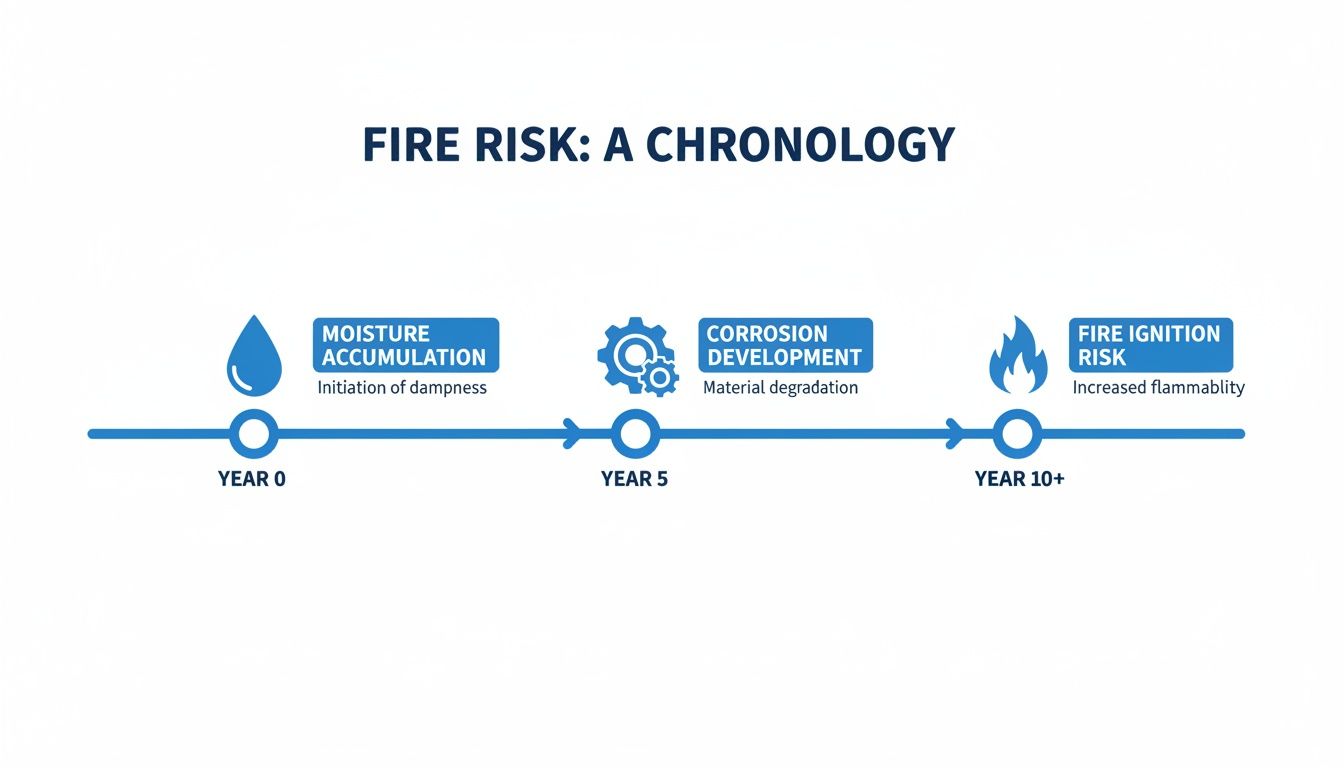
As you can see, the danger isn’t immediate but builds over time as corrosion takes hold, which makes catching it early absolutely critical.
Recognizing The Warning Signs
When a pattern of problems crops up in certain vehicle models, the first clues for a driver are often the warning lights on the dashboard. Think of these indicators as your vehicle’s first line of defense, letting you know that something is wrong under the hood.
Being proactive can make a world of difference. Simply educating yourself on what these alerts mean can help you spot potential trouble before it becomes severe. For a good starting point, understanding what causes a check engine light can help you recognize early warning signs in general.
How To Check Your VIN And Schedule A Free Repair
Now that you know about the safety risks tied to the 2013 Nissan Rogue recalls, it’s time to take action. Thankfully, finding out if your specific vehicle is affected—and getting it fixed—is a pretty straightforward process that won’t cost you a dime.
Here’s your game plan for getting clear answers and making sure your Rogue is safe to drive.
The key to all of this is your car’s Vehicle Identification Number (VIN). You can think of the VIN as your car’s unique fingerprint. It’s a 17-digit code that tells you everything about its manufacturing history.
Finding Your Rogue’s VIN
First things first, you need to find that number. It’s usually in a couple of easy-to-spot places, so you won’t have to hunt for it.
You can almost always find your VIN in one of these two spots:
- On the dashboard: Peek through the windshield on the driver’s side. You should see a small metal plate on the dashboard with the VIN stamped on it.
- Inside the driver’s doorjamb: Open the driver’s side door and check the sticker on the frame. The VIN is typically listed there along with information like recommended tire pressure.
Once you’ve jotted down that 17-digit number, you’re ready to see if any 2013 Nissan Rogue recalls apply to your car.
Using The NHTSA Recall Lookup Tool
The best and most authoritative place to check is the official National Highway Traffic Safety Administration (NHTSA) website. It’s a government database, so it’s always the most up-to-date source for safety recall information.
Below is what the official NHTSA recall lookup page looks like. This is where you’ll plug in your VIN.
The tool is incredibly simple. Just type your 17-digit VIN into the search box and the system will instantly check its database. It will tell you right away if your specific Rogue has any recalls that haven’t been fixed yet.
If you see a message saying “0 unrepaired recalls,” you’re in the clear. But if a recall notice pops up, it means your vehicle is due for its free repair.
By law, automakers must provide a fix for a safety recall completely free of charge. This means you pay nothing for the parts or the labor needed to correct the defect.
Scheduling Your Free Repair Service
If the NHTSA site shows an open recall for your Rogue, the final step is to call a local Nissan dealership. You don’t have to go back to where you bought the car—any authorized Nissan service center is required to perform the recall work.
When you call, just tell them you’ve confirmed an open recall on your 2013 Nissan Rogue and need to book the free repair. Make sure you have your VIN handy, as they’ll need it to confirm the recall and get the right parts in stock.
The dealership takes it from there. They’ll set up your appointment, do the work, and update the vehicle’s official records to show the recall is complete. Taking these quick steps is crucial for your safety and also protects your legal rights. You can dive deeper into why this matters in our guide to auto safety recalls.
Your Legal Rights If A Recall Caused An Accident In Florida
When a safety bulletin like the 2013 Nissan Rogue recalls becomes the reason for an actual accident, things change in an instant. It’s no longer just a mechanical problem—it’s a legal one. In Florida, your right to be safe on the road is backed by law. If a known defect leads to a crash that causes injury, damages your property, or worse, the automaker can be held financially responsible.
This isn’t just about getting your car fixed. It’s about seeking justice for the full human and financial cost of what happened. An accident victim has the right to pursue compensation for all of it.
Understanding Product Liability In Florida
Simply put, product liability laws exist to hold manufacturers accountable when they release dangerous products. When you buy a car, you’re operating on the trust that it’s safe. If an automaker like Nissan knows about a defect—like a fire risk from a corroded wire—but their failure to fix it leads to someone getting hurt, they can be held negligent.
To build a successful case tied to the 2013 Nissan Rogue recalls, you and your attorney would need to prove three things:
- The Rogue had a specific defect (the corroded wiring harness).
- That exact defect caused your accident or injuries (for example, the fire started and made you lose control of the vehicle).
- You suffered damages because of it (medical bills, lost work time, pain, etc.).
Proving this direct link between the defect and the harm you suffered is the cornerstone of any personal injury claim that starts with a vehicle recall.
Types Of Compensation You Can Pursue
The aftermath of a crash caused by a faulty part can feel overwhelming. The physical pain, emotional stress, and financial strain add up fast. Florida law allows victims to seek compensation, legally called “damages,” to cover these losses and help put their lives back together.
Damages are meant to cover both the bills you can see and the hardships you feel.
- Medical Expenses: This is for everything from the ambulance ride and ER visit to surgery, physical therapy, medications, and any future care you might need.
- Lost Income: If you can’t work because of your injuries, you can be compensated for the paychecks you’ve missed. If your ability to earn a living is permanently changed, you can also seek damages for future lost earning capacity.
- Pain and Suffering: This is compensation for the physical pain and emotional trauma the accident caused. It acknowledges things like anxiety, depression, and the loss of enjoyment in life that often follow a serious injury.
Preserving evidence is one of the most critical steps you can take immediately following a crash. The strength of your case often depends on the quality of the documentation you gather from day one.
Building A Strong Case After A Recall-Related Crash
Going up against a huge corporation and its insurance company isn’t easy. It takes a solid, evidence-backed case. What you do in the hours and days right after the accident can make all the difference in protecting your rights.
Here’s where to focus:
- Preserve the Vehicle: This is critical. Don’t let the insurance company junk the car or have it repaired right away. It’s your single most important piece of evidence. An expert needs to inspect it to officially link the crash to the recall defect.
- Document Everything: Take pictures and videos of the car, the scene, and your injuries. Keep a simple journal about your medical appointments and how the injuries are affecting your daily life.
- Gather Official Records: Get a copy of the police report. Keep every medical bill, receipt, and doctor’s note organized and in one place.
Trying to handle the legal system on your own is a huge challenge, but knowing the basics is a great start. For a more detailed guide on what to expect, you can learn how to file a personal injury claim. A skilled attorney can guide you through these steps, ensuring that no crucial detail gets missed.
Why Martin Hernandez Fights For Crash Victims

When a vehicle with a known defect, like a fire risk, causes a crash, you need more than just any lawyer. You need a dedicated advocate who is ready to go to trial from the moment you walk through the door. That’s the core principle we live by at Martin Hernandez, P.A.
We approach things differently because we’ve seen firsthand what it takes to stand up to massive car manufacturers and their insurance carriers. Every single case we take on is prepared for the courtroom from day one. This isn’t just a tactic; it’s our philosophy. It means we’re always ready, and we never have to play catch-up.
Our Expert-Driven, Proactive Approach
From the very beginning, we start building a rock-solid case. This goes far beyond just filing forms and making phone calls. We meticulously construct a compelling story of what happened, backed by undeniable facts and expert testimony.
Here’s a glimpse into how we operate:
- Engaging Crash Reconstruction Experts: We bring in top-tier specialists to analyze every detail of the accident. Their mission is to demonstrate exactly how a recall-related failure, such as those in the 2013 Nissan Rogue recalls, directly caused your crash.
- Collaborating with Medical Specialists: We partner with doctors and medical professionals to paint a complete picture of your injuries. It’s not just about the bills you have today, but the long-term impact—future surgeries, ongoing physical therapy, and the life-long care you might need.
- Deploying Advanced Litigation Technology: We use sophisticated tools to organize complex evidence and create powerful visual presentations. This helps us make your case crystal clear, whether we’re in settlement talks or arguing before a jury.
This thorough, front-loaded preparation sends an unmistakable signal to the other side: we’re serious, and we won’t be pushed into accepting a lowball offer.
When an attorney prepares every case for trial, it fundamentally changes the dynamic of settlement negotiations. Insurance companies know which firms are willing to go to court and which are not, and they adjust their offers accordingly.
Deep Roots In The Tampa Bay Community
Our firm isn’t some faceless national chain; we are part of the Tampa Bay community. We know the local courts, the judges, and the specific strategies insurance companies use right here in Florida to try and deny families what they deserve. That local knowledge is a powerful advantage for our clients. You can learn more about why Martin Hernandez is the best auto accident injury lawyer in Tampa in our detailed article.
We are dedicated to serving everyone in our community, which is why we proudly offer full bilingual support for our Spanish-speaking clients. Justice shouldn’t have a language barrier.
Most importantly, we work on a contingency fee basis. Put simply, you don’t pay us a dime unless we win your case. Our focus is on building the strongest claim possible to get you the maximum compensation, helping your family regain stability and peace of mind after a devastating event.
Answering Your Questions About the Rogue Recalls
It’s completely normal to have a lot of questions when your car is recalled. It can be confusing and a little stressful. Let’s walk through some of the most common concerns we hear from 2013 Nissan Rogue owners.
What If I Already Paid For A Repair Related To This Issue?
This is a great question, and it happens more often than you’d think. If you had the wiring harness connector fixed at your own expense before Nissan issued the official recall, you may be able to get your money back.
The key is documentation. You’ll need to gather your receipts and the repair orders from the shop. Once you have those, reach out to Nissan’s customer service department to start their reimbursement process.
Can I Legally Sell My Rogue With An Open Recall In Florida?
Technically, yes. In Florida, a private seller can legally sell a vehicle that has an open recall. However, that doesn’t mean it’s a good idea.
From both a safety and an ethical standpoint, you should disclose any known, unrepaired safety recalls to the buyer. If you don’t, you could find yourself in legal trouble later. The best and simplest path is to get the free recall repair done before you even think about selling the vehicle.
Keep in mind, this specific recall repair addresses one thing: the fire risk from the corroded wiring harness. Getting it fixed is crucial for resolving that particular safety hazard.
Of course, fixing one recall doesn’t make an older vehicle brand new again. It’s still up to you, as the owner, to keep up with regular maintenance and watch for any other issues to make sure your Rogue stays as safe as it can be on the road.
If a defect tied to the 2013 Nissan Rogue recalls has led to an accident that injured you or someone you love here in Florida, you have legal rights. At Martin Hernandez, P.A., we are here to help you secure the compensation you’re entitled to.
Contact us today for a free, no-obligation consultation to go over your case by visiting our injury lawyers’ website.