
It’s a huge moment when you look at your little one and realize they’re starting to look a bit cramped in their infant car seat. While it’s an exciting milestone, it can also bring a wave of confusion. You’ll start hearing about “2nd stage car seats,” which is just the industry term for the next step up: the convertible or forward-facing seats your child will use once they’ve officially outgrown their first ride.
Knowing exactly when—and how—to make that switch is one of the most important safety decisions you’ll make as a parent.
What Are 2nd Stage Car Seats
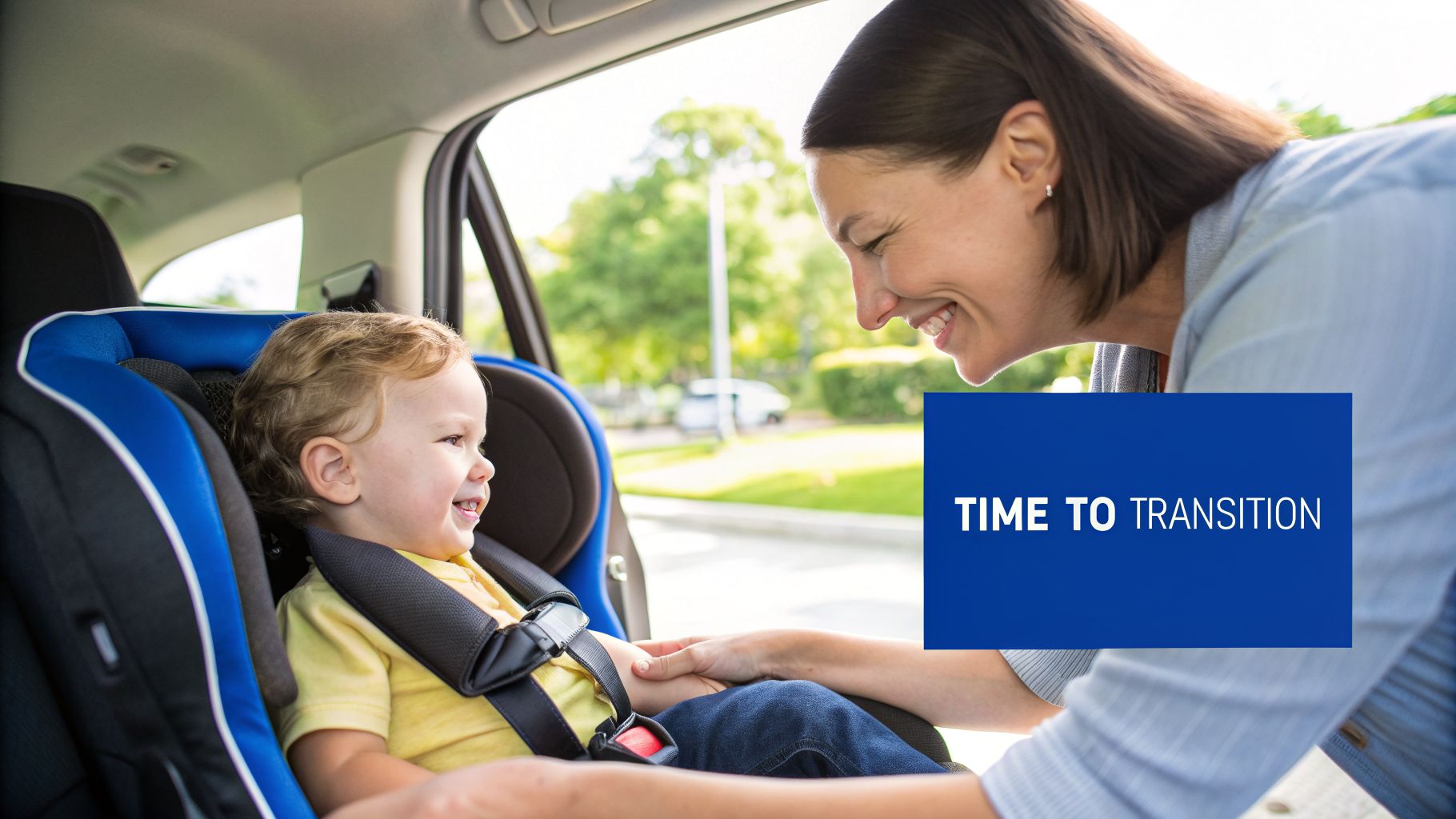
Think of your child’s car seat journey in phases. That first rear-facing infant seat is all about providing an armored shell for their fragile head, neck, and spine. Once they’ve built up enough strength and size, they graduate to the next level of protection: the 2nd stage, forward-facing car seat.
These seats are built specifically for the toddler and preschool years. They come equipped with a built-in five-point harness that secures your child across the strongest parts of their body—their shoulders, hips, and chest. In a crash, this system works to distribute the immense forces away from their delicate abdomen and spine, a critical shift in protection as they continue to grow.
Knowing When Your Child Is Ready
Figuring out the right time to turn your child’s seat around isn’t about hitting a certain birthday. It’s a careful balance of their age, weight, height, and overall development. It’s totally normal to be excited to see their little face in the rearview mirror, but safety experts are unanimous on this one: keep your child rear-facing for as long as your car seat’s limits allow.
Turning a child forward-facing too early is one of the most common and dangerous mistakes parents make. The National Highway Traffic Safety Administration (NHTSA) reports that car crashes are a leading cause of death for kids, and using the right restraint correctly can cut the risk of fatal injury by over 54% for toddlers. Sticking with the rear-facing position as long as possible is the single best thing you can do to protect them.
Once they’ve truly maxed out the rear-facing limits, they’re ready for their forward-facing seat. Here’s what to look for:
- They meet the minimums: Your child has met the minimum age, weight, and height requirements for the forward-facing position, as spelled out in your car seat’s manual.
- They exceed the maximums: They have hit the maximum height or weight limit for the rear-facing position on their convertible seat.
- They’re developmentally ready: Your child can sit up straight without help and is mature enough to not constantly try to wiggle out of the harness.
Florida Law and Best Practices
Here in Florida, the law sets the absolute minimum for child passenger safety, but best practices recommended by experts go much further. Florida Statute 316.613 requires children to be in a federally approved car seat through age 3. For kids aged 4 and 5, the law allows for a car seat or a booster seat.
But here’s the thing—just because it’s legal doesn’t mean it’s the safest option. Car seat technicians in Tampa and across the state will tell you to follow the guidelines from your car seat’s manufacturer, which are almost always stricter. That means keeping your child in a five-point harness until they are at least 5 years old and have the size and maturity to sit properly in a booster.
For more clarity, you can review guides that explain booster seat age and safety guidelines, which dive into readiness signs and legal requirements. We also cover the specific ages for booster seats in more detail in our related article.
Understanding the Safety Differences in Car Seats
Not all car seats are built the same, and for good reason. The design of each seat is tailored specifically to protect a child at a particular stage of development. It’s all about matching the right safety features to your child’s size, weight, and bone structure.
Think about a newborn in a rear-facing infant seat. That seat functions like a protective shell, cradling their head, neck, and spine. During a frontal collision—the most common type of severe crash—the force of the impact pushes the baby into the seat. This simple orientation distributes the powerful crash forces across the entire back of the seat, which is the strongest part of a baby’s body.
The Shift to Forward-Facing Safety
Once a child is big enough to “graduate” to a forward-facing or 2nd stage car seat, the physics of a crash change completely. Now that they’re facing the front of the car, the seat has to manage those crash forces in a totally different way. This is where the five-point harness really shines.
A five-point harness is a web of straps designed to secure your child at the five strongest points on their small frame:
- Both shoulders
- Both hips
- Between the legs at the crotch
In a crash, this system holds your child firmly within the protective shell of the car seat. It channels the immense forces onto their torso and pelvis—the parts of their body that can handle it—instead of their fragile limbs or internal organs. You can get a deeper look at the mechanics in our guide to the 5-point restraint.
But the harness is only part of the equation. There’s another crucial piece: the top tether. This is a long strap on the back of the car seat that hooks to a dedicated anchor point in your vehicle. Its job is to prevent the car seat from violently lurching forward in a collision. Using the top tether can reduce your child’s head movement by 4 to 6 inches, a difference that can easily prevent a severe head or neck injury.
Why a Booster Seat Is Not the Next Step
It’s so tempting for parents to see their child facing forward and think the next logical step is a “big kid” booster seat. Unfortunately, this move is often made dangerously early. A child who has just transitioned to facing forward is not ready for a booster.
A vehicle’s seat belt is designed to protect a full-grown adult, not a 40-pound child. A booster seat’s only job is to lift the child up so that adult belt fits them better. A five-point harness, on the other hand, is a complete safety system built specifically for a child’s body, offering vastly superior protection.
The rush to transition creates a major safety gap. Frighteningly, the American Automobile Association (AAA) found that nearly 23% of children are moved out of their harness and into a booster seat too soon. This is especially concerning when you consider that between 2019 and 2023, over 3.9 million children under 11 were involved in car crashes. Many of the resulting injuries could have been prevented with proper seat use.
Before ever thinking about the next stage, it’s essential to have a firm grasp of overall car seat safety guidelines to ensure your child is protected at every step.
How to Install a Forward-Facing Car Seat Correctly
Even the best car seat on the market is only as good as its installation. As a parent, you can get every other detail right, but a loose or improperly installed seat can fail when you need it most. The great news is that once you understand the fundamentals, installing a 2nd stage car seat correctly is a skill you can master.
You’ll have two options for securing the seat in your vehicle: the LATCH system (Lower Anchors and Tethers for Children) or your car’s own seat belt. It’s a common question, but one isn’t inherently safer than the other. The safest method is simply the one that allows you to get a rock-solid installation every single time. Just remember this critical rule: never use both methods together unless your car seat manual specifically says it’s okay.
Your Step-by-Step Installation Guide
No matter which method you choose, your goal is the same: to anchor that car seat so tightly it feels like it’s part of the car itself. This ensures that if a crash happens, the seat—not your child—takes the brunt of the impact forces.
For a LATCH Installation:
- Find the Anchors: Start by locating the lower anchor bars in your car. They’re usually tucked into the crease where the back and bottom seat cushions meet. Then, find the top tether anchor, which is typically on the rear shelf, the back of the seat, or even the ceiling or floor in an SUV.
- Attach and Tighten: Connect the car seat’s lower anchor straps to the vehicle’s anchors. Now, put your weight into the car seat—use a knee or press down firmly with your hands—and pull the LATCH strap until all the slack is gone and the seat is secure.
- Connect the Top Tether: This is an absolutely critical step, not an optional one. Attach the top tether strap to its anchor point and pull it snug. This simple connection drastically reduces how far your child’s head and neck can whip forward in a crash.
For a Seat Belt Installation:
- Route the Belt: Carefully thread the vehicle’s seat belt through the designated forward-facing belt path on the car seat. The path is always clearly marked, often with color-coded labels. Make sure the belt is completely flat with no twists.
- Buckle and Lock: Buckle the seat belt. Next, you need to lock the belt to keep the car seat from shifting. In most modern cars, you can do this by slowly pulling the shoulder belt all the way out to the end. As you let it retract, you should hear a clicking or ratcheting sound, which means it’s now locked.
- Tighten and Tether: Just as with the LATCH method, press your weight into the seat while pulling the shoulder belt tight to remove every bit of slack. And finally, always connect and tighten that top tether.
The infographic below shows the typical progression for car seat safety, with the forward-facing seat being the crucial second step.
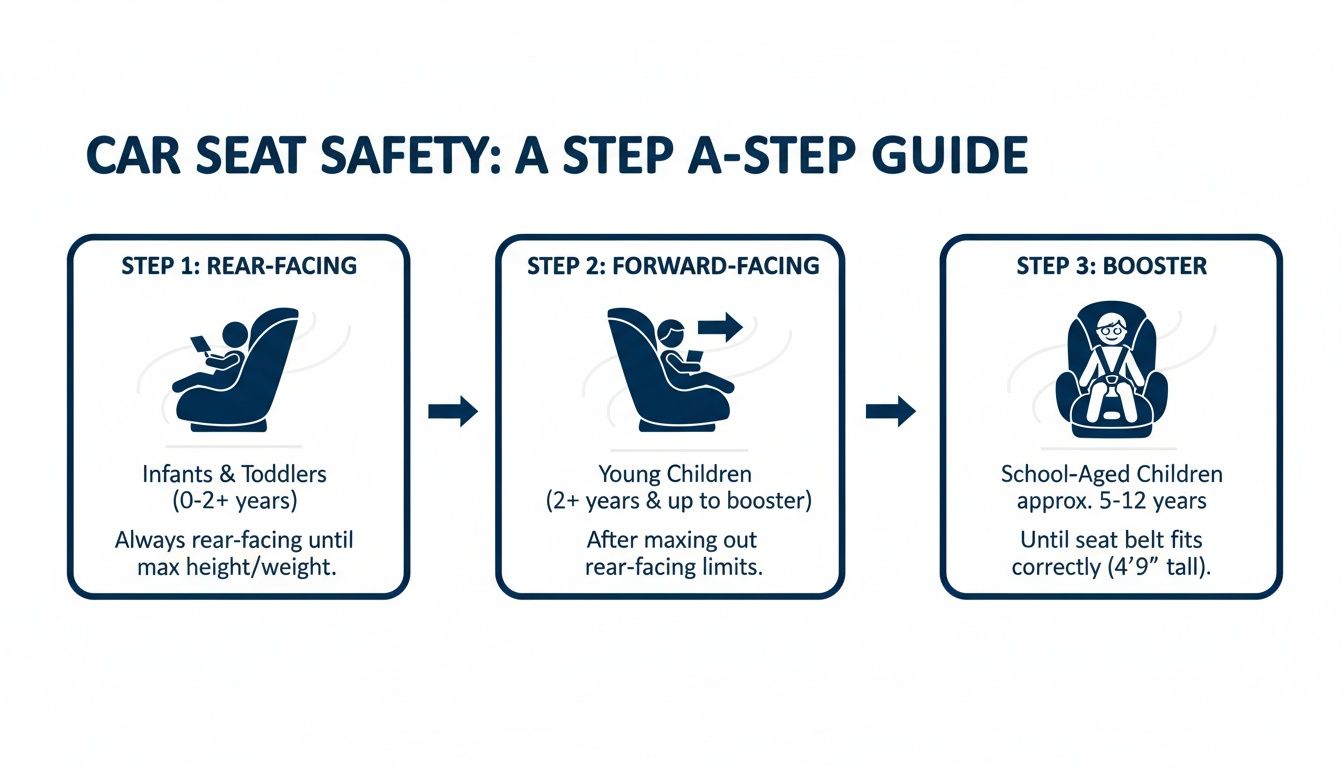
As you can see, a child moves from rear-facing to a forward-facing seat with a five-point harness, and only after outgrowing that do they transition to a booster seat.
Avoiding Common and Dangerous Mistakes
It’s an unfortunate reality that installation mistakes are incredibly common. In fact, forward-facing car seats have the highest rate of misuse among all types of child restraints, and even a small error can lead to devastating consequences in a collision.
A landmark study by the National Highway Traffic Safety Administration (NHTSA) found that forward-facing car seats have an estimated misuse rate of a staggering 61%. The most frequent mistakes include a loose installation, a harness that isn’t snug enough, and failing to use the top tether. You can see more details on common restraint errors on the NHTSA website.
Before you put your car in drive, perform these three quick checks to ensure your child is buckled in safely:
- The One-Inch Test: Grab the car seat at the belt path (where it’s installed) and give it a firm tug side-to-side and front-to-back. The seat should not move more than one inch in any direction.
- The Pinch Test: After you’ve buckled your child in, try to pinch a horizontal fold of the harness strap at their collarbone. If you can grab any excess webbing, the harness is too loose and needs to be tightened.
- Chest Clip Position: Always slide the chest clip up to be level with your child’s armpits. This simple adjustment ensures the shoulder straps are properly positioned over the strongest parts of their body.
Getting the installation right is one part of the safety equation; where you place the seat in your car is another. For a complete breakdown of the safest spots, check out our guide on where you should put a car seat for your child.
Navigating Florida Car Seat Laws and Local Resources
As a parent, understanding your state’s car seat laws is non-negotiable. It’s the absolute baseline for keeping your child safe on the road. Here in the Sunshine State, Florida Statute 316.613 lays out the legal minimums. But it’s critical to remember this: the law is just a starting point. Safety experts and car seat manufacturers almost always recommend stricter, safer practices.
Following these rules isn’t just about avoiding a ticket. It’s about protecting your child and, frankly, your legal rights if you’re ever in a car accident. An improperly restrained child can have devastating consequences, both for their physical well-being and for any potential injury claim you might need to make.
Breaking Down Florida Statute 316.613
Florida’s law is pretty straightforward, but it leaves a lot of room for parents to go above and beyond for safety. You need to know exactly what’s required, not only to avoid fines but to ensure you’re providing at least the minimum level of protection.
Here’s what the statute requires:
- Birth through Age 3: All children must be buckled up in a separate carrier device or a federally approved, crash-tested child restraint system. This covers both rear-facing infant seats and forward-facing seats that use a harness.
- Ages 4 and 5: Kids in this bracket must be secured in a separate carrier, an integrated child seat, or a booster seat.
This is where the law and best safety practices can really diverge. While the law says a five-year-old can legally ride in a booster, most kids that age simply aren’t ready. They lack the size and maturity for a booster to work correctly, making them far safer in a 2nd stage car seat with its five-point harness. Keep in mind, a violation is a moving violation that can lead to fines and points on your license.
Free Car Seat Inspections in Tampa
Knowing the rules is one thing. Feeling 100% confident your car seat is installed correctly is something else entirely. Even the most diligent parents can get it wrong—these things can be surprisingly tricky to install perfectly.
Fortunately, the Tampa Bay area has some fantastic resources where you can get your installation checked by a certified professional, completely free of charge. These events aren’t about getting parents in trouble. They are all about education and giving you peace of mind. A certified Child Passenger Safety Technician (CPST) will walk you through the proper installation, show you how to get the harness to fit your child just right, and answer every question you have.
It’s a scary but true fact: the vast majority of car seats are used incorrectly. Loose installation and sloppy harness fits are some of the most common—and dangerous—mistakes. A quick visit to a local check-up event can fix these issues and dramatically improve your child’s safety in a crash.
Here are a few places in and around Hillsborough County that regularly host free car seat checks:
- Johns Hopkins All Children’s Hospital: A leader in our community, they frequently hold inspection events and are a great source of safety information.
- Local Fire Rescue Stations: Many stations in Tampa and throughout Hillsborough County have certified technicians on staff or host check-up days.
- Safe Kids Florida Suncoast: This organization is dedicated to preventing childhood injuries and often partners with local agencies to offer these free inspections.
It’s always a good idea to check their websites or call ahead for dates, times, and to see if you need an appointment. These free services are an invaluable tool for every parent in Tampa. For more help on figuring out the next step, you can read our guide on backless booster seat requirements.
What to Do After a Car Accident with a Child
Nothing prepares you for the sheer terror of a car accident, especially when your child is in the back seat. The moments after the impact are a chaotic blur, and it’s easy to feel overwhelmed. Knowing what to do right away is absolutely critical for your child’s health and for protecting your family’s rights down the road.
Your immediate focus, of course, is your child. Even if they seem okay, you must get them checked out by a doctor. The rush of adrenaline after a crash is a powerful painkiller, and it can easily hide serious issues like concussions or internal injuries that don’t show symptoms right away. A prompt medical evaluation ensures any hidden injuries are found and creates an official record of the event.
The Unseen Danger: Why You Must Replace the Car Seat
One of the most common—and dangerous—mistakes parents make after an accident is reusing the car seat. Even in a minor fender-bender, the force of the impact can create tiny, hairline fractures in the seat’s plastic shell that you can’t see.
Think of it like a bike helmet. If you fall and hit your head, you replace the helmet, no questions asked. It did its job once, and its ability to protect you again is gone. Your 2nd stage car seat is built on the same principle; reusing it after a crash is a gamble you can’t afford to take.
Both the National Highway Traffic Safety Administration (NHTSA) and car seat manufacturers are clear on this: replace the car seat after any moderate to severe crash. Its structural integrity is compromised, and it simply won’t offer the same protection in a future accident.
This isn’t just a suggestion; it’s a fundamental rule of child passenger safety. The cost of a new seat is nothing compared to your child’s life. To understand the specifics, you can learn more about why you should replace the car seat after a car accident. A skilled Tampa personal injury attorney can also fight to have the replacement cost included in your insurance settlement.
Protecting Your Child and Your Claim
While you’re focused on your child’s well-being, taking a few key steps at the scene can make a huge difference for any future insurance or legal claim.
Immediate Action Steps:
- Call 911: Always report the accident and ask for police and paramedics. A police report is an official, unbiased account of the incident.
- Document Everything: Use your phone to take photos of the entire scene. Get pictures of the vehicle damage, license plates, any skid marks, and the final positions of the cars. Make sure to also photograph the car seat just as it was after the crash.
- Exchange Information: Calmly get the other driver’s name, phone number, address, driver’s license number, and insurance details. Stick to the facts and avoid arguing about who was at fault.
- Speak to an Attorney First: Before you talk to the other driver’s insurance adjuster, contact a personal injury lawyer. An attorney will manage all communications for you, ensuring your family’s interests are protected from the very beginning.
There’s a reason safety standards are always evolving. The global market for child safety seats, valued at USD 3.86 billion in 2024, is expected to surge to USD 6.79 billion by 2032. This growth is fueled by parents demanding better protection and by stricter government regulations, like new federal rules for side-impact testing. You can read more about these developments in the global child safety seats market growth. If a design flaw in the seat itself contributed to your child’s injuries, that information could become a critical part of your legal case.
Common Questions About 2nd Stage Car Seats
Even after you’ve read the car seat manual from cover to cover, real life with a growing toddler brings up a whole new set of questions. The technical stuff is one thing, but what about the day-to-day situations that leave you wondering if you’re doing it right?
Let’s cut through the confusion and get straight to the answers for some of the most common questions we hear from parents. These are the critical safety details you need to know.
My Child’s Legs Look Cramped in Their Rear-Facing Seat. Is It Time to Switch?
We hear this one all the time. You look in the rearview mirror, see your toddler’s legs bent or crossed, and your first thought is, “They must be so uncomfortable!” It’s a natural concern, but the short answer is a definite “no”—it’s not time to switch yet.
While it might look awkward to us, scrunched-up legs are a comfort issue, not a safety risk. Kids are incredibly flexible and will naturally find a comfortable spot for their legs, whether it’s crossing them “criss-cross applesauce” or propping them up on the seat back.
The safety trade-off here is massive. Think of it this way: a broken leg, while serious, is almost always a repairable injury. A spinal cord injury from being thrown forward in a crash is often permanent.
A child’s spine and developing neck are dramatically better protected in a rear-facing seat during a frontal crash—the most common and most severe type of collision. Turning them forward-facing too soon exposes their head and neck to incredible forces their small bodies simply aren’t ready to handle.
So, when have they actually outgrown the seat? Ignore the legs and follow the manufacturer’s rules. The real signs are hitting the maximum rear-facing weight or height limit, or when their head is less than one inch from the top of the car seat shell.
Can I Install a 2nd Stage Car Seat in the Middle Seat Using LATCH?
This is a tricky one, and the answer depends entirely on your specific car and car seat. The center rear seat is statistically the safest spot in a vehicle because it’s the furthest from any side impact. However, most cars do not have a dedicated set of lower LATCH anchors for that middle position.
You might be tempted to “borrow” the innermost LATCH anchors from the two side seats to rig a middle installation. Do not do this. This is a common but dangerous mistake unless both your vehicle’s manual and your car seat’s manual explicitly say it’s okay.
Using anchors that weren’t designed to work together creates an unstable installation that could easily fail in a crash. The spacing is all wrong, and the system won’t distribute the crash forces correctly.
The good news is there’s an equally safe solution: install the car seat in the middle using the vehicle’s seat belt. A tight seat belt installation is just as protective as a LATCH installation. Just make sure you lock the seat belt correctly and pull it tight until the car seat moves less than one inch side-to-side at the belt path.
Are Expensive 2nd Stage Car Seats Safer Than Cheaper Ones?
Every parent wants the best for their child, so it’s natural to wonder if a higher price tag equals better safety. The reassuring answer is that all car seats legally sold in the U.S. must pass the exact same strict federal safety tests (FMVSS 213). This means any seat you buy, regardless of price, provides the required level of safety when used correctly.
So, what are you paying for with a more expensive seat? The extra cost usually comes down to:
- Convenience Features: Things like no-rethread harnesses that adjust easily, simpler installation systems, and machine-washable fabrics that make your life easier.
- Premium Materials: You might get softer fabrics, extra cushy padding for comfort, or a steel-reinforced frame for added durability.
- Advanced Safety Features: Some high-end seats offer extra side-impact protection, anti-rebound bars, or load legs that go above and beyond the minimum federal standards.
These features are nice, but they’re enhancements, not essentials. The single most important safety factor isn’t the price; it’s choosing a seat that fits your child, fits your vehicle, and is installed and used correctly every single time. A properly used $100 seat is infinitely safer than an improperly installed $500 seat.
What Should I Do if My Child Was in an Accident in Tampa?
The moments after a car crash are chaotic and scary. If your child was in the car, you need to act methodically to protect their health and your family’s legal rights.
First, get immediate medical care for your child. Even if they seem fine, adrenaline can mask pain and some injuries, like concussions or internal bruising, aren’t immediately obvious. A professional medical evaluation is non-negotiable.
Second, plan to replace the car seat. The vast majority of manufacturers require you to replace the seat after any moderate to severe crash. The seat may have hidden structural damage that makes it unsafe for future use.
Third, document everything. Use your phone to take pictures of the vehicles, the car seat’s position in the car, all property damage, and any visible injuries. Get a copy of the police report and be sure to exchange insurance information.
Finally, contact a Tampa personal injury lawyer before you speak with any insurance adjusters. An experienced attorney knows how to navigate this complex process, ensuring your child’s medical care is prioritized and your right to compensation is protected. They will handle the adjusters, fight to get your car seat replacement covered, and ensure your family receives the support you deserve.
If your family has been impacted by a car accident, you don’t have to face the aftermath alone. The legal team at Martin Hernandez, P.A. is here to provide the expert guidance and aggressive advocacy you need. Contact us today for a free consultation to understand your rights and options. Visit us at https://injurylawyersoftampa.com.