
When you’re dealing with the aftermath of a car crash in Tampa, the last thing you want is another headache. But if your car was too damaged to drive, it was likely towed from the scene, and now you have to figure out where it is and how to get it back.
If you think 3 Brothers Towing took your vehicle, the clock is already ticking. You need to confirm they have it and find out where they took it. Every day that passes means more in storage fees, which can add up surprisingly fast and complicate your insurance claim.
Your Car Was Towed After a Crash. What Happens Now?
The chaos at an accident scene is overwhelming. Between talking to the police and dealing with the shock, it’s easy to miss the name of the tow company the officer called to clear the road. If 3 Brothers Towing rings a bell, your first move is to verify they have your car and kickstart the process of getting it back.
Everything you do from this point on matters. Staying organized and moving quickly will make a huge difference in handling your insurance claim and, if you were injured, your personal injury case. For a complete rundown of everything you should do, our guide on what to do after a car accident in Florida is an invaluable resource.
This simple flowchart breaks down the immediate priorities when your car is towed after a collision.
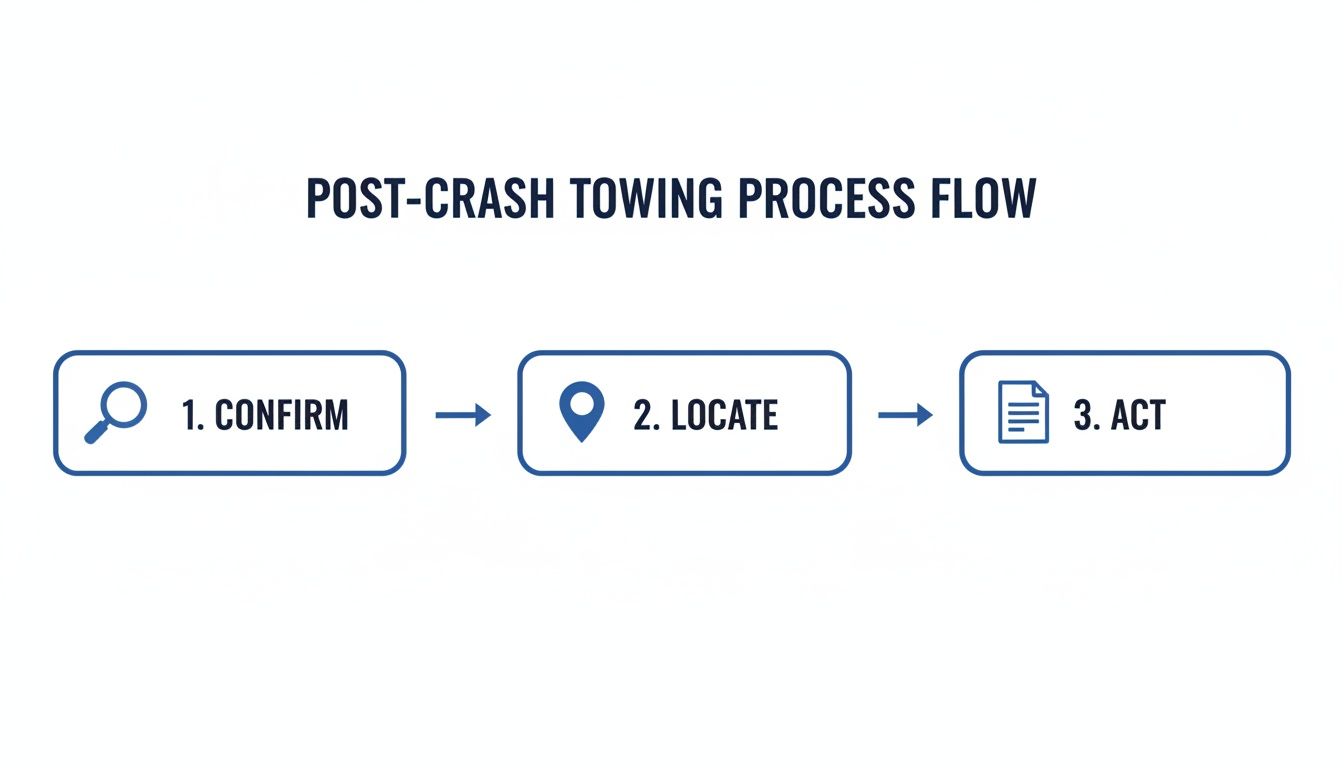
It really comes down to three things: confirm who has your car, find out where it is, and then act decisively to document everything and arrange for its release.
Securing Key Information at the Scene
Before you leave the crash site, there are two pieces of information you absolutely need to get from the police officer. I’ve seen countless cases get delayed because a client didn’t have these details handy.
- The Police Report Number: Your insurance adjuster will ask for this almost immediately. It’s the official key to your claim.
- The Towing Authorization Form: This is your proof of which company was officially called to take your vehicle.
If the officer confirms 3 Brothers Towing was dispatched, grab their phone number right then and there. It will save you from a frantic Google search later on.
To help you stay on track during this stressful time, here is a quick-reference checklist of non-negotiable first steps to take.
Post-Crash Vehicle Towing Checklist
- Get the Police Report Number: This is the official identifier for your accident and is required by all insurance companies to process your claim.
- Identify the Towing Company: Knowing who has your car (e.g., 3 Brothers Towing) is the first step to locating and retrieving it.
- Obtain the Tow Authorization Form: This document proves the tow was legitimate and outlines the initial service, which helps in disputing any surprise fees later.
- Note the Storage Lot Address: You’ll need the exact location to inspect your vehicle, retrieve personal belongings, and arrange for its release.
- Ask About Daily Storage Fees: Fees accumulate daily. Knowing the cost upfront helps you plan and prioritize getting the car out quickly.
Following these steps methodically will protect your interests and prevent unnecessary costs from piling up while you focus on your recovery.
The Importance of Acting Quickly
Let me be blunt: time is not on your side when your car is sitting in a tow yard. Florida law allows towing companies to charge daily storage fees, and these charges can transform a simple tow bill into a serious financial problem.
What starts as a few hundred dollars for the tow can balloon to over $1,000 in less than two weeks. This is precisely why your top priority must be to locate your car and get a clear breakdown of the fees immediately. The longer you wait, the more it will cost you.
Finding Your Car and Dealing with the Towing Bill
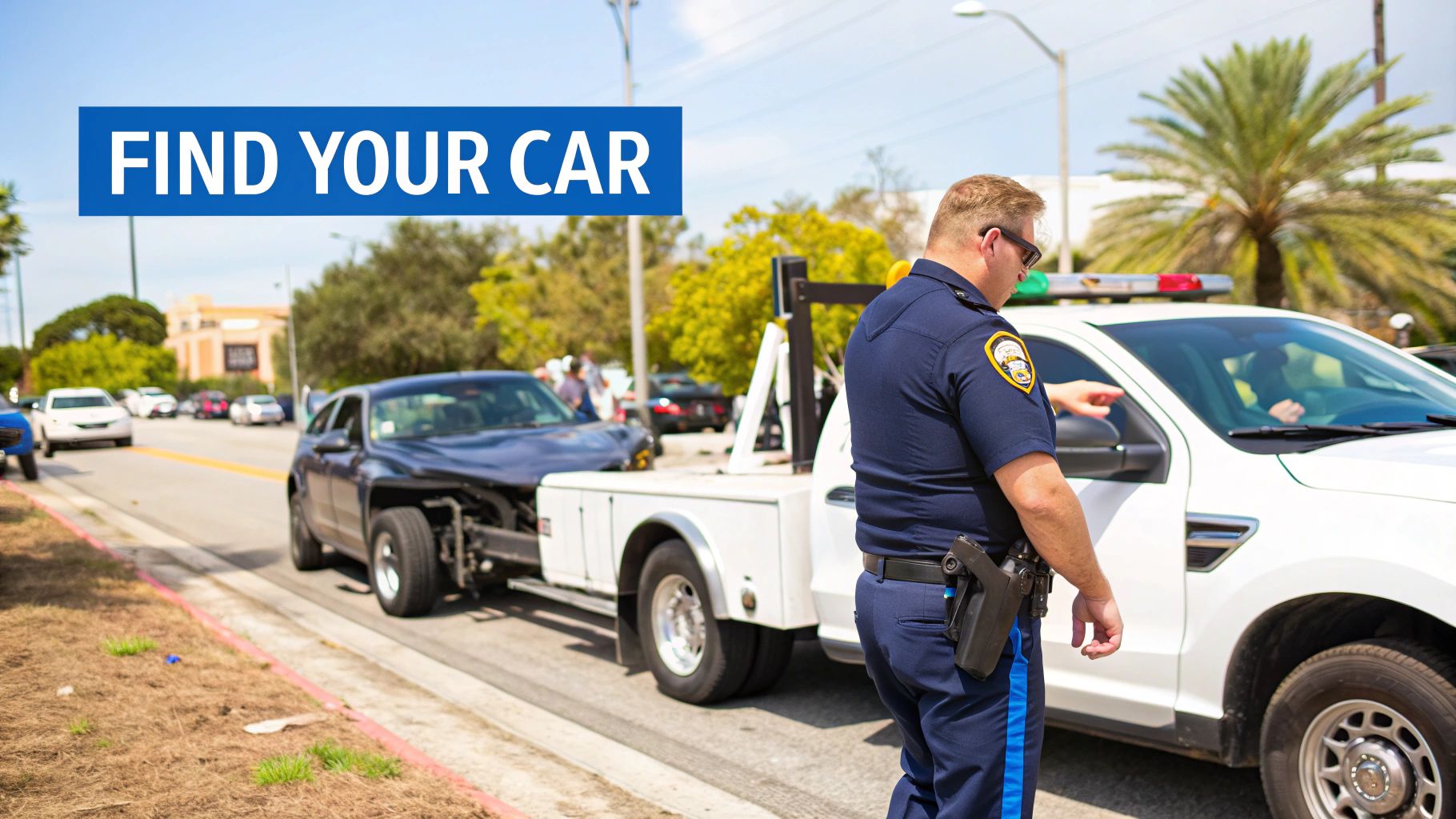
Once the initial shock of a crash starts to fade, one of the first practical problems you face is a big one: where is my car?
The police report you got at the scene is your best starting point. It should officially name the company that was called out—in this case, 3 Brothers Towing—and will often include their phone number and the address of the storage yard where they took your car.
Your next move is to get them on the phone. When you call 3 Brothers Towing, have your police report number, license plate, and your car’s make and model handy. This isn’t just to find out where your car is; it’s your first chance to get a preliminary breakdown of the charges you’re looking at.
Making Sense of the Towing Invoice
A towing bill can feel like it’s written in another language, but most of the charges are fairly standard under Florida law. Knowing what you’re being billed for is the first step in making sure the costs are fair.
- Hook-Up Fee: This is the flat rate for the service of getting your vehicle hooked up to the tow truck.
- Mileage: They’ll charge you per mile for the distance they drove from the accident to their storage lot.
- Daily Storage Fee: This is the one you really need to watch. It adds up every single day your car sits in their yard, and it’s why you can’t afford to wait.
- Administrative or Lien Fees: These are charges for the paperwork involved, like notifying you and your car’s lienholder (if you have a loan) that it’s been towed.
Towing companies provide a critical service by clearing crash scenes, but it doesn’t come cheap. In urban areas across Florida, the initial tow can run anywhere from $150-$500, and that’s before the daily storage fees even start to kick in.
Why Every Hour Counts: A Real-World Example
Let’s imagine your accident happens on a Friday afternoon, and 3 Brothers Towing takes your car. If you’re overwhelmed and decide to put it off until Monday morning, you’ve already lost a weekend.
At a typical rate of $30-$50 per day, that’s an extra $90-$150 tacked onto your bill just because you waited. Time really is money here. If you want to dive deeper into why tow trucks get called out in Florida, you can learn more about tow trucks at https://injurylawyersoftampa.com/tow-trucks-and-when-to-call-them-in-florida-explained-by-tampa-injury-lawyer-martin-hernandez/.
A delay of just one week can easily add over $300 in storage fees alone to your total bill. This is an avoidable expense that insurance companies may scrutinize during your claim.
Getting Ready to Pick Up Your Vehicle
Don’t just show up at the tow yard. You’ll need specific documents to prove the car is yours and to settle the bill. Arriving unprepared will only lead to more delays and, you guessed it, more fees.
Make sure you have these items with you:
- A valid, government-issued photo ID (like your driver’s license).
- Proof you own the vehicle, which can be the title or the current registration.
- A way to pay. Most yards take credit cards or cash, but it’s always smart to ask what they accept when you call them.
Some newer cars have built-in GPS tracking, and there are also aftermarket car locator devices that can give you peace of mind by showing you exactly where your vehicle is.
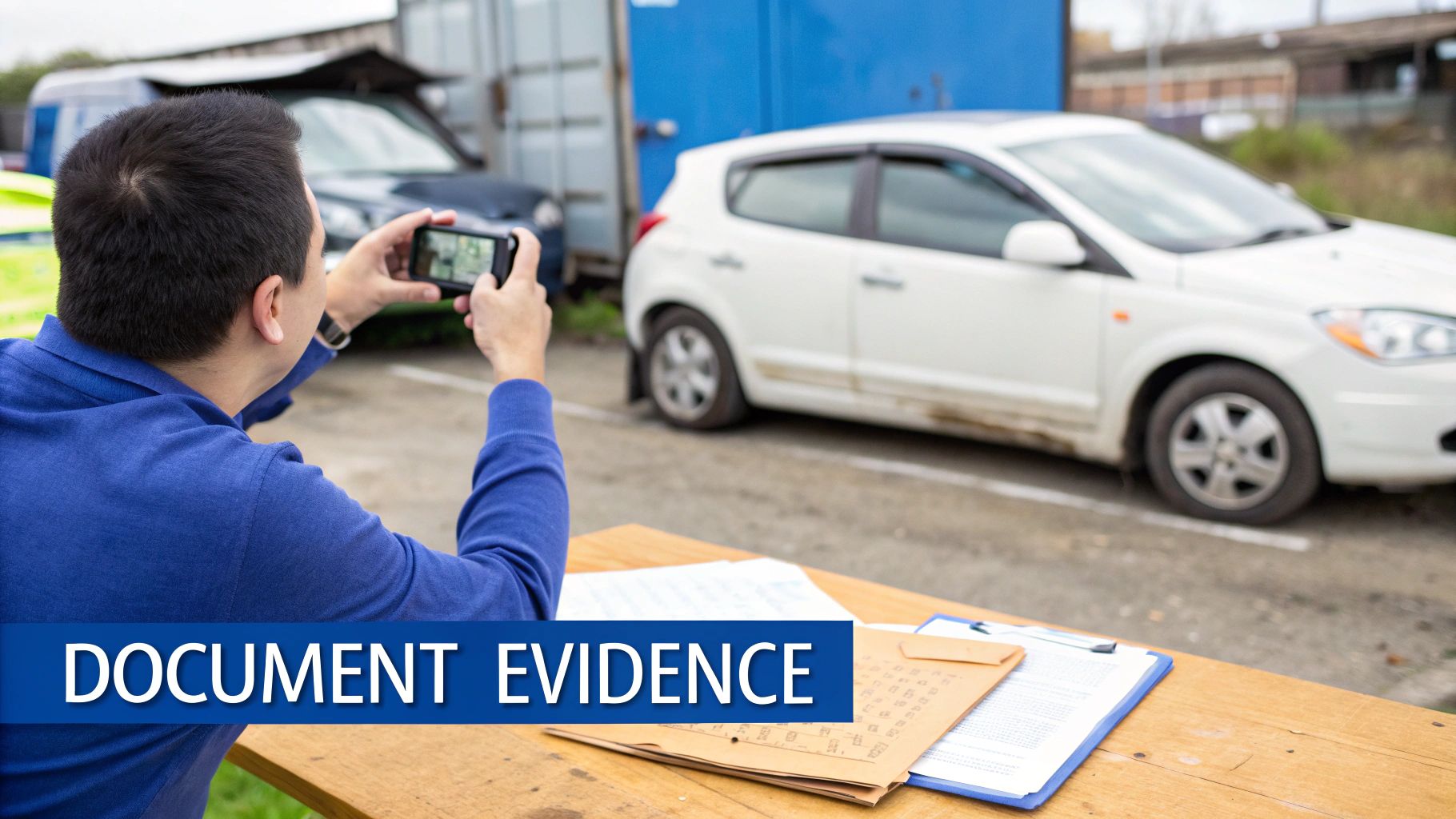
Once you get to the yard, and before you hand over any money, walk around your car and inspect it thoroughly. Use your phone to take pictures and videos of any new damage you see that wasn’t from the accident itself. This is crucial evidence you’ll need for your insurance claim.
Knowing Your Rights Under Florida Towing Laws
It’s completely normal to feel powerless after a crash, especially when your car is suddenly in the hands of a towing company like 3 Brothers Towing. The good news is, you’re not without options. Florida has some very specific laws designed to protect consumers from predatory practices, and understanding those rights is your first move toward taking back control.
Florida Statutes lay out exactly what towing companies can and cannot do. These rules are there to stop price gouging and demand transparency, giving you a solid legal foundation if you feel something isn’t right.
Your Basic Rights When Your Car is Towed After a Crash
When your car is towed from an accident without your express permission—what the law calls a “non-consensual” tow—you are automatically granted several key protections. Towing companies have clear obligations they must follow.
First and foremost, the tow truck operator must give you a detailed, itemized invoice before you are required to pay. This isn’t just a piece of paper with a number on it; it needs to clearly break down every single charge, from the hook-up fee to daily storage costs.
This transparency is your best tool against surprise fees or inflated charges. It also creates the paper trail your insurance company will absolutely need to see for reimbursement.
Rate Disclosures and Getting Your Personal Items Back
Florida law is very clear on this: a towing company must have its rates posted in a place where you can easily see them at their storage facility. If you show up at the tow yard and the fees on your bill are higher than what’s on their posted rate sheet, that’s a major red flag.
You also have the legal right to retrieve your personal property from your vehicle. A tow yard cannot hold your belongings hostage to force you to pay the bill. During their normal business hours, you should be allowed reasonable access to get things like medication, important documents, or your child’s car seat without paying the full towing and storage bill first.
It’s worth repeating: the law is on your side when it comes to getting your personal effects. A towing company that blocks you from accessing essential items from your car is likely violating Florida Statute 715.07.
What Is Considered an Improper Tow?
While most towing operators are professionals just doing their job, problems do happen. An “improper tow” isn’t just a bad experience; it often involves specific actions that violate your rights under Florida law.
Here are a few signs that something might be wrong:
- Hidden Fees: They tack on charges that aren’t listed on their publicly displayed rate sheet.
- Vague Billing: You’re asked for a lump sum payment without a clear, itemized breakdown of what you’re paying for.
- Holding Your Property Hostage: They refuse to let you get your personal belongings from the car before you pay up.
If you suspect that 3 Brothers Towing or any other company is doing any of this, you have the right to file a complaint. For those in Hillsborough County, the first step is usually to contact Consumer Protection Services. Our team can also help you document and report these issues correctly. You can learn more about your legal protections by reading about tow trucks in our related articles.
How Your Towed Vehicle Becomes Crucial Evidence in an Insurance Claim
After a car crash, your vehicle isn’t just a damaged piece of property; it’s the most important piece of evidence you have. When a company like 3 Brothers Towing hauls your car away, that vehicle is now central to the investigation. Your mission is to document every single detail, because this evidence is what will back up your claim for property damage and can even strengthen your case for personal injury.
Think of it this way: every dent, every scratch, and every line item on the final towing bill tells a part of your story. This is the story your insurance company and your attorney need to see, and documenting it thoroughly is non-negotiable if you want to be compensated fairly.
Building an Unshakeable Record of the Damage
The second you get to the tow yard, pull out your smartphone. It’s your best friend in this situation. Before you even talk about paying the bill, you need to conduct your own meticulous inspection.
- Go Wide: Start by taking photos of the entire car from every angle—front, back, and both sides. This gives a complete picture of its overall state.
- Zoom In: Now, get close-ups of every single point of impact from the wreck. I’m talking about the crumpled bumper, the spiderweb cracks in the windshield, the bent frame.
- Shoot a Video: Hit record and do a slow walk-around of the car. As you walk, talk about what you’re seeing. A video can catch nuances and angles that still photos sometimes miss.
This visual record does two critical jobs. First, it proves the severity of the crash, which is invaluable for accident reconstruction experts who need to show how the collision happened and how it led to your injuries. Second, it’s your proof if any new damage happened while the car was being towed or sitting in the storage lot.
Don’t Overlook the Power of Paperwork
Photos and videos are essential, but the paper trail you create is just as crucial. The final, itemized towing and storage bill from 3 Brothers Towing is a document you absolutely must have. Make sure you get a detailed copy of that invoice and solid proof of payment, whether it’s a credit card receipt or a “Paid in Full” stamp right on the bill.
An insurance company won’t just take your word for it. They will not reimburse you for towing and storage costs without a clear, itemized bill and proof that you paid it. File these documents with all your other accident records.
Keeping everything organized makes the entire claims process smoother. When an insurance adjuster starts giving you a hard time or denying parts of your claim, this detailed evidence is your best defense. If you’re facing that battle, learning how to fight an insurance denial is the next move. Every photo you take and every receipt you save makes it that much harder for the insurer to lowball you.
When You Should Contact a Tampa Car Accident Attorney
The aftermath of a car accident is already a mess. But when your car gets hauled off by a company like 3 Brothers Towing and you’re also nursing injuries, the thought of calling a lawyer can feel like just another overwhelming decision.
It’s easy to hesitate. You might think you can manage it all yourself, or maybe you believe your situation isn’t “serious enough” to bring in an attorney. From my experience, however, there are definite red flags that should tell you it’s time to get professional legal help on your side. If any of the following sounds familiar, making that call is one of the most important things you can do to protect yourself.
Clear Signals It Is Time to Call a Lawyer
The most critical reason to contact an attorney is if you or a passenger suffered any injuries in the crash. What feels like minor soreness right after the accident can quickly spiral into a serious medical problem. You can bet the at-fault driver’s insurance company is already working to downplay your injuries and pay you as little as possible.
Another huge sign is when the insurance adjuster starts giving you the runaround. Are they dragging their feet on your claim? Did they toss out a ridiculously low settlement offer that won’t even cover your initial medical bills? Are they trying to shift some of the blame onto you? If so, you need an advocate in your corner—fast.
And what about the towing company? If you’re getting hit with excessive fees, they’re holding your car hostage, or they won’t even let you get your personal belongings out of it, a lawyer can step in. We can assert your rights under Florida law and cut through the nonsense.
A classic insurance company move is to offer a quick, small check to make you go away. Be careful. Cashing that check almost always signs away your right to any future compensation, even if your injuries turn out to be far worse than you first realized.
The Role of an Attorney in Your Towing and Injury Claim
A good personal injury attorney looks at the whole picture, not just the injury part of your case. Here at Martin Hernandez, P.A., we manage every single angle of your claim to make sure you get the full and fair compensation you’re owed.
That includes tracking down and documenting every cost related to your vehicle, including that bill from 3 Brothers Towing, and building it into our demand to the insurance company. We’ve seen all the tactics insurers use to undervalue claims, and we know exactly how to fight back. Our understanding of when to hire a personal injury lawyer helps clarify how professional representation can shield you from these very challenges.
I know what you’re probably thinking: “How can I afford a lawyer right now?” That’s a huge concern for most people, which is why we work on a contingency fee basis.
It’s simple: you pay absolutely nothing unless we win your case and recover money for you. This takes the financial risk completely off your shoulders, so you can get the experienced legal help you need without any upfront cost.
Figuring Things Out After a Post-Accident Tow in Tampa
Getting your car towed after a crash is disorienting, and it almost always leaves you with a ton of questions. Let’s tackle some of the most common issues people face when their vehicle is taken from a Tampa crash scene by a company like 3 Brothers Towing.
Can I Get My Personal Stuff From My Towed Car?
Yes, you absolutely can. Florida law is very clear on this: you have the right to retrieve your personal belongings from your vehicle, and the towing company must give you reasonable access during their normal business hours.
They cannot hold your personal items hostage to pressure you into paying the bill. You have every right to get things like your wallet, phone, medication, legal papers, your kid’s car seat, or work tools without settling the entire invoice. They can, and likely will, ask to see your photo ID to prove you’re the owner, which is a standard and reasonable request.
Don’t let them tell you otherwise. It is illegal for a tow yard to deny you access to essential personal property. If a company tries this, they’re likely violating Florida Statute 715.07. Make a note of who you spoke to and when, and then call an attorney right away.
What Happens If the Other Driver’s Insurance Won’t Pay the Towing Bill?
This is a scenario we see all the time. The at-fault driver’s insurance company might drag their feet, argue about the fees, or flat-out refuse to pay while they “investigate” the claim. Meanwhile, those daily storage fees at the tow yard are climbing.
The best move to stop the financial bleeding is often to pay the bill yourself to get the car out of their lot. Make sure you get a detailed, itemized receipt and keep proof of your payment. This is a cost that you are entitled to get back.
You can then work on getting reimbursed in a couple of ways:
- Through Your Own Policy: If you carry collision coverage, your own insurance will likely cover the towing and storage costs. Keep in mind you’ll probably have to pay your deductible upfront.
- Through a Personal Injury Claim: A good attorney will roll the full, documented cost of the tow and storage into the total compensation demand we send to the at-fault driver’s insurance company. We make sure it’s not overlooked.
When dealing with the aftermath of a tow, sometimes the simple act of getting back into your vehicle can be a challenge, especially if keys were lost or damaged. In those cases, you might need to look into emergency locksmith services to regain access.
How Long Before They Can Sell My Car?
A tow yard can’t just decide your car is theirs. Florida law has a very specific timeline and process they have to follow before they can declare a vehicle abandoned and put a lien on it.
Typically, the tow company must send a formal lien notice to you and any other owners or lienholders on the title within a few business days. If you don’t pay the charges and pick up your vehicle within the timeframe on that notice (usually 35 days from the day it was towed), they can start the process to sell your car at a public auction to recoup their money.
You never want it to get to that point. By then, the fees are astronomical, and you risk losing your vehicle for good. The best strategy is always to act fast.
If you were injured in the accident and now you’re stuck navigating towing headaches, insurance company runarounds, and piling medical bills, you don’t have to handle it by yourself. The team at Martin Hernandez, P.A. knows how to protect your rights and fight for the full compensation you need. Get in touch today for a free, no-pressure consultation to go over your legal options. Visit us at https://injurylawyersoftampa.com.