
Figuring out the exact right time for a booster seat can feel confusing for any parent. The good news is, the guiding principle is actually pretty simple: your child needs a booster seat until your car’s adult seat belt fits them properly. Full stop.
While Florida has minimum age laws on the books, safety experts are clear that age is the least important factor. What really matters for keeping your child safe is their height, their weight, and exactly how that seat belt lies across their body.
Your Quick Guide to Florida Booster Seat Ages
As a parent in Florida, it’s crucial to understand the gap between the legal minimums and what’s actually safest. The state gives you a baseline, but organizations like the American Academy of Pediatrics (AAP) and the National Highway Traffic Safety Administration (NHTSA) offer recommendations grounded in years of crash test data and the realities of a child’s anatomy.
Simply going by your child’s age can be a dangerous gamble. An adult seat belt is built for an adult body, not a child’s. Without a booster, the lap belt rides up on their soft belly and the shoulder belt cuts into their neck—both can cause devastating internal injuries in a crash.
Age Is Just A Number
The best way to think of a booster seat is as a stepping stool for the car. It simply lifts your child up so the car’s own safety system—the seat belt—can do its job correctly. Moving them out of it too soon is like kicking that stool away, leaving them completely vulnerable.
This guide will walk you through what the law requires versus what will truly keep your child protected. We’ll also break down the 5-Step Test, a straightforward checklist that lets the seat belt’s fit, not a birthday, tell you when your child is ready to ride without a booster.
Getting this right is about more than just following a rule; it’s about understanding the why behind the recommendations. To get a broader view, you can learn more about how to determine which car seat your child should be in with our detailed guide.
The most important takeaway for any parent is that a child’s size and the way a seat belt fits their body are far more critical than their age. A booster seat correctly positions the seat belt over the strongest parts of a child’s body, dramatically reducing the risk of life-altering injuries.
Why Booster Seats Are Non-Negotiable Safety Devices
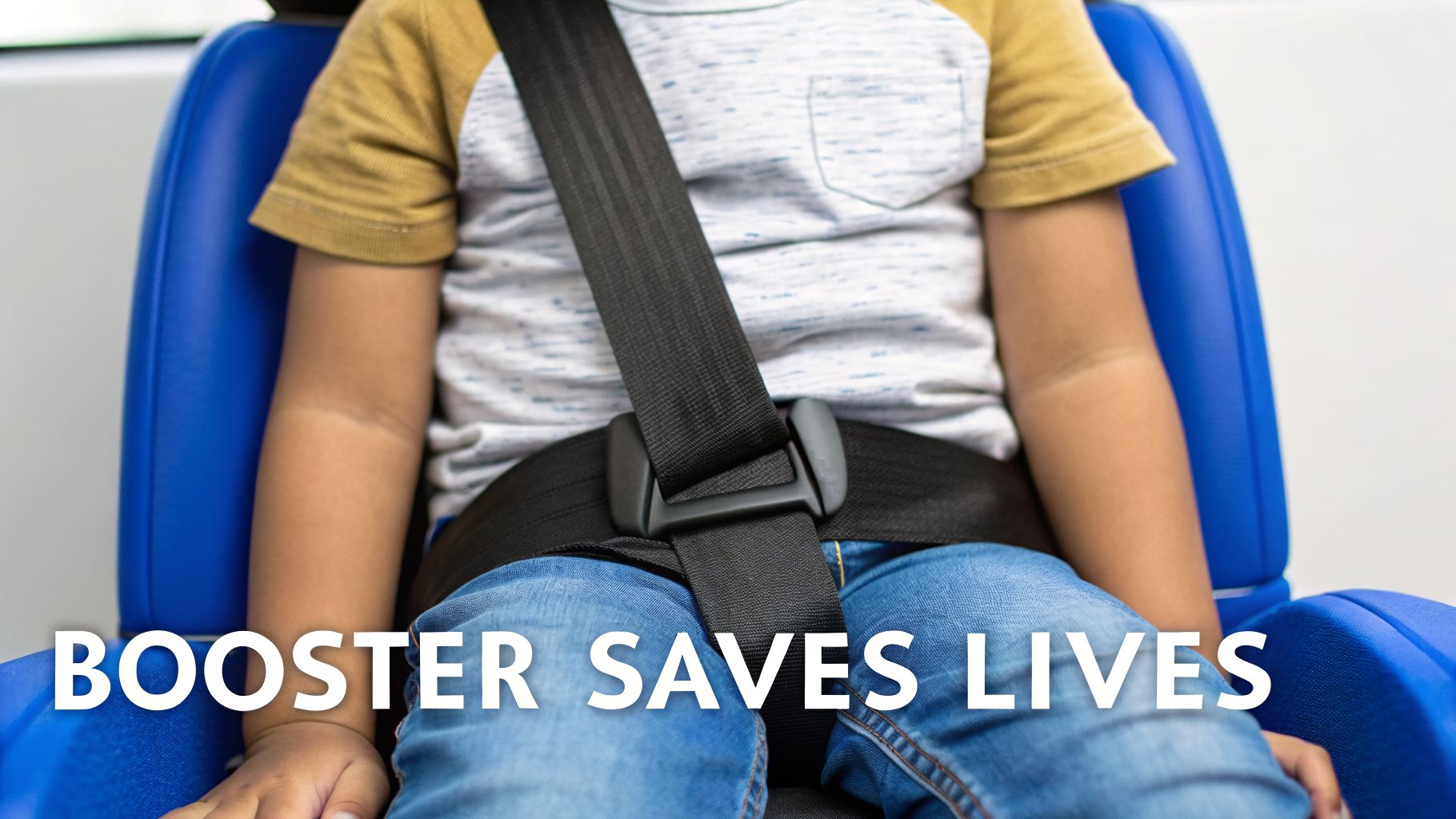
Think about it this way: you wouldn’t send your child out on their bike with a helmet that’s three sizes too big, right? It might be on their head, but it won’t do much in a fall. The same exact logic applies when a child is too small for an adult seat belt. Without a booster, they’re using safety equipment that just doesn’t fit—and that’s a dangerous gamble.
Your car’s seat belts are designed with one user in mind: a full-grown adult. They’re engineered to spread the massive force of a crash across the strongest parts of the body, specifically the sturdy bones of the hips and shoulder. A child’s smaller frame simply doesn’t line up.
A booster seat does one simple but critical job: it boosts your child up so the seat belt lies exactly where it’s supposed to. Without that lift, the lap belt often ends up high on their soft belly, and the shoulder belt cuts uncomfortably and dangerously across their neck or face. This bad fit can cause devastating internal injuries in a crash, a pattern often called “seat belt syndrome.”
The Hard Physics of a Car Crash
When a collision happens, everything inside the car is thrown forward with incredible force. A correctly positioned seat belt catches you across your strong hip bones and collarbone, holding you securely. But when that same belt is stretched across a child’s abdomen, all that force gets concentrated on their vulnerable internal organs—the liver, spleen, and intestines.
This isn’t just a minor detail; it’s a life-or-death matter of physics. The numbers don’t lie. According to the American Academy of Pediatrics (AAP), using a booster seat correctly reduces the risk of injury by a massive 45% for kids aged 4 to 8 compared to using a seat belt alone. You can read more about these child passenger safety findings to see the science behind the recommendations.
In a crash, a poorly positioned seat belt becomes the cause of an injury, not the prevention. A booster seat is the essential bridge that makes your car’s safety system actually work for your child.
It’s clear that the right time to use a booster isn’t about celebrating a birthday—it’s about when the seat belt fits correctly. This simple device is a non-negotiable tool for keeping kids safe on Florida’s busy roads. While parents often focus on the transition to a forward-facing car seat, the booster stage is every bit as crucial.
We’ve covered the forward-facing stage in our guide where you can learn more about the importance of a 5-point restraint system, which a child uses before they are ready for a booster. Getting this transition right is one of the most effective things you can do to prevent a tragedy.
Navigating legal codes can feel like trying to decipher a foreign language. When it comes to your child’s safety, you need straight answers, not confusing jargon. Let’s break down Florida’s booster seat laws in plain English.
Florida’s rules are covered in Florida Statute 316.613. The most important thing for parents to understand is that the law sets a very low bar for safety.
The statute legally requires children to be in a crash-tested, federally approved child restraint—like a car seat or booster seat—through age five. Once they turn six, the legal requirement ends. But this is just the bare minimum, and frankly, it falls short of what’s truly safe for most kids.
The Law vs. What’s Actually Safe
Treating Florida’s law as a finish line is a common—and dangerous—mistake. The average six-year-old is nowhere near big enough for an adult seat belt to fit them correctly. A belt that rides up on their tummy or cuts across their neck can cause serious internal injuries in a crash.
Think of the law as the starting point, not the final word. Safety experts at the American Academy of Pediatrics (AAP) and the National Highway Traffic Safety Administration (NHTSA) are crystal clear: parents should use height and weight, not just age, to decide when it’s time to move out of a booster.
A critical takeaway for every Florida parent: Following the law is mandatory, but following safety recommendations is what actually protects your child. The law gets your child to age six; best practices will keep them safe until they are much older, often closer to age 10 or 12.
What Happens if You Don’t Comply?
Ignoring Florida’s booster seat statute isn’t just a safety gamble; it has legal consequences. If a police officer pulls you over and your child isn’t properly buckled up, you can face fines and get points on your driver’s license.
These penalties highlight a simple truth: this is both a legal duty and a fundamental part of being a parent. Making sure your child is in the right seat is one of the most powerful things you can do to protect them on the road.
To learn more about the different types of boosters, our guide on backless booster seat requirements can help you understand the options. By following both the law and expert safety guidelines, you can be confident you’ve done everything possible to keep your child secure.
The 5-Step Test for Graduating from a Booster Seat
So, how do you know—for sure—that your child is ready to leave their booster seat behind? The best way is to forget their age, tune out what other parents are doing, and use a simple, nationally recognized safety checklist: the 5-Step Test.
This test takes all the guesswork out of the equation. Instead of focusing on a birthday, it hones in on the only thing that truly matters in a crash: how the car’s seat belt actually fits your child’s body. A proper fit is crucial because it ensures the belt rests on their strong hip and shoulder bones, not their soft, vulnerable abdomen.
This quick guide covers Florida’s legal minimums, which is a starting point, but the real test of safety comes next.
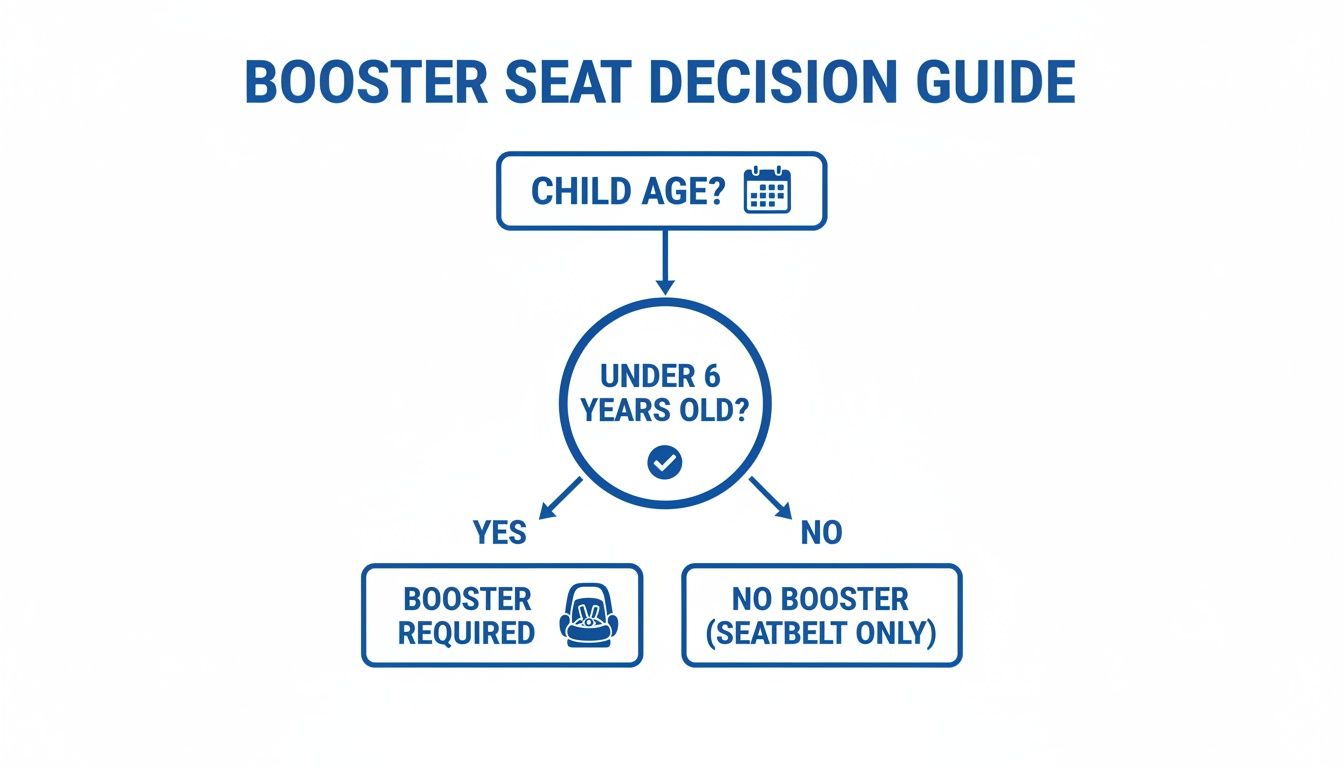
While the flowchart above shows the bare minimum required by law, safety experts are clear: you should always go beyond the law and use the 5-Step Test to determine when your child is truly ready.
The 5 Steps to a Safe Fit
To run this check, have your child sit in the back seat without their booster. They must be able to pass all five of these steps before you can even think about ditching the booster for good.
- Back Against the Seat: Can your child sit with their lower back flat against the vehicle’s seatback?
- Knees Bend Comfortably: Do their knees bend naturally right at the edge of the seat cushion while their back is still firmly against the seatback?
- Lap Belt on Thighs: Is the lap belt sitting low and snug across their upper thighs and hips? It should never ride up onto their soft belly.
- Shoulder Belt on Chest: Does the shoulder belt cross the middle of their chest and collarbone? It shouldn’t be cutting into their neck or slipping off their shoulder.
- Stays in Position: Can they stay in this exact position for the whole trip? No slouching, no squirming, no moving the belt out of place.
If you answered “no” to even a single one of these questions, your child is not ready. They still need a booster seat to keep them safe.
The 5-Step Test is the gold standard for a reason. It empowers parents to make a decision based on their child’s unique size and skeletal development, which is a far more reliable safety indicator than an arbitrary age.
This fit-first approach is backed by every major safety organization. Research from crash biomechanics is what led the AAP to recommend kids stay in boosters until they are 4 feet 9 inches tall—a milestone most children hit between ages 8 and 12. NHTSA echoes this, stressing that a perfect belt fit is the only true way to know a child is protected. You can learn more about the science behind these recommendations from the National Institutes of Health. Rushing this transition can be incredibly dangerous, as an ill-fitting seat belt can cause severe internal injuries in a crash.
Common Booster Seat Mistakes Florida Parents Make
Even the most attentive moms and dads can slip up when it comes to booster seats. These small oversights end up causing big trouble if there’s ever a crash. Spotting these pitfalls early is your best defense.
One of the biggest—and most overlooked—errors? Letting kids graduate from their booster seats too soon. It happens when you rely on age alone or give in to persistent pleas (“All my friends are using seat belts!”).
Age can’t tell the whole story. What really counts is a child’s height, weight, and how snugly the belt hugs their body before you make that switch.
Simple Habits That Undermine Safety
Even when a child stays in a booster, everyday habits can sneak in and wipe out its protection. These missteps are so common that parents often don’t see the risk until it’s too late.
- Placing the Shoulder Belt Incorrectly: Kids sometimes slide the shoulder belt behind their back or under an arm to ease neck discomfort. Unfortunately, this eliminates important support up top and spikes the chance of head, neck, and spinal injuries.
- Allowing Slouching: A slumped posture shifts the lap belt from the sturdy hip bones up onto the soft belly. In a crash, this can translate into serious internal trauma.
- A Loose Lap Belt: If the belt rides high or feels loose, it can’t lock down the hips during impact. Always aim for a tight belt low across the upper thighs.
A booster’s entire purpose is to position an adult seat belt so it lines up with a child’s strong bones. Once the belt sits off the hips or shoulders, you’ve lost the key benefit—and left your little one at risk.
A study from Safe Kids Worldwide uncovered a gap between what parents think they’re doing and what happens on the road. While many report using boosters for 4-7 year-olds, actual usage rates are much lower. You can explore the full survey on child passenger safety to see the details.
Putting a child in the front seat too early is another major misstep. Safety pros all agree: kids should ride in the back until they’re at least 13 years old.
A deploying front-seat airbag hits with enough force to cause life-threatening injuries for smaller passengers. To make sure you’re choosing the safest spot in your vehicle, check out our guide on where to put a car seat for your child.
What to Do After a Car Accident Involving a Child
The minutes following a car wreck are pure chaos. Your first and only thought should be your child’s safety. Even if they insist they’re okay, it’s absolutely critical to get them checked out by a doctor right away.
Adrenaline is a powerful thing; it can completely mask serious injuries. Symptoms of an injury might not show up for hours or even days later. Knowing what to look for, like the subtle concussion symptoms in children, can make all the difference. Nothing is more important than their health, so a professional medical evaluation isn’t just a suggestion—it’s a necessity.
Protecting Your Family and Your Rights
Once you’ve made sure your child is safe and help is on the way, there are a few things you can do to protect your family’s legal rights.
If you’re physically able, start taking pictures with your phone. Capture everything: the damage to all vehicles, the road conditions, skid marks, and any injuries you can see. Make sure an official police report is filed, as this creates a legal record of what happened. It’s also a good idea to get the names and phone numbers of anyone who saw the crash.
When talking to the other driver or the police, just stick to the facts. Avoid saying anything like “I’m so sorry” or guessing about what caused the accident.
One of the most overlooked but crucial pieces of evidence is your child’s booster seat. Do not throw it away, no matter how it looks. A collision can cause hidden stress fractures that make it completely unsafe, even if you can’t see the damage.
That booster seat is also powerful proof that you were taking every precaution to keep your child safe. Holding onto it is essential if you end up needing to file a personal injury claim. For a deeper dive, our guide explains precisely why you should replace the car seat after a car accident. In Florida, being able to show you followed all the rules strengthens your case immensely.
Trying to handle the legal fallout while caring for your family is overwhelming. Our firm specializes in helping Tampa families through this. We can help you document everything—from medical bills to the cost of a new booster seat—to make sure you receive the full compensation you deserve.
Common Questions Parents Ask About Booster Seats
Once you’ve got the basics down, it’s the real-world situations that bring up the trickiest questions. Let’s tackle some of the most common concerns we hear from parents in Florida about making the move to (and out of) a booster seat.
My Child Is 6 But Really Tall. Can They Ditch the Booster?
This is probably the number one question we get, and the short answer is: no, not safely. While Florida’s law says a child can stop using a booster at age 6, safety experts at the AAP and NHTSA are clear that age is a terrible indicator of readiness. What really matters is how the adult seat belt fits their body.
The best way to know for sure is to have your child take the 5-Step Test. If they can’t pass every single step, they still need that booster. An improperly fitting seat belt can ride up on the stomach and neck, which can cause devastating internal injuries in a crash. It’s always safest to wait until they’re at least 4’9″ tall and pass that fit test with flying colors.
High-Back vs. Backless Booster: What’s the Real Difference?
Choosing between these two comes down to your vehicle’s features and your child’s maturity.
- A high-back booster is your best bet for safety, hands down. It provides critical head and neck support, which is absolutely essential in vehicles with low seat backs or no headrests. The built-in guides also ensure the shoulder belt stays exactly where it needs to be—across the center of your child’s chest and collarbone.
- A backless booster is more of a convenience item. It’s portable and simply elevates your child so the lap belt sits low across their strong hip bones instead of their soft belly. This is a fine choice for older, more responsible kids who won’t slouch or lean over, and only in a vehicle that already has a supportive headrest.
For a child just moving out of a 5-point harness, a high-back booster is the safest first step.
Do I Really Need to Replace a Booster Seat After a Car Accident?
Yes, absolutely. Safety organizations and car seat manufacturers are unanimous on this: a booster seat involved in a moderate to severe crash should always be replaced.
Think of it this way: the intense forces of a collision can create tiny, invisible cracks and stress points in the plastic shell. While the seat may look perfectly fine, its structural integrity is gone. It simply won’t be able to protect your child the same way in a second crash.
After an accident, make sure the cost of a new booster seat is included in your insurance claim. A good lawyer can help ensure this and other easily overlooked expenses are fully covered.
If you’re dealing with the aftermath of an auto accident in the Tampa area, juggling insurance claims while caring for your family is a heavy burden. The dedicated team at Martin Hernandez, P.A. is here to help you secure the compensation you deserve. Contact us for a free consultation at our Tampa injury lawyers website.