
It’s a scene familiar to almost every Florida driver. That dreaded tire pressure light flicks on, but you’re miles from the specialty shop that filled your tires with nitrogen. So, what do you do? Can you just pull into the nearest gas station and top it off with regular air?
The short answer is a resounding yes. It is absolutely safe to add regular compressed air to a nitrogen-filled tire as a temporary fix.
The Urgent Question: Can You Add Air to Nitrogen Tires?
Putting regular air into a nitrogen tire won’t cause some kind of dangerous chemical reaction or immediate harm. Remember, the “regular” air from a compressor is already about 78% nitrogen anyway. It’s the perfect solution to get you safely back on the road. You can confidently drive from Tampa to Orlando after topping up a low tire, no problem.

While it’s perfectly safe, it’s important to know what’s happening inside your tire. By adding regular air, you’re diluting the high-purity nitrogen. This essentially re-introduces the very things that nitrogen inflation aims to minimize: oxygen and water vapor.
What Happens When You Mix the Gases
Pure nitrogen is a great choice for tires because it maintains a much more stable pressure over time. Its molecules are larger, so they don’t escape through the rubber of the tire as easily as the smaller oxygen molecules in regular air. When you add that air, you start to lose that key benefit. Your tire will begin to lose pressure more quickly, behaving more like a standard, air-filled tire.
The moisture in compressed air is another factor, especially given Florida’s famous heat and humidity.
- Pressure Fluctuations: Water vapor expands and contracts much more with temperature changes than dry nitrogen does. This can cause wider pressure swings when you go from a cool morning garage to driving on the hot asphalt of I-275 in the afternoon.
- Oxidation Risk: Over the long haul, moisture can contribute to the slow oxidation of the tire’s inner lining and potentially the wheel itself.
Think of it like adding a splash of tap water to a bottle of distilled, purified water. It’s still water, it’s perfectly safe to drink, but you’ve just lost the extra purity you paid for.
So, while topping off is fine, it’s good to understand how it affects your tire’s performance, stability, and whether that initial investment in nitrogen is compromised. Let’s dive into what that mixture really means for you.
How Nitrogen Tire Inflation Actually Works
Ever wonder why professional race car teams and even airlines use nitrogen in their tires? It’s not just for show. The whole idea comes down to two key principles: stability and purity. It all begins with the size of the molecules themselves.
Think of it this way: nitrogen molecules are like big, slow-moving basketballs. The oxygen and other gases in regular compressed air are more like a bunch of smaller, zippier tennis balls. Over time, those little “tennis balls” can sneak their way out through the microscopic pores of your tire’s rubber. The larger “basketballs” of nitrogen, however, have a much tougher time escaping.
This is the main reason why nitrogen-filled tires hold their pressure so much better. They simply lose air at a slower rate than tires filled with the standard stuff you get from the corner gas station pump. For you, this translates to more consistent tire pressure over the long haul, which is your best defense against the dangers of underinflation.
The Purity Advantage
Beyond just holding pressure longer, nitrogen brings another big benefit to the table: it’s an inert, dry gas. When a tire is properly filled with pure nitrogen, almost all of the oxygen and, just as importantly, the moisture are pushed out. This might not sound like a big deal, but it has a couple of significant advantages, especially for anyone driving around in the Tampa heat.
- No Internal Moisture: The compressed air from a regular pump always has some water vapor in it. As your tires heat up on the road, that water turns into steam, causing the pressure inside your tire to spike unpredictably. Pure, dry nitrogen gets rid of that problem entirely, giving you more stable pressure and predictable handling.
- Prevents Oxidation: When you mix oxygen and moisture inside a tire, you create the perfect recipe for rust and corrosion on your wheels, whether they’re steel or aluminum. It can also slowly degrade the rubber on the inside of the tire. By filling with nitrogen, you remove those corrosive elements and help protect the long-term health of both your tires and wheels.
At the end of the day, using nitrogen is all about creating a more controlled and stable environment inside your tires. This purity is what gives you more reliable performance and cuts down on the constant chore of checking and topping off your pressure. It’s a simple bit of science with some very real-world benefits on the road.
What Really Happens When You Mix Air and Nitrogen?
So, you’re on the road and your tire pressure light comes on. You’ve got nitrogen-filled tires, but the only thing available is a regular air compressor. What do you do?
The short answer is: go ahead and top it off. It’s completely safe. But it’s important to understand that doing so immediately changes the game inside your tire. Think of it like adding a shot of regular coffee to your decaf—it’s still coffee, but you’ve just reintroduced the caffeine you were trying to avoid.
The moment you add compressed air, you’re putting oxygen and water vapor back into a pure, dry environment. This immediately starts to chip away at the benefits you paid for with the nitrogen fill. Your tire will now lose pressure more like a standard air-filled tire, and that added moisture makes its internal pressure more reactive to temperature changes—a big deal for Florida drivers bouncing between hot asphalt and cool, rainy days.
This handy visual shows why the two gases behave so differently.
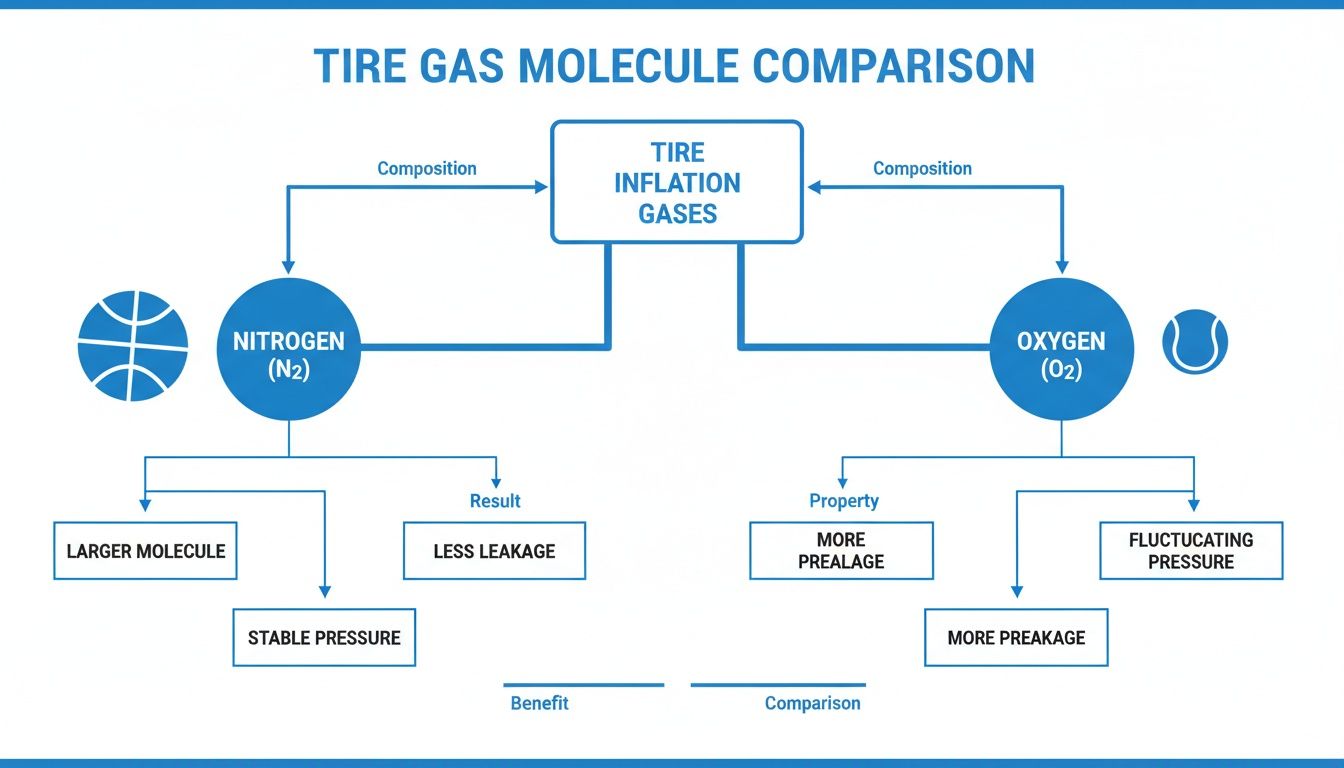
Simply put, the larger nitrogen molecules are just better at staying put inside the tire’s rubber lining.
How Does This Affect Your Car’s Performance?
The real difference comes down to the size and properties of the molecules themselves. Nitrogen molecules are larger and drier than the molecules in oxygen-rich air, which means they escape through the microscopic pores of your tire’s rubber at a much slower rate.
How much slower? Some studies show a standard air-filled tire can lose significant pressure in as little as one month, while a nitrogen-filled tire might take six months or more to see the same drop. That stable pressure is your best defense against underinflation, which is a major factor in tire blowouts and poor handling.
One emergency top-off with regular air isn’t the end of the world. But it does mean you’ll see more pressure swings—gaining PSI on a hot day and losing it on a cool night. If you repeatedly add air, you’re essentially just converting your expensive nitrogen-filled tire back into a plain old air-filled one, and the advantages you paid for are gone.
The bottom line is that adding air to nitrogen tires dilutes the pure nitrogen and reduces the very pressure stability you wanted in the first place. It’s perfectly safe in a pinch, but it means you’ll need to go back to checking your tire pressure more frequently.
In a worst-case scenario, a sudden loss of tire pressure can lead to a serious accident. If that happens, proving what went wrong is key, which is why the insights from an accident reconstruction expert witness can be so crucial in determining the cause.
Myths vs. Facts: What You Really Need to Know About Nitrogen Tires
When it comes to nitrogen-filled tires, there’s a lot of marketing noise out there. It can be tough to tell what’s a genuine benefit and what’s just hype. Let’s clear the air and get to the bottom of what nitrogen actually does for your tires.
One of the most persistent myths is that filling your tires with nitrogen will give you a huge boost in fuel economy. The truth is, any improvement you see in your gas mileage comes from one simple thing: maintaining the correct tire pressure. Nitrogen is great at this because it seeps out much more slowly than regular air, but a tire kept properly inflated with good old-fashioned air will deliver the same fuel efficiency.
So, What’s the Real Deal with Tire Maintenance?
Another dangerous misconception is that nitrogen-filled tires are completely “maintenance-free.” That’s simply not true. While they do hold pressure far longer than air-filled tires, they aren’t magic. You can still get slow leaks from a nail or lose pressure as the seasons change. You absolutely still need to check your tire pressure every month.
The real advantage of nitrogen isn’t eliminating maintenance—it’s about convenience and consistency. It just makes it easier to keep your tires at their optimal pressure for longer stretches.
This consistency is a big deal for safety. Properly inflated tires are fundamentally safer, and the National Highway Traffic Safety Administration (NHTSA) confirms that correct tire inflation prevents thousands of accidents and injuries every year. Nitrogen helps you stay in that safe zone without needing to top up your tires as frequently. Keeping that pressure stable is one of the easiest ways for drivers to reduce their accident risk.
Here’s a quick rundown of other common myths and the straight facts:
- Myth: Nitrogen is just for race cars.
- Fact: While it’s essential for the extreme demands of racing, everyday drivers also benefit from the more stable tire pressure and reduced internal moisture that nitrogen provides.
- Myth: Adding regular air to a nitrogen tire is dangerous.
- Fact: It’s 100% safe. The only thing that happens is you dilute the nitrogen, which lessens its long-term benefits. You won’t cause any damage.
Ultimately, knowing the facts helps you decide if the extra cost of nitrogen is worth it for you. It’s all about understanding the real-world advantages.
Proper Tire Maintenance After You Mix Air and Nitrogen
So, you’ve topped up your nitrogen-filled tires with regular air from a gas station. Don’t worry—you haven’t damaged anything. The only real downside is that the special, low-maintenance benefits you likely paid a premium for have been diluted. It just means you’ll need to adjust your maintenance routine.
Once you mix air in nitrogen tires, you should start treating them just like any standard, air-filled tire. The main advantage of pure nitrogen is its stability, but introducing oxygen and moisture from regular compressed air negates that. This means it’s time to get back to more frequent pressure checks.
The most crucial takeaway is this: Treat your mixed-gas tires as if they are filled with regular air. The original low-maintenance benefit of nitrogen is no longer in effect, and consistent manual checks are now essential for your safety on the road.
Now that the reliable, slow pressure loss of pure nitrogen is gone, you should be checking your tire pressure at least once a month and always before a long trip. Regular checks are your best defense against underinflation, which is critical for safe handling and fuel economy.
How to Restore Pure Nitrogen in Your Tires
If you want to get back to the “set it and forget it” nature of pure nitrogen, you can’t just top off the tires again. You’ll need to have a professional “purge and fill” service done. It’s a straightforward process that gets your tires back to their ideal state.
Here’s what a technician will do:
- Complete Deflation: They will completely let out all the mixed air and nitrogen from the tire.
- Nitrogen Refill: The tire is then refilled with high-purity nitrogen, usually 95% or greater.
- Optional Second Purge: For the best results, many shops will repeat the process. They’ll deflate and refill the tire a second time to ensure nearly all of the oxygen and moisture has been flushed out.
Finding a shop for this isn’t hard; most tire centers that offer nitrogen in the first place can perform a purge and fill. Remember, proper maintenance is a cornerstone of driver responsibility, and that includes knowing the details of your auto tire ratings. It also extends to seasonal prep, like understanding winter tire change guidelines, which ensures your vehicle is ready for whatever the road throws at it.
When Tire Failure Leads to Accidents in Florida
Keeping your tires properly inflated isn’t just about getting better gas mileage; it’s a huge safety issue, especially on the busy roads we see every day here in Florida. Whether you’re running pure nitrogen, standard air, or a combination, letting your tires get chronically underinflated is just asking for trouble. When a tire is low on air, its sidewalls flex way more than they should, building up an incredible amount of heat that can cause a sudden, catastrophic blowout.

When a tire explodes at highway speed, a driver can instantly lose control, veering into oncoming traffic or off the road entirely. For years, blowouts and flats have been a primary cause of some of the most devastating accidents. In fact, NHTSA data estimates that 17,019 tow-away crashes happened each year because of a blowout or flat tire, leading to hundreds of deaths and thousands of injuries annually.
Proving Negligence After a Tire-Related Crash
If a tire failure causes an accident in the Tampa area, it’s rarely a simple, random event. More often than not, it’s the direct result of someone’s negligence. For an injured person, figuring out who is liable is the most critical step. Did the driver know their tires were in bad shape and drive anyway? Did a trucking company or an auto shop cut corners on maintenance and safety checks? These are the questions that must be answered in a personal injury claim.
In Florida, proving that an improperly maintained tire—whether underinflated from mixing air in nitrogen tires or just from sheer neglect—was the real cause of an accident is the key to getting fair compensation for your injuries and other losses.
Our firm digs deep into these complicated cases. We pore over maintenance logs, driver records, and consult with tire experts to pinpoint exactly where the fault lies. This detailed investigation is absolutely essential for helping victims get back on their feet and for holding the responsible parties accountable. Proving this kind of negligence is also central to cases involving defective equipment, which we cover in more detail in our guide to auto safety recalls.
Common Questions We Hear About Nitrogen-Filled Tires
Even after laying out the facts, many drivers are still on the fence about whether nitrogen is the right move for their vehicle. Let’s tackle some of the most common questions we hear from drivers around the Tampa area.
Is Nitrogen Worth the Extra Cost for My Daily Drive?
For the average person commuting to work, the biggest plus for nitrogen is convenience. Since the pressure stays more consistent, you’ll be making far fewer trips to the air pump. If you value that kind of low-maintenance stability, especially with Florida’s wild temperature swings, then the extra cost might make sense for you.
On the other hand, if you’re already good about checking your tires every month, you can get perfectly safe and reliable performance from good old-fashioned compressed air.
What’s the Price Tag for a Nitrogen Fill?
The cost for a nitrogen service can bounce around a bit depending on the shop, but you can generally expect to pay somewhere between $5 to $10 per tire for the first fill-up. Many shops will even throw in free top-offs after you’ve paid for the initial service.
Of course, this is a clear step up from compressed air, which you can almost always find for free at local gas stations and tire shops.
Can I Go Back to Using Regular Air?
Absolutely. There’s no harm in switching back. The process is straightforward: a tire shop will simply deflate your tires to purge the nitrogen and then reinflate them with standard compressed air.
You can switch back and forth as often as you’d like, but keep in mind that once you add regular air, you’re diluting the nitrogen and losing its unique benefits.
Making the right choice for your tires comes from being informed, much like knowing what to do after a car accident in Florida is crucial for protecting yourself after the unexpected happens on the road.