
At its most basic, an auto insurance provider is a company that sells you financial protection in case of a car accident. You can think of it as a safety net that you pay for over time.
But it’s critical to remember one thing: these are for-profit businesses. Their primary goal is to minimize how much they pay out on claims, which can directly clash with your need to be fairly compensated after a crash.
Understanding the Role of Auto Insurance Providers
At its core, an auto insurance provider is selling a promise. You pay them a regular fee, called a premium. In return for that premium, they agree to cover specific financial losses if you get into an accident.
That sounds simple enough, but the reality—especially for drivers here in Tampa and across Hillsborough County—is far more complicated.
The relationship you have with your insurer is naturally unbalanced. After a wreck, your goal is to get the full compensation you’re entitled to for your medical bills, lost income, and vehicle repairs. The insurer’s goal, on the other hand, is to protect its profits by paying as little as possible. Grasping this dynamic is the first step toward protecting your own rights.
The Business Behind the Policy
It’s crucial to see auto insurance providers for what they are: massive corporations operating in an enormous market. The global automobile insurance market isn’t just big; it’s projected to grow significantly.
For accident victims in Florida facing an aggressive claims adjuster, the sheer size of these companies puts things into perspective. They show the immense financial power you’re up against. This is precisely why having experienced legal representation from a firm like Martin Hernandez, P.A. is so essential—it helps level the playing field.
When you’re shopping for a policy, comparing companies involves more than just finding the lowest price. You also need to dig into their reputation for handling claims. To help with that, you might be interested in our guide on the best auto insurance companies according to consumer reports.
Taking the time to understand your options and learning how to lower car insurance rates will ensure you end up with a provider that offers both good value and real reliability when you need them most.
Understanding What’s Actually in Your Florida Car Insurance Policy
After a wreck in Tampa, that auto insurance policy you pay for every month suddenly becomes the most important document you own. But let’s be honest, it often reads like a legal textbook, filled with confusing terms. The key is to understand what those terms mean for you and your recovery.
Think of your policy less like a single agreement and more like a bundle of different types of protection. Each one kicks in under specific circumstances. For instance, some policies even cover unusual situations, and it’s worth knowing if your plan includes things like misfuelling insurance cover. Let’s break down the main coverages you’ll deal with after an accident in Florida.
Personal Injury Protection (PIP): Your Immediate Medical Coverage
Florida is a “no-fault” state, which means every driver must carry Personal Injury Protection (PIP). I like to call this your financial first-aid kit. It’s designed to get you immediate access to money for medical care after a crash, no matter who caused it.
By law, PIP is the first $10,000 of coverage available for your medical bills and lost wages. It pays for 80% of your medical treatment and 60% of your lost income up to that $10,000 limit.
This system is designed so you aren’t stuck waiting for the insurance companies to fight over who’s at fault before you can get treated. You can get a deeper dive into the specifics in our guide on what PIP covers in Florida. Just remember the crucial deadline: you must get your initial medical evaluation within 14 days of the accident to use your PIP benefits.
Bodily Injury Liability (BI): Protecting Your Own Assets
While PIP covers your own initial expenses, Bodily Injury (BI) Liability is what protects you when you’re at fault for an accident that injures someone else. Think of it as a financial shield for everything you own—your house, your savings, your future income.
If you cause a crash that leaves someone else seriously hurt, their medical bills can skyrocket far beyond what their own PIP covers. Without BI coverage, you could be sued personally for the difference, which could be financially devastating. This is the coverage that pays for the other person’s:
- Medical bills and long-term rehabilitation
- Lost income and future earning potential
- Pain and suffering
Uninsured/Underinsured Motorist (UM/UIM): Your Own Safety Net
You’d be shocked at how many drivers in Florida are cruising around with zero insurance or just the absolute bare-minimum coverage. This is exactly why Uninsured/Underinsured Motorist (UM/UIM) coverage is so incredibly important. It’s your personal safety net.
Let’s say you’re hit and badly injured by a driver who has no BI insurance to cover your expenses. Who pays for your mounting medical bills and lost wages? This is where your UM/UIM coverage steps in. It essentially allows you to file a claim with your own insurance company, which then acts as the at-fault driver’s insurer. It protects you from the financial consequences of another driver’s irresponsibility and is, without a doubt, one of the most critical protections a Florida driver can have.
The Post-Crash Playbook: Your First Steps with the Insurance Company
The moments after a crash are a blur of adrenaline and confusion. But what you do next—how you handle that first call to the insurance company—can make or break your ability to get fair compensation. This is your game plan for dealing with auto insurance providers and building a strong claim from the ground up.
When you call to report the accident, less is more. Give them the basics: your name, policy number, and the time and place of the collision. That’s it. Do not apologize or admit fault, and avoid guessing about what caused the crash. The person on the other end of the line, the insurance adjuster, works for the insurance company. Their primary goal is to protect their employer’s profits, which often means paying you as little as possible.
The Adjuster Is Not Your Friend
It’s a hard truth, but one you need to understand immediately: the insurance adjuster is not on your side. Think of them as a professional investigator whose job is to find any reason to devalue or deny your claim. Their questions are carefully crafted to get you to say something they can use against you.
This is exactly why you should politely refuse to give a recorded statement until you’ve spoken with a lawyer. Anything you say on that recording can be twisted and taken out of context. You’re almost never legally required to give one, especially not to the other driver’s insurance company. The first step in protecting your rights is controlling the narrative.
Document Everything—No Detail Is Too Small
From this moment forward, you need to become the lead archivist for your own case. Solid documentation is your best weapon against an insurer looking to downplay your losses. Vague statements are easy to brush aside, but a mountain of detailed evidence is impossible to ignore.
- Your Injuries: Start a daily journal. Note your pain levels, what you can and can’t do, and how the injuries are impacting your day-to-day life. Can’t pick up your kids or manage the stairs? Write it down.
- Property Damage: Go overboard with photos of your car. Get pictures from every conceivable angle, capturing both the broad damage and the small details, inside and out. Then, get more than one repair estimate.
- All Expenses: Hoard receipts like they’re gold. This means everything—medical bills, pharmacy co-pays, gas money for trips to the doctor, and any other cost that pops up because of the accident.
This chart breaks down the typical order of operations for insurance claims here in Florida. It’s a road map for how the different types of coverage come into play.
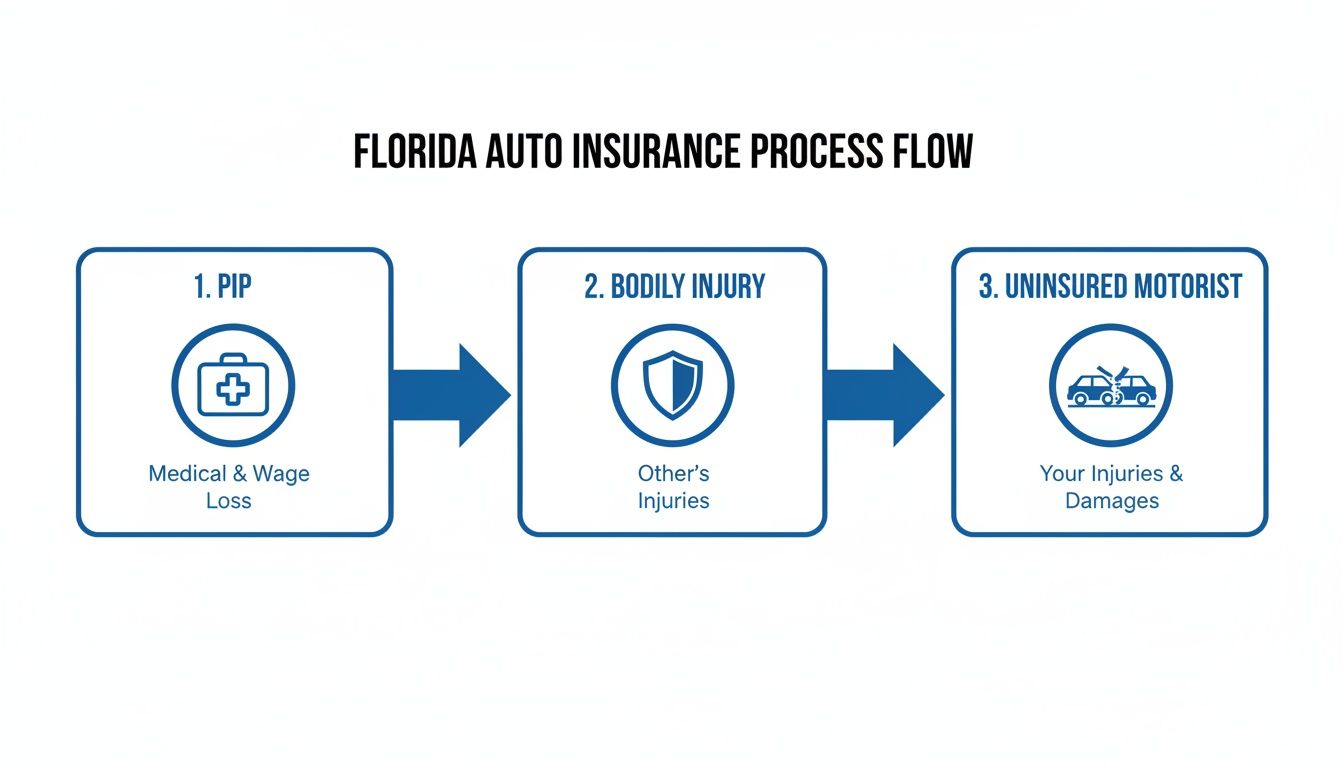
As you can see, the process starts with your own PIP coverage. After that, you can pursue a claim against the at-fault driver’s Bodily Injury liability. If they don’t have enough (or any) coverage, your own Uninsured Motorist policy becomes your most important asset.
Knowing this sequence is crucial. For a more detailed breakdown, you can learn more about what to do after a car accident in Florida right here on our site. Following this playbook can truly mean the difference between a lowball offer and the fair settlement you deserve from auto insurance providers.
How to Spot Insurance Company Bad-Faith Tactics
When you get into a crash, you naturally assume the insurance company you’ve been paying will be there to help. The hard truth is that some providers see your claim as a threat to their bottom line, and they have a whole playbook of tricks to delay, deny, or underpay what you’re rightfully owed.
Learning to spot these red flags is your first line of defense.

These aren’t just isolated incidents of poor customer service; they are often deliberate strategies. When an insurer refuses to hold up its end of the bargain by acting unfairly, it may be operating in what the law calls “bad faith.”
Common Red Flags of Bad Faith
Knowing what to watch for can tell you when it’s time to bring in professional help. Keep your guard up if you notice any of these classic warning signs from an auto insurance provider.
- Unreasonable Delays: The adjuster seems to vanish for weeks at a time, constantly misses deadlines, or just plain ignores your calls and emails. They’re hoping you’ll get tired and just go away.
- Failure to Investigate: A decision is made on your claim without a real investigation. Maybe they never bothered to interview witnesses, review the police report, or look at all the evidence.
- Lowball Settlement Offers: The company makes an offer that is so low it’s almost insulting. It doesn’t even come close to covering your actual medical bills and lost income, let alone your pain and suffering.
- Misrepresenting the Policy: An adjuster tries to mislead you about what your policy actually covers. They might try to convince you that you aren’t entitled to benefits that you clearly are.
An experienced personal injury firm like Martin Hernandez, P.A. levels the playing field by preparing every case for trial from the very beginning.
What to Do If You Suspect Bad Faith
If your gut tells you something is wrong, documentation becomes your best friend. Start a log of every phone call, email, and letter. Note the date, time, and the name of the person you spoke with. Save everything and never, ever agree to a settlement just because you feel pressured.
Bad faith is more than just a disagreement over your claim’s value. It happens when an insurance company unreasonably—and without a valid reason—denies, delays, or underpays what you are owed. This is a direct violation of their duty to act fairly and honestly with you, their policyholder.
Recognizing these dirty tricks is the first step toward making an insurance company honor the policy you paid for. If dealing with your adjuster feels more like a fight than a negotiation, that’s a pretty clear sign you need legal backup. You can learn more about what qualifies as a bad faith insurance claim and how to start protecting your rights.
Handling Claims for Truck and Rideshare Accidents
If you’re in an accident with a semi-truck, a city bus, or even an Uber or Lyft, you’re not just dealing with another driver—you’re up against a corporate machine. These aren’t simple fender-benders; they are high-stakes incidents where the insurance providers are focused on protecting massive corporate liability.

The claims process gets complicated fast. We’re talking about complex commercial policies with incredibly high coverage limits, which means the insurer’s financial risk is huge. You can bet their aggressive corporate legal teams get involved from the very beginning. One of the first hurdles is figuring out who is even responsible. Is it the driver? The trucking company that employs them? The owner of the truck? Or are there multiple insurance carriers all pointing fingers at each other?
The Complexity of Rideshare Policies in Florida
Rideshare accidents throw another wrench into the works. The insurance coverage that applies can change in an instant, depending on what the driver was doing in the app right when the crash happened. Florida law specifies the coverage levels required.
- Offline or App Off: If the driver wasn’t logged into the app, their own personal auto insurance is responsible. Simple enough.
- App On, Waiting for a Request: The moment a driver is available but hasn’t accepted a ride, a limited liability policy from the rideshare company (like Uber or Lyft) kicks in.
- En Route or on a Trip: Once a driver accepts a ride request and is on their way to a passenger or has them in the car, the company’s full commercial policy is active. This is typically $1 million in liability coverage.
Knowing which phase the driver was in is absolutely critical. It dictates which insurance provider is on the hook for your injuries and damages.
These aren’t just big claims; they’re fought tooth and nail because so much money is on the line. The commercial auto insurance market is booming. This explosive growth helps explain why insurers fight so hard to dispute liability in major crashes around Tampa Bay. You can review projections for the commercial auto insurance market to see the full scope of this trend.
Going up against these corporate giants and their seasoned lawyers is not a fair fight. You need an attorney in your corner who has experience dissecting these commercial claims and knows how to make them pay what you’re rightfully owed.
Knowing When to Call a Personal Injury Attorney
Trying to manage the chaos after a car wreck is tough enough. Figuring out when to stop dealing with the auto insurance provider yourself and call in a professional can feel just as confusing. But some situations are clear red flags that it’s time to get legal help.
If you were seriously hurt, the stakes are just too high to handle the claim on your own. The same goes for any crash involving a commercial truck, a delivery van, or even a rideshare vehicle. These cases get complicated fast, bringing in corporate insurance policies and their aggressive legal teams right from the beginning.
Leveling the Playing Field
Another huge sign is when the other driver’s insurance company starts pushing back. Maybe they’re denying their driver was at fault or using some of the bad-faith tactics we talked about earlier, like dragging their feet or throwing a ridiculously low offer at you. Those aren’t signs of a negotiation; they’re signs the insurer plans to fight you.
It’s crucial to understand that from the moment an accident is reported, the insurance company has lawyers working to protect its bottom line. Hiring your own attorney isn’t about being aggressive—it’s about leveling the playing field.
A lot of people hesitate to call a lawyer because they’re worried about the cost. That’s completely understandable. But most personal injury law firms, including ours here at Martin Hernandez, P.A., operate on a contingency fee basis. This system is specifically designed to give everyone access to legal representation, no matter what their bank account looks like.
Here’s how it works:
- No Upfront Costs: You don’t pay a dime out of your own pocket to get us started on your case.
- Payment Is Contingent on Success: Our firm only gets paid if we successfully win you a settlement or a court verdict.
This setup means you take on zero financial risk. If you’re on the fence, you can read more about when to hire a personal injury lawyer to help you decide if it’s the right move for your situation.
Common Questions We Hear About Florida Auto Insurance Claims
After a car crash in Tampa, your head is probably spinning with questions. Trying to make sense of your insurance policy while you’re recovering can feel overwhelming, but getting the right answers is crucial for protecting yourself and getting the compensation you’re owed.
Let’s walk through some of the most frequent questions we get from clients just like you.
Should I Talk to the Other Driver’s Insurance Company?
Absolutely not, especially if they ask for a recorded statement. You are under no legal obligation to speak with the other driver’s insurance adjuster, and frankly, it’s a bad idea. Their job is to find reasons to deny or minimize your claim.
It’s a common tactic. They’ll try to get you on record, hoping you’ll say something—anything—they can twist to shift blame or downplay your injuries. The best response is to politely decline and tell them to direct all questions to your attorney.
How Long Does an Insurer Have to Settle a Claim in Florida?
Florida law sets a few key timelines. Insurers must acknowledge your claim within 14 days of you filing it. From there, they have 90 days to pay or deny the claim once they have all the information they need.
But “promptly” can be a flexible term for some companies. If your provider is dragging their feet, giving you the runaround, or delaying without a good reason, that’s a major red flag. This kind of unreasonable delay is a classic sign of an insurer acting in bad faith.
What Happens if the At-Fault Driver Has No Insurance?
This is a scary and unfortunately common situation in Florida. It’s precisely why having Uninsured/Underinsured Motorist (UM/UIM) coverage on your own policy is so important. If the driver who hit you is uninsured, your UM coverage kicks in.
It covers the damages your Personal Injury Protection (PIP) doesn’t, like medical bills beyond your limit, lost income, and pain and suffering. Without it, your only real option is to sue the driver directly, and it’s often incredibly difficult to collect any money from someone who couldn’t afford insurance in the first place.
Think of your UM coverage as a financial safety net. It steps into the shoes of the at-fault driver’s missing insurance policy, protecting you from the consequences of their irresponsibility.
Why Did My Insurance Company Offer Me Such a Low Settlement?
Because they’re a business, and their goal is to pay out as little as possible. The first offer you get from an auto insurance provider is almost always a “lowball” offer. They’re hoping you’re stressed, in a tough spot financially, and will take the quick cash without asking questions.
Never, ever accept that first offer. An experienced personal injury lawyer can calculate the true value of your claim, factoring in everything from future medical treatments to your pain and suffering. Don’t let the insurance company pressure you into leaving money on the table.
If you’re dealing with an uncooperative insurance company after a wreck, you don’t have to fight them alone. The team at Martin Hernandez, P.A. knows their tactics and is ready to stand up for you. Contact us for a free consultation to get clarity on your rights and your next steps.