
When you’re shopping for car insurance, it’s easy to get lost in a sea of quotes and promises. That’s where auto insurance ratings from Consumer Reports come in. They offer a clear, unbiased look at how these companies actually behave when a customer needs them most.
These ratings cut through the marketing noise by focusing on real-world experiences, especially how insurers handle claims. After all, a cheap premium doesn’t mean much if the company fights you tooth and nail when you file a claim.
What Auto Insurance Ratings Really Mean for You

Looking at a page full of insurance ratings can feel like you’re trying to crack a code. While your eyes might naturally gravitate to the price, the real story is in the details Consumer Reports provides. Think of their ratings less as a simple grade and more as a behind-the-scenes look at customer satisfaction during the most stressful part of having insurance—filing a claim.
These reports give you the inside scoop on an insurer’s reliability, communication style, and overall fairness. For drivers here in Tampa, taking the time to understand these ratings is the first step toward finding a company that will be a genuine partner, not a roadblock, when you need support. A low price is great, but it’s worthless if your insurer ghosts you after an accident.
Why Ratings Matter More Than Price
Let’s be honest: the cheapest policy isn’t always the best deal. A rock-bottom premium can sometimes be a red flag for a business model that relies on delaying, underpaying, or flat-out denying claims to boost its own profits. This is precisely why the auto insurance ratings consumer reports provide are so valuable.
They let you size up an insurer based on what truly counts:
- Claims Handling Satisfaction: Were other policyholders actually satisfied with how their claim was managed from beginning to end?
- Timely Payments: Did the company pay claims without unnecessary, frustrating delays?
- Clear Communication: Was the insurer’s team helpful and transparent, or did they leave customers in the dark?
For Florida drivers, picking a highly-rated insurer is an investment in your own peace of mind. You’re paying for a promise—a promise that your insurer will have your back after a wreck on I-275 or a simple fender bender in a packed Publix parking lot. If you’re looking to understand coverage in different situations, these tips for understanding car rental insurance can also be incredibly helpful.
Choosing an auto insurer is about more than just finding the lowest rate; it’s about finding a reliable partner who will uphold their end of the bargain when you’re most vulnerable.
Ultimately, these ratings help you see past the clever commercials and look at a company’s actual performance record. To help you balance cost with quality, our guide on comparing Florida auto insurance rates can give you a more complete picture for making a smart decision.
So, How Does Consumer Reports Actually Figure Out Who’s Best?
Ever wondered what goes on behind the curtain when a trusted name like Consumer Reports puts together its auto insurance rankings? It’s not about flashy commercials or catchy jingles. Their entire process is built around the real-world experiences of people who’ve actually had to use their insurance.
Consumer Reports goes straight to the source: its own members. They send out massive surveys to thousands of people who have recently filed a car insurance claim. This gives them a powerful, unfiltered look at how these companies really perform when a customer is in a vulnerable spot.
What They’re Really Looking At
Instead of getting bogged down by marketing fluff, the surveys get right to the heart of what matters after an accident. They want to know every detail about the claims experience, from that first phone call to the final check.
This kind of detailed feedback is critical in an industry of this scale. The global vehicle insurance market hit a massive USD 973.33 billion in 2025, and it’s not slowing down. Experts predict it could climb to nearly USD 1,796.61 billion by 2034. You can discover more about the vehicle insurance market’s impressive growth and see why having a reliable guide is so essential.
Consumer Reports zeroes in on a few make-or-break factors:
- Starting the Claim: Was it a hassle-free process to get the ball rolling, or a bureaucratic nightmare?
- Communication: How good were the agents and staff at keeping policyholders in the loop with clear, helpful updates?
- Speed of Service: Did the company drag its feet, or did it handle the claim and pay out in a timely manner?
- The Payout Itself: Crucially, did customers feel the settlement they received was fair for the damages they suffered?
Why This Approach Is a Game-Changer
When you understand how they build these ratings, you can trust them. Consumer Reports doesn’t accept a dime of advertising money, so their loyalty is squarely with you, the consumer—not the insurance giants.
The real power of Consumer Reports’ rankings comes from their independence. By asking actual policyholders about their claims, they paint an honest, unbiased picture of an insurer’s true colors.
This means a high score for claims satisfaction isn’t just a number; it’s proof that a company consistently does right by its customers when they need it most. On the flip side, a low score is a serious warning sign. It points to a pattern of poor service, slow payments, or lowball settlement offers that real people have experienced. That’s what makes these ratings less of a list and more of a powerful tool for your protection.
Decoding the Best and Worst Insurers

When you dig into the numbers behind auto insurance ratings consumer reports, you start to see a story unfold about how a company truly operates. It’s not just about a single high or low score; it’s about predictable patterns of behavior that separate the good guys from the ones you’ll regret dealing with.
The best insurers act like a partner when you’re in a tough spot. They’ve built their business on a promise to be there for you. On the flip side, the lowest-ranked companies often reveal frustrating habits that can make an already stressful situation infinitely worse.
Hallmarks of the Best Insurers
Top-rated insurance companies just do things differently. They’ve earned their high customer satisfaction scores by showing up for policyholders when it counts the most, proving that their commitment is about more than just cashing your premium checks.
Here are a few signs you’re dealing with a top-tier insurer:
- Proactive and Clear Communication: You aren’t left in the dark. They reach out with updates on your claim, and when you call them, their agents give you straight, understandable answers.
- Fair Initial Settlement Offers: Their first offer is usually a realistic one. The goal seems to be covering your actual losses, not seeing how little they can get away with paying.
- Efficient and Timely Processes: They move things along. Paperwork, inspections, and payments are handled without needless hold-ups, helping you get your car fixed and your life back in order.
Warning Signs of the Worst Insurers
At the bottom of the rankings, you’ll find companies with a completely different playbook—one that often seems designed to protect their profits at your expense. These are serious red flags for any driver in Florida.
A pattern of unexplained delays, denied claims, and low settlement offers is a strong indicator that an insurer prioritizes profits over people. These behaviors are precisely what Consumer Reports’ member surveys are designed to uncover.
Be on the lookout for these troubling habits:
- Unexplained Delays: The entire process seems to be in slow motion. They drag their feet on everything from returning your first call to issuing a check, often with no good reason.
- Aggressive Scrutiny of Your Policy: Suddenly, after an accident, they’re digging through your original application with a fine-tooth comb, searching for any tiny error to deny your claim or cancel your policy.
- Immediate Lowball Offers: The first settlement they propose is so low it’s almost insulting. They’re banking on you being desperate enough to take it without a fight, regardless of your actual medical bills and repair costs.
Learning to spot these signs is a game-changer. It helps you see your own insurance company more clearly and gives you the confidence to make a smarter choice next time you shop for a policy. For a deeper look, you can learn more about how to use the best car insurance consumer reports to your advantage.
How Ratings Predict What Happens After Your Claim
An insurance rating isn’t just a number or a grade on a report card. It’s a pretty reliable forecast of how an insurer is going to treat you when you’re at your most vulnerable—right after an accident. When a respected source like Consumer Reports gives an insurer a high rating, it’s a strong signal that you can expect a smoother, less stressful claims process.
Think of it like checking Yelp before picking a restaurant. A five-star review sets you up for a great meal and attentive service. A one-star review is a warning sign to stay away. It’s the same with insurance. An insurer with top marks for “timely payment” is far more likely to get your car fixed and back on the road fast, saving you from weeks of rental car fees and logistical nightmares.
From a Score on a Page to Your Real-Life Experience
When you see a high “communication” score from other policyholders, it means you’re likely to get a real person who guides you through the process, not a ghost who never calls back. It’s the difference between getting clear, regular updates and being left in the dark, wondering what’s going on with your claim. You’ll feel supported, not abandoned.
For instance, a top-rated company isn’t likely to play games or use frustrating delay tactics. Even for something straightforward like a claim for auto glass replacement services, how they handle it speaks volumes about their commitment to customer service. The lower-rated companies, on the other hand, often have a documented history of creating one unnecessary hurdle after another.
A high rating is essentially a track record of promises kept. It indicates that an insurer consistently provides fair and prompt service, turning a potentially stressful claims process into a manageable one.
This is precisely why paying a slightly higher premium for a top-rated company can be one of the smartest investments a Florida driver can make. You’re not just buying a policy; you’re buying peace of mind and a much higher chance of a fair shake when you actually need to use it.
Why a Good Rating Is Your Best Defense
When you have to file a claim, you need an ally, not an adversary. Unfortunately, the business model for many lower-rated insurance companies often involves looking for any reason to underpay a claim—or deny it outright. This is where the true value of Consumer Reports’ auto insurance ratings really shines, as these reports expose those patterns.
Our firm has seen it time and time again: a poorly-rated insurer turns a simple, straightforward claim into a long, drawn-out fight. It happens so often that we put together a guide explaining the common reasons insurance companies deny claims.
Even with fierce competition in the insurance market, the quality of service is what truly sets companies apart. A good rating is your shield. It helps protect you from the frustrating, bad-faith tactics that are all too common with the bottom-tier providers. Choosing wisely from the start can save you a world of trouble later on.
A Practical Game Plan for Florida Drivers
Once the shock of a car accident wears off, you’re immediately thrown into the deep end of the insurance claims process. This is the moment of truth. All those promises from your insurer are put to the test, and their performance, as reflected in auto insurance ratings consumer reports, suddenly becomes very real. Having a solid game plan is crucial, especially when you’re trying to navigate Florida’s unique insurance laws.
Your first priority at the scene is always safety. Your second? Documentation. Think of yourself as an investigator building a case. Meticulous records are your most powerful tool, particularly if you suspect your insurer might be difficult.
Snap photos and take videos of absolutely everything—the damage to both cars, the accident scene, nearby traffic signs, and any visible injuries. Make sure you exchange information with the other driver and, just as importantly, get the names and numbers of anyone who witnessed the crash. Every little piece of evidence you collect strengthens your position.
Navigating the Claims Process
After you’ve reported the accident, how you communicate with your insurer should be directly influenced by their reputation. If you chose a company with top-tier ratings, you can probably anticipate a fairly straightforward process. But if your insurer has a history of dragging its feet or making lowball offers, you need to be on high alert.
Here are a few critical steps to take:
- Put It in Writing: After any phone conversation, send a quick follow-up email summarizing the discussion. This creates a paper trail that keeps everyone honest.
- Keep a Detailed Log: Grab a notebook and jot down every single interaction you have with the insurance company. Note the date, time, the name of the person you spoke with, and what was said.
- Know Your Florida PIP Coverage: Remember, in Florida, your own Personal Injury Protection (PIP) is the first line of defense for medical bills, no matter who was at fault. Be firm and clear that you need to access these benefits for your medical care.
This is where choosing a highly-rated insurer really pays off.
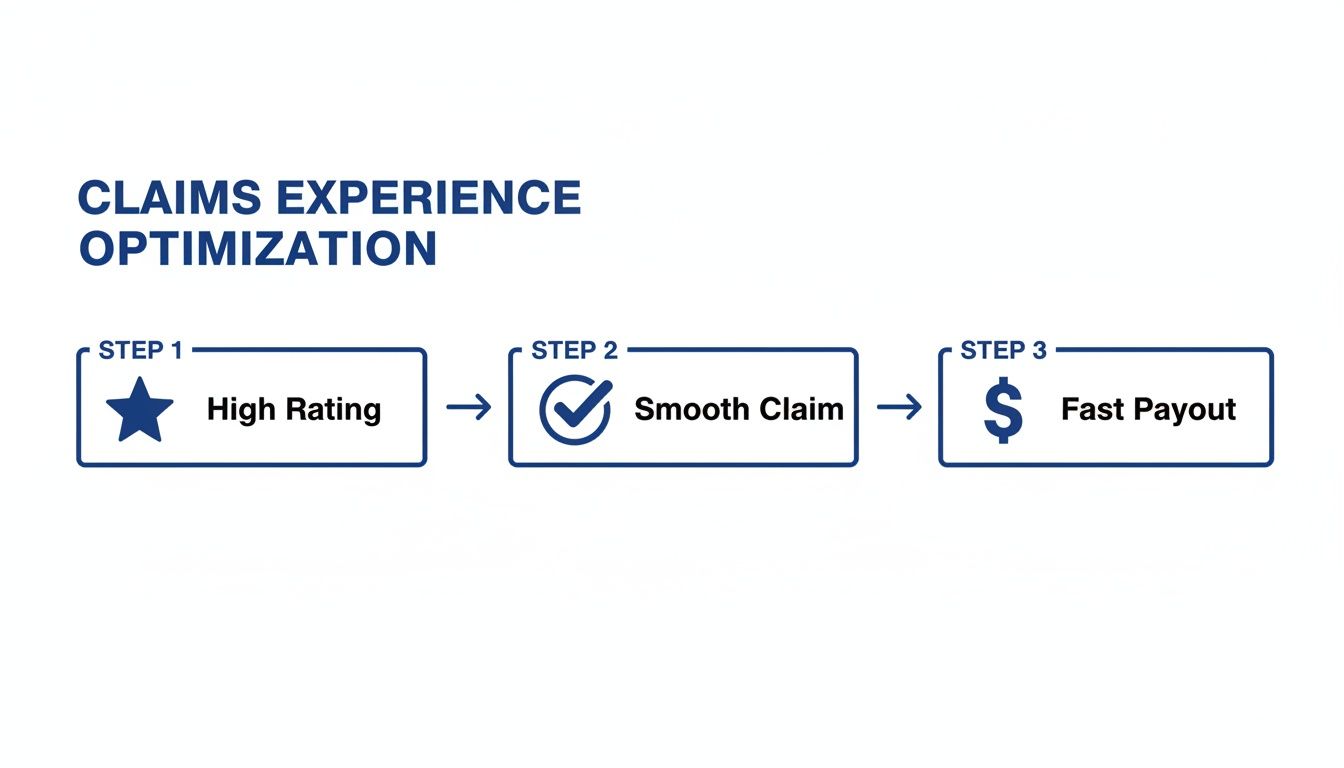
As you can see, insurers that earn high marks from Consumer Reports tend to deliver on their promises, making the entire claims journey smoother and leading to fair, timely payouts.
When an Insurer’s Actions Raise Red Flags
If you start getting a bad feeling—if your insurer’s actions just don’t seem right—it’s time to get proactive. Unreasonable delays in communication, pressure to accept a quick (and low) settlement, or an adjuster trying to deny necessary medical treatments are all major warning signs. Don’t let them push you around.
A low settlement offer isn’t the final word. It’s the opening line of a negotiation. Never, ever accept a first offer until you’ve fully calculated all your current and future costs, from medical bills and therapy to lost income.
It also helps to understand just how massive the insurance industry is. The commercial auto insurance market alone was valued at USD 199.9 billion in 2023 and is expected to hit USD 459.1 billion by 2035, growing at a 9.7% CAGR. This massive scale shows why it’s so important for individual consumers to be informed and assertive—it’s easy to get lost in the shuffle.
Staying organized and knowing your rights gives you the power to stand up to an insurer that isn’t playing fair. And while price is always a concern, our guide on the average cost for car insurance can help you balance what you pay in premiums against the quality of service you’ll receive when you need it most.
Knowing When to Call a Florida Car Accident Attorney
Even if you did all your homework and used tools like auto insurance ratings consumer reports to pick a top-rated company, you can still find yourself in a battle with your own insurer. After a crash, you’re in a vulnerable position, and unfortunately, some insurance companies see that as an opportunity to protect their profits. Recognizing the warning signs of bad faith behavior is the first step in protecting yourself.
You’ve faithfully paid your premiums, trusting your insurer would have your back when you needed them most. But when they start creating roadblocks instead of offering a helping hand, it’s a major sign that something is off. You don’t have to just accept their word as final.
Red Flags That Signal You Need Legal Help
Some tactics insurers use go way beyond a simple disagreement over a claim’s value. They are clear signs that the company is putting its own financial interests ahead of its legal and ethical obligations to you. If any of this sounds familiar, it’s probably time to talk to a professional.
Keep an eye out for these serious red flags—they often mean the claims process is about to get much more difficult:
- A Baseless Claim Denial: The insurance company rejects your claim but gives a flimsy, vague reason, or worse, no real reason at all. They might even try to blame a “pre-existing condition” without any medical evidence to back it up.
- Unreasonable Delays and Ghosting: Your adjuster suddenly stops returning your calls. Days turn into weeks with no update, or they keep stalling the investigation with one excuse after another.
- A Shockingly Low Settlement Offer: The first offer that lands in your inbox is a fraction of what you actually need to cover your medical bills and car repairs. This is a classic lowball tactic designed to see if you’re desperate enough to take it.
- High-Pressure Tactics: The adjuster pushes you to sign a release or accept a settlement check before you’ve even finished medical treatment or know the full scope of your damages.
When an insurance company denies a legitimate claim or offers an insultingly low settlement, they are counting on you to give up. Seeking legal counsel evens the odds and shows them you will not be pushed around.
An attorney can step in immediately and take over all the frustrating phone calls and paperwork, letting you focus completely on getting better. They know the insurance company playbook inside and out and are prepared to counter their tactics.
How a Florida Attorney Levels the Playing Field
Think of a personal injury attorney as your dedicated advocate. Their entire job is to fight for the full and fair compensation you’re entitled to under the law. They will meticulously document every single loss—from hospital bills and lost income to the cost of future medical care and your pain and suffering. They build a powerful, evidence-backed case that an insurer can’t just sweep under the rug.
Here in Florida, an experienced lawyer knows how to hold these companies accountable. If your claim was unfairly denied, you have options. You can learn more about how to fight an insurance denial to get a clearer picture of the road ahead. An attorney can handle the complex appeals process or, when necessary, file a lawsuit to demand the compensation you deserve. You never have to face a difficult insurance company alone.
Your Questions Answered: Making Sense of Insurance Ratings
Diving into the world of auto insurance ratings can feel a bit overwhelming. Let’s clear up some of the most common questions people have when they start using these reports to make smarter choices.
How Often Does Consumer Reports Update Its Ratings?
Think of it as a yearly check-up. Consumer Reports typically updates its auto insurance ratings on an annual basis. This ensures the data you’re looking at is fresh and reflects what real customers have gone through with claims, payments, and service in the recent past.
This isn’t a quick process. The ratings are built on comprehensive surveys from their members, making them a solid reflection of an insurer’s performance over the last year, not just a random snapshot in time.
Should I Jump Ship to a New Insurer Based on Ratings Alone?
Not so fast. While a high rating from a source like Consumer Reports is a fantastic starting point, it shouldn’t be the only thing you consider. Think of it as a strong signal, but not the whole story.
A great rating tells you that an insurer has a track record of keeping its customers happy, especially when it matters most—during a claim. But you also need to weigh other practical factors:
- The Price Tag: Can you comfortably fit the premium into your budget?
- The Policy Itself: Does the company offer the exact coverage you need for driving in Florida?
- Available Discounts: Could you qualify for savings that make a top-rated insurer even more attractive?
The best way to use the ratings is as a filter. Use them to build a shortlist of companies you can trust. From there, you can dig into the details, compare quotes, and find the one that truly fits your life.
Are National Ratings Really Relevant for Me Here in Tampa?
Yes, they absolutely are. While local agents and state-specific rules can play a role, the big-picture behaviors that Consumer Reports evaluates—things like paying claims on time, offering fair settlements, and communicating clearly—are deeply ingrained in a company’s culture. Those things don’t change much from state to state.
An insurance company that earns a reputation for treating people right across the country is highly likely to offer that same quality of service right here in Florida. On the flip side, a company known for lowballing settlements and dragging its feet elsewhere probably won’t suddenly become a model citizen just for Florida drivers.
These national ratings give you a powerful look into an insurer’s core DNA. They set a reliable baseline for what you can expect, helping you steer clear of companies that have a history of letting their customers down, regardless of location.
If you’ve been in a wreck and feel like your insurance company isn’t holding up its end of the bargain, you don’t have to take them on by yourself. The team at Martin Hernandez, P.A. is here to stand up for your rights and make sure you get the full compensation you’re owed. Contact us for a free, no-obligation consultation and let’s talk about your case.