
If you want to have a real shot at preventing your car from being stolen, you first have to understand what you’re up against. The days of a thief simply smashing a window and hot-wiring a car are long gone. What we’re dealing with now is a high-tech, organized criminal enterprise that costs drivers like us and our insurance companies billions of dollars every single year.
Understanding the Modern Threat of Auto Theft
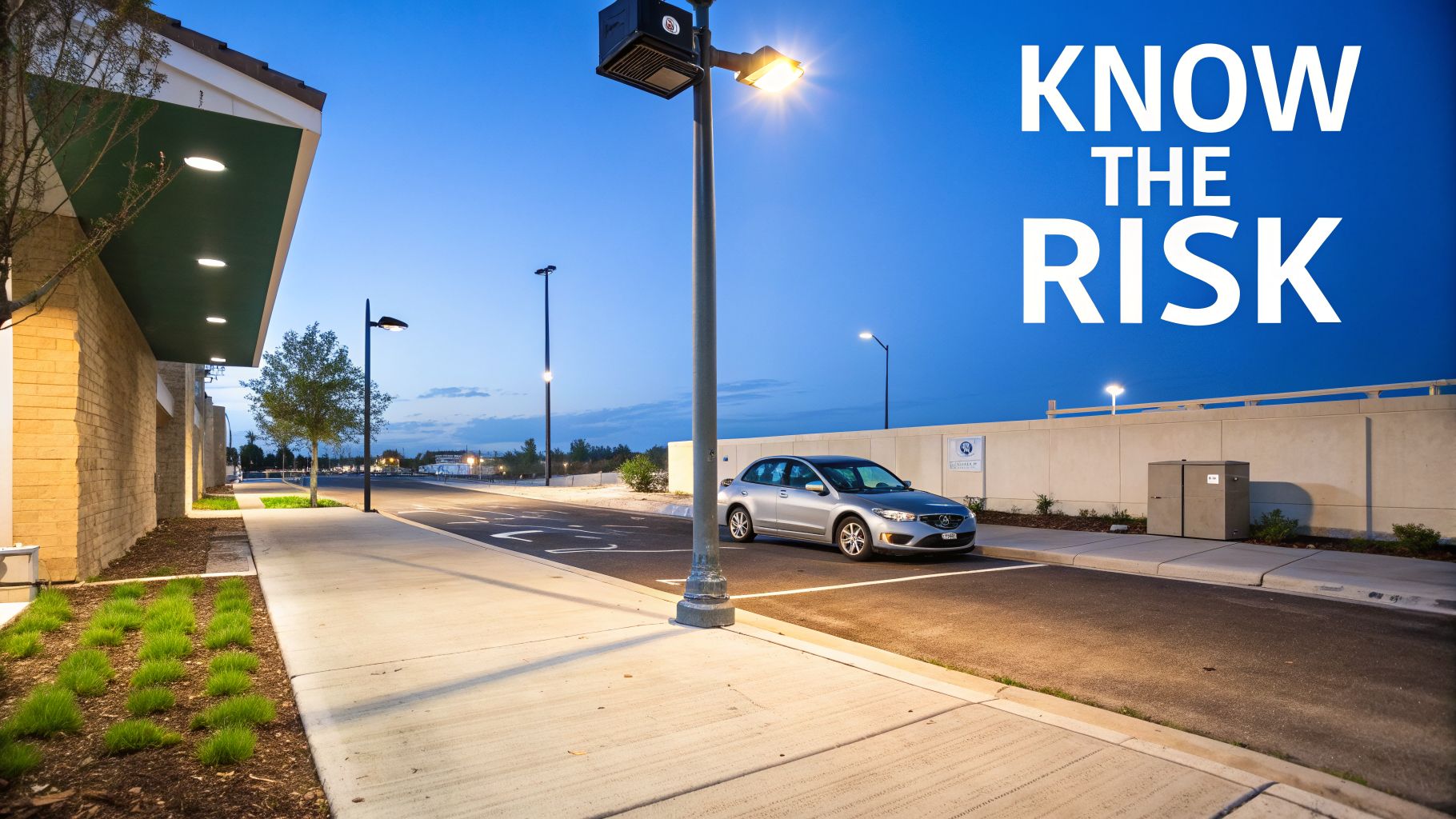
Forget the old stereotype of a joyrider looking for a quick thrill. Today’s car theft is a business, run by sophisticated criminal networks that use advanced tools to get around the security systems that come standard in our cars. For those of us in Florida, especially around Tampa and Hillsborough County, this is the new reality. It means we have to be smarter and more proactive than ever.
These organized groups aren’t stealing cars for fun. They’re running a complex international operation, and our stolen vehicles are their inventory. The first step to building a solid defense is knowing exactly how they pull it off.
How the Pros Steal Cars Today
Modern car theft is a quiet, calculated crime. Thieves have moved on to specialized electronic gadgets like signal relay amplifiers and CAN bus injectors. These devices essentially trick your car’s computer into believing the key fob is right there.
The result? They can unlock your doors and start the engine in seconds. No broken glass, no noise, no immediate sign of a break-in.
Once they drive away, your car is swept into a criminal supply chain built for one thing: profit. They have a few different playbooks for turning your vehicle into cash.
- Chop Shops: A huge number of stolen cars end up in hidden garages, or “chop shops,” almost immediately. In a matter of hours, your car is dismantled. High-value parts—engines, catalytic converters, even infotainment systems—are then sold online or to shady repair shops.
- Re-VINing and Export: Some crews specialize in giving a stolen car a whole new identity. They’ll find a legitimate Vehicle Identification Number (VIN) from a car that hasn’t been stolen, forge the paperwork, and stamp the stolen car with the new VIN. It’s then “cloned” and sold to an unsuspecting buyer or shipped overseas.
- Vehicle Finance Fraud: A particularly nasty and growing trend involves using stolen identities to “buy” brand-new cars from dealerships with fraudulent financing. The criminals drive off the lot, never make a single payment, and the car simply vanishes, sticking the lender with the loss.
Even when overall theft numbers go down, the financial damage is still massive. Organized crime is incredibly adaptable; as soon as one method gets harder, they pivot to another.
We’ve seen this play out recently. A report from Équité Association in 2025 highlighted that a major crackdown in Canada led to an 18% year-over-year drop in auto thefts. But here’s the catch: Canadians still got hit with $900 million in insurance claims.
As police made traditional theft tougher, criminals just shifted their focus. The same report found that vehicle finance fraud at major ports shot up by a jaw-dropping 72%. They always find a way.
Building Layers of Practical Vehicle Protection
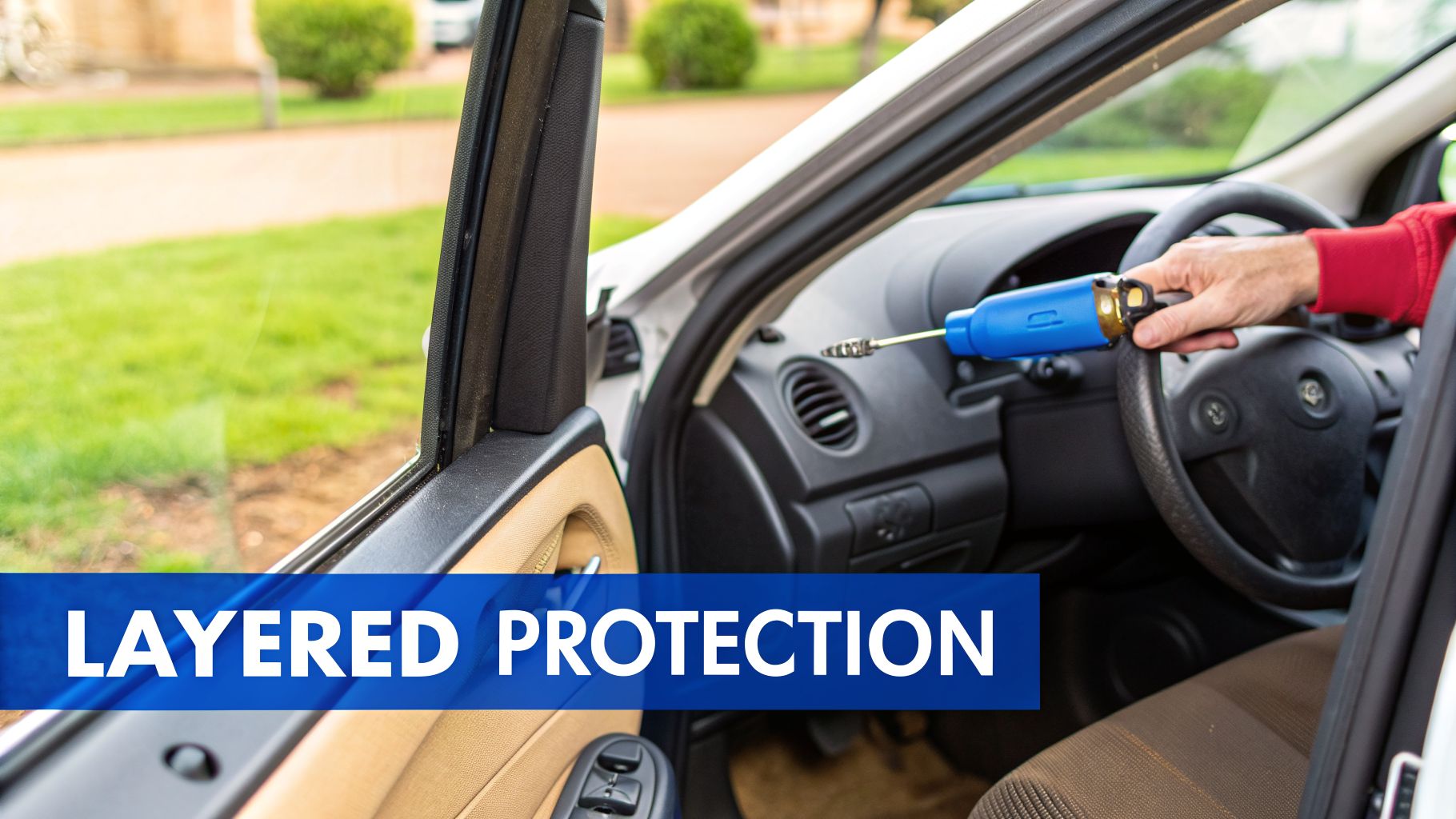
The best way to stop a car thief isn’t with one single gadget. It’s about creating multiple obstacles that make stealing your car a frustrating, time-consuming ordeal. The goal is simple: convince them to move on to an easier target. This all starts with the basics—simple, consistent habits that act as your first line of defense.
It sounds obvious, but you’d be surprised how often it’s overlooked: always lock your doors and take your keys. An unlocked car is an open invitation. Just as crucial is clearing out any valuables. A laptop bag on the seat, a GPS suctioned to the windshield, or even loose change in the console can be all the incentive a thief needs to smash a window. That first act of breaking in is often step one toward driving off with your entire vehicle.
Strategic Parking and Visible Deterrents
Where you leave your car matters just as much as locking it. Whenever you have the choice, park in well-lit areas. Crime reduction studies consistently show that better lighting dramatically cuts down on criminal activity, including car theft, simply by taking away the shadows thieves use for cover. Opting for a busy, monitored garage or a spot directly in view of security cameras adds another layer of risk that most criminals would rather not take.
Think about a real-world scenario, like parking at a crowded Tampa mall. Tucking your car away in a dim, isolated corner of the lot practically puts a target on it. But choosing a spot right under a light post near the main entrance? That forces any would-be thief to work in the spotlight, making them far more likely to get caught.
Once you have those foundational habits down, it’s time to add some inexpensive physical deterrents. These are all about sending a clear visual message to a prowling thief that your car is going to be a pain to steal.
- Steering Wheel Locks: This classic device is still one of the best visual deterrents out there. A thief peering through your window sees an immediate, physical barrier that will take a lot of noise and effort to defeat.
- Pedal Jacks: This device locks your brake or clutch pedal, making the vehicle impossible to drive. It’s just one more frustrating obstacle that will likely send a criminal looking for an easier score.
- VIN Etching: Having your VIN (Vehicle Identification Number) professionally etched onto your windows is a more subtle but highly effective tactic. It makes your car’s components difficult to resell on the black market, stripping it of its value to chop shops.
Key Takeaway: The strategy here is layering. A locked car in a well-lit area with a bright yellow steering wheel lock is a much tougher target than a car with only one of those protections. Every layer you add increases the time and risk for the thief.
If you’re looking to upgrade your car’s physical security with more advanced locks or key systems, getting advice from a professional automotive locksmith can give you some expert-level solutions. These physical layers, when paired with the car’s built-in safety features, create a powerful defense. You can learn more about what safety features to look for in a new car in our related article.
Choosing the Right High-Tech Security System
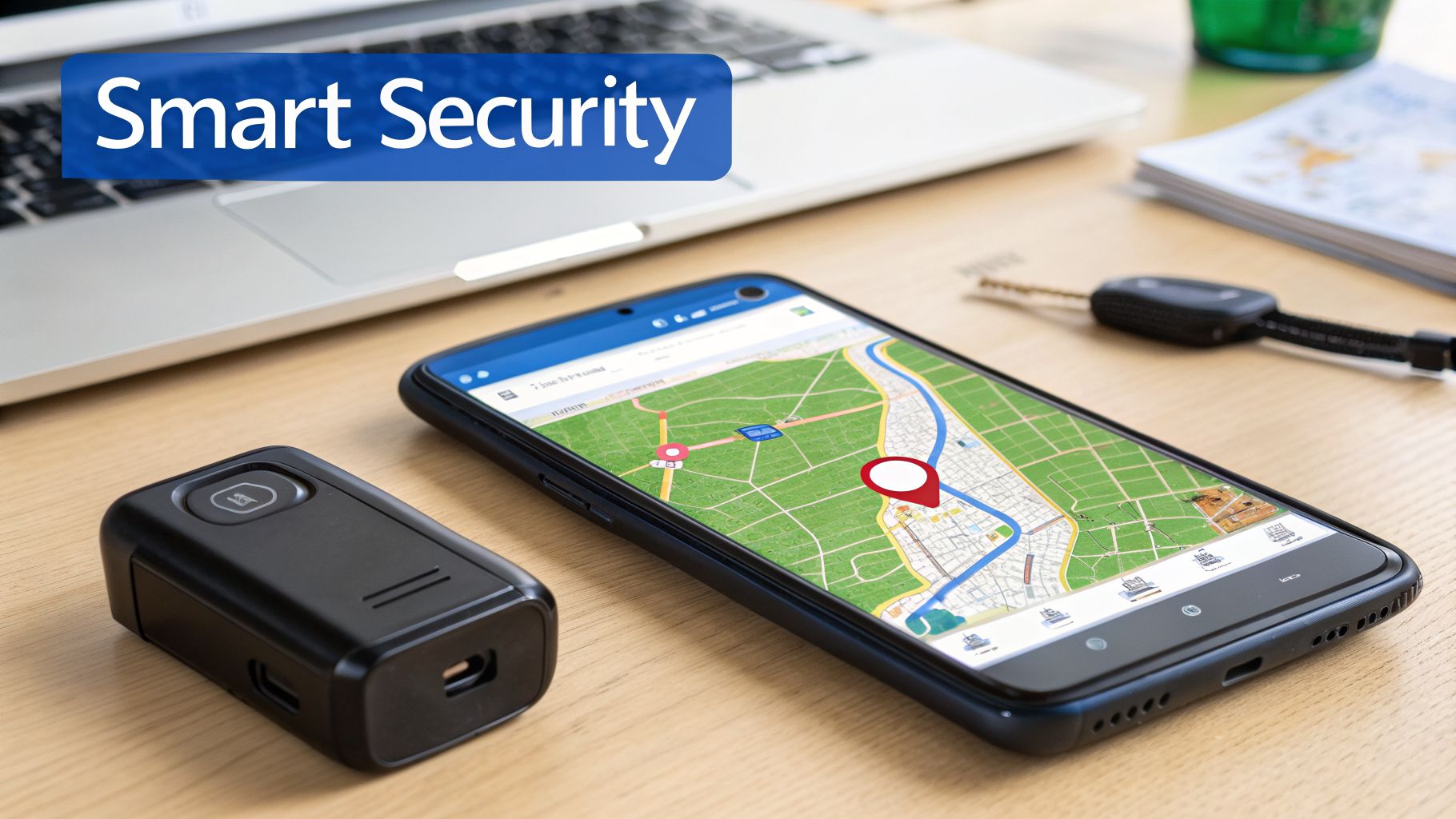
While physical locks are a solid first line of defense, today’s sophisticated thieves often require a high-tech answer. Modern security systems give you a powerful advantage, either by stopping a theft before it starts or by dramatically increasing the odds of getting your car back if it’s stolen.
Understanding the difference is key to picking the right setup for your vehicle and your budget. It’s all about finding the level of protection that lets you sleep at night.
Passive vs. Active Security Systems
You probably already have a passive security system and don’t even think about it. Most cars built in the last couple of decades have an engine immobilizer. It’s a simple but effective system where a chip in your key fob “talks” to your car’s computer. Without that digital handshake, the engine won’t turn over, making old-school hot-wiring a thing of the past.
Active security systems, on the other hand, are your eyes and ears after a thief has made their move. These are usually aftermarket devices you add to your car, giving you real-time information and a degree of control.
Some of the most common active systems include:
- GPS Trackers: This is the foundation of vehicle recovery. A small device is hidden somewhere in your car, transmitting its location to an app on your phone. If your car is taken, you can see exactly where it is, which is invaluable for law enforcement.
- Telematics Systems: Think of these as GPS trackers on steroids. They don’t just report location; they can monitor driving habits, vehicle diagnostics, and even send you an alert if your car leaves a pre-set area (a feature called “geofencing”).
- Remote Kill Switches: This is one of the most powerful tools you can have. A kill switch gives you the ability to remotely disable your vehicle’s engine. Once the thief parks and shuts the car off, they won’t be able to start it again.
For drivers in Florida, these systems do more than just help find your car. The data they generate, like GPS logs, can be critical evidence for an insurance claim or help you avoid liability if your stolen vehicle is involved in an accident.
The market for this technology is booming for a reason. Innovations like a Smart Anti Theft System offer a new level of integrated protection. Thieves frequently target common passenger cars like the Hyundai Elantra.
Making the Right Choice for Your Vehicle
When you’re looking at your options, consider your car’s age, its value, and where you park it. An older car might be fine with its factory immobilizer and a sturdy steering wheel lock.
But for a newer model or a high-value car, especially if you park in a high-risk spot like a downtown Tampa garage, a layered tech approach is a smart investment. Combining a GPS tracker with a remote kill switch gives you both recovery and control.
Don’t forget that some devices serve double duty. For instance, a dash cam can be a great visual deterrent while also capturing crucial evidence. To learn more, check out our guide on what the benefits of a dash cam are and see if it’s the right addition for you.
Why Thieves Target Certain Cars and the Power of an Immobilizer
Ever get the feeling you’re hearing about the same car models being stolen again and again? It’s not your imagination. Car thieves are creatures of habit and efficiency—they go after vehicles with known security flaws. The single biggest vulnerability they look for is the lack of a factory-installed engine immobilizer.
So, what is an immobilizer? It’s a surprisingly simple but incredibly effective anti-theft device. Think of it as a digital handshake. This electronic security system stops the engine from starting unless it gets the correct signal from your specific transponder key or key fob.
Without that unique digital key, the engine is dead in the water. It just won’t turn over. This makes old-school hot-wiring techniques completely obsolete. It’s the main reason newer cars are so much tougher to steal. Unfortunately, for a long time, some of the biggest car manufacturers decided to leave this critical feature out of millions of vehicles, essentially creating a buffet of easy targets for thieves.
The Problem with Popular, Unprotected Models
The fallout from this decision was massive, especially for certain Hyundai and Kia models. These cars became infamous after thieves figured out they could be stolen with shocking ease—sometimes with nothing more than a standard USB cable. The discovery triggered a nationwide explosion in thefts targeting these specific vehicles.
While anti-theft initiatives have started to work, as seen in theft trends and manufacturer responses on KBB.com, many older models without immobilizers remain top targets.
The crisis got so bad that manufacturers like Hyundai and Kia had to launch huge campaigns to update the security software on millions of these vulnerable cars. It’s a perfect real-world example of how one missing feature can create a massive problem—and how technology can fix it.
How to Check Your Own Car’s Risk
The first thing you need to do is figure out if your own car has an engine immobilizer. It’s the key to understanding your personal risk. If you’re driving a car from the last ten years or so, chances are good that you have one. But if your car is older, or you’re just not sure, it’s worth checking. A quick Google search for your car’s year, make, and model or a glance at the owner’s manual should tell you what you need to know.
An engine immobilizer is arguably the single most important anti-theft feature your vehicle can have. Its presence completely changes a thief’s game plan, often convincing them to just move on to an easier car.
Don’t panic if you discover your vehicle doesn’t have one. You’re not out of options. You can have an aftermarket immobilizer installed that provides the exact same protection as a factory one. When you pair that with the other physical and high-tech deterrents we’ve covered, even a high-risk model becomes a much tougher target. And if you’re in the market for a new or used car, make sure to verify this feature is included. Our auto reviews from consumer reports are also a great resource to help you find vehicles with top-tier safety and security ratings.
Your Action Plan If Your Car Is Stolen in Florida
That gut-wrenching moment when you realize your car isn’t where you left it is pure panic. It’s a chaotic and stressful experience, but what you do in those first few hours can make all the difference. Staying calm and taking clear, immediate action is your best bet for a positive outcome.
First things first, take a breath and make sure it was actually stolen. Is there any chance it was towed? Did you park a block over from where you thought? Once you’ve ruled out any other possibility and you’re sure it’s gone, it’s time to act.
Filing an Official Police Report
Your very first call should be to the police. Don’t wait. If you’re in the city of Tampa, you’ll contact the Tampa Police Department. If it happened elsewhere in the county, you’ll reach out to the Hillsborough County Sheriff’s Office.
Time is your most critical asset here. The sooner you report it, the faster your vehicle’s information gets into statewide and national law enforcement databases. This means every patrol officer on the road is another set of eyes looking for your car.
To make the report as effective as possible, have these details handy:
- Your car’s year, make, model, and color.
- The license plate number.
- The Vehicle Identification Number (VIN). You can usually find this on your car’s registration or your insurance card.
- Any unique marks like dents, scratches, bumper stickers, or aftermarket parts.
- The last known location and time you saw your vehicle.
Getting that police report filed immediately does more than just help recover your car—it protects you. If a thief uses your vehicle in a crime or gets into an accident, that official report creates a clear timeline proving you were not responsible.
Once you have a police report number, it’s time to call your insurance company. This is a crucial step to get the claims process started and officially document the loss.
This is why modern anti-theft systems are so important. An engine immobilizer, for example, is a powerful deterrent that works by electronically preventing the engine from starting if the correct transponder key isn’t present.
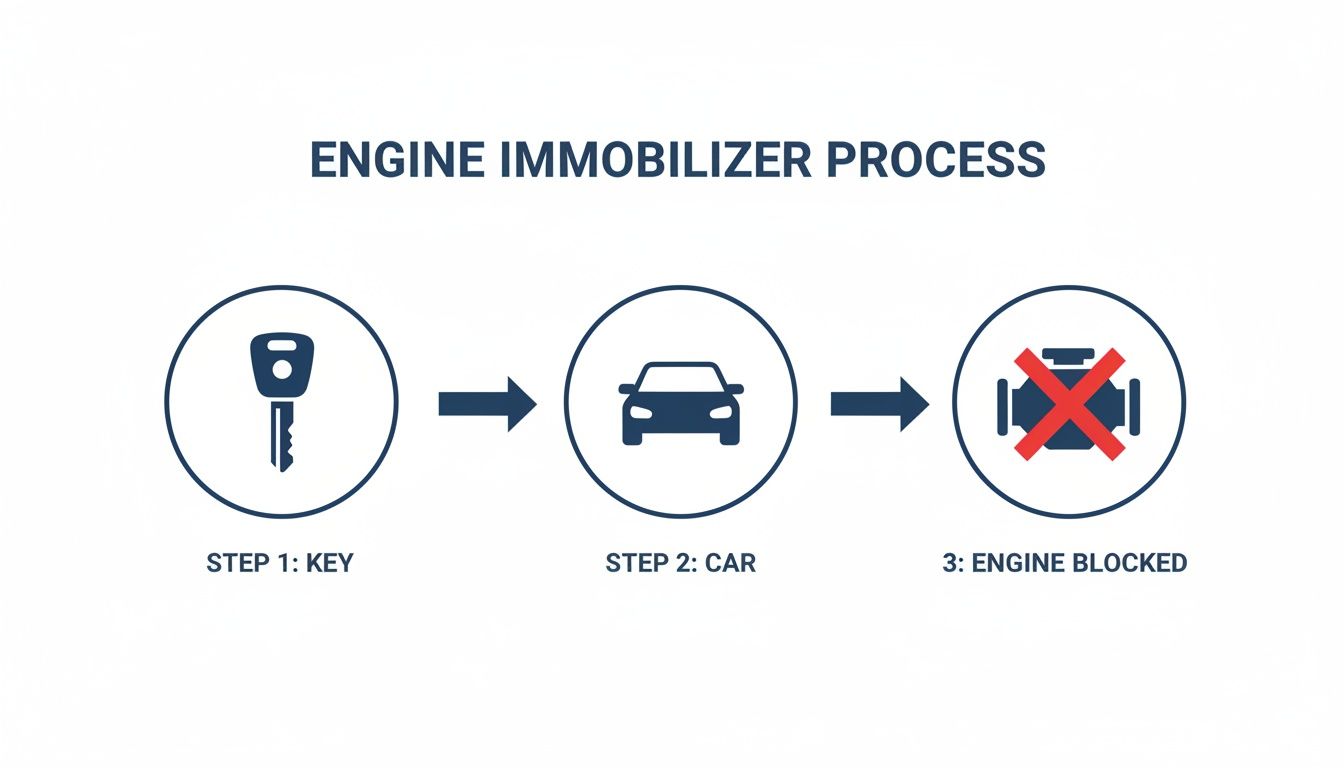
As the diagram shows, without the right key signal, the engine is completely blocked. It’s an incredibly effective way to stop thieves in their tracks before they can even drive away.
Contacting Your Florida Insurance Provider
When you call your insurer, let them know your car has been stolen and give them the police report number. In Florida, vehicle theft falls under the comprehensive part of an auto insurance policy. This is the portion that covers non-collision events like theft, fire, vandalism, or storm damage.
Your insurance company will open a claim and assign an adjuster to your case. This person will be your main point of contact, guiding you through the necessary paperwork, which usually includes a sworn “proof of loss” statement. Be thorough and honest with all the information you provide.
Keep in mind that insurers typically have a waiting period, often between 14 to 30 days, before they declare the vehicle a total loss and process a payment. This window gives law enforcement a reasonable amount of time to try and recover the car. To get a clearer picture of what to expect, you can learn more about comprehensive car insurance coverage in Florida from our in-depth guide. This coverage is your primary financial safety net when theft occurs.
Navigating Insurance Disputes and Legal Issues After a Theft
The bad news doesn’t always stop once you file the police report. For many car theft victims, the real fight is just beginning, and it’s often with their own insurance company.
What happens if your insurer rejects your claim? Or what if, in a worst-case scenario, the thief crashes your car and hurts someone? These are complicated, stressful situations that can feel impossible to navigate alone.
What to Do When Your Insurer Denies Your Claim
Getting that denial letter in the mail is a gut punch, but it’s absolutely not the final word. Insurance companies often look for any reason—a tiny inconsistency in your story, a dispute over the car’s value, or a claim that you didn’t secure the vehicle properly—to deny a claim. They’re betting you’ll just walk away.
This is exactly when you need to bring in an experienced attorney. A lawyer can immediately get to work dissecting the denial letter, poring over the fine print of your policy, and building a case to prove them wrong.
They’ll start gathering the evidence needed to force the insurer to reconsider, such as:
- Witness statements to corroborate your timeline.
- Security footage from surrounding homes or businesses.
- Maintenance records and expert valuations to prove your vehicle’s true worth.
The entire goal is to show the insurance company, in no uncertain terms, that you have a rock-solid case and won’t be bullied into accepting their decision.
A law firm that prepares every case for trial from day one sends a powerful signal. It tells the insurance company they aren’t just bluffing for a quick payout—they are fully prepared to go to court. This pressure alone is often enough to bring the insurer back to the table with a fair offer.
Complications if the Thief Causes an Accident
It’s a nightmare scenario: you get a call that your stolen car was involved in an accident, and someone was injured. While Florida law generally protects you from being held liable for a thief’s actions, proving it can be tricky. The other party’s insurance company may still try to come after you.
This is where having a lawyer is non-negotiable. They can help you prove a clear timeline establishing the car was stolen before the crash occurred, protecting you from financial responsibility. This often involves navigating complex Uninsured Motorist (UM) claims and dealing with multiple insurance carriers at once—something you don’t want to handle on your own.
The legal fallout from a car theft can be just as damaging as the theft itself. Whether you’re fighting an insurer or dealing with liability issues from a crash, having a skilled legal advocate is your best defense. If you’re hitting a wall with your insurance company, you can learn more about how to fight an insurance denial in Florida and start protecting your rights. A good attorney ensures that every single loss is documented and that you’re positioned to recover what you’re owed.
If you’ve been injured in an accident or are facing an unfair insurance dispute, the team at Martin Hernandez, P.A. is ready to fight for you. We prepare every case for trial to secure the full compensation you deserve. Visit us at https://injurylawyersoftampa.com to get the powerful representation you need.