
Navigating the maze of car insurance options is overwhelming, especially when every company claims to offer the best rates and service. The key to a smart decision lies in reliable, data-driven analysis from trusted sources. This guide cuts through the marketing noise, revealing the top platforms for the best car insurance consumer reports and tools that provide unbiased ratings, pricing insights, and customer satisfaction scores. We will dive deep into what these reports mean for you and how to use them effectively.
This article is designed to be your definitive resource for making an informed choice. You will learn not only which companies consistently rank highest but also why they do. We will explore how to interpret the methodologies behind these rankings, from Consumer Reports’ rigorous testing to J.D. Power’s customer satisfaction studies. For each resource on our list, you will find a clear breakdown of its strengths, direct links to its reports, and screenshots to help you navigate the information.
Specifically, we will provide actionable guidance for Florida drivers, with a focus on Tampa-area needs. Understanding Florida-specific coverage requirements and common complaint patterns is crucial for securing a policy that offers genuine protection. Whether you are comparing quotes, assessing an insurer’s claim-handling reputation, or preparing to dispute an underpaid claim, this roundup provides the clarity you need. By the end, you’ll be equipped to find an insurer that aligns with both your budget and your expectations for reliable service when you need it most.
1. Consumer Reports: The Gold Standard for Unbiased Reviews
When searching for the best car insurance consumer reports, the most logical place to start is with the source itself: Consumer Reports (CR). This non-profit organization has built a decades-long reputation for rigorous, independent product testing and consumer advocacy. Unlike many other insurance review sites, CR is primarily funded by its members, not by advertising revenue or referral fees from insurance companies. This model ensures its ratings and recommendations remain as unbiased as possible.
The platform’s core strength lies in its comprehensive annual surveys, which gather data from tens of thousands of real policyholders about their direct experiences. This data forms the basis of its detailed insurer ratings, which go far beyond simple price comparisons. CR provides scores on critical factors like satisfaction with claims handling, customer service, and policy review interactions.
Navigating the Platform for Actionable Insights
To get the most out of Consumer Reports, it’s essential to understand how to use its resources effectively.
- Focus on Claims Satisfaction: While low premiums are attractive, an insurer’s true value is tested during a claim. CR’s ratings for “claims process satisfaction” are invaluable, showing how companies perform when policyholders need them most. Pay close attention to companies that score highly in timely payment and clear communication.
- Utilize the Editorial Guides: Beyond the ratings, CR offers a wealth of articles and guides. These resources explain complex topics in plain language, from understanding different types of coverage to strategies for lowering your premium. For instance, their guides can help you determine the appropriate level of liability coverage for your situation, a crucial component of any Florida auto policy. Understanding liability insurance coverage is the first step toward building a protective policy.
- Look for Regional Performers: While CR provides national ratings, they often highlight insurers that excel in specific regions. For Florida drivers, this can help identify companies that are better equipped to handle the unique challenges of the state’s insurance market, such as frequent storms and high rates of uninsured drivers.
Access and Limitations
One key point to remember is that while some content is free, the detailed, head-to-head insurer comparisons and full ratings are typically behind a paywall. Access requires a digital or print membership, which comes at a monthly or annual cost. However, for many consumers, this small investment is worthwhile for the peace of mind that comes from making a well-informed decision based on independent data.
Key Takeaway: Consumer Reports doesn’t sell insurance. It is an educational and research tool. Use its ratings to create a shortlist of top-rated companies, then visit those insurers’ websites or contact an independent agent to gather direct quotes.
Pros:
- Highly trusted, unbiased ratings based on extensive member surveys.
- Clear, practical advice on saving money and choosing the right coverage.
- Minimal influence from advertisers or insurance companies.
Cons:
- Detailed insurer ratings and comparisons require a paid subscription.
- You cannot get quotes or purchase a policy directly from the site.
Website: https://www.consumerreports.org/products/car-insurance
2. J.D. Power: The Industry Benchmark for Customer Satisfaction
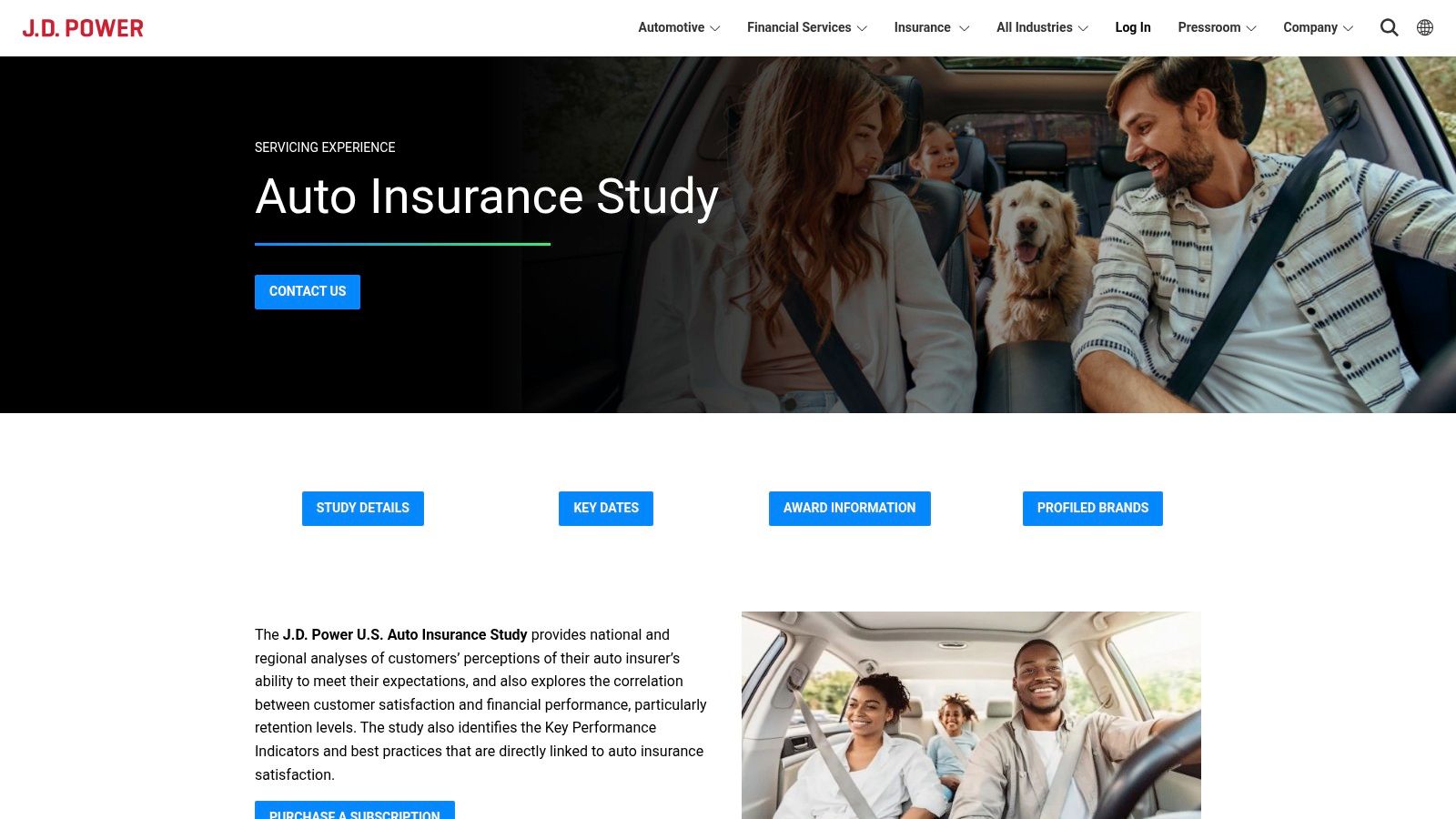
While Consumer Reports focuses on member-driven data, J.D. Power offers another critical lens for evaluating the best car insurance consumer reports: large-scale industry satisfaction studies. For decades, J.D. Power has been a recognized authority in measuring customer sentiment across various sectors, and its annual auto insurance studies are considered a benchmark for quality. The organization polls hundreds of thousands of verified customers, providing a statistically significant view of how major insurers perform.
Its strength is its methodological rigor and massive sample sizes, which allow it to produce highly reliable and region-specific rankings. This is particularly useful for consumers who want to see which companies consistently satisfy policyholders in their specific area, rather than relying on a purely national average.
Navigating the Platform for Actionable Insights
J.D. Power’s data is primarily presented through press releases and study summaries, so knowing where to look is key to extracting value.
- Drill Down by Region: Start with the annual U.S. Auto Insurance Study. It breaks down overall satisfaction scores into 11 distinct regions. For Florida drivers, this means you can specifically see which insurers are rated highest by other Floridians, accounting for state-specific factors like hurricane preparedness and local service quality.
- Isolate Claims Satisfaction: An insurer’s performance during a claim is paramount. The U.S. Auto Claims Satisfaction Study is a separate, dedicated report that ranks companies solely on their claims handling. This is an essential resource for identifying insurers that provide clear communication, fair settlements, and timely payments after an accident.
- Evaluate Digital Experience: In today’s market, a company’s app and website are crucial. J.D. Power’s Digital Experience Study assesses how easy it is to shop for policies, manage your account, and file a claim online. High scores here indicate a modern, user-friendly insurer.
Access and Limitations
The high-level results and press releases from J.D. Power’s studies are available for free to the public on its website. Consumers can easily find and review the top-ranked companies in their region. However, the deep, granular data behind these studies is proprietary and primarily marketed to the insurance industry itself. The consumer-facing tools are limited, and you cannot get quotes or bind a policy directly through J.D. Power.
Key Takeaway: J.D. Power is a powerful tool for vetting an insurer’s reputation for customer service and claims handling. Use its regional rankings to identify the top performers in Florida, then cross-reference those names with pricing and coverage options you find elsewhere.
Pros:
- Recognized methodological rigor with very large sample sizes.
- Region-specific rankings make the results highly actionable for shoppers.
- Dedicated studies for overall satisfaction, claims, and digital experience.
Cons:
- Full, detailed datasets are not accessible to the general public.
- Consumer-facing content is limited to press releases and study summaries.
- Not a platform for purchasing or quoting insurance policies.
Website: https://www.jdpower.com/business/insurance/auto-insurance-study
3. NAIC (National Association of Insurance Commissioners)
While satisfaction surveys provide one perspective, another crucial layer of research involves official regulatory data. The best car insurance consumer reports also consider how often customers formally complain about an insurer. This is where the National Association of Insurance Commissioners (NAIC) becomes an indispensable tool. The NAIC is the U.S. standard-setting and regulatory support organization created and governed by the chief insurance regulators from the 50 states.
The NAIC offers free, non-commercial resources designed to protect consumers. Its most powerful feature is the Consumer Insurance Search (CIS) tool, which provides access to a national database of company complaint data. This isn’t based on general sentiment; it’s a record of verified, regulator-processed complaints, offering a hard-data view of an insurer’s performance when things go wrong.

Navigating the Platform for Actionable Insights
The NAIC’s website is more of a research database than a user-friendly review site, so knowing how to find information is key.
- Analyze the Complaint Ratio: The most important metric is the “complaint ratio” or “complaint index.” A national median index of 1.00 is the baseline. A company with an index of 2.00 has twice as many complaints as expected for its size, while a company with a 0.50 index has half as many. Look for insurers with a consistently low (below 1.00) complaint index.
- Search by Company, Not Brand: Insurance companies often operate under different legal entity names than their well-known brand names (e.g., “State Farm Mutual Automobile Insurance Company” instead of just “State Farm”). You may need to look up the specific underwriter for your policy to get accurate complaint data.
- Connect to Your State Regulator: The NAIC site provides direct links to each state’s Department of Insurance, including the Florida Office of Insurance Regulation. This is the portal you would use to file a formal complaint against an insurer for issues like unfair claim denials, especially in complex situations like those involving uninsured drivers. Given Florida’s high rate of such drivers, understanding the essentials of uninsured motorist coverage in Florida is a critical step in protecting yourself.
Access and Limitations
All information and tools on the NAIC consumer website are completely free to access. There is no subscription or paywall. The main limitation is its user interface, which can feel dated and less intuitive than commercial websites. It presents raw data and regulatory information, requiring the user to do more of the interpretive work.
Key Takeaway: The NAIC is not for shopping or getting quotes. It is an oversight and data tool. Use it to vet the companies on your shortlist from other sources and to check for red flags like a high volume of verified consumer complaints.
Pros:
- Official, government-affiliated source of non-commercial information.
- Complaint data is regulator-verified, providing an objective measure of performance.
- Direct access to state-specific resources and complaint filing portals.
Cons:
- The interface can be clunky and less user-friendly than commercial sites.
- Requires searching by specific underwriting company names, which can be confusing.
- Does not provide quotes, satisfaction ratings, or a way to purchase insurance.
Website: https://content.naic.org/consumer
4. NerdWallet: Data-Driven Price Comparisons and Insights
For consumers whose primary search filter is price, NerdWallet offers one of the most comprehensive and user-friendly platforms for finding the best car insurance consumer reports focused on affordability. While not a non-profit like Consumer Reports, NerdWallet has established itself as a trusted source by combining extensive rate analysis with detailed editorial reviews. Its strength lies in making complex pricing data accessible, allowing users to see estimated rates for various driver profiles and coverage levels.
The platform distinguishes itself by frequently updating its rate data, providing fresh snapshots of the market, including its “best” and “cheapest” roundups for 2025. NerdWallet’s methodology is transparent, using a mix of proprietary rate data from Quadrant Information Services, complaint data from the NAIC, and in-depth editorial scoring. This multi-faceted approach gives consumers a balanced view of an insurer’s value proposition, weighing cost against customer service and financial stability.
Navigating the Platform for Actionable Insights
To effectively leverage NerdWallet for your insurance search, it’s important to use its tools strategically.
- Filter for Your Specific Profile: NerdWallet’s comparison tools are most powerful when you tailor them to your situation. Use their filters for different driver types, such as those with a clean record, a past accident, or poor credit. This provides a more realistic estimate of what you can expect to pay, moving beyond generic national averages.
- Drill Down into State-Specific Guides: The platform offers dedicated analyses for each state. The Florida-specific guides are particularly useful for Tampa drivers, as they break down minimum coverage requirements, highlight insurers with strong local performance, and discuss factors unique to the Sunshine State’s high-risk driving environment.
- Read the Full Insurer Reviews: Don’t just look at the star rating or the estimated price. NerdWallet’s full reviews provide crucial context, detailing an insurer’s available discounts, digital tools (like mobile apps for claims), and customer complaint trends. This deeper dive can reveal if a cheap insurer cuts corners on service.
Access and Limitations
NerdWallet is a free resource for consumers, funded through affiliate relationships. When you click a link to get a quote or apply for a policy, the platform may receive a commission. This business model means its rankings and recommendations can sometimes differ from purely subscription-based sources. It’s also critical to remember that the “average rates” displayed are estimates based on sample profiles; your actual premium will only be determined after you provide your personal information to the insurer for a direct quote.
Key Takeaway: NerdWallet is a powerful starting point for price shopping and understanding market trends. Use it to identify competitively priced insurers, then proceed to their official sites to get binding quotes and verify coverage details.
Pros:
- Fresh, frequently updated pricing snapshots for various driver profiles.
- Easy-to-use interface and digestible comparisons.
- Strong state-specific guides tailored to markets like Florida.
Cons:
- Operates on an affiliate model, which could influence rankings.
- Quoted “average rates” are only estimates and not your final price.
Website: https://www.nerdwallet.com/insurance/auto/cheapest-car-insurance
5. The Zebra: The Quote Comparison Marketplace
While research-focused platforms provide essential ratings, The Zebra shifts the focus from analysis to action. It operates as a comprehensive insurance comparison marketplace, allowing you to get real-time quotes from over 100 carriers by filling out a single form. This makes it an invaluable tool for taking the insights gained from sites like Consumer Reports and putting them into practice by comparing actual prices.

The Zebra’s main advantage is efficiency. Instead of visiting multiple insurer websites and re-entering your information repeatedly, you do it once to see dozens of options side-by-side. The platform also publishes its own research, including state-by-state rate analyses and guides on the “best” or “cheapest” providers based on various consumer profiles. This blend of market data and a direct quoting tool makes it a powerful one-stop shop for price shopping.
Navigating the Platform for Actionable Insights
To effectively use The Zebra, it’s best to approach it with a clear strategy and a list of well-rated insurers.
- Use it for Price Validation: After identifying top-rated companies from an unbiased source, use The Zebra to see how their premiums stack up for your specific profile. It quickly reveals which of your preferred insurers offer competitive pricing in your Tampa ZIP code. You can see how even small changes to your coverage affect prices with their real-time auto insurance rates comparison tool.
- Explore “What-If” Scenarios: The platform is excellent for experimenting. You can easily adjust coverage limits, change deductibles, or add endorsements to see how each decision impacts your premium across multiple companies. This is particularly useful for Florida drivers trying to balance robust protection against the state’s high insurance costs.
- Understand the Data Required: The quoting process is detailed, asking for personal, vehicle, and driving history information. It helps to understand what goes into comprehensive insurance quote request forms to ensure you provide accurate data for the most precise quotes.
Access and Limitations
The Zebra is free to use, as it earns commissions from the insurance partners it works with. This business model is the source of both its greatest strength and its primary limitation. The quotes you see are limited to the carriers within its network, which may not include every insurer available in Florida. Furthermore, after requesting quotes, you may receive follow-up communications, such as emails or calls, from insurance agents or the carriers themselves.
Key Takeaway: The Zebra is a powerful price-shopping engine, not an unbiased reviewer. Use it to quickly gather and compare live quotes from a broad range of companies after you’ve already researched which insurers have the best customer service and claims satisfaction records.
Pros:
- Actionable: allows you to view quotes and purchase a policy in one place.
- Highly efficient for multi-carrier price shopping without filling out repetitive forms.
- Provides helpful summaries of Florida insurance laws and average rates.
Cons:
- Marketplace results depend on partner carrier availability in your specific location.
- You may receive follow-up calls or emails from carriers or agents after requesting quotes.
Website: https://www.thezebra.com/
6. Policygenius: A Guided Marketplace for Shoppers
For consumers who value a blend of digital convenience and expert human guidance, Policygenius stands out as a licensed insurance marketplace. It bridges the gap between doing it all yourself and working with a traditional agent. The platform allows you to compare quotes from multiple partner insurers side-by-side after filling out a single application, streamlining a process that can otherwise be repetitive and time-consuming.
Unlike pure lead-generation sites, Policygenius is a licensed broker in all 50 states, including Florida. This means they are legally empowered to provide advice and bind policies. Their model is built on providing a guided shopping experience, which is particularly beneficial for first-time insurance buyers or those with complex needs who want to ensure they are making the right coverage decisions.

Navigating the Platform for Actionable Insights
To get the most value from Policygenius, it’s best to use both its digital tools and its human expertise.
- Leverage Licensed Agents: After you receive your initial online quotes, take advantage of the option to speak with a licensed agent. These professionals can help you understand the nuances between policies, identify potential discounts you missed, and explain why one insurer’s quote is higher than another. This is especially helpful for understanding Florida-specific requirements.
- Use the Educational Content: Policygenius maintains a robust library of articles and guides. These resources break down insurance jargon and offer data-driven insights on how factors like credit scores, driving history, and even your vehicle model affect rates. For instance, their guides can clarify the difference between collision and comprehensive coverage, helping you decide if you need protection from non-accident-related damage common in Florida, like flooding or hail.
- Compare More Than Just Price: The platform presents quotes in a way that allows for easy comparison of coverage limits and types, not just the final premium. Pay close attention to the liability limits, deductibles, and any optional coverages included in each quote to ensure you are comparing equivalent policies.
Access and Limitations
Policygenius is completely free for consumers to use. The company earns a commission from the insurance carrier when you purchase a policy through their platform, so there is no direct cost to you. The primary limitation is that their marketplace includes only partner insurers. While they work with many top-rated national and regional carriers, you won’t see quotes from every single company, such as those that only sell directly or through captive agents.
Key Takeaway: Policygenius is a powerful tool for efficient comparison shopping, especially if you want the option of professional guidance without the pressure of a traditional agent. Use it to quickly gather and compare several competitive quotes before making a final decision.
Pros:
- Free, one-stop shopping to compare quotes from multiple insurers.
- Access to licensed, non-commissioned agents for unbiased advice.
- Strong educational resources and a user-friendly interface.
Cons:
- Quote options are limited to their network of partner insurance companies.
- You won’t find quotes from major direct-to-consumer carriers like Geico or Progressive in some searches.
Website: https://www.policygenius.com/auto-insurance/compare-car-insurance-quotes/
7. Bankrate: Balancing Cost Data with Quality Metrics
While some platforms focus solely on user reviews and others on direct quotes, Bankrate strikes a powerful balance between the two. The site has evolved from a personal finance resource into a formidable tool for finding the best car insurance consumer reports by combining deep data analysis with practical, editorial insights. It aggregates information from various sources, including J.D. Power customer satisfaction studies and AM Best financial strength ratings, to create a holistic view of each insurer.
Bankrate’s primary value proposition is its blend of quantitative data with qualitative reviews. The platform is renowned for its regularly updated rate studies, which provide consumers with a baseline understanding of what they might pay for coverage. These studies break down average costs by state, city, age, and even credit score, giving users a clear picture of the pricing landscape before they start shopping.

Navigating the Platform for Actionable Insights
To leverage Bankrate’s full potential, it’s important to use its different components in a strategic sequence.
- Start with the “Best of” Lists: Begin with Bankrate’s editorially curated lists, such as “Best Car Insurance Companies” or “Cheapest Car Insurance.” These articles provide a high-level overview, explaining why certain carriers made the cut based on factors like price, customer service, and digital experience.
- Analyze State-Specific Rate Data: Dive into the platform’s detailed rate analyses. For Florida drivers, this is especially useful for understanding how location, driving history, and coverage choices impact premiums in the local market. For instance, you can see how Tampa’s rates compare to other Florida cities, which is a crucial first step in budgeting for your policy. These figures help you understand the average cost for car insurance in Florida before you receive personalized quotes.
- Use the Quote Tool for Real Numbers: After identifying top contenders, use Bankrate’s integrated quote tool (powered by Coverage.com) to get actual premium estimates. While the rate studies provide averages, this tool connects you with insurers to see what your specific policy will cost.
Access and Limitations
Bankrate’s editorial content, including its detailed reviews and rate studies, is completely free to access. There is no paywall or subscription required. The platform generates revenue when users click through to its affiliate partners to purchase a policy.
It’s important to recognize that the quote comparison tool is operated by a third party, Coverage.com. This means your information will be shared with that service to generate quotes. Additionally, the average rates published in articles are excellent for research but may not reflect the final price you are quoted, as personal factors heavily influence your premium.
Key Takeaway: Bankrate is an exceptional research hub for understanding the market landscape. Use its data to learn which companies are competitively priced and well-regarded in Florida, then use its quoting tool to validate those findings with personalized offers.
Pros:
- Excellent blend of pricing data, third-party ratings, and editorial reviews.
- Transparent methodology for its extensive rate studies and insurer rankings.
- Free to access all content and use the quote comparison tool.
Cons:
- The quote marketplace is an affiliate partnership, not a direct Bankrate service.
- Published average rates can create unrealistic expectations for your personal quote.
Website: https://www.bankrate.com/insurance/car/best-car-insurance-companies/
When Your Insurer Doesn’t Cooperate: Protecting Your Rights in Florida
Navigating the landscape of car insurance can feel overwhelming, but armed with the right information, you are empowered to make the best decision for your needs. This guide has walked you through the most reliable resources for evaluating insurers, from the in-depth analysis of Consumer Reports to the comprehensive market comparisons offered by tools like The Zebra and Policygenius. We’ve explored how organizations like the NAIC provide transparent complaint data and how J.D. Power captures customer satisfaction, giving you a 360-degree view of what to expect.
By synthesizing these insights, you can move beyond simple price comparisons and select a carrier with a proven track record of reliability and fairness. Remember, the ultimate goal is not just to find the cheapest policy, but to secure a partner who will be there for you when you need them most. The findings from the best car insurance consumer reports consistently show that top-rated companies excel in communication, claims processing, and overall value.
Key Takeaways and Your Next Steps
Choosing an insurer is just the first step. The true test of their worth comes after an accident. For drivers in Tampa and across Florida, understanding our state’s specific insurance laws, like the Personal Injury Protection (PIP) system, is non-negotiable. Even with a highly-rated company, disputes can and do arise.
Your action plan should now focus on these critical areas:
- Review Your Current Policy: Before you even need to file a claim, pull out your declarations page. Do you have adequate Bodily Injury Liability and Uninsured/Underinsured Motorist coverage? Relying solely on Florida’s minimum requirements can leave you financially vulnerable after a serious crash.
- Document Everything: After any accident, meticulous documentation is your strongest asset. This includes photos of the scene, witness information, police reports, and detailed records of all medical treatments and expenses. Never give a recorded statement to any insurance adjuster without first understanding your rights.
- Understand Bad Faith Tactics: Be vigilant for signs that your insurer is not acting in good faith. These red flags include unnecessary delays in processing your claim, offering a settlement that is far below what your damages warrant, or misrepresenting the terms of your policy.
Crucial Insight: An insurance policy is a contract. When an insurer fails to uphold their end of this contract by unreasonably denying or underpaying a valid claim, they may be operating in “bad faith.” In Florida, this can give you legal grounds to hold them accountable not just for your original claim, but for additional damages caused by their actions.
What to Do When a Claim is Unfairly Denied or Underpaid
If you find yourself in a dispute with your insurance company, it is essential to act decisively to protect your interests. They have teams of adjusters and lawyers working to minimize their payout; you deserve an advocate who is solely focused on your recovery.
An experienced Florida personal injury attorney can immediately level the playing field. They can handle all communications with the insurer, gather the necessary evidence to substantiate the full value of your claim, and counter any lowball settlement offers. This is particularly vital in complex cases involving serious injuries, disputes over fault, or when dealing with an uninsured or underinsured at-fault driver. Your attorney’s role is to ensure the insurer honors its contractual and legal obligations, allowing you to focus on your physical and emotional recovery.
Finding the right insurer using tools like Consumer Reports is the first line of defense, but when that fails, you need a strong advocate. Martin Hernandez, P.A. specializes in holding insurance companies accountable for their obligations to policyholders in Tampa and throughout Florida. If you are struggling with a denied or underpaid claim after an accident, contact us for a free consultation to understand your legal rights and options.