
As a parent, you make hundreds of decisions to keep your child safe. Few are as important as choosing the right car seat. This isn’t just about buying a piece of baby gear; it’s about providing a shield for your little one on the road.
When installed and used the right way, a car seat is the single best tool you have to protect your child in a crash. Especially on Florida’s hectic roads, getting this right is non-negotiable.
Why This Choice Protects Your Child’s Future
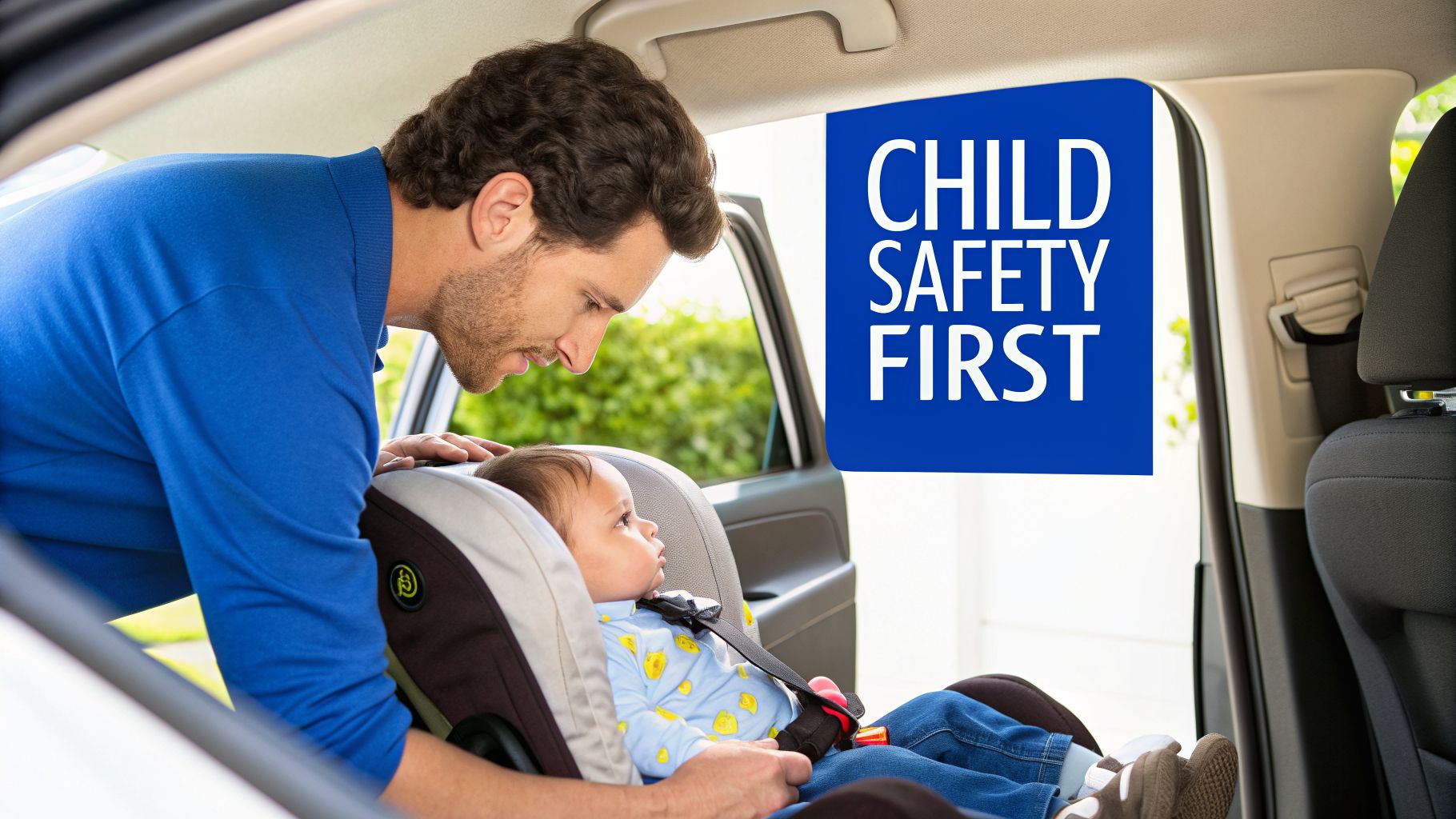
It helps to think about how a car seat actually works. Adult seat belts are made for fully-grown bodies. A car seat, on the other hand, is engineered to cocoon a child’s smaller, more fragile frame. During a collision, it absorbs and redirects the immense forces away from their delicate head, neck, and spine.
The numbers really drive this point home. Using a car seat correctly can slash the risk of fatal injury by a staggering 71% for infants and 54% for toddlers. You can find more details on these vital child passenger safety statistics from the National Safety Council.
A correctly chosen and installed car seat is your child’s first line of defense in a car accident. It’s a non-negotiable tool for preventing catastrophic injury.
As personal injury attorneys, our first hope is that you never need us. Prevention is everything. But when an accident does happen because someone else was careless, you need to know what to do next. This guide is designed to give you straightforward, real-world advice on car seat types, laws, and safety features. Our goal is to empower you to make the best choice, so your child is as safe as possible every single time you buckle them in.
Matching the Right Car Seat to Your Child’s Growth Stage
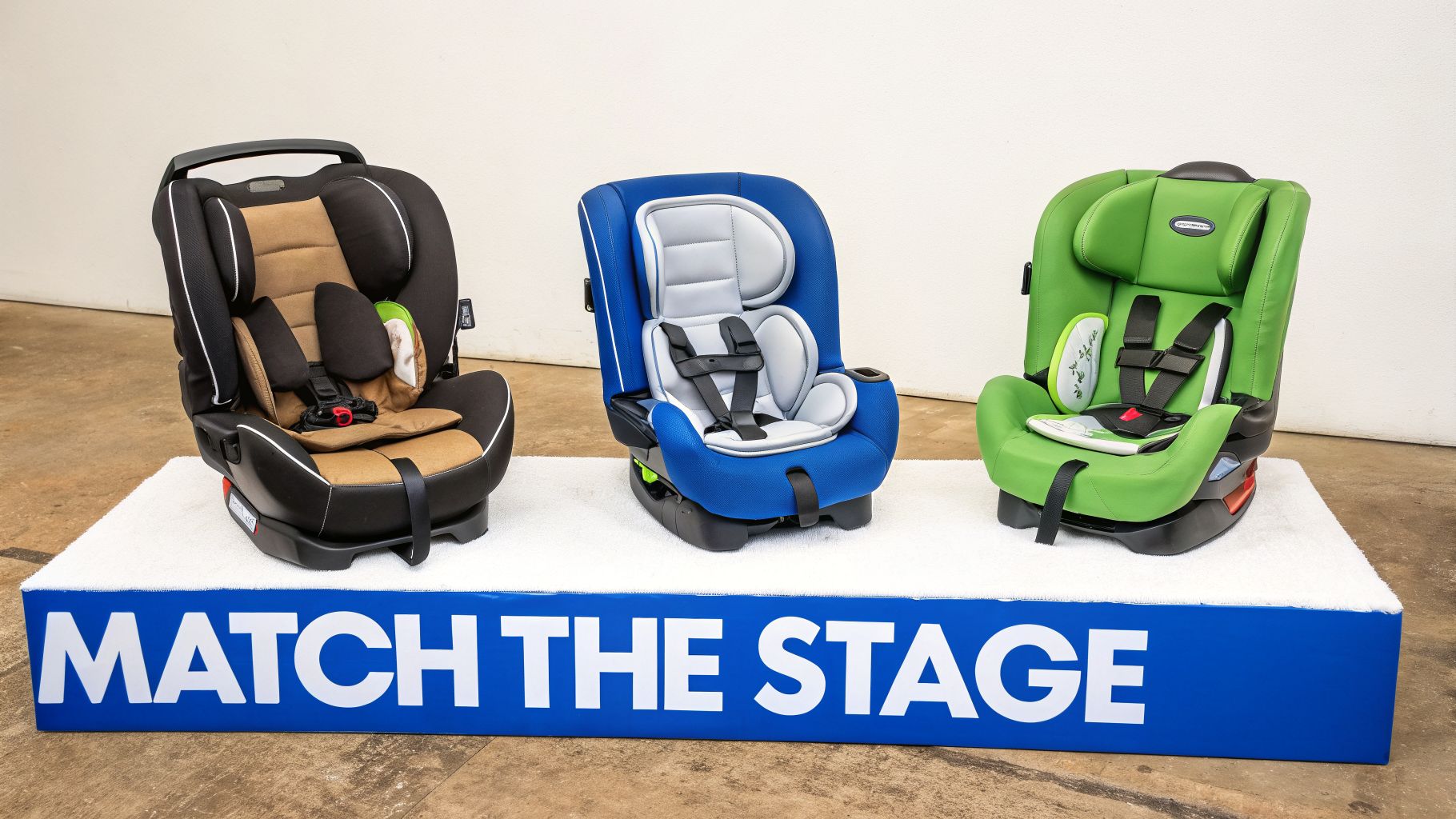
Choosing a car seat isn’t a one-and-done decision. It’s a journey that follows your child’s growth, with each seat providing specialized protection for their current size and developmental stage. Understanding the “why” behind each type of seat is what really matters.
For infants and toddlers, the absolute priority is protecting their incredibly fragile head, neck, and spine. This is the core reason safety experts and manufacturers stress the importance of rear-facing travel for as long as possible. A rear-facing seat acts like a protective cradle, spreading the force of a crash across the seat’s entire shell—the strongest part of your child’s body.
The Four Main Types of Car Seats
Before your child is ready to use a vehicle’s seat belt on its own, they’ll likely go through a few different car seats. Each one is built for a specific purpose tied to their height, weight, and age, though some modern seats offer the flexibility to adapt as they grow.
- Infant Car Seats: These are exclusively for newborns and small babies. They are always rear-facing and provide a snug, reclined position. Many come with a detachable carrier that clicks into a base you leave in the car, which is incredibly convenient.
- Convertible Car Seats: Just as the name implies, these seats “convert” from rear-facing for babies and toddlers to forward-facing for older kids. They cover a broad range of sizes, making them perfect for keeping your child in the safer rear-facing position for much longer.
- All-in-One Car Seats: Think of these as the marathon runners of the car seat world. An all-in-one seat is designed to be the only one you’ll ever need, transforming from a rear-facing seat to a forward-facing harness, and finally, into a booster seat.
- Booster Seats: Once a child outgrows the weight or height limits of their forward-facing harness, it’s time for a booster seat. A booster’s job is simple: it “boosts” the child up so the car’s adult seat belt fits them correctly. This means the lap belt sits low on their strong hip bones and the shoulder belt crosses their chest and shoulder, not their soft belly or neck. To get into the specifics, you can review our guide on backless booster seat requirements in Florida.
Understanding Florida’s Car Seat and Booster Laws
Picking out a great car seat is the first hurdle. The next, and arguably more important one, is knowing how to use it correctly according to Florida law. It helps to think of these laws not as the final word on safety, but as the absolute bare minimum.
Florida’s main car seat law is Statute 316.613. This law sets the baseline requirements based on a child’s age. While following it keeps you on the right side of the law, true safety often means going a step further. Most safety experts agree: it’s best to keep your child in each type of seat until they reach the maximum height or weight limit, not just the minimum age.
Age-Specific Requirements in Florida
So, what does that actually mean for you day-to-day? Here’s a breakdown of the rules you need to know. Each stage is designed to protect a child’s growing body in the event of a crash.
- Birth to 3 Years Old: Every child three years old and younger must ride in a separate carrier device or a manufacturer-integrated child seat. For infants and toddlers, this means using a rear-facing car seat.
- Ages 4 and 5: Children in this bracket must be secured in a separate carrier, an integrated seat, or a booster seat. This is the age when many parents consider moving from a 5-point harness to a booster.
The law gives you the floor, but best safety practices raise the ceiling. For instance, keeping your child rear-facing for as long as their convertible seat allows offers far better protection for their fragile head, neck, and spine.
Once a child turns six, Florida law no longer requires them to be in a booster seat. However, this decision should always come down to their physical size and how the adult seatbelt fits them—not just the number of birthdays they’ve had. For a more detailed look at this transition, check out our guide on the appropriate ages for booster seats in Florida.
What Goes Into the Safest Car Seats?
When you’re looking at a wall of car seats, it’s easy to wonder what separates a good one from a great one. While all seats sold must pass federal crash tests, the very best models go far beyond those minimums. It’s the advanced safety technology, often hidden from view, that truly sets them apart.
Let’s start with what happens in a side-impact crash. The top-tier seats feature advanced side-impact protection (SIP), which is like a protective cocoon for your child. Think deep side walls lined with multiple layers of specialized foam. Some even have external “pods” on the side of the shell that are designed to absorb and distribute crash forces before they even reach your child, offering critical protection for their head and torso.
The type of material inside the seat is just as important. You’ll often see energy-absorbing foam, like EPP (Expanded Polypropylene), mentioned in the specs. This isn’t just padding for comfort; it’s engineered to compress on impact. It acts like a microscopic crumple zone, soaking up the violent energy of a crash that would otherwise be transferred directly to your child’s body.
Stability Features That Make a Real Difference
Beyond absorbing impact, the best car seats focus on minimizing dangerous movement during an accident. These features are non-negotiable if you’re looking for maximum protection.
- Anti-Rebound Bar: When your child is rear-facing, a steel anti-rebound bar presses against the vehicle’s seat back. In a frontal crash, this simple-looking bar dramatically cuts down on the seat’s “rebound,” or backward rotation, keeping your child more contained and secure.
- Load Leg: This is a support pole that extends from the car seat’s base down to the floor of your vehicle. Its job is to absorb crash energy and stop the seat from pitching forward in a collision. This significantly reduces the forces on your child’s head and spine.
- 5-Point Harness: This is the gold standard for a reason, securing your child at the shoulders, hips, and between the legs. For a deeper dive into why this setup is so crucial, you can read all about the 5-point restraint system.
The demand for these advanced features is clear. The global child safety seats market has been growing rapidly, a trend fueled directly by innovations that keep our kids safer on the road.
To see how these technologies come together in top-rated models, check out this guide to the best car seats of 2025. You can also learn more about the trends shaping the child safety seat market.
Proper Installation Is Your Most Important Safety Check
You can buy the most expensive, highest-rated car seat on the market, but if it’s not installed correctly, those advanced safety features won’t do their job. It’s a tough pill to swallow, but this is the single most common and dangerous mistake parents make. The good news is, it’s entirely avoidable.
The entire point of a car seat is to absorb and distribute the immense forces of a crash. For it to work, it has to be rigidly connected to the vehicle’s frame. A loose car seat can’t protect your child—instead, it becomes part of the problem.
Whether you’re using your car’s built-in LATCH system or the vehicle’s seat belt, the goal is the same: make the car seat feel like it’s part of the car itself. When installed correctly, the seat’s safety features can work together as a protective system during an impact.
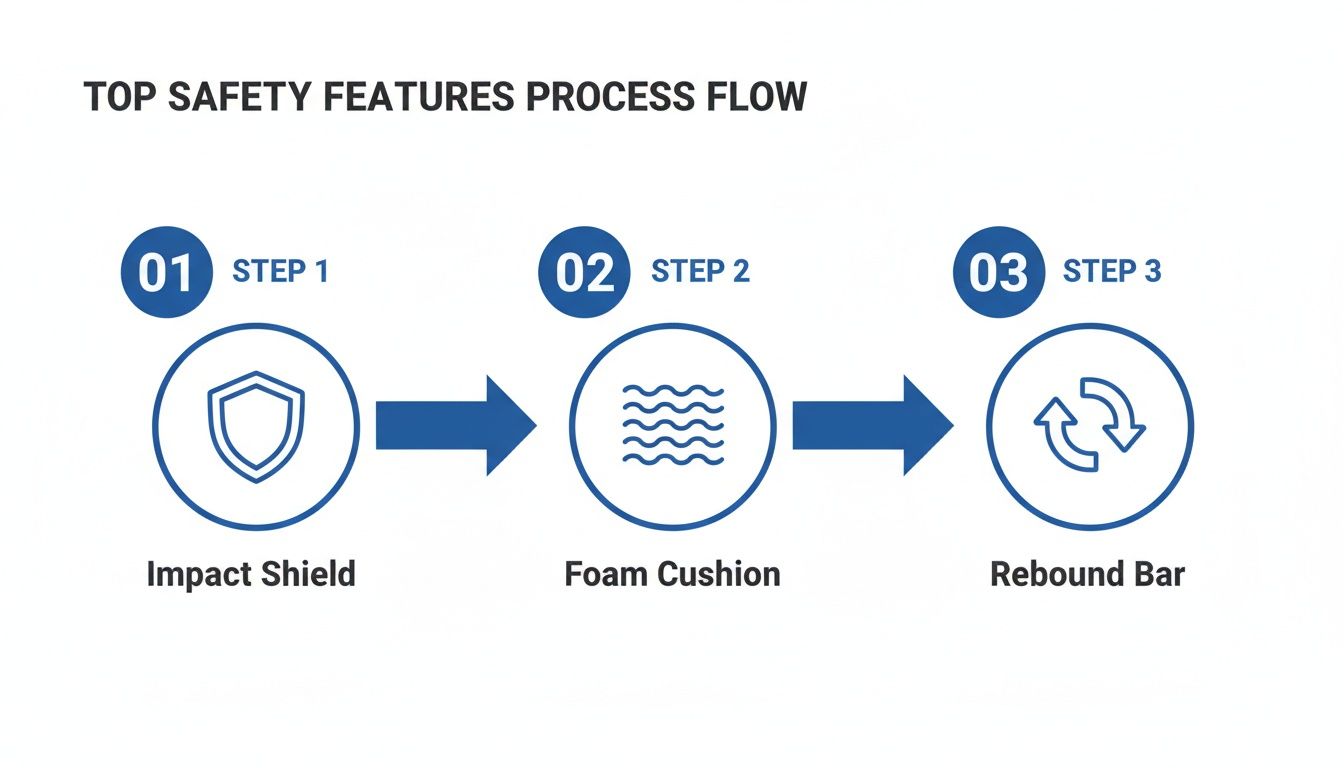
As you can see, features like impact shields and rebound bars form a layered defense to manage crash energy before it ever reaches your child.
Two Simple Tests for a Secure Fit
Once you’ve installed the seat, there are two non-negotiable checks you need to perform every single time. These quick tests are the best way to confirm you’ve got a rock-solid installation.
- The One-Inch Test: Grab the car seat at the belt path (the slot where the seat belt or LATCH strap passes through). Now, give it a firm tug side-to-side and front-to-back. The seat should not move more than one inch in any direction. If it does, you need to tighten it more.
- The Harness Pinch Test: After you’ve buckled your child in, find the harness strap near their collarbone. Try to pinch a horizontal fold of the webbing. If you can grab a pinch, the harness is too loose. Tighten it until your fingers slide right off the strap.
Getting it right is critical. You can also explore detailed crash test research from the IIHS to better understand the forces at play.
For parents in the Tampa area, please don’t leave this to guesswork. You can schedule a free inspection with a certified Child Passenger Safety Technician who will teach you exactly how to install your seat in your car, giving you complete peace of mind.
Mastering the installation process is a skill you’ll use for years. Once you have it down, you’ll be well-prepared for the next step. When your little one gets bigger, you can check out our guide on what to look for in 2nd stage car seats for growing toddlers.
What to Do After a Car Accident Involving Your Child
You can have the safest car seat on the market and install it perfectly, but you can’t control the actions of other drivers. When a crash happens because someone else was negligent, your world shrinks to one single priority: your child.
The absolute first thing you must do is get them checked out by a medical professional. This is non-negotiable, even if your child seems perfectly fine. Adrenaline is a powerful chemical that can easily mask pain from serious injuries like concussions or internal bruising, which often have no immediate, visible signs.
A doctor’s visit right after the accident creates an official medical record of your child’s condition. This professional evaluation is incredibly important down the line.
While you’re waiting for first responders, try to document the scene as best you can. Use your phone to take pictures of both cars, the surrounding road, and any injuries you can see. You’ll need to swap insurance and contact information with the other driver, but it’s best to avoid any conversation about who was at fault.
For a more detailed checklist, our guide on what to do after a car accident in Florida walks you through those first critical moments.
How a Personal Injury Firm Can Help
Once your child’s immediate medical needs are handled, the sheer weight of what comes next can feel crushing. This is where a personal injury firm can lift that burden from your shoulders. We handle the crash investigation, speak with medical experts to understand the true extent of your child’s injuries, and manage all the back-and-forth with the insurance companies.
Your job is to focus on your family. Our job is to handle the legal complexities and fight for the resources your family needs to heal properly.
This frees you up to be there for your child, which is exactly where you need to be. Beyond the immediate safety and medical concerns, you also have to think about the financial damage to your vehicle. If you’re dealing with a crash in Florida, you can assess your car’s value loss after an accident in Florida to get a clearer picture.
Our goal is always to build a thorough case that accounts for every need—both now and in the future—to ensure you have what you need for a full recovery.
Common Questions About Car Seat Safety
As parents, we’re all looking for straightforward answers to keep our kids safe in the car. When you’re standing in the aisle looking at dozens of car seats, the questions can feel overwhelming. Let’s clear up a few of the most common ones I hear all the time.
A big one is about buying used car seats. It’s tempting to save a few dollars, I get it, but this is one area where it’s just not worth the gamble. It’s a major safety risk because you simply can’t know the seat’s full history. Was it in a fender bender? Even a minor collision can create hairline fractures you can’t see, compromising the seat’s integrity when you need it most.
Understanding Expiration and Rear-Facing Rules
Another thing many parents don’t realize is that car seats actually have an expiration date. Think about it: the plastic and other materials bake in the Florida sun day after day. Over time, that intense heat and UV exposure makes the materials brittle and far less effective in a crash.
- Finding the Expiration Date: To find the date, look for a sticker on the back or bottom of the seat itself. It should have a “Do Not Use After” date printed right on it. If you can’t spot the sticker, check the owner’s manual. It will tell you how many years the seat is good for, which you can calculate from the date of manufacture (also found on a sticker).
- Turning Forward-Facing: While Florida law permits a child to be turned forward-facing at age one, this is a bare minimum, not a best practice. All safety experts agree: keep your child rear-facing for as long as possible. This means until they hit the maximum height or weight limit for the rear-facing position on their convertible seat.
Think of a rear-facing seat as a protective shell. In a collision, it cradles the child’s head, neck, and spine, spreading the immense crash forces across the entire seat. Turning a child forward too early exposes their still-developing neck and heavy head to dangerous forces.
Following best practices, not just the legal minimums, is the single best thing you can do for your child’s safety on the road. Waiting to turn them forward-facing is probably one of the most important car seat safety decisions you’ll make.
Dealing with the aftermath of a car accident is chaotic, and it’s even more stressful when your child has been hurt. The experienced team at Martin Hernandez, P.A. can handle the legal details so you can focus on what matters most—your family’s recovery. If you or your child were injured, please contact us for a free consultation at https://injurylawyersoftampa.com.