
The moments after a car wreck are a blur of adrenaline and confusion. It’s tough to think straight, but what you do right then and there can make or break your ability to recover compensation later. After a collision in Tampa, your focus boils down to three things: ensure everyone’s safety, document everything, and report the incident to the police. These first actions build the foundation for any potential legal claim and are exactly what a Tampa car accident lawyer will ask about first.
Your First Steps at the Scene of a Tampa Wreck
Chaos is the first word that comes to mind in the aftermath of a crash. The best thing you can do is try to stay calm and methodical. The evidence you collect and, just as importantly, the things you don’t say can drastically alter the outcome of your insurance claim.
Right now is not the time to hash things out with the other driver or brush off your injuries. Adrenaline is a powerful painkiller, and an ache you barely notice at the scene could become a debilitating injury days later. Protecting your rights starts the second the crash happens.
Secure the Scene and Your Safety
First thing’s first: safety. If your car is still drivable, get it over to the shoulder. This is especially critical on treacherous roads like I-275 or a busy stretch of Dale Mabry Highway, where a disabled vehicle can cause a secondary, often worse, collision. Flip on your hazard lights immediately.
Next, check on yourself and anyone else in your car. Even if you think you’re okay, call 911. You need police on the scene to create an official accident report, which is an indispensable piece of evidence. You also want paramedics to check you out, creating an immediate medical record of your condition right after the impact.
Document Everything Meticulously
Once it’s safe to move around, turn your smartphone into your best tool. Start taking photos and videos of everything, and I mean everything. Don’t just get a quick snap of your dented bumper; paint a full picture of the scene for someone who wasn’t there.
Here’s a quick checklist of what to capture:
- Vehicle Damage: Get close-ups of the points of impact on all cars involved, then step back for wider shots that show their positions relative to each other.
- License Plates and VINs: A clear picture of the other vehicle’s license plate is a must. If you can, also get their Vehicle Identification Number (VIN), usually visible on the driver’s side of the dashboard.
- The Scene: Take photos of skid marks, debris from the crash, relevant traffic signs or signals, and the general road and weather conditions.
- Visible Injuries: If you or your passengers have any cuts or bruises, photograph them. These can be important later.
I’ve seen it time and again: people only take pictures of their own car. That’s a mistake. You need comprehensive photos of all vehicles and the surrounding area to give your attorney the full context of what happened.
This simple flow chart breaks down the critical steps to take right after a wreck.
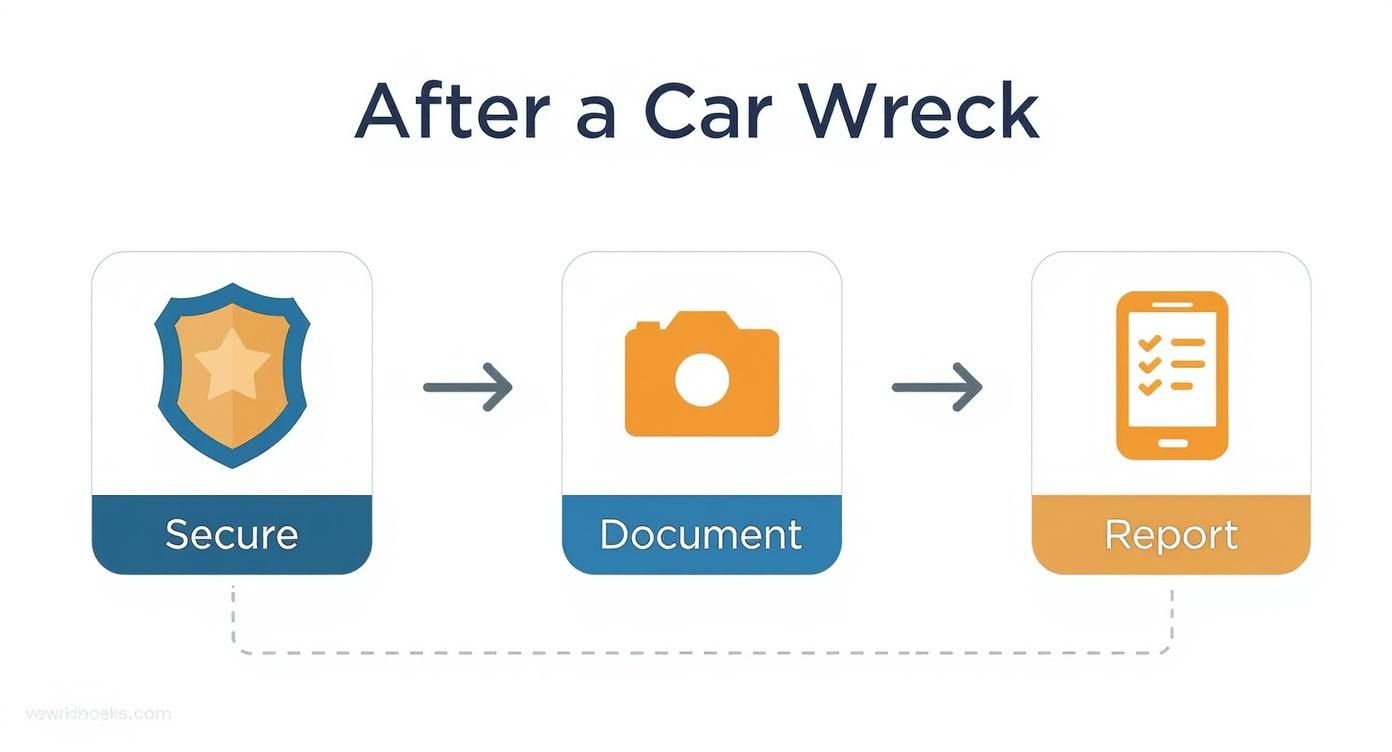
These three pillars—securing the scene, gathering evidence, and reporting the crash—are your best defense in the critical moments after an accident.
Be Careful What You Say
When you speak with the other driver, keep it civil but brief. You need to exchange basic information: name, phone number, and insurance policy details. That’s it. Do not get into a discussion about who was at fault.
Avoid saying things like “I’m so sorry” or “I didn’t even see you.” An insurance adjuster will twist those simple phrases into an admission of guilt, even if you were just being polite. Stick to the facts and let the police officer do their job.
For a more detailed look at what to do in the hours and days that follow, you can read through our complete guide on what to do after a car accident. It’s also worth understanding the benefits of a dash cam, as that kind of unbiased video footage can shut down any “he said, she said” arguments before they even start.
Understanding Tampa’s Dangerous Roads
If you’ve driven around Tampa, you know the feeling. It’s more than just traffic; it’s an obstacle course. With a constant stream of tourists, explosive population growth, and a web of highways that are perpetually jammed, our local roads are uniquely risky. This isn’t just an observation—the data shows that Hillsborough County is one of the most dangerous places to get behind the wheel in all of Florida.
This sheer volume of cars and trucks creates a high-stakes environment where a routine drive can go wrong in a heartbeat. It’s exactly why having a local car accident lawyer in Tampa isn’t just a good idea; it’s a necessity. An attorney who truly gets the dynamics of our roads can make a world of difference when you’re trying to put your life back together.
The Numbers Don’t Lie
Unfortunately, Tampa has earned a reputation as one of the most hazardous cities for drivers in the entire country. The numbers are staggering and highlight why car accident lawyers stay so busy here.
In 2021 alone, the City of Tampa saw 28,316 traffic crashes. That breaks down to more than 75 accidents every single day. Even more concerning is that this was a huge 17% jump from the 24,218 crashes reported in 2020. This sharp upward trend is a reality that Tampa residents face every time they commute.
What’s causing this perfect storm? A few key factors are at play:
- Exploding Population: Hillsborough County is one of the fastest-growing regions in the U.S., adding thousands of new drivers to an infrastructure that can’t keep up.
- Constant Tourism: Millions of visitors flock to Tampa each year. Many are unfamiliar with our roads and traffic patterns, adding a layer of unpredictability to the mix.
- Heavy Commercial Traffic: As a major port city, Tampa’s highways are crowded with large commercial trucks, which dramatically increases the risk of severe, high-impact collisions.
This means that on any given day, you’re sharing the road with rushed commuters, lost tourists, and massive semi-trucks.
An attorney with local experience knows that a crash on the Howard Frankland Bridge at 5 p.m. involves different factors—and different insurance company tactics—than a weekend collision near Busch Gardens. This granular knowledge is key.
Know Tampa’s Most Notorious Hotspots
While a crash can happen anywhere, certain roads and intersections in Tampa are practically magnets for accidents. They are the epicenters of everything from minor fender-benders to catastrophic, life-altering events. An experienced car accident lawyer in Tampa knows these hotspots like the back of their hand—and understands the common types of collisions that happen there.
Major arteries like I-275, Dale Mabry Highway, Hillsborough Avenue, and Bruce B. Downs Boulevard are infamous for their gridlock and high-speed traffic. These aren’t just roads; they’re complex systems where one mistake can easily set off a multi-car pileup. The way some of these intersections are designed, coupled with aggressive driving, makes them especially dangerous.
For anyone driving in the city, knowing which areas require extra vigilance is critical. You can learn more by reading our guide on the top 5 dangerous intersections in Tampa and how to stay safe. Understanding these trouble spots not only helps you drive safer but also shows why, if an accident does happen, you need a lawyer who gets the unique challenges these locations present.
How to Find and Vet the Right Tampa Attorney
After a crash, looking for a car accident lawyer in Tampa can feel like the last thing you have the energy for. You’re bombarded with billboards, TV ads, and online pop-ups. So, how do you cut through the noise and find someone who will genuinely fight for you?
The secret is to look past the flashy slogans. You need to focus on substance, real-world experience, and a proven track record right here in Hillsborough County. Think of it less like a search and more like an interview process—you’re hiring a critical partner for your recovery.
Sizing Up a Law Firm Online
A law firm’s website is their digital handshake. It gives you an immediate feel for their practice, and you’re not just looking at the design. You’re looking for evidence of actual expertise.
Here’s what really matters:
- Specialization: Do they dabble in a dozen different practice areas, or is their primary focus on personal injury and car accidents? A lawyer who lives and breathes auto collision cases will know the local courts, the insurance company tactics, and the medical complexities inside and out.
- Real Results: Hunt for a “Case Results” or “Verdicts and Settlements” page. Vague promises are a major red flag. Good firms aren’t shy about showing the real-world outcomes they’ve secured for past clients. This proves they can deliver when it counts.
- Real Reviews: Look past the star ratings. Are the testimonials detailed? Do they mention lawyers by name and talk about communication and the process? That’s far more telling than a generic “they got me money” comment.
A site that offers helpful articles and resources shows a firm is committed to empowering its clients, not just signing them. For a more detailed guide on this, we’ve put together a resource on how to choose a car accident lawyer that digs deeper into these criteria.
Looking Beyond the Website: Referrals and Directories
Your research shouldn’t stop at the firm’s homepage. Unbiased sources are crucial for getting the full picture.
A personal referral from a friend or family member who had a good experience with a local attorney is often the best place to start. It’s a powerful, trusted endorsement.
Legal directories like Avvo, Martindale-Hubbell, and Super Lawyers can also be incredibly useful. They use peer reviews and objective standards to rate attorneys. Pay special attention to endorsements from other local lawyers. When an attorney’s competitors respect their work, it speaks volumes about their reputation in the Tampa legal community.
Don’t rely on just one source. A smart approach is to find a few highly-rated lawyers on a directory, then check their websites for the signs of expertise we just talked about. Finish by reading their Google reviews. This gives you a well-rounded view of who you’re dealing with.
Building Your Shortlist for Consultations
The goal here is to narrow down the field to just two or three top contenders. At this point, you’ll schedule free consultations to meet them face-to-face (or on a video call).
Your shortlist should be made up of attorneys who clearly have:
- A deep focus on Florida car accident law.
- A public history of successful settlements and verdicts.
- Positive reviews from both clients and other lawyers.
- A professional, client-first approach that feels authentic.
Once you have this list in hand, you’re ready for the most important part: the initial consultation. This is your chance to ask the tough questions and decide who you truly trust to handle your case.
Getting the Most Out of Your Initial Consultation
That first sit-down with a potential car accident lawyer is a big deal. It’s more than just a meet-and-greet; it’s your chance to interview them, get a feel for their expertise, and decide if you can trust them with your case. Walking in prepared shows you’re serious and, more importantly, helps you get the answers you need to make the right choice.
This meeting is where you take the reins. You’ll be sizing up their experience, listening to their initial thoughts on your case, and seeing how they communicate. A productive consultation really boils down to two things: bringing the right paperwork and asking the right questions.

What to Bring to the First Meeting
To give an attorney the clearest possible picture of what happened, you need to show up with all your documentation. The more info you provide upfront, the more detailed and useful their initial evaluation will be. A little organization goes a long way here.
Try to gather these key items before you go:
- The Official Police Report: This is ground zero. It has the officer’s initial take, witness info, and other crucial details from the scene.
- Photos and Videos: Don’t leave anything out. Bring every picture you took of the vehicle damage (yours and theirs), the general scene, road conditions, and any visible injuries you had.
- Medical Records: This isn’t just about the big stuff. Include hospital discharge papers, every bill from doctors or physical therapists, and any written diagnoses you’ve received.
- Proof of Lost Wages: A simple letter from your HR department or your last few pay stubs can paint a clear picture of the income you’ve lost while recovering.
- Insurance Information: Make sure you have your own auto policy details handy, along with whatever insurance information you were able to get from the other driver.
Having this evidence organized is the first real step toward building a strong claim. For a deeper dive, check out our guide on how to preserve evidence after a car accident in Tampa, FL.
The Must-Ask Questions for Any Tampa Lawyer
Think of this as your interview. You’re hiring someone for a critical job, so don’t be afraid to ask tough, direct questions to get a real sense of their ability. Their answers will tell you a lot about their experience, their courtroom savvy, and whether you’ll even be able to get them on the phone.
Here are a few questions I always recommend asking:
- What percentage of your cases are car accidents right here in the Tampa area? You’re looking for a local specialist who lives and breathes this stuff, not a general practice lawyer who just dabbles in personal injury.
- Based on what you’ve seen so far, what’s your gut reaction and initial strategy for my case? This question gets them off their script. It tests their ability to think on their feet and gives you a preview of how they’ll approach your unique situation.
- If I hire you, who will be my main point of contact? What’s the firm’s policy on returning calls and emails? Vague answers here are a bad sign. You need to know you can reach your team when you have questions.
- How much trial experience do you have in Hillsborough County, and what’s your read on local juries? An attorney’s familiarity with the local courts is a massive advantage. They know the other lawyers and the judges. They understand that local juries have heard it all, especially with some of the most dangerous roads in the state right here. For instance, Interstate 275 sees 1,800 or more crashes annually, and Interstate 4 isn’t far behind with 1,500 crashes per year. A seasoned lawyer knows how these statistics and high-risk areas play in a Hillsborough County courtroom.
“The quality of an attorney’s answers to these questions will tell you everything you need to know. A confident, experienced lawyer will provide direct, specific answers. Vague or evasive responses are a major red flag.”
Understanding Florida’s Contingency Fee System
Let’s talk about money, because it’s one of the biggest worries for people after a wreck. The good news is that almost every reputable personal injury lawyer in Florida works on a contingency fee basis.
In short, this means you pay zero upfront costs. The attorney’s fee is contingent on them actually winning your case.
Here’s the breakdown:
- No Win, No Fee: It’s as simple as that. If the lawyer doesn’t get you a settlement or win a verdict at trial, you owe them nothing for their time. This levels the playing field, giving everyone access to legal help.
- A Percentage of the Recovery: When they do win your case, their fee is a pre-determined percentage of the total money they recover for you. This is all spelled out in the agreement you sign before they start working.
- Case Costs are Covered: Law firms front the money needed to build a strong case—things like hiring expert witnesses, paying court filing fees, and requesting records. These expenses are then paid back out of the settlement at the end.
This setup is great because it means your lawyer’s goals are perfectly aligned with yours. They only get paid if you get paid, so they’re motivated to fight for the absolute maximum compensation possible. Just make sure you ask for a clear explanation of the fee percentage and how case costs are handled before you sign anything.
The Legal Process After You Hire Your Lawyer
Hiring a Tampa car accident lawyer is a huge relief, but it’s really just the starting line. Think of it as putting a seasoned coach in your corner for a fight you didn’t ask for. Knowing the game plan can take a lot of the mystery—and stress—out of what comes next.
Once that representation agreement is signed, the first thing your lawyer does is step between you and the insurance companies. No more calls from adjusters trying to twist your words or push a quick, cheap settlement. Your only job now is to focus on getting better.
Building Your Case: The Investigation Phase
While you’re healing, your legal team gets to work, and they dig deep. Right away, they’ll fire off a spoliation letter to the other side. This is a crucial legal notice that essentially says, “Don’t you dare touch that evidence.” It legally requires them to preserve things like the other driver’s vehicle, its “black box” data, and any dashcam footage that might exist.
This isn’t just about glancing at the police report. A proper investigation is far more intense.
Here’s what’s happening behind the scenes:
- Gathering Medical Records: Your team will start collecting every piece of paper related to your injuries—from the ambulance report and ER charts to notes from your physical therapist and specialists.
- Issuing Subpoenas: They have the power to demand evidence. This could mean getting the other driver’s cell phone records to see if they were texting, or pulling traffic camera footage from the City of Tampa that caught the collision.
- Tracking Down Witnesses: They’ll find and interview everyone listed on the police report, getting their official statements on the record while the details are still sharp in their minds.
- Hiring Experts: If the other driver is denying fault, your car accident lawyer in Tampa might bring in an accident reconstruction expert. These specialists can recreate the crash to prove exactly what happened.
This phase is all about laying a foundation of solid, undeniable proof. The more evidence we have, the stronger our position when we start talking numbers with the insurance company.
What’s Your Claim Actually Worth?
One of the most important things an attorney does is figure out the true, full value of your case. It’s way more than just adding up your medical bills. Insurance adjusters love to make quick offers that conveniently ignore the long-term impact of your injuries.
We calculate damages by looking at two distinct categories.
Economic Damages are the clear, out-of-pocket costs with a receipt:
- All medical bills you’ve already paid and will have to pay in the future.
- Wages you lost because you couldn’t work.
- Future income you’ll lose if your injuries keep you from doing your old job.
- The cost to repair or replace your car.
Non-Economic Damages are just as real, but they don’t have a price tag:
- Pain and suffering.
- Emotional distress and anxiety.
- Loss of enjoyment of life (not being able to play with your kids, go for a run, or enjoy your hobbies).
Your lawyer will use your medical records, expert opinions, and their firsthand experience with Hillsborough County juries to assign a fair dollar amount to these damages.
The Demand and the Negotiation Dance
Once you’ve reached what doctors call Maximum Medical Improvement (MMI)—meaning you’re as recovered as you’re going to get—it’s time to make our move. Your lawyer compiles everything into a powerful demand package. This isn’t just a letter; it’s a meticulously organized binder that outlines the facts, presents the evidence, details every last dollar of your damages, and makes a formal demand for a settlement.
That package lands on the insurance adjuster’s desk, and the negotiations begin.
This is where having an experienced negotiator is priceless. They know the insurance company’s playbook, they anticipate the lowball offers, and they know how to counter every argument. This back-and-forth can take some time, but it’s the best way to make sure you’re treated fairly.
If the insurance company agrees to a fair number, the case is settled. But what if they refuse to be reasonable?
When a Lawsuit Becomes Necessary in Hillsborough County
If the insurer digs in their heels and won’t make a fair offer, filing a lawsuit is the next logical step. Now, this doesn’t mean you’re automatically headed for a dramatic courtroom trial. In reality, over 95% of personal injury cases settle before a jury ever hears them.
Filing a lawsuit simply cranks up the pressure. It moves the dispute into the formal court system, which has strict rules and deadlines. This part of the process includes things like discovery (exchanging evidence under oath), depositions, and formal mediation. It’s a longer road, but sometimes it’s the only way to make an insurance company pay what your case is truly worth.
To get a better sense of this part of the journey, you can learn more about the personal injury lawsuit process in Tampa and what to expect in our detailed guide.
Common Questions We Hear About Tampa Car Accident Claims
After a car crash in Tampa, you’re suddenly thrown into a world of unfamiliar rules, insurance adjusters, and medical jargon. It’s overwhelming. You’re trying to heal, figure out how to pay your bills, and understand your rights all at the same time.
Here are some of the most pressing questions we get from clients every day, with straightforward answers to help you get a handle on your situation.
How Long Do I Really Have to File a Lawsuit in Florida?
This is one of the most critical questions, and the answer recently changed. In Florida, the statute of limitations for bringing a personal injury lawsuit from a car wreck is now just two years from the date of the accident.
That deadline used to be four years, so this change puts immense pressure on accident victims. If you miss that two-year window, your case will almost certainly be thrown out of court. You’ll lose your right to demand compensation for good.
What Does Florida’s “No-Fault” Law Actually Mean for Me?
Florida’s “no-fault” insurance system confuses a lot of people. In simple terms, it means you have to turn to your own car insurance first, no matter who was responsible for the crash.
This initial coverage comes from your Personal Injury Protection, or PIP, benefits. Here’s the breakdown of what your own policy covers right away:
- 80% of your initial medical bills.
- 60% of your verified lost wages.
- A total benefit capped at the standard $10,000.
Now, if your injuries are serious—think permanent injuries, significant scarring, or the loss of an important bodily function—the game changes. You can then step outside the no-fault system and pursue a claim directly against the driver who caused the crash. This is how you recover damages for things PIP won’t touch, like pain and suffering.
How Much Is It Going to Cost to Hire a Lawyer?
Concerns about cost are completely valid, especially when you’re already facing a mountain of medical bills. The good news is that nearly all reputable Tampa personal injury lawyers work on a contingency fee basis.
This arrangement is designed to give everyone a fair shot at justice. You pay zero upfront fees to get your case started. Your attorney only gets paid if they win money for you, and their fee is a pre-agreed-upon percentage of your final settlement or jury award.
Let me be clear: if we don’t recover any money for you, you don’t owe us a dime in attorney’s fees for our work. Our success is tied directly to yours.
What Happens If the Other Driver Doesn’t Have Insurance?
This is a scary thought, but it’s a reality on Tampa’s roads. If the at-fault driver is uninsured—or doesn’t have enough insurance to cover your losses (underinsured)—you aren’t necessarily out of luck.
This is exactly why having Uninsured/Underinsured Motorist (UM/UIM) coverage on your own policy is so important. It’s an optional but essential safety net. A good lawyer will help you file a claim with your own insurance company under your UM/UIM policy and fight to make sure they honor the benefits you’ve been paying for.
If you have more questions or need help right now, the team at Martin Hernandez, P.A. is here to give you the clear answers and strong advocacy you need. We prepare every case as if it’s going to trial, fighting for the full compensation you deserve. Contact us today for a free, no-obligation consultation at https://injurylawyersoftampa.com.