
Before you even think about picking a lawyer, what you do in the first few hours after a crash can make or break your case. The chaos and adrenaline of an accident are overwhelming, but your top priorities are simple: your health, documenting everything, and reporting the incident correctly.
Getting these initial steps right lays the groundwork for everything that follows.
Critical First Moves After a Florida Car Accident
The moments after a car crash are a blur. It’s tough to think clearly when you’re shaken up, but the actions you take right then and there can either build a rock-solid foundation for your claim or create roadblocks your attorney will have to fight to overcome.
The 14-Day Rule and Your Health
In Florida, getting checked out by a doctor isn’t just common sense—it’s a legal deadline. The state’s Personal Injury Protection (PIP) law is crystal clear: you must seek initial medical treatment within 14 days of the accident to use your own PIP benefits.
Miss that two-week window, and you could be kissing up to $10,000 in coverage for your medical bills and lost wages goodbye.
Even if you think you’re okay, don’t tough it out. Injuries like whiplash, concussions, or even internal bleeding often don’t show symptoms right away. A prompt medical evaluation creates an official paper trail that connects your injuries directly to the crash, which is priceless evidence down the line.
Document the Scene Like an Investigator
If you’re not seriously injured and it’s safe to move around, your smartphone is the most powerful tool you have. Think of yourself as a crime scene investigator, because that’s essentially what you’re doing—gathering crucial evidence.
- Take Photos of Everything: Start with wide shots of the entire scene to show how the cars ended up, where they are in the road, and any nearby traffic signals. Then, get close-ups of the damage to all vehicles, skid marks, and anything else that seems relevant.
- Capture the Conditions: Was the sun in someone’s eyes? Was the road wet from rain? Were there potholes or debris? Snap pictures of anything that could have played a role.
- Get Everyone’s Information: You’ll need to swap names, phone numbers, and insurance details with the other driver. Just as importantly, try to get the names and contact info for any witnesses. They often disappear quickly, and their objective account can be invaluable.
Think about it this way: your attorney wasn’t there to see the crash happen. The photos and notes you take are the next best thing. They help paint a vivid, undeniable picture of what really happened, making it much tougher for the insurance adjuster to argue about the facts.
This brief process flow chart highlights the three essential actions to take immediately following an accident.
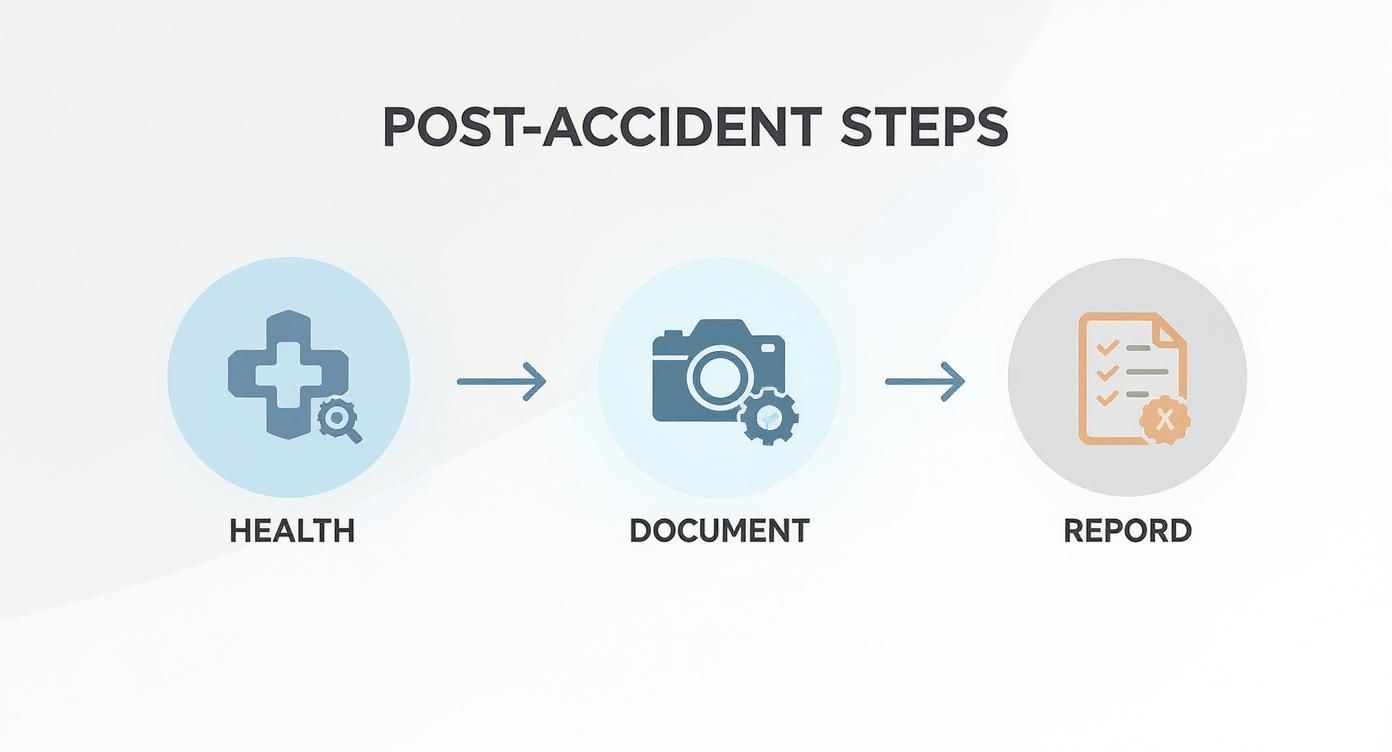
Focusing on your health, documenting evidence, and reporting the incident correctly are the pillars of a strong claim.
While you’re dealing with the initial shock, don’t forget about your car. Finding quality auto repair services is a key part of getting your life back to normal. For an even more detailed guide on the immediate aftermath, you can learn more about exactly what to do after a car accident here.
Vetting a Lawyer’s Real-World Experience
A law degree on the wall is one thing, but it doesn’t tell you if an attorney has the battle-tested knowledge needed to win a Florida car accident case. When your financial recovery is on the line, you can’t afford to hire a general practitioner who just dabbles in personal injury.
You need to look past the generic “years of experience” claims and dig into what that experience actually is. The goal is to find someone who lives and breathes auto accident law. A firm that focuses on this niche understands the specific tactics insurance companies use in Tampa and how to counter them effectively.
Specialization Is Your Advantage
Think of it this way—you wouldn’t ask your family doctor to perform heart surgery. The same logic holds true for lawyers. An attorney who dedicates their practice to car accident claims brings a focused insight that a jack-of-all-trades lawyer simply can’t offer.
This kind of specialization means they’re already up to speed on:
- Specific Accident Types: They’ve handled cases just like yours, whether it was a multi-car pileup on I-4 or a T-bone collision at a busy downtown intersection.
- Florida Insurance Nuances: They know the loopholes in PIP coverage, the strategies for uninsured motorist claims, and the adjusters who work for the big insurance companies.
- Building Strong Cases: They have a go-to network of medical experts and accident reconstructionists who can provide the powerful evidence needed to maximize your claim.
When you sit down for a consultation, ask them point-blank: “What percentage of your cases are car accidents?” A true specialist will be proud to tell you it’s their main focus.
The Power of Trial Readiness
Insurance companies are in the business of protecting their profits, which means paying out as little as possible. They keep files on local attorneys, and they know who will roll over for a quick, low settlement and who will fight them all the way to the courthouse.
This is where a lawyer’s trial record becomes your secret weapon.
An attorney who prepares every single case as if it’s headed for trial sends a powerful message to the insurance company: we’re not taking the first lowball offer that comes our way. That willingness to fight often forces them to the negotiating table with a much more serious offer. To see just how much this matters, you can learn more about why trial experience is so important when hiring a personal injury attorney.
An attorney’s reputation for being a fighter is one of your biggest assets. It makes the insurance company take your claim seriously from day one and can lead to a better, faster resolution.
While it’s true that the vast majority of personal injury cases—about 96%—settle before trial, your lawyer’s readiness is what gets you the best possible settlement. The data backs this up. Car accident claims have a high success rate, with around 61% ending in a settlement that favors the injured person. This shows just how effective skilled representation can be.
As a final check, always make sure any lawyer you consider is in good standing with The Florida Bar. It’s a quick search that confirms they’re properly licensed and have no disciplinary actions against them. It’s a simple step that provides crucial peace of mind.
Making Your Initial Consultation Count
That free initial meeting with a lawyer isn’t just their sales pitch—it’s your job interview for them. This is your chance to look past the website slogans and see if they genuinely have the skill, resources, and even the right personality to handle your case. To get this right, you need a game plan.
When you walk in prepared with the right documents and a list of smart questions, you completely change the dynamic. The meeting transforms from a passive conversation into an active evaluation. It gives the attorney what they need for a real, substantive assessment of your case and, more importantly, it gives you the power to find a car accident lawyer who is truly the right fit.
What to Bring to Your First Meeting
To make the most of everyone’s time, try to gather any documents you have related to the accident. Don’t stress if your file is incomplete; just bring whatever you’ve been able to get your hands on. This gives the attorney a running start in piecing together the facts.
Your folder should ideally include:
- The Police Report: This is often the cornerstone of the initial review.
- Photos and Videos: Bring any pictures or videos you took of the accident scene, vehicle damage, and your injuries. Visuals tell a powerful story.
- Medical Records: This can be anything from hospital discharge papers and doctor’s bills to notes on prescribed treatment plans.
- Insurance Information: Have your own policy information handy, along with any letters or emails you’ve exchanged with any insurance company.
Having this information ready helps the lawyer spot the strengths and potential weak spots in your claim right from the get-go. For a more detailed look, our guide on what evidence you should preserve after a car accident is a great resource.
Asking the Right Questions to Get Real Answers
Once the attorney has looked over your paperwork, the ball is in your court. The questions you ask now will pull back the curtain on how their firm operates and what you can realistically expect if you sign on with them. This is how you find a true partner for the road ahead.
Forget the generic stuff. You need to ask questions that get to the practical realities of what it will be like working together.
This meeting is as much about assessing personal chemistry as it is about legal expertise. You’re entering a long-term partnership during a stressful time. You must feel a genuine sense of trust and confidence in the person who will be fighting for you.
To help you vet a lawyer’s experience, communication style, and initial thoughts on your case, here are some essential questions to ask:
On Experience & Strategy:
- “Have you handled cases similar to mine before? What was the outcome?” You need a lawyer who understands the specific nuances of your type of accident, not just a generalist.
- “Based on what you see, what is your initial assessment? What do you foresee as the biggest challenges?” This reveals their honesty and strategic thinking. A good lawyer will be upfront about potential hurdles.
On Day-to-Day Management:
- “Who will be my primary point of contact? Will I be working directly with you or a paralegal?” This sets expectations about who you’ll be talking to. You need to know if you’re hiring the lawyer or their staff.
- “How will you keep me updated on my case? How often should I expect to hear from you?” This clarifies their communication protocol and helps avoid future frustration.
On Financials & Fees:
- “Can you walk me through your fee agreement? Are there any costs I’d have to pay if we lose the case?” You need to understand the contingency fee structure and exactly what case expenses you might be responsible for.
- “Does your firm have the financial resources to take my case all the way to trial if necessary?” Litigation is expensive. You need a firm that won’t be pressured into a lowball settlement because they can’t afford a trial.
The answers you get will paint a very clear picture. A great attorney will be transparent and direct, setting realistic expectations from the first handshake. This conversation is absolutely crucial for choosing a lawyer who not only has the right qualifications but also makes you feel supported and confident.
Understanding the Financials: Legal Fees and Contingency Agreements

Let’s talk about the elephant in the room: money. The thought of hiring a lawyer can be stressful, especially when you’re already drowning in medical bills and watching your income disappear.
Fortunately, the system for personal injury cases in Florida is built to help you. The vast majority of car accident attorneys work on what’s called a contingency fee basis. It’s a straightforward concept with a powerful promise: you pay absolutely nothing unless they win your case.
This isn’t just a payment model; it aligns your lawyer’s goals directly with yours. They only get paid if they successfully recover money for you, which means they are fully invested in getting you the best possible outcome. It levels the playing field, allowing you to take on massive insurance companies without any upfront financial risk.
How Florida’s Contingency Fee Structure Works
So, what does this look like in practice? In Florida, the standard contingency fee for a case settled before a lawsuit is filed is 33.3%, or one-third of your total recovery. If your lawyer secures a $90,000 settlement, their fee would be $30,000. It’s clean and predictable.
But what happens if the insurance company digs in its heels and refuses to make a fair offer? That’s when your attorney files a lawsuit.
The moment litigation starts, the case becomes exponentially more complex and time-consuming. To reflect that massive increase in work—depositions, court filings, expert testimony, and trial prep—the standard fee typically rises to 40%. You can get a more detailed breakdown of how contingency fees work in a car accident case right here.
A Critical Distinction: Fees vs. Costs
This is one of the most common points of confusion, and it’s vital to get it straight before you sign anything. “Fees” and “costs” are not the same thing.
- Fees: This is your lawyer’s paycheck—the 33.3% or 40% percentage they earn for their time and expertise.
- Costs: These are the out-of-pocket expenses paid to third parties to build your case. They are entirely separate from the attorney’s fee.
Case costs cover all the necessary expenses to move your claim forward. Think of things like court filing fees, paying for copies of your medical records, hiring a court reporter for depositions, or bringing in an accident reconstruction expert.
A good law firm will front these costs for you, so you still don’t pay anything out of pocket. They are then reimbursed from the settlement amount after the attorney’s fee is calculated. Always ask for a clear explanation of this process.
Consider that the average motor vehicle accident settlement is around $37,000. With contingency fees in the 30% to 40% range, the value of representation becomes clear, especially since studies consistently show that clients with lawyers receive significantly higher settlements than those who try to handle it alone. Make sure you have a frank conversation about how costs are handled before you sign on the dotted line.
The Financial Side of Hiring a Lawyer

It’s a question every accident victim asks: “Can’t I just deal with the insurance company myself and avoid lawyer fees?” It’s a logical thought. But in my experience, trying to save money this way almost always costs you in the end.
Going it alone against a massive insurance carrier means you’re walking onto their home field, playing by their rules. Their adjusters are professional negotiators trained with one goal: protect the company’s profits by paying you as little as possible. An experienced car accident lawyer doesn’t just level the playing field—they move the game to neutral ground.
How an Attorney Immediately Changes the Game
The moment you retain an attorney, the entire dynamic of your claim shifts. The insurance company is legally required to stop contacting you directly. All those phone calls, emails, and subtle pressure tactics are now routed through your lawyer, giving you the space to focus on your recovery.
From there, your attorney gets to work building a demand package. This is far more than just a stack of your current medical bills. It’s a meticulously documented case for the full value of your damages, including the things most people don’t even think to calculate:
- Future Medical Care: What about the surgery you might need next year? Or the ongoing physical therapy required to get you back on your feet? We project those costs and demand compensation for them now.
- Lost Earning Capacity: If your injuries mean you can’t return to your previous job, we calculate the lifetime impact on your income.
- Pain and Suffering: This is where an experienced lawyer really makes a difference—placing a fair value on the physical pain, emotional trauma, and disruption to your life.
This comprehensive, evidence-based approach sends a clear signal to the insurer: you are not an easy target. You know what your claim is worth, and you’re prepared to fight for it.
Hiring a lawyer isn’t about looking for a fight; it’s about making sure the fight is fair. Think of it as a strategic financial move that gives you the professional leverage you need to get what you’re owed.
Don’t just take my word for it—the numbers are incredibly compelling. Study after study shows that accident victims with lawyers walk away with significantly more money. One major industry report found that claimants with legal representation received settlements nearly 3.5 times higher than those who handled claims on their own.
That same research showed that 85% of all money paid out by insurance companies for bodily injury claims goes to victims represented by an attorney. Learn more about the statistical benefits of hiring a lawyer.
This huge jump in compensation almost always covers the attorney’s fee and still leaves you with far more money in your pocket. A good lawyer also helps you navigate the complicated financial web that comes after a settlement, like dealing with liens and subrogation. For instance, they’ll handle tricky issues like whether you have to pay back your health insurance from your recovery, ensuring you keep as much of your settlement as legally possible.
Common Questions About Choosing a Lawyer
https://www.youtube.com/embed/x1IyVpBk1EY
Even after you’ve done your homework on a lawyer’s background and fee structure, a few practical questions almost always pop up. Getting straight answers to these common concerns can give you that final bit of confidence you need before signing on the dotted line.
Think of this as your chance to clear up any of those lingering “what if” scenarios that can create doubt.
How Soon Do I Need to Contact a Lawyer?
The simple answer? Immediately. Florida’s statute of limitations for negligence claims—which is what most car accident cases fall under—recently changed. For any accident that happened on or after March 24, 2023, you now have just two years to file a lawsuit.
If you wait, you’re not just racing against the clock; you’re actively hurting your own case. Key evidence like traffic camera footage gets erased, witnesses’ memories get fuzzy, and you could blow right past crucial legal deadlines without even knowing it. Getting a lawyer involved early means they can start gathering evidence and protecting your claim while everything is still fresh.
What If I Was Partially at Fault in Florida?
This is a huge worry for a lot of people, but don’t let it stop you from seeking help. Being partially at fault doesn’t automatically kill your case. Florida uses a legal standard called modified comparative negligence. What that means is you can still recover money for your injuries as long as you weren’t more than 50% responsible for the crash.
Here’s how it works in the real world: your final compensation is reduced by whatever percentage of fault is assigned to you. For example, if you have $100,000 in damages but are found to be 20% at fault, your award would be cut by that 20%, leaving you with $80,000. This is exactly why you need a skilled attorney—their job is to build a case that minimizes your percentage of fault and maximizes what you can recover.
It’s a mistake to assume you don’t have a case just because you think you share some blame. Let an experienced attorney evaluate the facts. The insurance company will do everything in its power to shift as much fault onto you as possible, and you need a professional in your corner to fight back.
Can I Switch Lawyers If I Am Unhappy?
Absolutely. You always have the right to change your legal representation, no matter what stage your case is in. If you feel your current lawyer is dodging your calls, seems unprepared, or is just not a good fit, you are never stuck.
Making the switch is a pretty straightforward process:
- You notify your current attorney. A formal written notice is all that’s needed to let them know you’re terminating their services.
- Your new attorney handles the rest. They will officially notify the old firm and take care of getting your entire case file transferred over.
- Attorney’s fees are sorted out. Your previous lawyer will likely place a lien on your case for the work they’ve already put in. This is normal. Your new attorney will handle negotiating and settling that lien from the final settlement funds, ensuring you aren’t paying double.
Your peace of mind is what matters most. If you have serious doubts about how your case is being handled, don’t ever hesitate to get a second opinion.
Navigating the chaos after a car accident is overwhelming, but you don’t have to do it alone. The team at Martin Hernandez, P.A. is here to provide the clear, aggressive, and compassionate representation you deserve. We prepare every case for trial from day one, ensuring insurance companies take your claim seriously. If you’ve been injured in the Tampa area, contact us for a free, no-obligation consultation to understand your rights and how we can fight for you. Visit us at injurylawyersoftampa.com to get started.