
When that denial letter from the insurance company lands in your hands, your first instinct might be to feel defeated. Don’t be. Think of that letter not as a final verdict, but as the insurance company’s opening move in a negotiation. What you do in the next 48 hours is critical and can set the entire tone for a successful appeal.
Your First Steps After an Insurance Denial
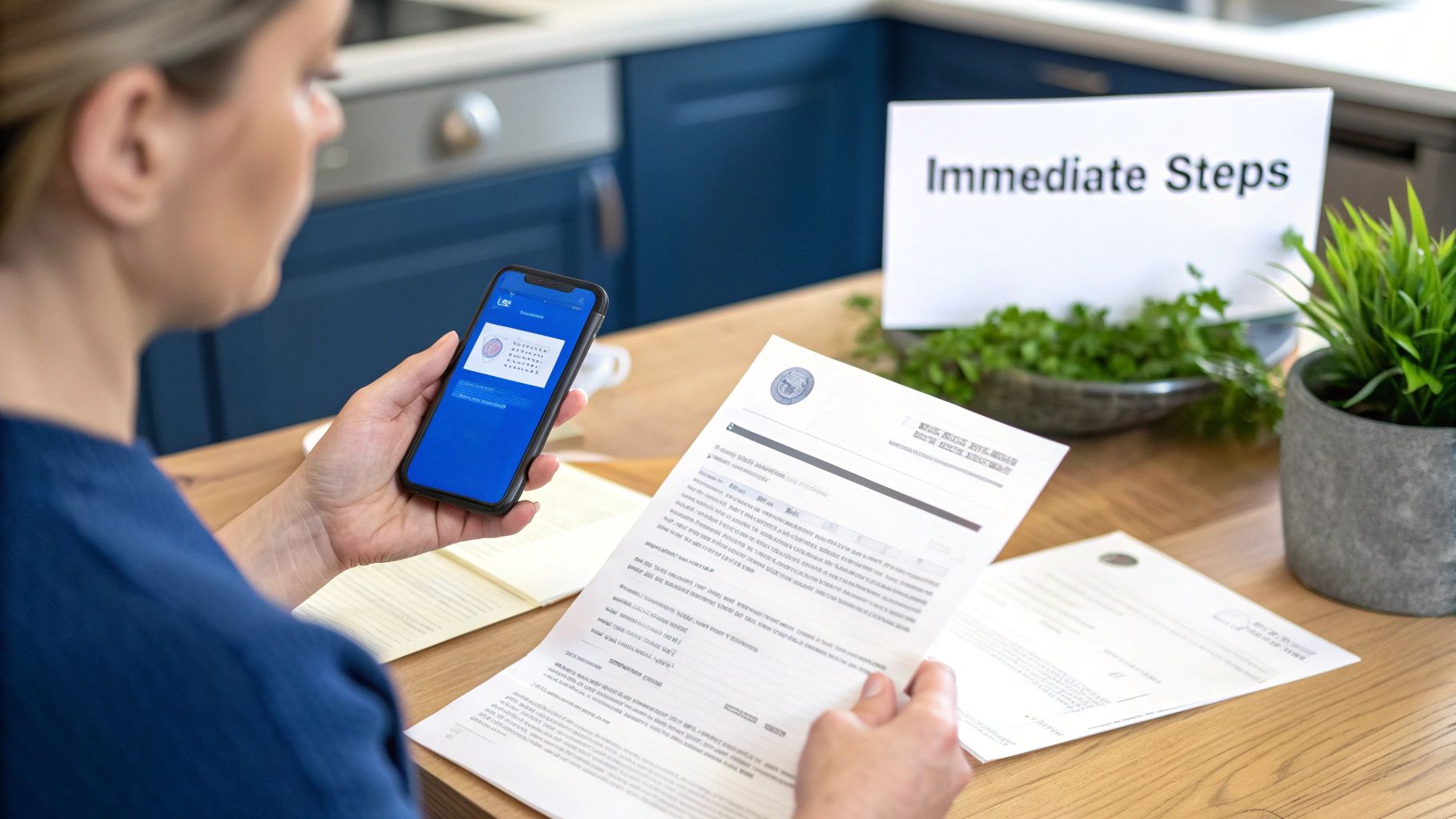
Panicking won’t help, but focused, strategic action will. Your immediate response shows the insurer you’re serious, organized, and not going away quietly. This isn’t just about shuffling papers; it’s about laying the groundwork for your fight and seizing back control of the process. That early momentum is absolutely key.
Dissect The Denial Letter
First things first: read that denial letter. And I mean really read it, not just skim it. Under Florida law, they can’t just say “no”—they have to give you a specific reason. Your job is to find that reason and put it under a microscope.
What’s their official excuse? Usually, it boils down to one of these:
- Policy Exclusion: They’re claiming something about your accident or injury isn’t covered by the fine print in your policy.
- Disputed Medical Necessity: A common one. Their “in-house expert” decided the treatment your own doctor ordered wasn’t actually necessary.
- Simple Coding Error: You’d be surprised how often a claim is denied because a medical provider’s office simply typed in the wrong code.
- Lack of Information: A vague but frequent reason, claiming you or your doctor didn’t send them enough paperwork to approve the claim.
Pinpointing their argument is the first step to tearing it down. This single piece of information becomes the blueprint for your entire appeal strategy.
Key Takeaway: The denial letter isn’t just a rejection; it’s the insurer’s playbook. It tells you exactly what you need to disprove to win your appeal. Treat it as your roadmap.
Formally Request Your Complete File
Once you know why they denied you, it’s time to gather your ammunition. You have a right to see every single piece of information they used to make their decision. You need to put a formal request in writing for two crucial items:
- Your Complete Claim File: This is the good stuff. It includes all the internal adjuster notes, reports from their medical reviewers, correspondence, and assessments related to your case.
- All Relevant Policy Documents: Get a certified copy of your full insurance policy. That means everything—declarations, endorsements, and all the riders. You need to be working from the exact same contract they are.
Do not just call or email this request. Send it via certified mail with a return receipt requested. This is non-negotiable. It creates a legal paper trail and proves they got your request, which is vital for holding them to deadlines down the road. This kind of proactive evidence gathering is essential for building a rock-solid case. You can find more on this in our guide on what evidence you should preserve after a car accident in Tampa.
Don’t Let Them Dictate The Pace
Insurance companies love to drag things out. They know that the longer it takes, the more likely you are to get frustrated and just give up. By acting quickly and professionally, you take control of the timeline.
From this moment on, document everything. Log every call with the date, time, and who you spoke with. Save every email. Keep a meticulous file of every single interaction.
This initial phase isn’t about getting into a shouting match with a call center employee. It’s about systematically collecting the evidence you need to build a compelling, fact-based appeal they can’t just brush aside.
If this all sounds overwhelming, especially while you’re trying to recover from an injury, remember that you’re not alone. Denials are incredibly common. Initial denial rates for private commercial claims hover around 13.9%, and a huge number of those are successfully overturned on appeal. In 2022, U.S. hospitals spent a staggering $19.7 billion just trying to get wrongfully denied claims paid.
To help you get started, here is a simple action plan.
Your First 48 Hours: An Insurance Denial Action Plan
Use this checklist to take control immediately after receiving a denial notice from your insurance company in Florida.
- Analyze the Denial Letter (Within 24 Hours): You need to know their exact reason for the denial to build your counter-argument.
- Draft a Formal Request Letter (Within 24 Hours): Prepare a written request for your complete claim file and all policy documents.
- Send Request via Certified Mail (Within 48 Hours): This creates a legal paper trail and proves the insurer received your request.
- Start a Communication Log (Immediately): Document every call, email, and letter. Record dates, times, and names.
- Do Not Provide a Recorded Statement (Ongoing): Avoid saying anything that could be misconstrued or used against you later.
- Organize All Your Documents (Within 48 Hours): Create a physical or digital file for everything related to your accident and claim.
Following these steps methodically in the first two days doesn’t guarantee a win, but it dramatically improves your odds by establishing you as an organized and determined opponent.
Building Your Case with Rock-Solid Documentation
An insurance company rarely reverses a denial based on a good argument alone. They respond to one thing: evidence. After you get that denial letter in the mail, your job shifts. You’re no longer just a claimant; you’re building a fortress of facts that makes it nearly impossible for the adjuster to stand by their original decision.
This isn’t about just stuffing a few receipts into a folder. It’s about methodically assembling a denial file that tells a complete, compelling story. Think of this as your arsenal. Every single document adds firepower, and knowing how to organize it is your greatest advantage when you fight an insurance denial.
What Goes in Your Denial File?
Your main goal is to create a chronological narrative that directly punches holes in the insurer’s reasons for saying “no.” You have to think like a detective piecing together a case. Every email, every note, every photo is a piece of the puzzle that strengthens your position.
First things first: gather every single piece of correspondence you’ve had with the insurance company. This isn’t optional—it’s the foundation of your appeal.
- Emails and Letters: Print them all out. Every single one sent or received.
- Call Logs: Keep a detailed log of every phone call. I’m serious—write down the date, the time, the full name of the person you spoke with, and a summary of what was said. This log can be a lifesaver later, especially if you need to prove they gave you bad information or used delay tactics.
A strong case often begins moments after the incident itself. This includes understanding crucial steps after a car accident, as the evidence you collect at the scene can become critical for your appeal down the road.
Getting Your Hands on Official and Medical Records
Now, let’s move beyond your own notes. You need official documents to back everything up. The police report from your accident is a huge one. It’s a third-party, unbiased account that establishes facts the insurer will have a hard time arguing with. You can request a copy from the agency that responded, like the Tampa Police Department or the Hillsborough County Sheriff’s Office.
Next, you have to dig into the medical evidence. This is where many personal injury claims are won or lost. A final bill isn’t going to cut it.
The insurance adjuster is often betting you won’t put in the effort to get detailed medical proof. When you show up with a meticulously organized file, it sends a clear signal: you’re serious, and you’re not going away.
You need to request your complete medical file from every single doctor, clinic, and hospital that treated your injuries. This includes:
- Doctor’s Notes: These are pure gold. They detail your symptoms in your own words, the doctor’s diagnosis, and the prescribed treatment plan.
- Test Results: Get copies of everything—lab work, MRIs, X-rays, and any other diagnostic reports.
- Treatment Summaries: Keep records of physical therapy sessions, surgeries, and every other procedure.
Here’s a pro tip: Ask your primary treating physician for a letter of medical necessity. This is a specific letter where your doctor states, in their professional opinion, that the treatment the insurance company denied was essential for your recovery. This directly attacks one of the most common excuses for a denial. You can learn more about why these documents are so important in our guide on securing your claim with medical documentation in Tampa.
The Undeniable Power of Photos and Videos
Never, ever underestimate what a person can understand just by seeing it. Photos and videos can tell a story far more powerfully than a stack of papers ever could.
If you didn’t do it at the scene, start gathering visual proof now. This means photos of the vehicle damage, pictures of the intersection or road conditions, and—crucially—photos that document your injuries over time. A picture of a swollen, bruised limb from day one, day seven, and day thirty is infinitely more compelling than a line on a medical chart that just says “contusion.”
By carefully gathering and organizing every piece of this evidence, you transform your appeal from a simple request into an undeniable case. This methodical, evidence-first approach is how you effectively fight back and get the compensation you deserve.
Navigating the Internal Appeals Process
Receiving that denial letter doesn’t mean the fight is over. In fact, it’s just the beginning. The internal appeals process is your first official shot at challenging the insurance company’s decision, and you have to do it on their turf. This isn’t about asking them to reconsider; it’s about building a case so strong they have no logical choice but to reverse their decision.
Think of this as your opening argument. How you frame it, the evidence you present, and the sheer organization you bring to the table can make all the difference. You’re going to use their own rulebook to methodically pick apart their reasons for saying “no.”
Reconsideration vs. a Formal Appeal
First things first, let’s figure out the right path. Sometimes, a simple reconsideration request is all you need. This is the informal route, perfect for fixing obvious mistakes. Did they use the wrong billing code? Did they miss a key document you already sent? A quick phone call or a short letter can often clear up these simple clerical errors without a full-blown battle.
But a formal internal appeal is a different beast entirely. You go this route when the denial is based on a real disagreement—they’re claiming your treatment wasn’t “medically necessary,” or they’re misinterpreting the language in your policy. This is a much more structured and serious challenge where you’ll present a detailed, evidence-based argument against their core reasoning.
This flowchart gives you a good visual for the mindset you need to adopt from day one: get organized.
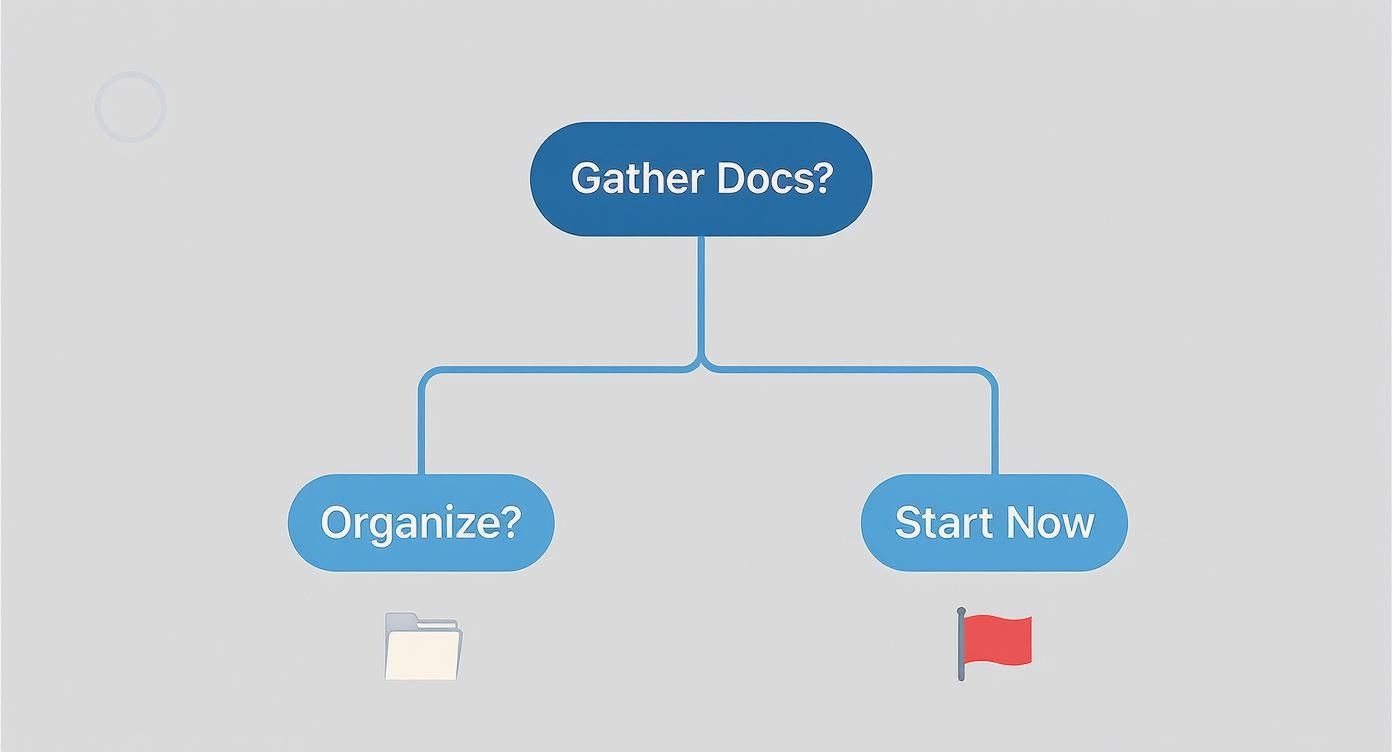
The message here is simple but powerful: the moment you decide to fight back, you need to start gathering your ammunition. When your rightful compensation is on the line, there’s no time to waste.
Crafting a Compelling Appeal Letter
Your appeal letter is the heart of your challenge. The key is to be professional, factual, and persuasive—leave emotion at the door and let the evidence do the talking. A powerful letter follows a clear, logical path.
- The Opener: Get straight to the point. Start with your full name, policy number, and claim number. State clearly that you are appealing the denial of your claim, referencing the date of their denial letter. No fluff.
- The Rebuttal: This is where you dismantle their argument. Go through their denial letter and address every single reason they gave, one by one. If they said a procedure was “not medically necessary,” you counter it directly with your doctor’s letter of medical necessity, supporting clinical notes, and maybe even peer-reviewed articles. Match their reason with your proof.
- The Closing: End with a firm, direct call to action. Restate your demand for them to overturn the denial and approve your claim for full payment. Make it clear you expect a written response within the timeframe laid out in your policy.
This methodical approach signals to the adjuster that you are organized, serious, and not going away. It makes it much harder for them to brush you off. While you can write this letter yourself, learning the art of persuasion is critical. We share more strategies on this in our guide on how to negotiate with insurance companies.
Deadlines and Delivery Are Non-Negotiable
Insurance companies live and die by deadlines, and they will hold you to the same standard. The easiest way to lose an appeal is to miss the filing deadline.
Crucial Insight: Your policy document is your guide. It will tell you exactly how long you have to file an internal appeal. While it’s often 180 days from when you receive the denial, you must check your specific policy. The moment you get that denial, find that date and put it on your calendar.
Once you’ve assembled your appeal package—the letter, the medical records, everything—don’t just stick a stamp on it and hope for the best. Send the entire package via USPS Certified Mail with a return receipt requested. This is your ironclad proof. It shows you sent it on time and, more importantly, that they got it, leaving them no room to claim your paperwork got “lost in the mail.”
Believe it or not, most people get intimidated and give up right here. But persistence pays off. Between 2019 and 2022, a staggering 83% of appealed prior authorization denials in Medicare Advantage were fully or partially overturned. Let that sink in. Despite this incredible success rate, only one in ten denials were ever appealed in the first place. Don’t be one of the people who walks away. Let that statistic be your motivation—the odds are very much in your favor if you’re willing to fight.
When to Escalate to External Reviews and Legal Action
Getting that final denial letter after your internal appeal can feel like hitting a brick wall. It’s frustrating, and it’s easy to think you’ve run out of options. But this is not the end of the road.
Think of it as the point where the fight moves from the insurance company’s home turf to a neutral arena. When the insurer digs in their heels, you have two powerful paths forward: escalating to an independent external review or pursuing direct legal action. Both options take the decision-making power away from the very company that said “no.”
Taking Your Case to an Independent Third Party
One of the most important consumer protections you have is the right to an external review. This process brings in an Independent Review Organization (IRO)—a certified, impartial third party with no connection to your insurance company—to take a hard look at your claim.
This is your chance to get a fresh, unbiased set of expert eyes on your case. The IRO examines the same evidence you submitted, weighs it against the insurer’s reason for denial, and makes a judgment. In most cases, their decision is legally binding on the insurance company.
You have to act fast, though. Florida law sets a specific window of time to request an external review after you get the final denial, so don’t delay. The process involves a formal submission of your request and all your supporting documents. Since legal and medical fields still often rely on faxing, you may need to find services that let you fax documents online for free to get everything to the right place securely.
Shifting Gears to Legal Action with a Demand Letter
Sometimes, an external review isn’t the right move, or you simply need to apply more direct pressure. This is the moment you transition from administrative appeals to formal legal action, and it almost always starts with a formal demand letter.
This isn’t just another strongly-worded complaint. A demand letter is a potent legal document, usually drafted by an attorney, that puts the insurance company on official notice. It’s a final, pre-litigation warning shot that clearly states your intention to file a lawsuit if they refuse to pay what’s fair.
A well-crafted demand letter will:
- Recap the Facts: It lays out a concise timeline of the accident, your injuries, and the history of the claim and denial.
- Outline Liability: It explains, in no uncertain terms, why the insurer is legally and contractually obligated to cover your losses.
- Detail Your Damages: It provides a full accounting of your damages—every medical bill, lost paycheck, future care cost, and a calculation for your pain and suffering.
- Make a Specific Demand: It concludes with a demand for a specific settlement amount and gives the insurer a firm deadline to respond.
This letter forces the insurer to look at your claim through a new lens: legal risk. It makes them calculate whether fighting you in court is going to cost them far more than simply paying the claim you were entitled to all along.
Understanding Insurance Bad Faith in Florida
In some situations, an insurer doesn’t just make an honest mistake; they act unfairly, dishonestly, or unreasonably. When their conduct crosses that line, you might have more than a simple contract dispute—you could have a bad faith claim.
Key Insight: Florida law demands that insurance companies treat their policyholders with good faith and fair dealing. This isn’t a suggestion; it’s a legal duty to investigate properly, communicate honestly, and pay legitimate claims without unreasonable delay.
Under Florida Statute 624.155, you have the right to sue your insurer for acting in bad faith. This is a separate legal action from your original claim for benefits. A bad faith lawsuit isn’t about your injuries; it’s about the insurance company’s illegal behavior in handling your claim. A successful case can result in you recovering damages far beyond your original policy limits. To learn more, read our detailed guide on what constitutes an insurance bad faith claim.
Actions that could be considered bad faith include:
- Failing to conduct a proper and timely investigation.
- Deliberately misinterpreting the law or your policy language.
- Using delay tactics to try and wear you down.
- Refusing to make a fair settlement offer when liability is clear.
Proving bad faith gives you immense leverage. It changes the entire dynamic, shifting the focus from your accident to the insurer’s wrongful conduct.
Knowing When to Call a Personal Injury Attorney

Trying to take on an insurance company by yourself can feel like getting into the ring with a heavyweight champion. They have deep pockets, teams of lawyers, and a playbook designed to wear you down. While you might be able to handle a very minor fender-bender claim on your own, there are clear signals that it’s time to stop and get a professional in your corner.
Making that call is one of the most critical decisions you can make for your case. If you spot any of the red flags below, it’s a sign the insurer is stacking the deck against you. You need to level the playing field, and fast.
Spotting the Critical Red Flags
Sometimes, the insurance company’s actions make it painfully obvious they aren’t going to play fair. Their strategy can quickly shift from negotiation to outright resistance, and at that point, going it alone is a recipe for disaster.
It’s time to seriously consider calling a lawyer when:
- The stakes are high. If your accident resulted in serious injuries, mounting medical bills, or long-term disability, the financial risk is simply too great to handle alone.
- The insurer goes silent. Are your calls and emails suddenly going unanswered? “Ghosting” you is a classic tactic. They hope your frustration will lead you to give up.
- They start using delay tactics. The adjuster keeps asking for the same documents you’ve already sent. Or they create one pointless hurdle after another. This isn’t a mistake; they’re trying to exhaust you.
- Liability becomes a complex fight. Is the insurance company trying to pin the blame on you for the accident? Or claiming your injuries were pre-existing? You’ve moved beyond a simple claim dispute and into a legal battle.
Catching these signs early is key. The longer you wait, the harder it can be for an attorney to untangle the mess and repair any damage done to your claim. Deciding when to hire a personal injury attorney is a make-or-break moment.
People often think that hiring an attorney is an aggressive move. The reality is that it’s a strategic one. It forces the insurance company to take your claim seriously and treat you with the respect you deserve under Florida law.
The True Value of Legal Representation
A seasoned personal injury lawyer does far more than just write letters. They bring an expert understanding of Florida’s intricate insurance laws and legal precedents to the table. They’ve seen the insurers’ tactics a thousand times, and more importantly, they know exactly how to counter them.
The real advantage is how it completely shifts the power dynamic. An attorney can use legal tools like depositions and subpoenas to compel the insurance company to hand over information and act. They can also tap into a network of trusted medical experts to fight back against the insurer’s doctors who are paid to say your injuries aren’t that bad or your treatment wasn’t necessary.
Plus, a good lawyer knows how to calculate the true, full value of your claim. This goes way beyond just totaling up your medical bills. It includes:
- Future medical treatment and ongoing care costs
- Lost wages and what you could have earned in the future
- Pain, suffering, and the emotional toll of the accident
This thorough approach ensures you aren’t short-changed. By bringing in a dedicated legal team, you lift that immense burden off your shoulders. You can finally focus on what really matters—your recovery—while your attorney handles the fight for you.
Common Questions About Fighting an Insurance Denial in Florida
When you’re staring down a denial letter from your insurance company, your head is probably swimming with questions. It’s a frustrating, often confusing position to be in, but getting some clear answers can give you the confidence you need to push back. Here’s what we hear most often from folks in your exact situation.
How Long Do I Really Have to Fight a Denial?
This is a make-or-break question, and the timeline isn’t always straightforward. For an internal appeal, you’ll need to check your policy documents, but typically you have around 180 days from the day you get that denial notice. Don’t just assume—find the exact deadline in your paperwork.
When it comes to filing a lawsuit for breach of contract, Florida law generally gives you five years. But please, don’t wait that long. Evidence gets lost, witnesses move, and memories fade. The faster you act, the stronger your position will be.
Can My Insurance Company Cancel My Policy if I Appeal?
Absolutely not. Florida law is very clear on this: it is illegal for your insurer to cancel your policy, jack up your rates, or otherwise penalize you just for filing a claim or appealing a decision.
That kind of move is called retaliation, and it’s a huge red flag for insurance bad faith. You have a legal right to dispute their decision without fearing they’ll punish you for it.
Insurers are banking on the idea that you’ll be too intimidated or exhausted to challenge their decision. Don’t play into their hands. The law is on your side, and fighting back isn’t just about getting what you’re owed—it’s about holding them to the promises they made in your policy.
I Can’t Afford a Lawyer. Now What?
This is one of the biggest misconceptions we see. The reality is, you don’t need money in your pocket to hire a top-notch insurance dispute lawyer in Florida. Nearly all of us work on a contingency fee basis.
What does that mean? It’s simple: we don’t get paid unless you get paid. Our fee is a percentage of the money we recover for you through a settlement or a court verdict. If we don’t win your case, you owe us nothing. This system levels the playing field, giving everyone access to skilled legal help and making sure our goals are perfectly aligned with yours.
What if They Only Denied Part of My Claim?
It’s a common tactic. The insurer approves a small part of your claim, hoping you’ll be so relieved to get something that you’ll drop the rest. Don’t fall for it. A partial denial is still a denial.
You have every right to appeal the specific items they refused to cover, whether it’s a certain medical treatment or the true cost to repair your vehicle. Never accept a lowball offer just because it’s better than nothing. If the denied part of your claim is valid, you need to fight for it. An experienced attorney can quickly tell you if the partial payment is fair or if you’re being short-changed.
Trying to untangle an insurance denial on your own is a tough road. If you’re feeling stuck, or if you suspect the insurance company isn’t playing by the rules, our team at Martin Hernandez, P.A. is here to take over. We build every case as if it’s going to trial, putting you in the strongest possible position to demand the full compensation you deserve.
Reach out to us for a free, no-pressure consultation. We’ll review your case and show you how we can fight back.