
After a car crash, you’re thrown into a world of confusion and stress. But even in that chaos, three things absolutely must happen to protect yourself and your potential claim: get checked out by a doctor, document everything, and talk to a personal injury lawyer as soon as you can.
These aren’t just suggestions; they’re the foundational pillars of a strong case.
Your First Moves After a Florida Car Accident
The minutes and hours after an accident in Tampa are a blur. It’s tough to think straight. But the actions you take right then and there can make or break your personal injury claim later on, especially with Florida’s tricky no-fault insurance laws.
Your health is priority number one. No exceptions. You might feel okay, but adrenaline is a powerful painkiller that can hide serious injuries. Getting a medical evaluation immediately does two things: it takes care of your health and creates an official record that ties your injuries directly to the crash. This is non-negotiable.
Start Building Your Case from the Scene
Good documentation is your best weapon. We’re talking about more than just swapping insurance cards. You need to capture a complete picture of the scene before cars are towed and memories get fuzzy. For a complete breakdown, you can learn more about what to do after a car accident and see how these crucial first steps fit into the bigger picture.
This flowchart breaks down the basic process you should follow right after a crash.
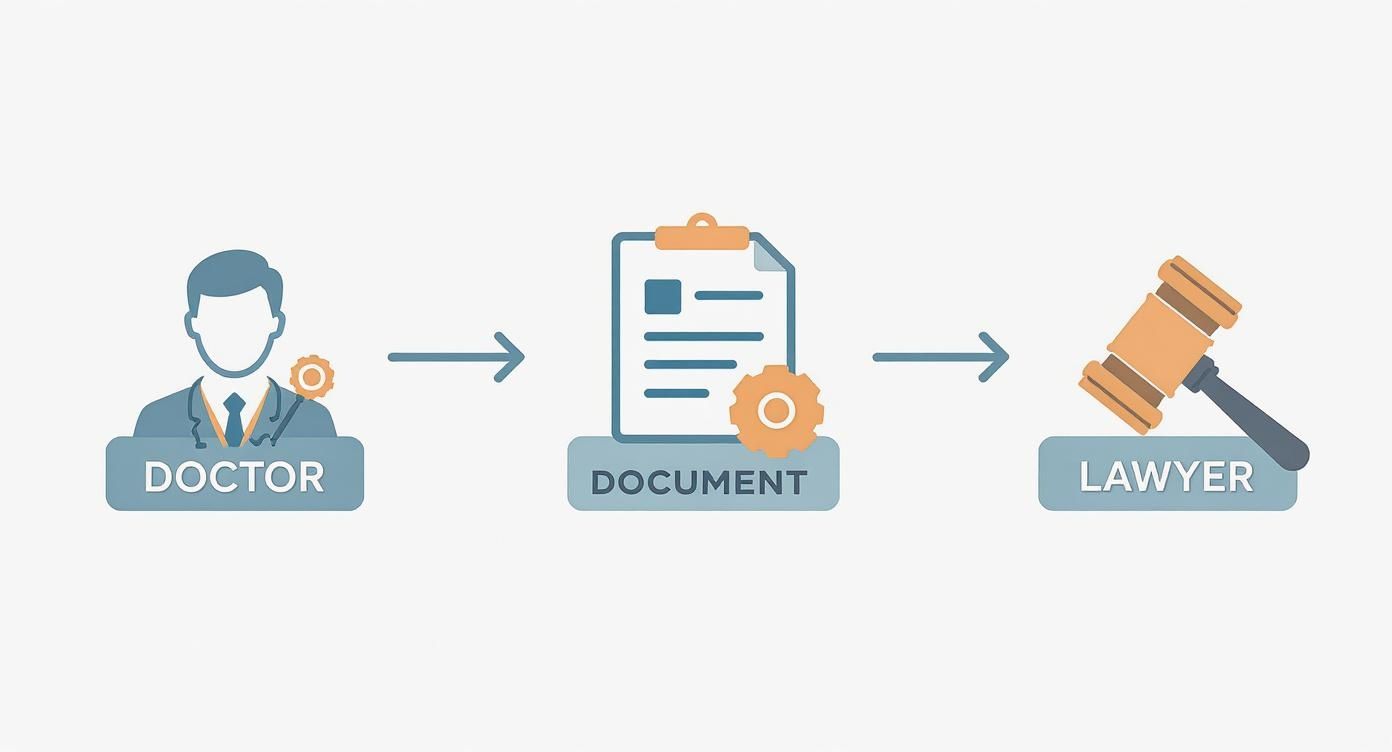
As you can see, taking care of your health and gathering evidence are the first critical steps before you even think about bringing a lawyer into the mix. They set the stage for everything that follows.
Contacting an attorney early might feel like you’re jumping the gun, but it’s one of the smartest defensive moves you can make. A seasoned car accident lawyer shields you from the insurance company’s tactics—and trust me, they have a playbook designed to pay you as little as possible. Your lawyer will take over all communications and deadlines, letting you focus on what really matters: getting better.
The numbers don’t lie. Research shows that having a lawyer on your side makes a massive difference. An incredible 91% of claimants who hired a lawyer received a payout, a stark contrast to the 51% who tried to handle it themselves.
And it’s not just about getting paid; it’s about getting paid fairly. On average, people with lawyers walk away with settlements 3.5 times larger than those who go it alone. That’s a staggering difference.
Where to Start Your Search for the Right Lawyer
When you’re trying to find a good car accident lawyer, just figuring out where to begin can be overwhelming. A quick Google search will throw a hundred names at you, but the best attorneys aren’t always the ones with the flashiest ads. The real goal is to build a small, solid list of local lawyers who truly understand Florida’s complex laws and, just as importantly, the insurance company playbook here in Tampa.
This isn’t the time to call a massive, out-of-state firm that sees you as just another case file. You need someone with boots on the ground in Hillsborough County. These lawyers know the local court system, have connections with respected medical experts in the area, and are familiar with the reputations of the insurance adjusters and opposing attorneys you’ll likely face. That local knowledge is a huge advantage.
Tap into Your Trusted Network
Before you even think about searching online, start with the people you already know and trust. A personal referral is often the gold standard because it comes from someone with direct experience.
Ask friends, family members, or coworkers if they’ve ever had to hire a personal injury lawyer in the Tampa area. They can give you the real story on an attorney’s communication skills, how they run their office, and whether they got the results they were hoping for.
Don’t overlook other professionals in your life, either. Your family doctor, chiropractor, or even your accountant often have professional networks that include highly respected attorneys. They hear things from their own clients and can often point you toward someone with a solid reputation.
Use Official and Legal Resources
After you’ve gathered a few names (or if you’re starting from scratch), your next move should be to consult official legal organizations. These groups are the gatekeepers of the profession, and they can help you verify an attorney’s credentials and standing.
Here are the best places to look:
- The Florida Bar: This is the official governing body for every lawyer in the state. Their website is a crucial tool for checking if an attorney is in good standing. Even better, you can search for lawyers who are Board Certified in Civil Trial Law. This is a big deal—it means they’ve proven their expertise through extensive trial experience and a grueling exam. It’s a mark of a true specialist.
- Local Bar Associations: Groups like the Hillsborough County Bar Association are fantastic for finding local talent. They often provide lawyer referral services that connect you with pre-vetted attorneys who focus specifically on personal injury cases right here in our community.
Using these resources helps you filter out the marketing hype and focus on what actually counts: qualifications and peer-recognized skill. If you want to dig deeper into this, our guide on how to find the best lawyer near you has even more strategies for your local search.
Prioritize local expertise above all else. An attorney who knows the Hillsborough County judges and courtroom procedures has a home-field advantage that an out-of-towner simply can’t match. This inside knowledge can make a real difference in how your case unfolds.
Navigate Online Legal Directories Wisely
Online directories like Avvo, Martindale-Hubbell, and Super Lawyers can be helpful, but you have to use them with a bit of strategy. These sites are packed with attorney profiles, client testimonials, and peer ratings.
The key is to look beyond the ads and sponsored listings that always appear at the top. When reading client reviews, look for the detailed ones that talk about the entire process, not just the final settlement. You’re looking for patterns. Do multiple people mention that the lawyer was a great communicator? Or that the paralegals were always helpful? That’s the kind of insight you want.
Peer ratings, especially on a site like Martindale-Hubbell where lawyers review other lawyers, are also very telling. A high rating from other legal professionals is a powerful sign of competence and respect in the field. By combining personal referrals with official verifications and a smart approach to online directories, you’ll be well on your way to creating a strong shortlist of attorneys to interview.
How to Evaluate a Lawyer’s Experience
Okay, you’ve got your shortlist of potential attorneys. Now the real work begins. This is where you move past the online profiles and start digging into what truly matters: experience.
When it comes to Florida car accident cases, the specific type of experience a lawyer has can make or break your claim. Not all legal experience is the same, and knowing precisely what to look for is your best defense against leaving money on the table.
First things first, you need a specialist, not a generalist. A lawyer who handles divorces one day and DUIs the next simply doesn’t have the deep, focused knowledge required to win a complex injury case. You want an attorney who lives and breathes Florida car accident law every single day.
These are the lawyers who intimately understand the nuances of PIP (Personal Injury Protection) insurance, who know the playbook used by big insurers like State Farm or Progressive, and who can pinpoint the exact evidence needed to prove negligence in a Hillsborough County courtroom.
Look for Proven Specialization
Real expertise isn’t just something a lawyer claims on their website—it’s something they’ve earned. One of the highest credentials an attorney in Florida can achieve is becoming Board Certified in Civil Trial Law by The Florida Bar.
This isn’t just a fancy plaque. To get this certification, a lawyer must have significant trial experience, pass a grueling specialty exam, and be rigorously vetted by their peers and judges. It’s a huge deal.
Think of it like this: you wouldn’t let your family doctor perform open-heart surgery. In the same way, you shouldn’t trust a general practice lawyer with a serious injury claim. Board certification is a clear signal you’re dealing with a true expert.
Beyond certifications, ask about their experience with cases like yours. If you were hurt in a multi-vehicle pileup on I-275, you need someone who has navigated that kind of chaos before, not just simple fender-benders. Don’t be afraid to ask for specific examples of similar cases they’ve successfully handled.
Investigate Their Track Record of Results
A lawyer’s history of settlements and jury verdicts tells a story. While it’s easy to be impressed by multi-million dollar wins advertised on billboards, what you really want to see is a consistent pattern of strong results across a wide range of cases. This proves they know how to value a claim correctly and go toe-to-toe with insurance adjusters.
The data backs this up. Nationally, about 61% of car accident claims end in a settlement for the injured person. But that number jumps dramatically when a reputable, experienced attorney is involved. In fact, most personal injury cases—somewhere between 90% and 95%—settle out of court, and top-tier firms often report success rates well over 90%.
An attorney’s willingness to go to trial is your greatest leverage. Insurance companies keep detailed records on law firms. They know which ones will accept a lowball offer to avoid court and which ones are prepared to fight a case all the way to a jury verdict.
Hiring a lawyer with a reputation as a fierce litigator sends a clear signal to the insurance company: we won’t be pushed around. This simple fact often brings them to the table with a much more serious offer right from the start.
Assess Their Trial Experience and Courtroom Confidence
Even though most cases settle, the credible threat of a trial is what forces a fair settlement. An attorney who is known to avoid the courtroom is operating at a massive disadvantage. Insurance companies are businesses focused on one thing: minimizing what they pay out. They will absolutely exploit an attorney’s reluctance to litigate.
This is where you need to ask direct questions during your consultation. How many cases have they taken to trial recently? How comfortable are they in front of a jury? You need to understand how important trial experience is when hiring a personal injury attorney because it directly impacts your final compensation.
A good lawyer prepares every single case as if it’s going to trial. This means they are meticulously building a rock-solid foundation of evidence that can withstand any challenge, whether it’s used in settlement talks or presented in a courtroom. It’s about finding a true advocate who can level the playing field against a powerful insurance corporation.
Making the Most of the Initial Consultation
https://www.youtube.com/embed/WQ49gwNQqTU
You’ve done your homework and have a short list of promising attorneys. Now for the most critical step in your entire search: the initial consultation.
Think of this meeting—which should always be free—as a two-way interview. It’s not just your chance to explain what happened; it’s your opportunity to size up the person you might hire to guide you through one of the most stressful experiences of your life. This is where you find a true partner, not just a name from a TV ad.
Walking in prepared can make a world of difference. Your goal is to get past the generic sales pitch and understand their personality, how their office runs, and what their gut reaction is to your specific case.
What to Bring to Your First Meeting
To have a truly productive conversation, you need to show up with the right paperwork. Giving the attorney the key facts and documents from day one allows them to offer a much more realistic assessment of your situation. It also shows you’re serious.
Try to gather as much of this as you can:
- The Official Police Report: This is ground zero for your claim.
- Photos and Videos: Any pictures or videos you have of the accident scene, vehicle damage, or your injuries are incredibly helpful.
- Medical Records: Even just the initial ER report, doctor’s notes, or the first few medical bills will do.
- Insurance Information: Details about your own policy and any information you managed to get from the other driver.
- Witness Information: The names and phone numbers of anyone who saw what happened.
- Proof of Lost Wages: Recent pay stubs or a simple letter from your employer can help paint the picture of your financial losses.
Don’t panic if you can’t find everything. Bring what you have. A good law firm will help you track down the rest.
Critical Questions to Ask Your Potential Lawyer
Remember, you are the one doing the hiring. The questions you ask should dig into their actual experience, their communication habits, and how they think. When you prepare for this meeting, it can be helpful to look at how people vet other professionals, like these essential questions to ask a financial advisor, and adapt that mindset to your legal needs.
Here are a few questions you absolutely must ask:
- Who will I be dealing with day-to-day? At bigger firms, you might meet an impressive senior partner, only to have your case passed off to a less-experienced associate or even a paralegal. Find out who your main point of contact will be.
- What’s your honest, initial take on my case? An experienced attorney should be able to give you a candid opinion about the strengths and potential weaknesses of your claim right away. Be very wary of anyone who makes big promises or guarantees a huge payout.
- How do you keep your clients in the loop? This is huge. Ask how they handle client communication. Do they provide regular updates? What’s their policy on returning calls and emails? You want to know if you’ll have to constantly chase them for information.
- What’s your general strategy for a case like this? This question gets to their thought process. Do they give a canned, one-size-fits-all answer, or do they talk about specific strategies for evidence, negotiations, or potential experts that apply to your accident?
Your comfort level and gut feeling are just as important as their credentials. If the lawyer seems distracted, rushes you, or talks down to you, that’s a massive red flag. You need to hire an advocate you genuinely trust and feel comfortable confiding in.
By the end of the meeting, you should have a clear sense of whether this lawyer is the right fit. The goal isn’t just to find a lawyer; it’s to find your lawyer—someone who makes you feel confident and supported. You should leave feeling more informed and empowered, not more confused.
Understanding Legal Fees and Costs in Florida

One of the biggest worries people have after a crash is how they’ll afford a lawyer. Let’s put that concern to rest. In Florida, the vast majority of personal injury lawyers work on a contingency fee basis.
This setup is designed specifically for people in your situation. It means you don’t pay a dime out of your own pocket to get your case started. Your lawyer’s payment is entirely contingent on winning your case.
It’s the “no fee unless you win” promise you’ve probably heard about. If your lawyer doesn’t secure a settlement or win a verdict for you, you owe them nothing for their work. Simple as that.
How Do Contingency Fees Work?
When you win, the lawyer’s fee is a set percentage of the total amount they recover for you. While this can vary slightly from firm to firm, Florida has some pretty standard guidelines.
Typically, you can expect to see a structure like this:
- 33.3% of any money recovered before a lawsuit has to be formally answered by the other side.
- 40% of any money recovered after the case progresses further into the litigation process.
Let’s use a real-world example. Say your attorney negotiates a $100,000 settlement before things get deep into the lawsuit phase. Their fee would be $33,333. This model gives your lawyer a powerful incentive to fight for every dollar you deserve—their success is literally tied to yours. You can discover more about how contingency fees work in a car accident case for a more detailed look.
Hiring an attorney on contingency is almost always a smart financial decision. Research consistently shows that accident victims who have a lawyer get significantly larger payouts—on average, 3.5 times higher than those who go it alone. Even after the attorney’s fee is paid, most people walk away with far more compensation than they ever would have gotten by themselves. It’s why finding the right lawyer is such a critical investment.
Fees vs. Costs: What’s the Difference?
This is a crucial distinction to understand. The “fee” is what you pay your lawyer for their time and expertise. “Costs” are the out-of-pocket expenses needed to actually build and fight your case.
Think of it this way: your lawyer isn’t just working; they’re spending money to move your case forward.
These case costs are separate from the contingency fee and typically include things like:
- Court filing fees
- Charges for pulling police reports and your medical records
- Hiring expert witnesses (like accident reconstructionists or doctors)
- Paying for depositions and court reporters
Before you sign anything, make sure you get a written fee agreement. It should spell out, in plain English, the exact fee percentage and how these case costs will be handled. A good lawyer will have no problem being transparent about this.
Most established law firms will front these costs for you, so you still don’t have to pay anything upfront. When your case is resolved, these costs are typically reimbursed to the firm from the settlement money after the attorney’s fee is calculated. If an attorney is vague about their fee structure or how costs are managed, that’s a major red flag.
Spotting the Red Flags Before You Sign Anything
Choosing the right lawyer isn’t just about ticking boxes on a qualifications list; it’s about knowing who to walk away from. As you narrow down your options, your Spidey-sense needs to be tingling. You’re looking for the warning signs that could lead to a world of frustration and a bad outcome.
Your initial consultation is the best place to find these red flags. It’s a two-way interview. Pay attention to more than just their answers—watch their behavior. If a lawyer is constantly glancing at their phone, cutting you off, or rushing your story, they’re showing you exactly where you’ll be on their priority list: at the bottom.
Beware of Big Promises and High-Pressure Tactics
One of the brightest red flags is a lawyer who guarantees a specific result or throws around a multi-million dollar figure in the first meeting. Let’s be clear: no ethical lawyer can ever guarantee a win. Every single case is different, and making huge promises before they’ve even seen a police report is deeply unprofessional. It’s a classic sign of desperation.
Just as bad is any attorney who tries to pressure you into signing their contract right then and there. A good lawyer wants you to be 100% confident in your decision. They’ll actually encourage you to take the fee agreement home, read it over, and sleep on it. High-pressure sales pitches belong on a used car lot, not in a law office.
Your gut feeling is your best guide here. If you feel rushed, dismissed, or just plain uncomfortable, that’s your cue to leave. You’re about to enter a long-term professional relationship, and you absolutely must have an advocate you trust.
Keep an eye out for these specific warning signs:
- The “Slam Dunk” Promise: Any lawyer who calls your case a “slam dunk” before they’ve done a deep dive into the evidence is telling you what you want to hear, not what’s true.
- The Hard Sell: Pushing you to sign a retainer agreement on the spot, before you’ve had a chance to process everything or talk to other lawyers.
- Fuzzy Math on Fees: If they can’t clearly and simply explain their contingency fee and how case costs are handled, that’s a problem. It should be crystal clear.
Communication Breakdowns Are a Bad Omen
How a law firm treats you before you’re a client is a sneak peek of what’s to come. Think about it: if they’re slow to return your calls now, when they’re trying to win your business, it’s only going to get worse once you’ve signed on.
A well-run firm is responsive. While you can’t expect the head attorney to take every call, their team—paralegals and case managers—should be able to give you clear updates and always treat you with respect. If getting a simple question answered feels like pulling teeth from the start, you’re dealing with a disorganized or overloaded practice.
Making the Final Call
Alright, you’ve met with your top contenders. Now it’s time to make your choice. Don’t just go with the lawyer who promised you the moon. Instead, step back and compare them based on both the hard facts and your personal comfort level.
Try making a simple chart. For each lawyer you’re considering, jot down your thoughts on these key points:
- Real-World Experience: Do they have a track record of winning Florida car accident cases like yours? Not just any personal injury, but specifically car accidents.
- Communication Vibe: Were they easy to talk to? Did you feel heard and respected, or were they condescending?
- The Team Dynamic: Who will actually be handling your case day-to-day? Did you get a clear sense of how they’ll keep you in the loop?
- The Trust Factor: At the end of the day, who did you feel most comfortable with? Who would you trust to have your back in a fight?
Looking at it this way helps you make a balanced decision. You’re not just hiring a law degree; you’re choosing a partner to guide you through a difficult time. You need someone with the skills to win and the integrity to make you feel confident every step of the way.
Your Top Questions Answered
After a crash, it’s completely normal to have a ton of questions swirling around. Even with research, some things just aren’t clear. Let’s tackle a few of the most common—and most critical—questions we hear from folks here in Tampa. Getting these answers straight is key to feeling confident in your next steps.
How Much Time Do I Have to File a Lawsuit?
This is, without a doubt, one of the most important questions. The clock is ticking from the moment the accident happens.
Here in Florida, the law gives you a strict deadline, known as the statute of limitations. For any car accident that happened on or after March 24, 2023, you now have just two years from the date of the crash to file a lawsuit. If you miss that window, your right to seek compensation is usually gone for good.
What If the Accident Was Partially My Fault?
This is a common worry, but it doesn’t automatically mean you can’t recover anything. Florida operates under what’s called a modified comparative negligence rule.
In plain English, this means you can still claim damages as long as you weren’t more than 50% responsible for the accident. Your final compensation will simply be reduced by whatever percentage of fault is assigned to you. For example, if you’re found to be 20% at fault for the crash, your total award would be cut by 20%.
A huge part of a skilled lawyer’s job is to build a case that minimizes your percentage of fault. They’ll dig into the evidence—police reports, witness statements, traffic camera footage—to argue on your behalf and protect your right to fair compensation.
A quick word of caution: Never take the insurance adjuster’s first offer at face value. It’s almost always a lowball number designed to make your claim go away as quickly and cheaply as possible for them. It rarely considers the full, long-term impact of your injuries.
Before you even think about accepting an offer, you should run it by an attorney. They know what your case is truly worth and can fight for a settlement that you’d have a tough time getting by yourself. For a deeper dive, check out our guide on when to hire a personal injury attorney.
Trying to figure all this out while you’re recovering is overwhelming, but you’re not in this alone. The experienced team at Martin Hernandez, P.A. is here to offer the clear advice and strong advocacy you deserve. If you were hurt in a crash in the Tampa area, reach out to us for a free, no-pressure consultation to talk about your rights and options. https://injurylawyersoftampa.com