
Your search for the right injury lawyer doesn’t start with a Google search. It starts the moment your accident happens. What you do in those first chaotic minutes and hours is critical—it lays the groundwork for the case your future attorney will build. Getting this part right can make a huge difference in the outcome.
What to Do Immediately After a Tampa Accident
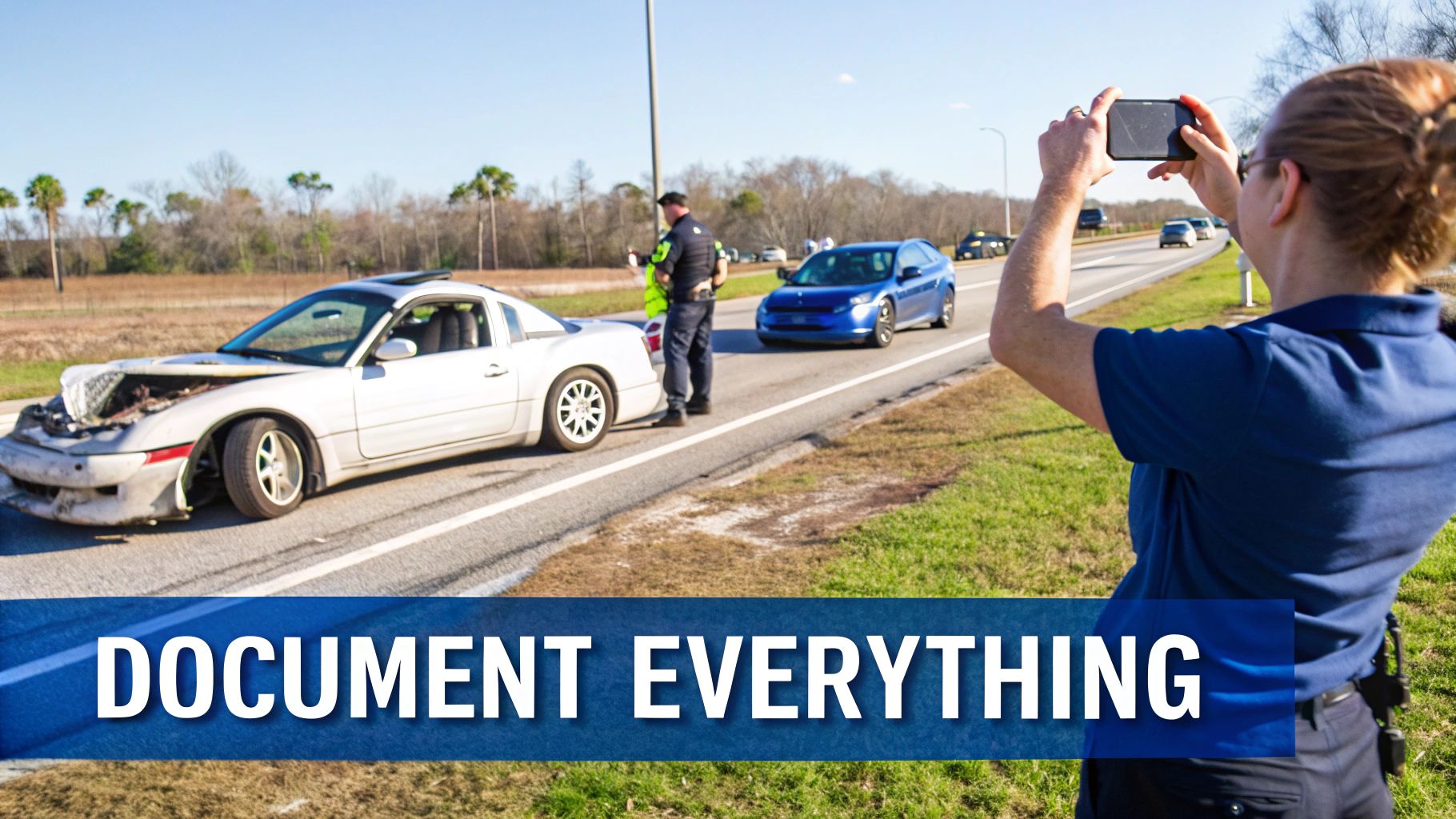
The aftermath of a crash is disorienting. Your head is spinning, you’re shaken up, but the steps you take right then and there can dramatically affect your future. Before you even think about calling a lawyer, you need to focus on two things: your health and the evidence. These aren’t just boxes to check for the insurance company; they’re the raw materials a great lawyer will use to fight for you.
First thing’s first: see a doctor. Go get checked out, even if you think you’re okay. Adrenaline is a powerful painkiller and can easily hide serious problems like whiplash or internal injuries.
Here in Florida, the clock is ticking. You have just 14 days from the accident date to get initial medical care to qualify for your Personal Injury Protection (PIP) benefits. This visit creates an official record tying your injuries directly to the crash, which is absolutely essential for your case. Knowing the difference between Urgent Care vs Emergency Room can help you get the right care, right away.
Secure Official and Personal Documentation
Next, you need an official record of what happened. Call the police. Whether it’s the Tampa Police Department or the Hillsborough County Sheriff’s Office, having an officer on the scene to create a report gives you an impartial account of the incident. That police report becomes a cornerstone of your claim.
While you’re waiting for the police to arrive, turn your smartphone into your best tool. Memories fade fast, but photos don’t.
- Take Pictures of Everything: Get photos of the damage to both cars from every possible angle. Don’t forget the wider scene—capture traffic signals, skid marks on the road, and any relevant road conditions.
- Collect Key Information: Swap insurance and contact info with the other driver. And if anyone saw what happened, get their name and number. A witness’s account can be incredibly powerful down the line.
These early steps feel overwhelming, but they’re not just procedural. You’re building the foundation of your case. Prioritizing your health and gathering this evidence gives a skilled attorney the indisputable facts they need to advocate for the full compensation you deserve.
For a more detailed checklist, our guide on what to do after a car accident in Florida is a great resource: https://injurylawyersoftampa.com/what-to-do-after-a-car-accident-in-florida/
The information you gather in these first few hours is the powerful starting point for a successful claim.
Where to Begin Your Search for the Right Lawyer
After an injury, you’re suddenly bombarded with lawyer ads. You see them on billboards, TV, and all over the internet. But a flashy commercial doesn’t tell you who has the actual skill to win your case. The real trick is to ignore that noise and look for genuine, reliable sources.
Honestly, the best place to start is often with people you already know and trust. Ask a friend, a family member, or even a professional you respect, like your doctor or accountant. A referral from them is worth its weight in gold because it’s based on a real experience, not a paid ad. They can give you the inside scoop on how the lawyer actually works—were they good at communicating? Did they feel taken care of?
Tap Into Vetted Local Resources
Beyond your personal network, there are official organizations that serve as a great gut check. These groups are designed to make sure lawyers are meeting high ethical and professional standards, which makes them a much safer bet than a random Google search.
If you’re in the Tampa area, there are two key places to look:
- The Hillsborough County Bar Association: This is your local hub. They can give you a list of attorneys who are in good standing right here in our community. That local knowledge is huge—it means they know the local judges, court staff, and procedures inside and out.
- The Florida Bar: Every single lawyer in the state has to be a member. You can use their website to double-check that an attorney is properly licensed and, more importantly, see if they have any disciplinary actions against them. This is a non-negotiable step.
How to Read Online Reviews Like a Pro
Online reviews can be a useful tool, but you have to know how to sift through them. Don’t just look at the star rating. A long line of generic, five-star reviews can sometimes be less helpful than a detailed four-star one that candidly explains what went well and what could have been better.
What you’re really looking for are patterns. Do several different reviews praise the same paralegal for being incredibly helpful? Or do multiple people bring up the same complaint about poor communication? These recurring themes paint a much more accurate picture of what it’s actually like to work with that firm. For a deeper dive into this, an external guide on how to choose a personal injury attorney offers some great, practical advice that can help you weigh all these factors.
The point of this initial search isn’t to find your lawyer immediately. It’s to build a solid shortlist of two or three qualified, local attorneys. Combining trusted referrals with official verification and a smart reading of online reviews sets you up to make a confident, well-informed choice.
This strategy ensures you’re looking at lawyers who are not just visible, but also verified, respected, and recommended. And if you’re wondering how payment works, you can learn more by reading about how contingency fee lawyers work.
How to Vet a Lawyer’s Experience and Specialization
Let’s be blunt: not every lawyer can handle a serious personal injury claim in Florida. That attorney on the billboard advertising divorces and DUIs is not the person you want fighting for you after a devastating car or truck accident. You need a specialist—someone whose entire practice is built around injury law.
Think of it this way: you wouldn’t see a family doctor for brain surgery. A general practice lawyer might know the basics, but they won’t have the deep, firsthand knowledge of Florida’s complex no-fault insurance system, the dirty tricks insurance adjusters pull, or the network of medical experts needed to build a winning case. Finding the right lawyer means finding a true specialist.
This simple process is how you can start to identify the right candidates before you get into the nitty-gritty of their qualifications.
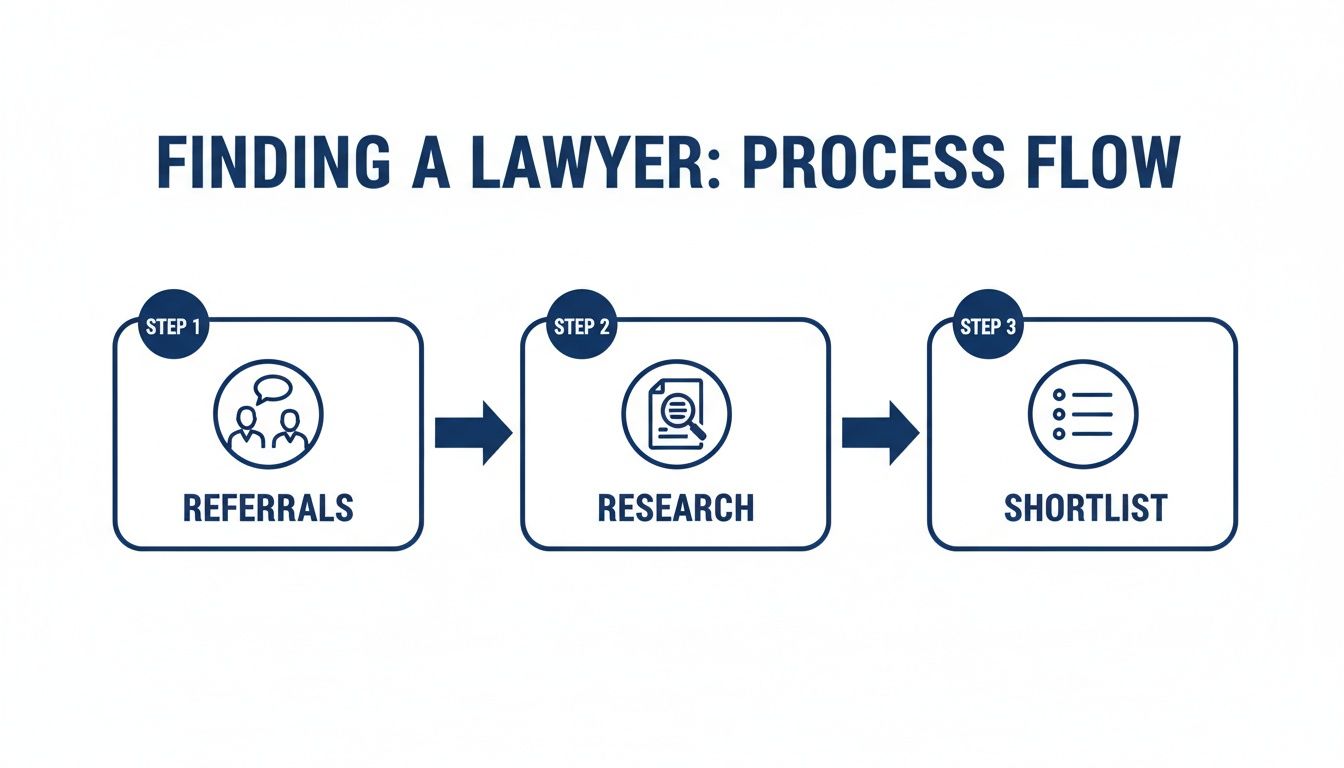
The idea is to start with people you trust, then do your own homework to create a focused list of lawyers to interview.
Look Beyond Wins to Maximum Recoveries
When you start talking to lawyers, don’t just ask if they win cases. The real question is about their track record of maximizing compensation for clients with injuries just like yours. A quick, lowball settlement technically counts as a “win,” but it does you no good when you have future medical bills and long-term suffering to account for.
A great attorney fights for every single dollar you are owed. They achieve this by meticulously documenting all your damages, from every cent of lost income to the projected cost of future physical therapy. Their goal isn’t just to close your file; it’s to secure a result that truly makes you whole again.
The Critical Importance of Trial Readiness
Here’s a factor that many people miss, but it’s a game-changer: Is the law firm actually ready and willing to go to trial? This single detail completely changes the power dynamic with the insurance company.
Insurance adjusters keep lists. They know which law firms will take a low offer to avoid court and which ones will gladly fight it out in front of a jury. A firm that prepares every single case for trial from day one is negotiating from a position of incredible strength.
Even though the vast majority of cases settle, this trial-ready approach is what forces insurers to make much higher settlement offers. They know the alternative is a costly and unpredictable court battle they’d rather avoid. Understanding how important trial experience is when hiring a personal injury attorney is key to choosing an effective advocate.
What Does “Trial-Ready” Really Mean?
Being prepared for trial is far more than just tough talk. It means taking concrete, expensive actions on your case right from the start. A firm that is truly trial-ready will:
- Hire Experts Immediately: They’ll bring in accident reconstruction specialists to prove the other party was at fault and medical experts to clearly explain the severity of your injuries.
- Utilize Advanced Technology: They aren’t afraid to invest in modern litigation tools, like 3D animations of the crash scene or powerful video depositions that tell a compelling story to a jury.
- Conduct Thorough Discovery: This is the legal term for digging deep. They’ll uncover every shred of evidence, from the at-fault driver’s cell phone records to a trucking company’s hidden maintenance logs.
This proactive approach sends a clear signal that they are serious. While only about 4% of personal injury cases ever see the inside of a courtroom, top firms secure excellent settlements in 90-95% of their cases precisely because they’re always prepared for that small chance. In Florida, where plaintiffs win in 54% of jury trials, having a lawyer who is comfortable and experienced in court is a massive advantage.
Critical Questions to Ask During Your Consultation
That free consultation isn’t just your chance to tell your story—it’s the most important job interview you’ll ever conduct. This is where you cut through the billboard promises and find a real advocate.
Walking in prepared with a handful of smart questions is the key. It allows you to peel back the curtain and see how a firm actually operates, how they communicate, and whether they have the local courtroom grit to handle your case. You’re looking for substance, not just a sales pitch.
Questions About Communication and Your Case Strategy
You know the number one complaint people have about lawyers? Lousy communication. Getting left in the dark is frustrating and stressful, so you need to nail this down from the very beginning. It’s crucial to understand who you’ll be talking to and how the day-to-day of your case will be managed.
Here’s what to ask to get a clear picture:
- Who will be my main point of contact? Will I be speaking directly with you, the attorney, or will my case be handed off to a paralegal or case manager?
- How do you keep clients updated? Do you prefer phone calls or emails? What’s a realistic timeframe for me to expect a response if I reach out?
- What’s your initial strategy for a case like mine here in Hillsborough County? Based on what you know about the local judges and how insurance companies operate in Tampa, what’s your game plan?
This isn’t just about getting a warm, fuzzy feeling. It’s about hiring a team with a concrete plan and a process that won’t leave you wondering what’s going on.
You’re not just hiring an attorney; you’re hiring a communications partner. Their answers here will tell you everything you need to know about whether they’ll keep you in the loop or leave you in the dark.
Understanding the Financial Commitment
Next up: money. Most personal injury lawyers in Florida work on a contingency fee basis, meaning they don’t get paid unless you do. It sounds simple, but the devil is always in the details.
Let’s imagine a real-world scenario: you get rear-ended on I-275 during rush hour. The stats are clear. The Insurance Research Council found that accident victims who hire a lawyer receive a settlement 85% of the time. Even better, those settlements are, on average, three times larger than what people get when they try to go it alone. The right lawyer doesn’t just cost money; they make you money.
To make sure you understand the bottom line, ask these direct questions:
- What is your exact contingency fee percentage?
- Does that percentage increase if the case has to go to trial?
- Are case costs—like expert witness fees or court filing fees—taken out before or after your fee is calculated? (This makes a big difference!)
- If we lose the case, will I be on the hook for any of those costs?
A good, trustworthy attorney will be happy to explain their fee agreement line-by-line, with no hesitation. If you want to dive deeper into how this all works, check out our guide on how contingency fees work in a car accident case. An attorney’s transparency about money is a huge indicator of their integrity.
Warning Signs and Red Flags to Avoid

Picking the wrong lawyer can cause as much damage as the accident itself. When you’re vetting potential attorneys, spotting the red flags is just as crucial as recognizing the green ones. Certain behaviors are instant deal-breakers—signs you should thank them for their time and walk away.
The first, and maybe the biggest, red flag is any lawyer who guarantees a specific outcome. If someone promises you a certain dollar amount from the get-go, that’s not just a bad sign; it’s unethical. No experienced attorney can predict the future. They can promise to fight for you, but they can never guarantee a result.
Poor Communication and High-Pressure Tactics
Pay close attention to how they treat you during that first call or meeting. If the attorney or their staff takes forever to get back to you, gives you vague answers, or makes you feel rushed, that’s exactly how they’ll treat you once you’re a client.
Be particularly skeptical of anyone who pressures you to sign a contract on the spot. A good lawyer wants you to be comfortable and confident in your choice. They’ll encourage you to think it over. High-pressure sales pitches are usually a hallmark of a “settlement mill” firm that’s more concerned with their case volume than your well-being.
Your alarm bells should be ringing if they are:
- Brushing off your questions: A good lawyer will patiently explain everything, especially their fees, until you understand completely.
- Creating false urgency: Watch out for phrases like, “You have to sign today to get this deal.” This is a classic manipulation tactic.
- Being secretive about costs: If they can’t clearly explain their fee structure or the potential expenses involved in your case, it’s time to leave.
Trust your gut. A healthy attorney-client relationship is built on clear communication and mutual respect. If you feel pressured, ignored, or confused right from the start, that’s your cue to keep looking.
The Problem with Generalists and Settlement Mills
Finally, you need a specialist. Avoid the attorney who dabbles in personal injury alongside a dozen other practice areas. A “jack of all trades” lawyer won’t have the deep, focused experience required to take on insurance companies and navigate Florida’s complex injury laws.
This kind of specialization is what drives results. While we all see courtroom showdowns on TV, the reality is that 95-96% of personal injury cases are settled out of court. And the data shows that victims with lawyers receive 85% of all money paid out by insurers, with settlements often 3x higher than what unrepresented victims get. These stats prove that a great lawyer’s value is in maximizing your recovery long before a trial ever begins—a skill that comes from dedicated focus. You can find more details on how these personal injury outcomes affect your case on Growlaw.co.
Learning to spot these red flags will help you steer clear of the wrong fit and find a true advocate who is genuinely committed to your case and your recovery.
Common Questions We Hear All the Time
Even after you’ve done your research, a few questions always seem to surface right before you’re ready to pick up the phone. It’s completely normal. The legal world can feel a bit intimidating, but getting straight answers to these common worries can make all the difference.
“I Can’t Afford a Lawyer, So What’s the Point?”
This is hands-down the biggest misconception we see, and thankfully, the answer is a relief for most people. Nearly every reputable personal injury lawyer in Florida works on a contingency fee basis.
What does that mean for you? You pay absolutely nothing out of your own pocket. Zero. The lawyer’s fee is simply a percentage of the money they recover for you, whether that’s through a settlement or a jury verdict.
If for some reason they can’t win your case, you owe them no attorney fees. It’s that simple. This approach levels the playing field, ensuring anyone can get top-tier legal help, no matter their bank account balance.
“My Injuries Weren’t That Bad, Right?”
It’s so easy to brush off your own pain. You tell yourself, “It’s just a little stiffness,” or “This headache will go away.” But what feels minor right after a crash can easily spiral into a chronic, debilitating condition down the road.
Even a seemingly straightforward claim has to navigate Florida’s complex no-fault insurance rules just to get your initial medical bills paid. A good lawyer protects your rights from the very beginning. They make sure you don’t unintentionally sign away your ability to seek more compensation if that “minor” injury turns into a major problem.
We see it all the time: people wait to call because they think their case is “too small.” But a free consultation costs nothing but a little bit of your time. It can give you clarity, a solid plan, and most importantly, peace of mind.
“Is It Too Soon to Call a Lawyer?”
Honestly, the real question is, “Is it too late?” The best time to contact an attorney is as soon as you can after the accident.
Every passing day works against you. Evidence gets lost, surveillance videos are erased, and witnesses’ memories get fuzzy. Plus, Florida has strict legal deadlines—called statutes of limitations—for filing a lawsuit. Miss that deadline, and your case is gone forever.
Getting a lawyer involved early means they can immediately start preserving crucial evidence and take over all communications with the insurance companies. If you’re wondering about the timing, we break it down in our guide on when to hire a personal injury attorney after an accident.
“What Is My Case Actually Worth?”
Be very wary of any lawyer who gives you a specific dollar amount in the first conversation. No ethical attorney can promise a result.
What they can do is walk you through the real factors that determine what your case might be worth. It’s a detailed calculation based on things like:
- Medical Costs: Every bill from the E.R., specialists, physical therapy, and any future care you’ll need.
- Lost Income: The wages you’ve already missed and, just as importantly, your diminished ability to earn in the future.
- Pain and Suffering: Real compensation for the physical agony and emotional trauma you’ve been forced to endure.
- Property Damage: The cost to get your car fixed or replaced and any other property that was destroyed.
A great lawyer digs in and documents every single loss, big or small, to build a powerful case for the maximum compensation you deserve. This isn’t just paperwork; it’s the foundation of getting you what you’re owed.