
Getting hurt in an accident is overwhelming. One moment everything is normal, and the next, you’re dealing with pain, medical appointments, and a future that suddenly feels uncertain. Amidst all this chaos, the first question is often how to find a personal injury lawyer who can actually help.
The truth is, you need to act fast. Finding an experienced, local attorney right away is one of the most important things you can do. They can jump in immediately, start preserving crucial evidence, and handle the insurance companies for you, freeing you up to focus on getting better.
Your First Steps After a Florida Injury
In the hours and days after an injury, it’s easy to feel lost. You’re in pain, the medical bills are starting to pile up, and you’re not sure what to do next. It’s tempting to put off calling a lawyer, but in Florida, that can be a big mistake.
An experienced personal injury attorney isn’t just someone who shows up at the end to collect a check. They are your advocate from day one. Their first job is to shield you from the insurance adjusters, whose only real goal is to pay you as little as possible.
This is especially true here in Florida. Our state’s modified “no-fault” insurance system can make even a straightforward car accident case surprisingly complex. You need someone who lives and breathes these local laws to start navigating the process for you right away.
Why Immediate Action Matters
Hesitating to call a lawyer can seriously hurt your case. Evidence has a way of disappearing, witnesses’ memories get fuzzy, and you could accidentally say something to an insurance adjuster that they’ll use against you later.
Taking quick action ensures that doesn’t happen. For instance, if you’ve been in a wreck, following the right steps is critical. This guide on what to do after a car accident in Florida can help lay the groundwork for a much stronger claim.
The legal world is massive. By 2025, the personal injury industry is expected to hit $61.7 billion in revenue, with more than 50,000 firms across the country. That’s a lot of noise to cut through.

While you have thousands of options, your real task is to find that one right choice for you and your family.
Your lawyer’s job is to level the playing field. Insurance companies have teams of professionals working to protect their interests; you deserve the same dedicated advocacy.
Hiring an attorney early isn’t about being litigious or rushing to file a lawsuit. It’s about protecting yourself. It’s about preserving your options and giving your case the best possible chance of success from the very beginning. Let a professional handle the legal headache so you can focus on what matters most: your recovery.
Where to Begin Your Search for the Right Lawyer

So, where do you actually start looking for the right lawyer? A quick Google search is tempting, but it can unleash a flood of ads and overwhelming, often misleading, results. A smarter, more focused approach will save you a ton of time and point you toward truly qualified candidates right here in Hillsborough County.
The goal isn’t to find every single lawyer in Tampa. It’s to build a solid, manageable shortlist of maybe three to five attorneys who genuinely have the right experience for a case like yours. That means looking in the right places from the very beginning.
Start with Trusted Professional Sources
Before you ask a friend or dive into general web searches, start with official and professional organizations. These sources usually have some sort of vetting process, which gives you a baseline of credibility you just can’t get from a paid advertisement.
A great first stop is The Florida Bar’s official lawyer referral service. This resource only lists attorneys in good standing, and they often meet specific qualifications for the areas they practice in. Many local bar associations run similar services, but it’s worth noting that their screening rigor can vary. Some only list lawyers who carry malpractice insurance and pass extra checks, while others might include any licensed attorney in the area.
Reputable online legal directories are another powerful tool. Websites like Avvo, Martindale-Hubbell, and Super Lawyers offer detailed profiles, client reviews, and peer ratings that give you a much deeper look into a lawyer’s reputation and professional background.
When you’re scrolling through online reviews, focus on the quality, not just the quantity. A detailed review explaining how a lawyer navigated a complex case is far more telling than a dozen generic “they were great” comments.
These professional channels are the best way to build your initial list of potential attorneys.
Leverage Your Personal Network Carefully
Getting a recommendation from a trusted friend, family member, or coworker can be pure gold. A firsthand account of a positive experience provides a level of personal insight you’ll never find online.
But you have to approach these referrals with a critical eye. Just because a lawyer was perfect for your cousin’s workers’ comp claim doesn’t mean they’re the right fit for your complex trucking accident case. Personal injury law has many sub-specialties, and you absolutely need someone who focuses on your specific type of accident.
To get the most out of a referral, ask a few targeted questions:
- What kind of case did the lawyer handle for you? This tells you if their experience is even relevant.
- How was the communication? You want an attorney who is responsive and keeps you in the loop, not one you have to chase down for updates.
- Were you happy with the outcome and how the firm treated you? This gives you a gut check on their client service and their ability to get results.
A referral is a fantastic lead, but it should be the start of your research, not the end of it. The next step is to independently vet that attorney to make sure they have the specific expertise your case requires. For more tips on this process, check out our guide on how to find the best lawyer near you.
How to Properly Vet Potential Attorneys
Okay, you’ve got a short list of potential lawyers. Now the real work begins. This is where you dig deeper than the slick ads and professional headshots to figure out who you can actually trust with your future.
Think of it like this: you’re not just hiring a lawyer; you’re hiring a business partner for one of the most important financial and personal recoveries of your life. Being a savvy consumer here is non-negotiable.
Looking Past the Marketing Spiel on Their Website
First things first, pull up each firm’s website, but put on your skeptic’s hat. A nice-looking site is table stakes these days. You’re looking for substance, not just a pretty design.
Pay close attention to the promises they make. Do you see a lot of talk about “quick cash” or “fast settlements”? That can be a major red flag. While nobody wants a case to drag on forever, an experienced attorney knows that rushing a claim often means leaving money on the table. A firm that heavily pushes speed might be more focused on turning over a high volume of small cases than on maximizing the value of yours.
Next, hunt for proof. Any firm that gets great results for their clients is going to want to talk about it. Look for a “Case Results” or “Verdicts and Settlements” page.
But don’t be fooled by vague statements like, “We’ve recovered millions for our clients.” That doesn’t tell you anything useful. You want to see specific examples of cases they’ve handled that are similar to yours—a car wreck, a slip and fall, etc. If they don’t list any results, it could mean they’re new, inexperienced, or just don’t have impressive outcomes to show off.
While you’re there, check out the attorney bios. Is their practice 100% focused on personal injury? Or do they list a mishmash of practice areas like personal injury, family law, and criminal defense? You’re not looking for a jack-of-all-trades; you need a specialist who lives and breathes injury law.
Verifying Credentials and Checking for Red Flags
This next part is an absolute must-do, and thankfully, it’s easy. You need to independently verify that the lawyer is in good standing.
Go directly to The Florida Bar website and use their “Find a Lawyer” search. This will instantly confirm if they are licensed and, more importantly, if they have any public disciplinary history.
A clean record is the bare minimum. Skipping this step is a huge gamble—you could unknowingly hire someone with a history of professional misconduct or ethical violations.
Vetting isn’t just about finding the good; it’s about screening out the bad. A few minutes of due diligence can prevent a massive headache and protect the integrity of your case down the road.
The need for this diligence is clear when you look at the numbers. In the U.S., about 39.5 million people need medical attention for injuries each year, leading to roughly 400,000 personal injury claims filed annually. As you can learn from personal injury trends at Casepeer.com, the field is crowded. Your job is to find the advocate who truly stands out.
Why Trial Experience Is Your Secret Weapon
Here’s a piece of inside baseball that many people miss: an attorney’s trial experience matters, even if your case never sees the inside of a courtroom. In fact, it might be the most important factor of all.
Insurance companies aren’t guessing. They have entire departments dedicated to tracking law firms and their attorneys. They know exactly which lawyers will do anything to avoid a trial and are quick to accept a lowball offer.
They also know which lawyers aren’t afraid to go to battle in front of a jury and win.
That reputation is a powerful weapon. When the insurance adjuster sees a demand letter from a known trial attorney, the whole dynamic shifts. They are far more likely to offer a fair settlement because the alternative—facing a skilled litigator in court—is an expensive and unpredictable risk for them.
A lawyer who only settles cases has no leverage. An attorney who is ready, willing, and able to go to trial has all of it. To dig deeper into this, you can learn more about why trial experience is so important when hiring a personal injury attorney.
Understanding Contingency Fees and Legal Costs

Let’s talk about the elephant in the room: legal fees. One of the biggest fears that keeps people from calling a lawyer after an injury is the cost. The great news is you almost never have to pay anything out of your own pocket to get started.
Nearly every personal injury law firm in Florida works on what’s called a contingency fee basis. The whole system is designed to give you a fighting chance, no matter your financial situation. Simply put, your lawyer only gets paid if they win money for you.
If there’s no recovery, you owe them zero for their time. This setup is powerful because it perfectly aligns your lawyer’s goals with yours—the more they get for you, the more they earn.
What Is a Typical Contingency Fee Percentage?
The Florida Bar actually regulates these fees, so they’re fairly standard across the board. The fee is a set percentage of the total money recovered in your case.
A common breakdown for most injury claims in Florida looks like this:
- 33.3% of the recovery up to $1 million if your case settles without filing a lawsuit.
- 40% of the recovery up to $1 million if a lawsuit has to be filed and the case moves into litigation.
These percentages can shift for recoveries that go above $1 million. The key thing to remember is that this percentage is taken from the gross settlement amount, before other expenses are paid back. This structure means no surprise hourly bills and no hidden fees for the lawyer’s work.
The Critical Difference Between Fees and Costs
This is where things can get a little confusing, and it’s something you absolutely must get clarity on before signing with any attorney. Attorney’s fees and case costs are not the same thing.
Attorney’s Fees: This is the percentage your lawyer earns for their work and expertise. You only pay this if they win.
Case Costs: These are the out-of-pocket expenses required to build and prove your claim.
Think of case costs as the fuel for your lawsuit. These are real expenses paid to outside parties to gather the evidence needed to stand up to the insurance company and win your case.
Common case costs might include:
- Court filing fees to officially start a lawsuit.
- Expert witness fees for doctors, accident reconstructionists, or financial experts who provide testimony.
- Deposition costs for court reporters and videographers.
- Fees for obtaining medical records and official police reports.
- Private investigator fees to track down witnesses or uncover evidence.
In a serious case, these costs can easily run into the thousands of dollars. So, who foots that bill?
How Case Costs Are Handled
Here’s the mark of a good, well-funded personal injury firm: they will advance all these costs for you. They front the money needed to hire the right experts and build the strongest case possible without you having to worry about it.
This is a huge relief. It means your lawyer is literally investing their own money in your case’s success.
When your case finally settles or you win a verdict, these advanced costs are paid back to the firm out of the total recovery. The attorney’s contingency fee is then calculated on what’s left. For a closer look, you can read more about how contingency fees work in a car accident and see how it all comes together.
Before you hire anyone, ask them to walk you through a hypothetical settlement breakdown. A transparent lawyer will have no problem showing you exactly how the math works so you can see a real-world estimate of your final check. That kind of clarity is a sure sign you’ve found a trustworthy advocate.
How to Prepare for Your Initial Consultation
That first meeting with a lawyer isn’t just a formality—it’s a two-way interview. You’re sizing them up, and they’re evaluating whether you have a strong, winnable case. Walking in organized and prepared shows you’re serious and helps them give you a much better assessment right from the start.
When an attorney can see the key documents and hear a clear story, they can spot the strengths and weaknesses of your claim almost immediately. It saves everyone time and sets the foundation for a good working relationship.
Gather Your Essential Documents
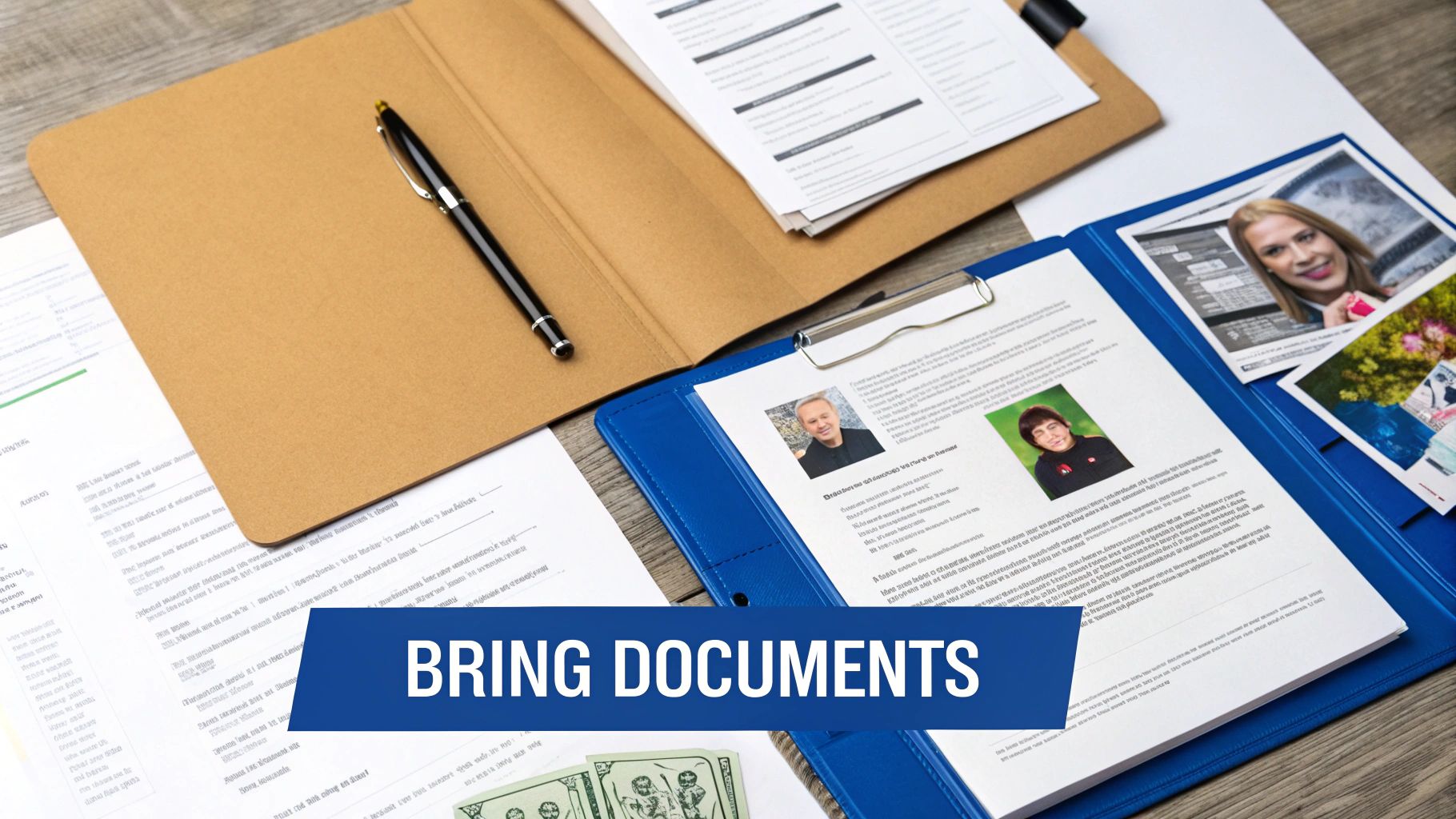
The backbone of any personal injury claim is paperwork. Your memory is vital, but hard evidence is what convinces insurance adjusters and juries. Before you go, pull together as much of this as you can into one folder:
- The Police or Accident Report: This is ground zero. It’s the official, neutral account of what happened.
- Photos and Videos: Any pictures you snapped at the scene are huge. Show the car damage, the road conditions, and any visible injuries you had. A picture is truly worth a thousand words here.
- Medical Records and Bills: This is non-negotiable. Bring everything from the ER report and doctor’s notes to prescription receipts and the bills that are starting to pile up. Understanding the critical role of medical documentation in Tampa personal injury cases is key.
- Insurance Company Letters: Have you gotten anything in the mail or email from any insurance company (yours or theirs)? Bring it. Also, jot down notes from any phone calls.
- Proof of Lost Wages: A few recent pay stubs or a simple letter from your HR department showing the hours you missed and the income you lost will do the trick.
Don’t panic if you can’t find every single item. A good lawyer has ways of getting official reports and records. Just bring what you have—it gives them a massive head start.
Organize Your Story
Paperwork is only half the battle; your story fills in the gaps. It’s tough to talk about a traumatic event, and it’s easy to get sidetracked by emotions. Before the meeting, take a few minutes to write down a simple, chronological timeline of what happened.
A clear, concise timeline is the fastest way for an attorney to understand the sequence of events. Stick to the facts: what you saw, what you heard, and how you felt, both during the incident and in the days that followed.
Think through the details. What was the exact date and time? Were the roads wet? Was it dark? Who else was there? Writing this down ensures you won’t forget a critical piece of information when you’re sitting in their office.
This simple exercise does more than just prepare you for the meeting—it helps you process what happened, making it easier to talk about it clearly and calmly. When you can present the facts in an organized way, it helps the attorney ask the right questions and gives you the best shot at getting the clear answers you need.
Making Your Final Decision and Moving Forward
You’ve done the hard work of interviewing a few well-qualified attorneys. Now comes the part that’s less about their resume and more about your own comfort level. Credentials and track records are critical, but the attorney-client relationship can last for months, sometimes years. Choosing someone you genuinely trust is just as important.
It’s time to think back on those consultations. Go beyond the numbers and consider the connection. Who actually listened? Who took the time to break down the legal jargon into plain English? A good rapport isn’t just a bonus; it’s essential for getting through the stress of a personal injury case.
Trusting Your Gut
Don’t underestimate your instincts. After an injury, you’re already feeling vulnerable. The last thing you need is a lawyer who makes you feel like an inconvenience or just another case file. The right attorney should give you a sense of confidence and make it clear you’re a valued partner in this process.
Think about how each lawyer communicated. Was one more patient, willing to answer every single question without rushing you? The way an attorney and their staff treat you in that first meeting is a pretty reliable preview of how they’ll treat you for the entire case.
A successful outcome is built on a foundation of trust and clear communication. If an attorney makes you feel confident and cared for from the very first meeting, that’s a powerful sign you’ve found the right advocate.
Once you’ve settled on the best fit—factoring in both their expertise and your personal comfort—it’s time to make it official.
Reviewing the Fee Agreement
Before any legal work starts, the firm will give you a fee agreement or an engagement letter. This is your contract, and it’s crucial to read every line before you sign. Don’t let the legal language intimidate you.
This document should clearly spell out a few key things:
- The exact contingency fee percentage and how it’s calculated.
- How case costs are handled (confirming the firm advances them and how they’re paid back from the settlement).
- The scope of representation, which defines exactly what legal services the firm will provide.
- Your responsibilities as the client, like being honest and staying in touch.
If any part of that agreement feels fuzzy or confusing, ask for clarification right away. A good lawyer will be happy to walk you through it, clause by clause, until you understand everything.
Once you sign, your work is mostly done. Your legal team will notify the insurance companies and other parties that they now represent you. From that moment on, they take over all communications, finally giving you the space you need to focus on what really matters: your recovery.
When you need an advocate who combines proven trial experience with genuine client care, the team at Martin Hernandez, P.A. is ready to fight for you. We understand the physical, emotional, and financial toll an injury takes, and we are committed to guiding you with clarity and compassion. Contact us today for a free, no-obligation consultation to learn how we can help you move forward. Visit us at https://injurylawyersoftampa.com.