
Successful insurance negotiations don’t start with a phone call; they start with preparation. The secret is to build a rock-solid, evidence-based case that spells out the full scope of your damages, leaving the insurance adjuster very little room to argue. This groundwork is your most powerful tool.
Building Your Case Before You Call

The minutes and hours after an accident feel chaotic, but what you do here truly sets the stage for your entire claim. You need to remember that an insurance adjuster’s primary job is to protect their company’s profits by paying out as little as possible. Your job is to hand them a file so well-documented that they have no choice but to take your claim seriously.
Think of yourself as an investigator. Every photo, every receipt, and every note you take adds weight to your side of the story, making it much harder for the insurer to lowball you. This isn’t just about proving who was at fault—it’s about demonstrating the real, tangible impact this accident has had on your life. Without a strong foundation of proof, you’re just negotiating opinions. With it, you’re negotiating facts.
Gather Indisputable Accident Evidence
First things first, you need objective proof of what happened. This evidence is the factual backbone of your claim, establishing how the crash occurred and who is liable. Without these core documents, it’s just your word against the other driver’s.
Always get an official copy of the police report. It’s a critical, neutral account of the incident and often includes the officer’s initial thoughts on who was at fault. Next, your smartphone is your best friend. Start taking pictures and videos of everything:
- Vehicle Damage: Get photos from every angle of all cars involved. Capture the close-up damage but also wider shots to show the context.
- The Accident Scene: Document the intersection, traffic signs, road conditions, and any skid marks on the pavement.
- Your Injuries: Take pictures of any visible cuts, bruises, or swelling right after the crash and continue to document them as they heal (or don’t).
Finally, talk to anyone who saw what happened and get their contact information. An independent witness account can be a game-changer, especially if the other driver starts changing their story. For a more detailed checklist, see our complete guide on https://injurylawyersoftampa.com/what-to-do-after-a-car-accident/ to make sure you don’t miss a thing.
Meticulously Document Your Financial Losses
Every single dollar you’ve spent or lost because of this accident needs to be tracked. These are called “special damages,” and they are the easiest part of your claim to prove because they come with a paper trail. The key is organization. While many guides focus on organizing business receipts, the same principle applies here: be meticulous.
Get a folder or a box and keep everything. This means every medical bill, every pharmacy receipt, every co-pay. Log the mileage to and from your doctor’s appointments. Get a letter from your HR department documenting your lost wages.
This level of detail does more than just prove your expenses. It sends a powerful signal to the adjuster that you are serious, organized, and ready to back up every penny you’re asking for.
Create a Pain and Suffering Journal
Receipts can show your financial costs, but they can’t possibly capture the human toll of an accident. That’s where a pain and suffering journal becomes one of your most persuasive pieces of evidence. Insurers call these “general damages,” and they often try to minimize them because they’re subjective. Your journal makes the subjective real.
Start it the day of the accident, if possible. Every day, just jot down a few notes about:
- Your physical pain levels and where you’re hurting.
- Any feelings of anxiety, frustration, or trouble sleeping.
- Simple daily activities you suddenly can’t do, like walking the dog or picking up your kids.
- How the injuries are impacting your relationships and your overall mood.
This journal tells a story that medical records alone never can. It paints a vivid picture of how the other driver’s negligence has turned your life upside down, giving you a powerful foundation to argue for the compensation you truly deserve.
Crafting Your Demand and Calculating Your Number
Once you’ve gathered all your evidence, it’s time to shift from investigator to advocate. The next move is to take all that organized proof and package it into a formal demand letter. This isn’t just a simple letter; it’s a powerful tool that lays out your case for the insurance company in a logical, persuasive way. A well-written demand makes it much harder for them to come back with a lowball offer.
Think of the demand letter as your opening argument in the negotiation. It clearly states the facts of the accident, details the full scope of your injuries, and directly connects the other driver’s negligence to the damages you’ve suffered. It shows the adjuster you’re serious, organized, and prepared, forcing them to view your claim through the eyes of a potential jury. That’s a critical part of negotiating effectively.
Structuring Your Demand Letter for Maximum Impact
Your demand letter needs to tell a compelling story, with every claim backed by the evidence you’ve collected. It’s the roadmap that walks the adjuster from the crash all the way to the final settlement figure you’re requesting. You don’t need to load it up with legal jargon, but it absolutely must be structured, thorough, and professional.
Here are the essential pieces to include:
- A Factual Narrative: Start with a clear, concise summary of how the accident happened. Pinpoint the date, time, location, and the sequence of events that proves their insured was at fault.
- A Detailed Injury Breakdown: List every single injury you sustained. Don’t leave anything out, from major fractures to things that might seem minor, like whiplash or severe bruising. Reference your medical records to describe the official diagnoses and treatments you received.
- The Story of Your Recovery: This is where your pain and suffering journal really shines. Describe your medical journey—surgeries, physical therapy sessions, specialist visits. More importantly, explain how these injuries have turned your daily life upside down. Talk about the chronic pain, the sleepless nights, and the hobbies or activities you can no longer enjoy.
A well-crafted demand letter does more than just list facts; it constructs an argument. It demonstrates to the adjuster that you have a comprehensive understanding of your claim’s value and are prepared to defend it with clear, documented evidence.
Calculating Your Settlement Figure
This is the moment of truth in your demand: putting a specific dollar amount on your claim. Your settlement figure is a combination of two different kinds of damages. My experience has shown that adjusters are far more receptive to a number that is calculated logically and can be justified with hard proof.
First, you need to tally up your special damages. These are your concrete, economic losses—the ones with a clear price tag. This part is pretty straightforward math. Be sure to include:
- All Medical Expenses: Add up every single bill. This means hospitals, doctors, chiropractors, physical therapists, and pharmacy receipts.
- Lost Income: Calculate every dollar of wages you lost because you couldn’t work. Remember to include any sick or vacation days you were forced to use.
- Out-of-Pocket Costs: Don’t forget the smaller expenses that add up, like prescription co-pays, mileage for driving to and from medical appointments, or any other cost you incurred directly because of the accident.
Next comes the trickier part: calculating your general damages. This is compensation for non-economic losses like pain, suffering, emotional distress, and the loss of enjoyment of life. A common way to approach this is the “multiplier” method. You take your total special damages and multiply them by a number between 1.5 and 5. A minor injury that healed quickly might warrant a 1.5 or 2 multiplier. A severe, life-altering injury could easily justify a 4 or 5. To get a better handle on this, you can learn more about how much a personal injury case is worth in our detailed guide.
Once you have both figures, you simply add them together to get your total demand amount. To make sure your math is spot-on, using specialized resources can be a huge help, as referenced by the microestimates tools sitemap. When you present a final number that’s clearly supported by evidence, you send a strong signal to the insurance company: you’ve done your homework and you won’t be pushed into accepting an unfair offer.
Mastering the Conversation with the Adjuster
Once your demand letter is in their hands, the real back-and-forth begins. This is where you’ll be dealing directly with the insurance adjuster, a professional whose primary goal is to settle your claim for as little money as possible. All the preparation you’ve done—gathering evidence, documenting everything—was to build your case. Now, it’s time to present it with confidence.
That first phone call from the adjuster is a pivotal moment. They are trained negotiators, skilled at steering the conversation and getting you to say things that can hurt your claim. Your job is to stay cool, stick to the facts you’ve already laid out, and not give them any new ammunition.
Setting the Tone in Your First Conversation
When the adjuster rings, remember this is strictly business. It’s not the time to vent your anger or share the emotional toll of the accident; your demand letter and pain journal have already done that job. Keep your tone calm, professional, and firm.
Here’s a quick rundown of what to do—and what not to do:
- Do confirm basic details like your name and address.
- Don’t agree to a recorded statement. You have no legal obligation to do so. A polite but firm, “I’m not comfortable giving a recorded statement right now, but I’m happy to answer specific questions in writing,” is all you need to say. Our guide on whether you should talk to an insurance adjuster goes into more detail on why this is so critical.
- Don’t apologize or admit any fault. A simple “I’m sorry the accident happened” can be twisted to suggest you’re accepting blame.
- Don’t downplay your injuries. Stay away from phrases like “I’m doing okay” or “I’m feeling a bit better.” The only story that matters is the one told by your medical records.
You want to leave them with the impression that you’re organized, serious, and won’t be easily pushed around. Before you hang up, let them know you prefer to handle important discussions via email going forward. This creates a paper trail and keeps everyone honest.
Responding to the Inevitable Lowball Offer
I can almost guarantee their first offer will be frustratingly low. Don’t take it personally. This is a standard opening move, a tactic to see if you’re desperate or don’t know what your claim is actually worth. Getting angry or discouraged is exactly what they want.
The first offer is just a starting point, never their final number. It’s a test. Your best response is a calm, evidence-based counter, not an emotional reaction.
Instead of just saying “no,” put the ball back in their court. Ask the adjuster to justify their low offer in writing. Make them explain exactly which documents they reviewed and how they calculated that specific number. This forces them to defend a weak position and gives you a clear roadmap for your counteroffer, where you can systematically pick apart their reasoning using your own evidence.
Your settlement demand isn’t a random figure; it’s a careful calculation based on real losses.
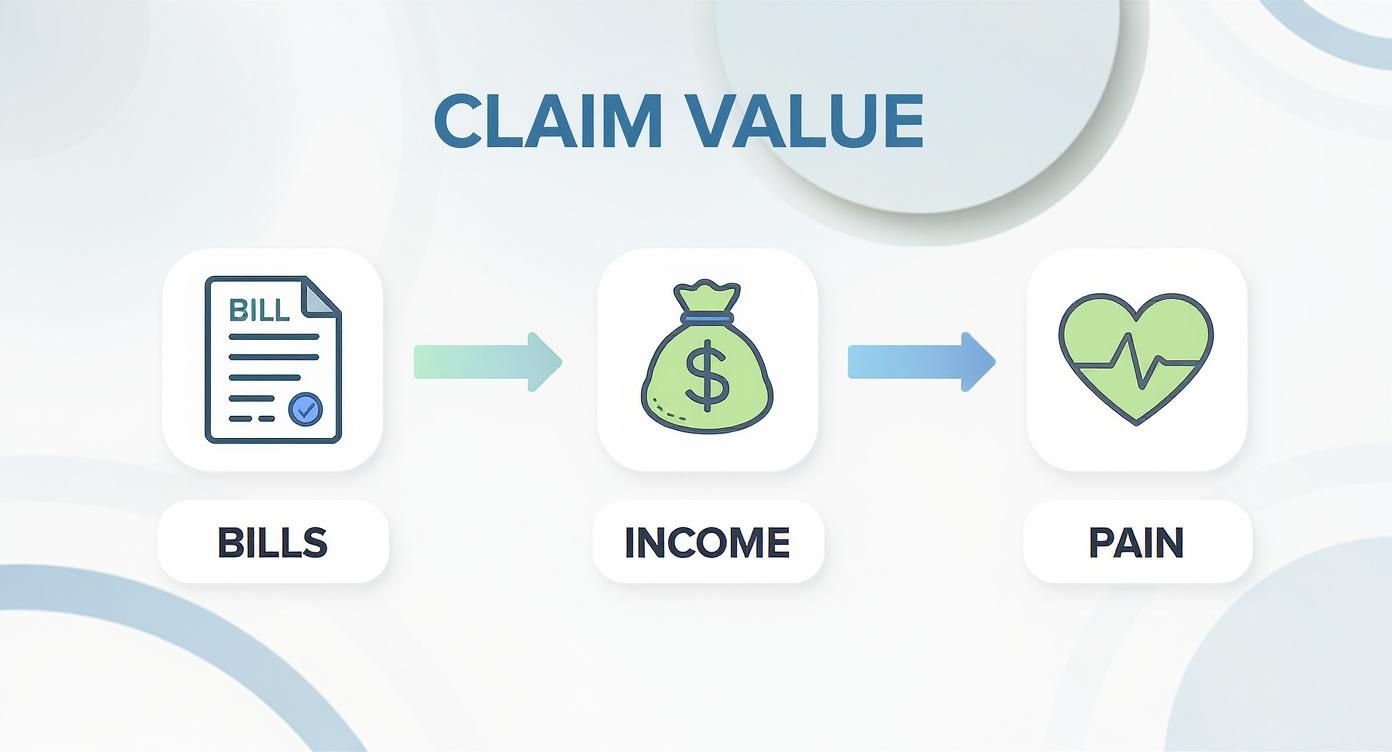
By referencing these core components, you show the adjuster that your counteroffer is grounded in fact, not emotion.
Documenting Every Single Interaction
From this point on, if it isn’t in writing, it didn’t happen. After every phone call, send a brief follow-up email to the adjuster summarizing what you discussed. This simple step creates an undeniable record and prevents them from conveniently “forgetting” what was said.
Keep a running log of every contact you have with the insurance company.
- Date and time of the call or email.
- Name of the person you spoke with.
- A quick summary of the conversation, including any offers made.
This meticulous record-keeping is your best defense against common delay tactics or an adjuster trying to deny a verbal agreement. The negotiation process can drag on for weeks or even months, but patience, backed by rock-solid documentation, is your most powerful tool in this phase.
Understanding Your Negotiation Leverage
To get a fair settlement from an insurance company, you need to know where your power comes from. It isn’t about raising your voice or getting emotional. Real leverage in these talks comes from a calm, strategic understanding of your case’s strengths, backed by cold, hard facts.
Think of it this way: insurance adjusters are risk managers. Their job is to resolve your claim for the least amount of money possible. Your job is to show them that a lowball offer is a bigger financial risk than a fair settlement. When you can clearly demonstrate that you have a solid case that would likely win at trial, you completely change the conversation.
The Power of Irrefutable Evidence
Your single greatest weapon in this fight is solid, well-organized evidence. An adjuster can argue all day about your pain and suffering, but they can’t argue with a police report that puts their driver at fault or a detailed MRI report showing a herniated disc.
Every piece of proof you gather adds weight to your side of the scale. The better your documentation, the less room the adjuster has to downplay your claim. When you present an airtight case, you’re not just asking for a fair number; you’re showing them the very real financial consequences of saying no. For a deeper look, it’s worth understanding the role of evidence in proving negligence in personal injury cases in Tampa.
Clarity of Fault and Severity of Injuries
Two things immediately strengthen your position: clear fault and serious injuries. If liability is a no-brainer—say, you were rear-ended at a red light—the adjuster can’t credibly deny the claim. That’s a huge advantage right out of the gate.
Likewise, severe injuries backed by extensive medical records create a high-value claim that’s tough to ignore. A case that involves surgery, months of physical therapy, and documented lost wages carries far more weight than a minor fender-bender that only resulted in a few check-up visits. This combination of clear liability and significant damages is a powerful one-two punch that puts the insurer on the defensive.
An insurance company’s biggest fear is unpredictability. A well-documented, high-value claim heading to court represents a massive, unpredictable financial risk. Your leverage lies in making a fair settlement the most predictable and financially sound option for them.
Litigation Is the Insurer’s Biggest Motivator
At the end of the day, an insurance company is a business. Every decision it makes is based on a cost-benefit analysis. The adjuster is constantly weighing the cost of meeting your demand against the potential cost of fighting you in court.
Litigation is incredibly expensive for an insurer. They have to pay their own lawyers, cover court costs, hire expert witnesses, and all the while, there’s a chance a jury could hit them with a verdict far larger than what you asked for. This is your ultimate trump card. The credible threat of a lawsuit is what forces them to take you seriously. You’re not just negotiating the value of your injuries; you’re negotiating against the backdrop of what a jury might decide.
When to Call a Personal Injury Attorney

Sure, you can probably handle a minor fender-bender claim on your own. But there’s a definite tipping point where the stakes get too high and the complexity of your case demands a professional. Knowing when to stop advocating for yourself and start interviewing attorneys is one of the most important decisions you’ll make.
Let’s be clear: the insurance company has a whole team of adjusters and lawyers working around the clock to protect their profits. When your claim involves serious injuries, a fight over who was at fault, or an insurer who just won’t play fair, you are completely outmatched. That’s the moment an experienced personal injury attorney becomes your greatest advantage.
Red Flags That Signal You Need Legal Help
Some situations should be an immediate, blaring alarm that it’s time to stop talking to the adjuster and start calling a lawyer. These are the classic signs that the insurance company is digging in for a fight and you need an expert in your corner to push back.
Here are the biggest red flags I see in my practice:
- Severe or Long-Term Injuries: If you needed surgery, face months of physical therapy, or are dealing with a permanent disability, your claim’s value just skyrocketed. Calculating the true cost of lifelong care is incredibly complex. An attorney will work with medical and financial experts to project those future needs so you don’t settle for a fraction of what you’re truly owed.
- Disputes Over Fault: The second the insurance company starts questioning liability or trying to blame you, your entire claim is at risk. This is particularly dangerous in Florida, where comparative negligence rules can slash your settlement based on your percentage of fault. A good lawyer will immediately start gathering the evidence needed to build an ironclad case proving the other party was responsible.
- The Insurer Uses Bad-Faith Tactics: Is the adjuster dragging their feet, ignoring your calls, or making a ridiculously low offer that won’t even cover your medical bills? Those aren’t negotiation tactics; that’s bad faith. They are trying to wear you down until you give up and take a lowball offer out of sheer frustration.
When an insurer’s behavior crosses the line from tough negotiation to outright stonewalling, it’s a clear signal that they don’t see you as a serious threat. Hiring an attorney changes that dynamic instantly, showing them you are prepared to escalate the matter.
The Immediate Advantages an Attorney Provides
Bringing in a lawyer doesn’t just level the playing field—it tilts it in your favor. They aren’t just negotiators; they are advocates who know the law, the local Tampa courts, and the exact playbook each insurance company uses.
Right away, your attorney takes over all communication, which shields you from the stress and pressure of dealing with adjusters. They also bring resources to the table you simply don’t have, like accident reconstructionists and medical experts to properly value your claim. Most importantly, they carry the one piece of leverage that truly matters: the credible threat of a lawsuit. An adjuster who gives you the runaround will suddenly find their tone changes when a letter arrives from a law firm they know isn’t afraid to go to trial.
Understanding the Contingency Fee Model
A lot of people hesitate to call a lawyer because they’re worried they can’t afford it. That’s a common misconception. The vast majority of reputable personal injury attorneys work on a contingency fee basis.
It’s a straightforward system designed to give everyone access to justice:
- You pay zero upfront costs for legal representation.
- The attorney’s fee is a set percentage of the settlement or verdict they win for you.
- If they don’t get you any money, you owe them nothing.
This arrangement means your attorney’s interests are perfectly aligned with yours—they only get paid if you do, and they’re motivated to get you the absolute maximum compensation. This no-risk model makes getting expert legal help a powerful and accessible option for anyone hurt in an accident. You can learn more about why you should never go it alone when dealing with insurance companies after an accident.
Got Questions About Your Insurance Negotiation? We’ve Got Answers.
Going head-to-head with an insurance company can feel like stepping into a whole new world with its own set of confusing rules and timelines. It’s only natural to have questions, and feeling a little lost is completely normal. We’re here to clear up some of the most common things people worry about when negotiating a settlement.
A little bit of knowledge can make all the difference. When you understand the typical flow of a negotiation, what to expect from that first lowball offer, and what your options are if things stall, you gain a massive advantage. Let’s get into it.
How Long Does an Insurance Settlement Negotiation Take?
This is the big one, and unfortunately, there’s no magic number. A simple fender-bender with clear fault and minor injuries might wrap up in just a few weeks. But if you’re dealing with serious injuries, things can easily stretch out for several months, sometimes even longer.
A few key things dictate the timeline:
- The Severity of Your Injuries: The golden rule of personal injury is to never settle your claim until you’ve reached what’s known as Maximum Medical Improvement (MMI). This is the point where doctors agree your condition is stable and they have a clear picture of any future care you’ll need. Settling before you hit MMI is a gamble you can’t afford to take—you could be stuck paying for future surgeries or therapy out of your own pocket.
- Arguments Over Who’s at Fault: If the insurance company is trying to pin some of the blame on you, expect delays. They’ll dig for evidence and draw out the process, hoping you’ll get tired and accept less.
- The Insurance Company’s Pace: Let’s be honest, some insurance companies are just slow. Whether it’s an adjuster buried under a mountain of cases or a deliberate delay tactic, their responsiveness (or lack thereof) can add weeks or months to your wait.
In this game, patience is your best weapon. Rushing to get a check in hand almost always plays right into the insurance company’s hands.
Should I Take the First Settlement Offer?
Let me make this simple: almost never. You have to understand what that first offer really is. It’s not a genuine attempt to make you whole; it’s a business tactic. It’s a calculated, lowball number designed to find out if you’re desperate, inexperienced, or just unwilling to put up a fight.
Think of it as the opening shot in a long negotiation, not the final word. The adjuster is simply testing the waters, hoping you’ll bite and they can close your file for pennies on the dollar. Accepting it means you are almost guaranteed to be leaving a significant amount of money behind—money you are legally entitled to for your medical bills, lost wages, and pain and suffering.
The right way to respond to a lowball offer isn’t with anger, but with a calm, fact-based counter. Politely reject their offer in writing, point them back to the evidence in your demand letter, and ask them to explain exactly how they justified such a low number based on the facts.
What if the Insurance Company Will Not Offer a Fair Settlement?
Sometimes, no matter how well you’ve prepared your case, you and the adjuster will hit a brick wall. When they refuse to move from an unreasonable number, it’s easy to feel like you’re out of options. You’re not.
When talks completely break down, your most powerful move is often to file a lawsuit. This simple action sends a crystal-clear message: you’re serious, and you’re ready to let a jury decide. Interestingly, the vast majority of personal injury cases settle after a lawsuit is filed but before the trial ever starts. The threat of a trial is often all it takes to get the insurer to come back to the table with a realistic offer.
Another path is mediation, where a neutral third party steps in to help find common ground. But if an insurer is still refusing to negotiate fairly, that’s them showing their hand—it’s called “bad faith,” and it’s the clearest sign you need a professional in your corner. An experienced attorney can step in, assess the situation, and take the fight to the next level.
At Martin Hernandez, P.A., we know the insurance company playbook inside and out. We are ready to fight for the full compensation you are owed. If you’re getting the runaround from a stubborn insurer after an accident in Tampa, don’t go it alone. Contact us for a free, no-obligation consultation to see how we can help.