
TL;DR:
- Loss of use insurance reimburses you for transportation costs when your vehicle is being repaired or replaced after an accident. The at-fault driver’s liability insurance covers these costs without daily caps, unlike rental reimbursement policies. You can claim loss of use benefits even if you do not rent a car, based on the fair rental value of comparable transportation.
Loss of use insurance, in the context of a rental car after an accident, is defined as compensation for your transportation costs while your vehicle is being repaired or replaced. If you’re reading this after a crash, you need to know that the at-fault driver’s liability insurance is responsible for covering a comparable rental vehicle for the full duration of your repair. The industry term for this is “loss of use,” and it is distinct from the rental reimbursement add-on you may carry on your own policy. Average repair wait time is 15 days, and 44% of drivers without rental reimbursement pay out of pocket for transportation. Knowing which coverage applies to your situation is the difference between getting reimbursed and absorbing costs you were never supposed to carry.
What is loss of use insurance for a rental car?
Loss of use coverage is the legal right to be compensated for the time you cannot use your vehicle because of someone else’s negligence. The term covers more than just renting a car. It includes any reasonable substitute transportation, such as rideshare rides, bus fare, or a borrowed vehicle’s equivalent value.
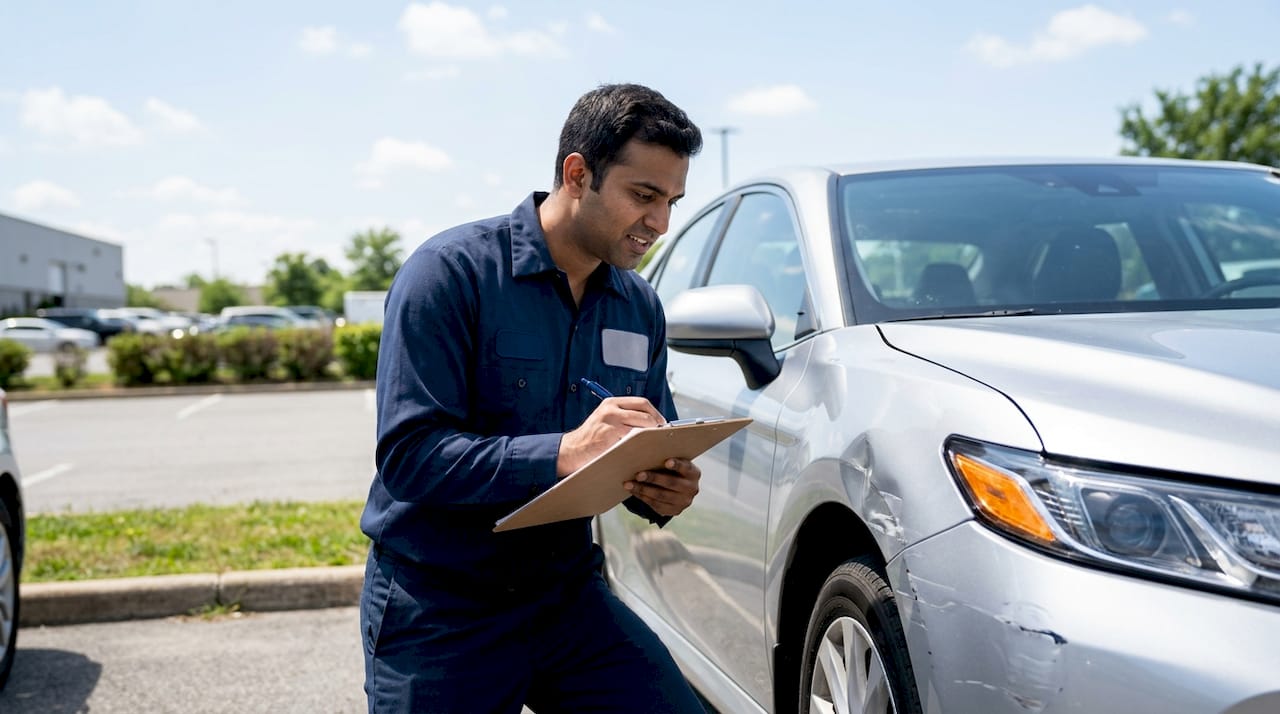
The key distinction is between two separate coverage types. The first is a third-party loss of use claim, which you file against the at-fault driver’s liability insurer. The second is rental reimbursement, which is an optional add-on on your own auto policy. Both serve the same practical purpose, but they work very differently in terms of limits, timing, and who controls the claim.
Understanding this distinction matters because the wrong assumption can leave you paying hundreds of dollars out of pocket. Most people conflate the two, and that confusion is exactly what insurers count on.
Who pays for loss of use after a car accident?
The at-fault driver’s liability insurance pays for your rental car costs when fault is clear. Third-party claims cover the full reasonable cost of a comparable rental without daily or total caps. That is a significant advantage over your own rental reimbursement coverage, which carries strict limits.
The situation gets more complicated when fault is disputed or the other driver is uninsured. In those cases, you have three realistic options:
- File through your own rental reimbursement coverage as an interim solution while fault is being determined.
- Use uninsured motorist property damage coverage if the other driver has no insurance. Learn more about your options after an uninsured accident to understand what Florida law allows.
- Pay out of pocket and seek reimbursement later once liability is established, though this creates a real financial burden.
When fault is disputed, victims often bear upfront rental costs before any reimbursement arrives. That delay can stretch weeks or months, which is why having your own coverage as a backup is not optional. It is a practical necessity.
Pro Tip: Notify the at-fault driver’s insurer in writing as soon as possible. A written record of your rental request creates a paper trail that is hard for adjusters to ignore or delay.
Property damage liability policies carry state-minimum limits that may not cover all your rental and repair costs combined. If the at-fault driver carries only minimum coverage, you may need to pursue additional compensation through your own underinsured motorist coverage or a personal injury claim.
How does rental reimbursement differ from loss of use coverage?
Rental reimbursement is an optional add-on to your personal auto policy. It typically costs $5–$15 per month and covers daily rental costs up to $30–$50 per day, with a total cap of $900–$1,200. Those limits sound reasonable until you need a truck or SUV to replace your vehicle, and the daily rate runs $80 or more.
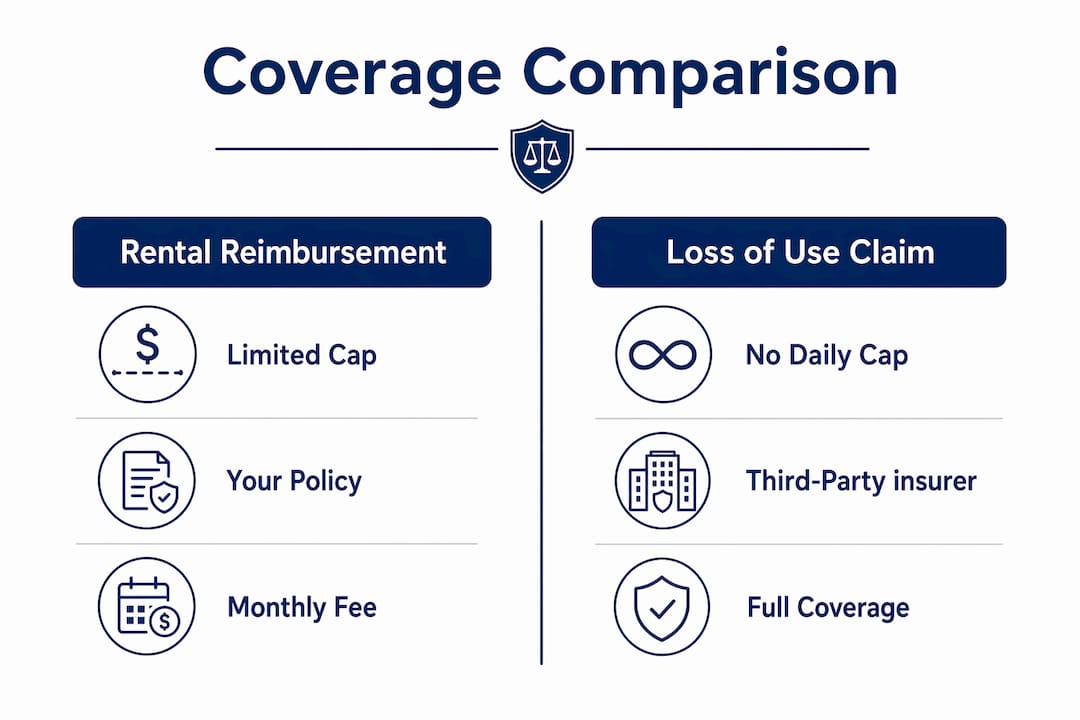
A third-party loss of use claim against the at-fault driver’s insurer carries no such caps. The at-fault insurer pays the full reasonable cost of a comparable rental for the entire repair period. “Comparable” means a vehicle of similar class and size to yours, not the cheapest economy car on the lot.
| Feature | Rental reimbursement (your policy) | Loss of use claim (at-fault insurer) |
|---|---|---|
| Daily limit | $30–$50 | No strict cap; reasonable cost |
| Total cap | $900–$1,200 | No strict cap |
| When it applies | Any covered loss | When another driver is at fault |
| Timing | Available immediately | May require fault determination |
| Subrogation | Yes, insurer recovers costs | Not applicable |
One critical fact that surprises most drivers: full coverage auto insurance does not automatically include rental reimbursement. You must purchase it separately before an accident occurs. Adding it after a crash is not allowed.
There is also a separate issue that catches people off guard. If you rent a car and damage it, the rental company may charge you its own loss of use fee for the days the car sits out of their fleet for repairs. Personal auto policies rarely cover rental company loss of use fees. Premium credit cards sometimes provide secondary coverage for these charges, so check your card benefits before declining the rental company’s collision damage waiver entirely.
Pro Tip: If your insurer pays your rental costs under your own policy while fault is disputed, subrogation kicks in. Your insurer can recover those costs from the at-fault driver’s insurer once liability is settled, so you are not penalized for using your own coverage first.
What is a reasonable rental and how long will insurance cover it?
“Reasonable” is the word insurers use to limit what they pay, and it has a specific meaning in the context of car rental loss of use claims. A reasonable rental vehicle is one of like kind and quality to your damaged car. If you drove a midsize sedan, you are entitled to a midsize sedan, not a luxury SUV. If you drove a pickup truck for work, you are entitled to a comparable truck.
Coverage duration is tied directly to the repair timeline. The at-fault insurer pays for the rental from the day your car goes into the shop until repairs are complete or a total loss settlement is reached. Delays caused by parts shortages or shop backlogs are generally covered, provided you document them. Delays caused by your own inaction are not.
Here is what you need to track during the repair period:
- Written repair estimates and timelines from the body shop, updated whenever delays occur.
- Daily rental receipts showing the vehicle class, rate, and rental period.
- Written communication with the adjuster confirming the approved rental duration.
- Any alternative transportation costs if a rental was unavailable, including rideshare receipts.
After a total loss determination, rental coverage does not end immediately. The at-fault insurer covers the rental for a reasonable period after the settlement offer, giving you time to find and purchase a replacement vehicle. What counts as “reasonable” varies by insurer, but three to seven days is a common standard. Push back in writing if the insurer tries to cut off coverage the day they declare a total loss.
Pro Tip: If the adjuster disputes your rental class, pull the window sticker or original purchase documents for your vehicle. Showing the original MSRP and trim level gives you a concrete basis for requesting a comparable rental.
How to file and maximize a loss of use insurance claim
Filing a car rental loss of use claim correctly from day one prevents the most common problems: delayed approvals, underpayment, and wrongful denials. The process is straightforward when you follow the right sequence.
- Contact the at-fault driver’s insurer directly. Get the claim number in writing. Ask specifically whether they accept liability and will authorize a rental. Do not assume authorization; get it confirmed.
- Choose a rental vehicle in the same class as your car. Do not downgrade to save the insurer money. You are entitled to a comparable vehicle, and accepting less sets a precedent that is hard to reverse.
- Keep every receipt. This includes the rental agreement, daily charges, fuel, and any alternative transportation you used when a rental was unavailable.
- Document all repair delays in writing. Ask the body shop to send email updates when parts are delayed or the timeline extends. Forward those updates to the adjuster immediately.
- Use your own rental reimbursement coverage as a backup if the at-fault insurer delays authorization. Your insurer can recover those costs through subrogation once fault is established, so you stay mobile without absorbing the expense.
One fact that most accident victims do not know: you can claim loss of use compensation even if you never rented a car. If you used rideshares, borrowed a friend’s vehicle, or simply went without transportation, you are still entitled to the fair rental value of a comparable vehicle for the repair period. Document your actual expenses and submit them as part of your claim.
If the at-fault insurer denies or underpays your rental claim, do not accept the denial as final. A written dispute with supporting documentation, including repair timelines and rental receipts, often reverses the decision. If it does not, understanding how to fight an insurance denial gives you the next steps to escalate effectively.
Key Takeaways
Loss of use coverage from the at-fault driver’s insurer pays the full reasonable cost of a comparable rental with no daily cap, making it far more valuable than your own rental reimbursement add-on.
| Point | Details |
|---|---|
| Loss of use vs. rental reimbursement | Third-party claims have no daily cap; your own add-on caps at $30–$50 per day. |
| Full coverage gap | Full coverage does not include rental reimbursement; you must add it separately before an accident. |
| No rental required | You can claim loss of use compensation even without renting a car, based on fair rental value. |
| Subrogation protects you | Using your own coverage while fault is disputed does not cost you; your insurer recovers the money later. |
| Document everything | Repair timelines, rental receipts, and written adjuster communications are the foundation of a strong claim. |
What I’ve learned from handling these claims in Tampa
After years of representing accident victims in Hillsborough County, I can tell you the single biggest mistake people make: they assume the at-fault insurer is on their side. That insurer’s job is to minimize what they pay. Your job is to document everything and push back when the numbers do not add up.
The second mistake I see constantly is people accepting a downgraded rental without question. If you drove a full-size truck and the adjuster offers you a compact car, that is not a reasonable replacement. You have the right to a vehicle of comparable class, and I have seen adjusters back down the moment a client puts that request in writing.
The “full coverage” myth is the third issue. Drivers pay for comprehensive and collision coverage for years and assume they are fully protected, only to discover after a crash that they have no rental coverage at all. Check your declarations page today, not after an accident.
One thing I tell every client: the loss of use clock starts when your car becomes unavailable, not when the insurer gets around to authorizing a rental. If they delay authorization for a week, you are still entitled to compensation for that week. Keep records of every day your car was out of service, and do not let the insurer redefine the start date.
If you are dealing with a disputed claim or an insurer that is dragging its feet, knowing your rights after a Tampa accident is the first step toward getting what you are owed.
— Martin Hernandez
How Martin Hernandez, PA can help with your claim
Dealing with an insurer after a crash is stressful, especially when you are also recovering from injuries and trying to get back to your normal routine. Martin Hernandez, PA represents accident victims in Tampa and Hillsborough County on a contingency fee basis, meaning you pay nothing unless your case is won.

Whether the dispute involves a denied rental claim, an underpaid loss of use settlement, or a more complex personal injury case, the firm handles every case with the same trial-ready approach. All staff members speak fluent Spanish. If you are unsure whether your situation warrants legal help, understanding when to hire a personal injury lawyer can clarify your options quickly. Contact Martin Hernandez, PA for a free case evaluation and get a clear answer about what you are owed.
FAQ
What does loss of use mean in a car insurance claim?
Loss of use is compensation for the time you cannot use your vehicle due to an accident caused by another driver. It covers the cost of a comparable rental or equivalent transportation for the full repair or replacement period.
Does the at-fault driver’s insurance have to pay for my rental car?
Yes. The at-fault driver’s liability insurance covers rental costs for a comparable vehicle with no strict daily cap, for as long as repairs reasonably take.
Can I claim loss of use if I didn’t rent a car?
Yes. Loss of use compensation applies even if you used rideshares, borrowed a vehicle, or went without transportation. The claim is based on the fair rental value of a comparable vehicle for the repair period.
What if the at-fault driver is uninsured?
You can file through your own uninsured motorist property damage coverage or rental reimbursement add-on. Your insurer may then pursue the at-fault driver directly through subrogation to recover those costs.
How long will insurance pay for a rental car after a total loss?
After a total loss determination, the at-fault insurer typically covers the rental for a reasonable period, commonly three to seven days, to give you time to find and purchase a replacement vehicle.
Recommended
- Your 2026 Guide: How to Read Insurance Policy in Florida – Personal Injury Lawyers of Tampa
- Auto Insurance Providers: Your Guide After a Florida Accident – Personal Injury Lawyers of Tampa
- What is liability insurance coverage: A Clear Guide to Protection – Personal Injury Lawyers of Tampa
- Florida Buyout Car Lease Guide 2026 – Personal Injury Lawyers of Tampa