
In Florida, the general deadline for filing a personal injury lawsuit based on negligence is now just two years from the date of the incident. This is a huge change. For years, the deadline was four years, which means victims now have half the time they used to have to file a suit.
The Clock Is Ticking Faster: Florida’s New Two-Year Deadline
Think of it like a countdown clock for a critical task. For a long time, that clock was set to four hours, giving you plenty of time to get organized and act. Now, without warning, the rules have changed, and the clock is set to just two hours. That’s precisely what happened to the statute of limitations for personal injury in Florida. This is the absolute final day you have to file a lawsuit to get compensation for your injuries.
This major shift comes from a new law that went into effect on March 24, 2023. If your injury from negligence—like a car crash, a slip and fall, or another accident—happened on or after that date, your window to take legal action has been sliced in half. This isn’t some small tweak to the rules; it fundamentally changes your ability to protect your rights after an accident.
This new, shorter deadline creates a real sense of urgency. If you’ve been hurt because someone else was careless, waiting to act can have devastating consequences, even if you’re just trying to focus on getting better.
Understanding The Old vs. New Timelines
Seeing the change side-by-side makes the impact crystal clear:
- Injuries Before March 24, 2023: You had a four-year window (1,460 days) from the incident date to file your lawsuit. This gave victims a reasonable amount of time to let their medical situation stabilize and understand the full, long-term impact of their injuries.
- Injuries On or After March 24, 2023: You now have only two years (730 days) from the incident date. This tight timeframe means you have to move quickly to gather evidence and start building your case.
Before this law passed, Florida’s statute of limitations was one of the more forgiving in the nation. The four-year period was especially helpful for people who needed lengthy medical treatment or had to go through long, drawn-out negotiations with insurance companies. The 2023 change brought Florida more in line with other states that have shorter deadlines, putting the pressure squarely on victims to act fast. You can discover more insights about these changes on brandonjbroderick.com.
The Hardest Deadline: If you miss this two-year deadline, the court will almost certainly throw out your case. This means you lose your right to seek any money for medical bills, lost income, or pain and suffering forever, no matter how strong your case was.
This new reality makes it vital to understand every detail affecting your claim. For example, you may want to learn more about how long you have to file a suit after a Florida auto accident in our detailed guide. Speaking with a personal injury attorney right after an accident is no longer just a smart move—it’s an absolutely critical step to protect your future.
When The Two-Year Rule Doesn’t Apply
While that new two-year deadline for most negligence claims is the big headline, it’s far from the only rule on the books. Think of it as the main highway, but Florida law has several off-ramps and side roads, each with its own strict speed limit. Assuming you have two years can be a catastrophic mistake, as some claims come with much shorter deadlines and extra procedural hoops to jump through.
It’s absolutely essential to know which timeline applies to your specific situation. The law doesn’t care if you were confused; missing a deadline means losing your right to seek compensation forever. Understanding which path your claim follows is the first and most critical step.
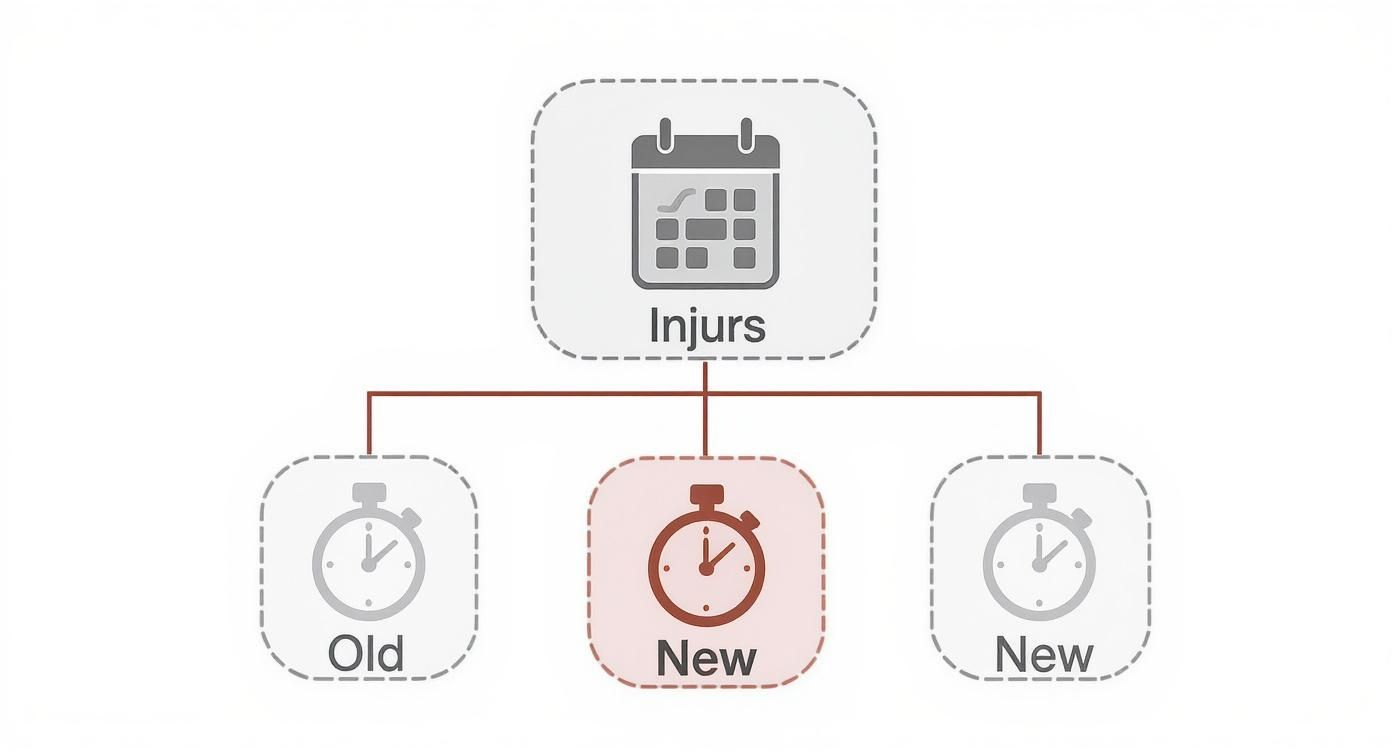
This change from four years to two for most cases really turned up the pressure. It cut the time victims have to build a case and file a lawsuit in half, making prompt action more important than ever.
Medical Malpractice Claims
Claims against doctors, hospitals, or other healthcare providers are in a category of their own. For medical malpractice, you generally have two years to file a suit, but the clock starts ticking either when the malpractice happened or when you should have reasonably discovered it.
But here’s the kicker: Florida also has what’s called a “statute of repose.” This is a hard, absolute deadline. You cannot file a medical malpractice lawsuit more than four years after the actual incident, no matter when you found out about the injury. This can create heartbreaking situations, especially when the harm isn’t obvious right away.
On top of that, you can’t just go and file a lawsuit. The law requires a lengthy pre-suit investigation process. You have to serve the medical provider with a formal “notice of intent,” which kicks off a mandatory 90-day investigation period. This process alone eats up three months of your valuable time.
Wrongful Death Lawsuits
When another person’s negligence results in a death, the timeline works a bit differently. For a wrongful death claim in Florida, the family has two years to file, but that clock starts on the date of the person’s death—not necessarily the date of the accident.
This is a critical distinction. Imagine someone gets hurt in a crash but fights for their life for six months before passing away. The two-year deadline for the wrongful death action begins on the day they died. We cover the unique rules for these tragic cases in more detail in our wrongful death statute of limitations in Florida guide.
Claims Against Government Entities
Trying to sue a government body? Get ready for a whole different set of rules, and a much shorter leash. If your injury was caused by a city, county, or state agency, the process is incredibly strict.
Before you can even think about a lawsuit, you must provide a formal written notice of your claim to the correct agency. The deadlines for this notice are tight:
- You have three years from the date of injury to provide notice.
- For wrongful death, you only have two years from the date of death.
After you send the notice, the government gets a 180-day investigation period where you’re legally barred from filing your lawsuit. If you miss that initial notice deadline or fail to follow the procedure exactly, your claim is dead on arrival. It doesn’t matter how strong your case is; you’ve lost your right to sue.
Uninsured Motorist Claims
There is one key area where the law gives you more time. If you need to file a claim against your own insurance for an accident caused by an uninsured or underinsured driver, the statute of limitations is five years.
Why the longer deadline? Because this isn’t technically a negligence claim. It’s a breach of contract claim. Your insurance policy is a contract between you and your provider. When they refuse to pay the benefits you’re owed under that policy, you’re suing them for breaking their promise, and contract disputes get a longer timeline under Florida law.
Exceptions That Can Extend Your Filing Deadline

While Florida’s personal injury deadlines are strict, the law isn’t blind to reality. Life is complicated. What happens if an injury is hidden, not showing symptoms for months or years? Or what about a child who is hurt but is too young to understand their legal rights?
For these kinds of special situations, the law has a built-in pause button. It’s a legal process known as tolling, and it essentially stops the countdown on the statute of limitations until certain conditions are met. This isn’t a loophole; it’s a critical safeguard designed to ensure fairness, giving victims a real opportunity to seek justice even when circumstances get in the way.
It’s tempting to think your situation might qualify, but relying on an exception is a complex legal move. You should never just assume the clock has been paused for your case without speaking to an experienced attorney.
The Discovery Rule for Hidden Injuries
One of the most important exceptions is called the Discovery Rule. It’s designed for those difficult cases where an injury isn’t obvious right away. Instead of the legal clock starting on the day the accident happened, it begins on the day the injury was discovered—or reasonably should have been discovered.
Let’s walk through an example. A surgeon accidentally leaves a small surgical sponge inside a patient. For three years, the patient feels fine, but then starts having severe abdominal pain. An X-ray finally reveals the problem.
Under the standard two-year medical malpractice rule, the patient would seem to be out of luck. But this is where the Discovery Rule comes in. The clock didn’t start ticking on the day of the surgery; it started the day the sponge was found on that X-ray. From that moment of discovery, the patient gets a new two-year window to file a claim.
This principle is a cornerstone of fairness within the statute of limitations for personal injury in Florida. It stops victims of hidden negligence from being unfairly penalized just because the harm took time to reveal itself.
Special Protections For Minors
Florida law also gives special consideration to children injured by someone’s negligence. A minor can’t legally file a lawsuit on their own, so the system adjusts for that. The statute of limitations is often tolled—or paused—until they are no longer a minor.
In many cases, this means the countdown doesn’t even start until the child’s 18th birthday. The law can sometimes extend this deadline for up to seven years from the date of the incident. This allows the person, once they are a legal adult, to make their own informed decision about pursuing a case.
This protection is especially vital in situations involving:
- Birth injuries, where the true extent of a developmental delay might not be clear for several years.
- Accidents at a daycare or school, where a young child may not be able to explain what happened.
- Cases of abuse or neglect, where the at-fault party is the child’s own caretaker.
Incapacity and Other Rare Circumstances
Another scenario where the deadline might be paused is if the injured person is legally incapacitated. If an accident leaves someone in a coma or with a severe brain injury that prevents them from handling their own affairs, the statute of limitations can be tolled.
The clock would usually start running again once they regain capacity or when a court appoints a legal guardian to act on their behalf.
These tolling rules are incredibly complex and only apply in very specific circumstances. For example, the rules for extending deadlines in wrongful death cases are entirely different and often much more rigid. Understanding who can file a wrongful death lawsuit in Florida is the first critical step in those tragic cases. Given what’s at stake, it is absolutely essential to have a legal professional evaluate your case to determine if any of these exceptions could apply.
Practical Steps To Protect Your Injury Claim
Knowing Florida’s statute of limitations is one thing, but acting on it is what truly matters. The clock is ticking, and the steps you take—or fail to take—in the hours and days after an accident can make or break your case. To give your claim the best chance of success, you need to be strategic right from the start.
It’s easy to feel overwhelmed and disoriented after an injury. The key is to focus on creating a clear, indisputable record of what happened and the impact it’s had on your life. Here’s a roadmap to follow to protect your rights.

Prioritize Your Health and Document Everything
First things first: get medical help. Your well-being is the absolute top priority. Even if you think you’re okay, get checked out by a doctor or visit an emergency room. Adrenaline can mask serious injuries like concussions or internal damage that won’t show symptoms for hours or even days.
Seeing a doctor immediately creates an official paper trail. This medical record becomes one of the most powerful pieces of evidence you have, directly connecting your injuries to the accident. You can learn more about this by reading our guide on securing your claim with critical medical documentation in Tampa personal injury cases. Following through on all prescribed treatments is just as critical; it demonstrates that you’re taking your recovery seriously.
Crucial Takeaway: Delaying medical care is a gift to the insurance company. They will jump at the chance to argue your injuries weren’t that bad or, worse, that they were caused by something else entirely.
Gather Evidence While It Is Fresh
If you are physically able, start gathering evidence at the scene. Memories fade, witnesses move on, and physical proof like skid marks can disappear overnight. You’re essentially acting as a first responder for your own case, capturing a snapshot of the immediate aftermath.
Here’s what you should focus on collecting:
- Photos and Videos: Your smartphone is your best tool. Take pictures and videos of everything—the damage to all vehicles, your injuries, skid marks on the road, traffic signals, and the surrounding area. If you slipped and fell, document the spill or hazard before it gets cleaned up.
- Witness Information: Spot someone who saw what happened? Politely ask for their name and phone number. An unbiased account from a third party can be incredibly valuable down the road.
- Official Reports: After a car crash, always call the police. The responding officer will create an official police report, which provides a formal, objective narrative of the incident.
This on-the-scene evidence gathering lays the groundwork for a solid personal injury claim.
Avoid The Insurance Adjuster Trap
It won’t be long before you get a phone call from the other party’s insurance adjuster. Be careful. These adjusters are friendly, but their job is to protect their company’s bottom line, which means paying you as little as possible.
They are trained to ask leading questions and get you to say things that could hurt your case. They’ll almost certainly ask for a recorded statement, hoping you’ll downplay how you’re feeling or accidentally admit partial fault. Your best response is to politely decline to give any statement or sign any paperwork until you’ve consulted with a lawyer.
Contact A Personal Injury Lawyer Immediately
With Florida’s strict two-year personal injury deadline, you simply can’t afford to wait. Calling an experienced attorney should be one of your very first moves. A lawyer can immediately get to work investigating your case, handling all communications with the insurance companies, and making sure every deadline is met.
Hiring an attorney early levels the playing field. It signals to the insurance company that you are serious about getting fair compensation, allowing you to step back and focus on what’s most important—your recovery.
Why Acting Quickly Is Your Strategic Advantage
Meeting the Florida statute of limitations is more than just checking a box on a legal to-do list; it’s about giving your case the strongest possible start. Think of it this way: the scene of an accident is like a crime scene. The fresher it is, the more clues are available.
When you delay, critical evidence can disappear, and the other side gets a head start building their defense. Acting quickly flips that script. It signals to insurance companies that you’re serious and organized, immediately putting them on the back foot and preventing them from using stall tactics to run out the clock.

Preserving Time-Sensitive Evidence
The evidence needed to prove your case has a surprisingly short shelf life. Getting an attorney involved right away means they can secure crucial information that can vanish in a matter of days—sometimes even hours. This is particularly true for evidence held by businesses or other third parties who have no reason to keep it for you.
Here are a few examples of evidence that needs to be locked down immediately:
- Surveillance Footage: That camera footage from the convenience store or a traffic light can be the most honest witness you have. But many businesses automatically overwrite their recordings every 30 days—or even weekly. Wait too long, and that objective proof is gone for good.
- Witness Testimony: Memories fade. Fast. A witness’s account is crystal clear right after an accident, but details get fuzzy and stories can change over time. People also move or change phone numbers, making them impossible to find later.
- Physical Evidence: After a car wreck, skid marks on the road can disappear with the next rainstorm. In a slip-and-fall case, the puddle or hazard that caused your fall is often cleaned up within minutes.
An experienced lawyer can immediately send out a spoliation letter. This is a formal legal demand telling the at-fault party they must preserve all relevant evidence. This one simple step can be the difference between winning and losing your case.
Building a Stronger Case and Negotiation Position
Getting an early start also gives your legal team the time they need to conduct a thorough investigation. A winning case is about more than just gathering facts; it’s about weaving them into a powerful and convincing narrative. This might mean hiring accident reconstructionists to show how a crash happened or consulting with medical experts to explain the full extent of your injuries.
This detailed preparation does more than just get you ready for a potential trial; it gives you massive leverage in settlement talks.
When an insurance adjuster sees a claim that is meticulously documented, backed by hard evidence, and supported by expert opinions, they know you’re not just hoping for a settlement—you’re prepared to win in court. This pressure often results in a much faster, fairer settlement offer.
Ultimately, the statute of limitations for personal injury in Florida isn’t just a deadline. It’s a clock that’s constantly ticking. Every day you wait, your case can get a little weaker. By acting decisively, you protect your rights and give yourself the best possible chance to recover the full compensation you deserve.
Common Questions About Florida Injury Deadlines
Even after you get the basics down, the rules around Florida’s personal injury deadlines can feel like a maze. When you’re dealing with the stress of an injury, the last thing you need is more confusion. Let’s clear the air and tackle some of the most common—and most urgent—questions people ask about these critical timelines.
Think of this as a quick, no-nonsense Q&A to make sure you know exactly what’s at stake.
What Happens If I Miss The Filing Deadline?
This is the most important question, and the answer is brutal. If you miss the deadline to file a lawsuit, your case is over. Period.
It doesn’t matter how catastrophic your injuries are or how obviously the other person was at fault. Once that legal window closes, it’s sealed shut. A judge will have no choice but to dismiss your case, and you lose your right to recover any money for your injuries forever.
Missing the statute of limitations means the courthouse doors are locked to you. The at-fault party and their insurance company are permanently off the hook.
This isn’t just a suggestion to act quickly; it’s a harsh reality. There are no do-overs.
Does Negotiating With An Insurance Company Pause The Deadline?
Absolutely not. This is probably the single most dangerous misunderstanding in personal injury law. Many people assume that as long as they’re talking to an insurance adjuster and trying to settle, the legal clock stops ticking. This is completely false.
The two-year countdown is running in the background, no matter what an adjuster tells you. Some will even intentionally drag out negotiations, dangling the possibility of a settlement to keep you from calling a lawyer. They know that if they can stall you past the deadline, their company owes you nothing.
Your legal filing deadline is a separate track from the insurance claims process.
How Is The Start Date Of The Deadline Determined?
For most cases, it’s simple: the clock starts ticking on the exact date of the accident. If you were hurt in a car crash on May 1st, 2024, the two-year deadline to file your lawsuit expires on May 1st, 2026.
But what if you don’t know you’re injured right away? This is where the “Discovery Rule” comes in. For certain situations, like some medical malpractice cases, the law says the clock might not start until the date you discovered the injury—or reasonably should have discovered it.
For example, imagine a surgeon leaves a sponge inside a patient. If the patient doesn’t experience pain and discover the problem for three years, the clock would likely start from the day the problem was diagnosed, not the day of the surgery. These exceptions are tricky and need a sharp legal eye to apply correctly.
What Is The Deadline If A Child Is Injured?
Florida law gives special protection to kids who are hurt by someone else’s negligence. A child can’t file their own lawsuit, so the statute of limitations is usually “tolled,” or paused, to protect their rights.
In most cases, the deadline is put on hold until the child turns 18 years old. At that point, they have the standard two-year window to bring their own claim as a legal adult. This ensures a child’s right to seek justice isn’t lost just because they were too young when the injury happened.
This is a crucial safeguard, especially for injuries where the full impact—like a developmental delay from a birth injury—might not be known for years.
These different rules, from filing deadlines to initial medical treatment, are all connected. It’s why it’s also important to understand what the Florida PIP 14-day rule means for your claim, as these timelines can interact in complex ways.
Navigating the strict deadlines and complex rules of Florida’s personal injury laws requires immediate and knowledgeable legal guidance. If you or a loved one has been injured in Tampa, do not risk your right to compensation by waiting. Contact the experienced team at Martin Hernandez, P.A. to ensure your claim is protected from day one. Schedule your free, no-obligation consultation by visiting us at https://injurylawyersoftampa.com.