
When you’re injured because of someone else’s carelessness in Florida, the clock starts ticking on your right to seek justice. For most personal injury claims based on general negligence—think car accidents or a slip and fall—you now have two years from the date of the incident to file a lawsuit.
This isn’t just a suggestion; it’s a strict legal deadline known as the statute of limitations.
Understanding the Clock on Your Injury Claim

Imagine the statute of limitations as a countdown timer on your case. If that timer runs out before you’ve formally filed a lawsuit, your right to hold the responsible party accountable is gone for good. It doesn’t matter how clear their fault was or how severe your injuries are.
Why do these deadlines exist? They serve two main purposes:
- Preserving Evidence: As time passes, memories get fuzzy, witnesses can become hard to find, and crucial physical evidence deteriorates. A firm deadline pushes for action while the proof is still solid.
- Providing Closure: These laws also prevent people and businesses from being blindsided by a lawsuit years or even decades after an incident occurred, allowing for a sense of finality.
Why This Deadline Matters to You
From the moment an injury happens, that two-year clock is ticking for most negligence cases. But the law is full of exceptions and specific rules. Different types of claims, like medical malpractice or an action against a government entity, come with their own unique—and often shorter—timelines.
A prime example is a wrongful death case, which has its own set of rules. You can learn more about the specific nuances of the wrongful death statute of limitations in Florida here.
The statute of limitations is one of the most unforgiving parts of personal injury law. If you miss the filing deadline by even one day, the court will almost certainly dismiss your case, and you’ll lose any chance to recover compensation for medical bills, lost income, and your pain and suffering.
The Scope of Personal Injury Law
You might be surprised to learn just how common these cases are. Across the United States, nearly 400,000 personal injury lawsuits are filed each year, mostly in state courts. This reflects a much larger problem—in 2023 alone, about 62 million people (roughly one in five Americans) needed medical care for an injury.
The economic toll is staggering, with unintentional injuries costing the nation over $1.28 trillion annually. These figures, highlighted in a detailed legal industry report, underscore why firm rules like the statute of limitations are so essential to managing the justice system. Knowing your deadline isn’t just important; it’s the first and most critical step in protecting your legal rights.
Key Florida Personal Injury Deadlines You Need to Know
Knowing that a legal countdown exists is one thing, but knowing the specific timer on your case is everything. In Florida, the law doesn’t use a one-size-fits-all stopwatch for personal injury claims. The exact nature of your injury sets the deadline.
It’s also crucial to know that the rules have changed recently. Relying on outdated information is a surefire way to miss your chance to file, which can unfortunately bring your claim to a dead end before it even starts.
The Standard for General Negligence: Two Years
For most everyday injury cases, the rule is now simple and strict. If you were harmed because someone else was careless—what the law calls negligence—you have two years to file a lawsuit. This is a big change from the old four-year rule and applies to any incident that happened on or after March 24, 2023.
This two-year window covers the vast majority of injury scenarios, including:
- Car, truck, and motorcycle accidents: When another driver’s mistake causes a crash.
- Slip and fall accidents: If you’re injured on someone else’s property because of a hazard they should have fixed, like a wet floor or a broken handrail.
- Dog bites: When an owner fails to control their animal and it attacks.
- Other premises liability claims: Any situation where a property owner’s failure to maintain a safe environment leads to an injury.
For most of these, the two-year clock starts ticking the moment the injury happens. For a car wreck, that’s the day of the crash. If you want a deeper dive into that specific scenario, we break down how long you have to file suit after a Florida auto accident in another guide.
Medical Malpractice Claims: Two Years
Things get a bit more complicated when the injury is caused by a trusted medical professional. For medical malpractice claims in Florida, the deadline is also two years, but the starting point is much trickier to pin down.
Instead of starting on the date of the procedure, the two-year clock begins from the moment the malpractice was discovered, or reasonably should have been discovered. This “discovery rule” is a critical protection for patients. After all, you might not know a surgical error occurred until months or even years later when symptoms finally appear. The clock doesn’t start on the day of the surgery; it starts when you find out what’s really causing your pain.
Wrongful Death Claims: Two Years
Losing a family member is a devastating experience, and the law gives families a way to hold the responsible party accountable. In Florida, a lawsuit for wrongful death must be brought within two years.
The key here is understanding when that two-year period begins. It’s not from the date of the accident, but from the date your loved one passed away. For instance, if someone is severely injured in a fall and dies from their injuries two months later, their family has two years from the date of death to take legal action.
When Your Filing Deadline Can Be Extended
While Florida’s personal injury deadlines are strict, they aren’t completely inflexible. The law understands that life happens, and sometimes, circumstances make it impossible—or just plain unfair—for an injured person to file a lawsuit on time. In these specific situations, the legal countdown clock can be paused, or “tolled,” giving you a fair shot at pursuing the justice you deserve.
Think of it like hitting the pause button on a stopwatch during a race because someone threw an obstacle on the track. The timer stops until the track is clear, and then it picks up right where it left off. These exceptions are crucial lifelines, but they are very specific and need a careful legal eye to apply correctly.
The Discovery Rule for Hidden Injuries
One of the most significant exceptions is the discovery rule. This most often comes into play in complicated cases like medical malpractice, where the damage from a negligent act isn’t immediately obvious. An injury can lie dormant for months or even years before you have any idea that something is wrong.
Let’s say a surgeon accidentally leaves a small piece of medical equipment inside a patient. The patient feels perfectly fine for three years but then starts having severe, unexplainable internal pain. It’s only after an X-ray that the foreign object is finally found.
In a situation like that, the two-year clock didn’t start ticking on the day of the surgery. Instead, it began on the day the patient discovered—or reasonably should have discovered—the real source of their suffering. This rule is designed to protect people from being penalized simply because they couldn’t have known about their injury any sooner.
This infographic helps break down the different starting points for the clock on various injury claims.
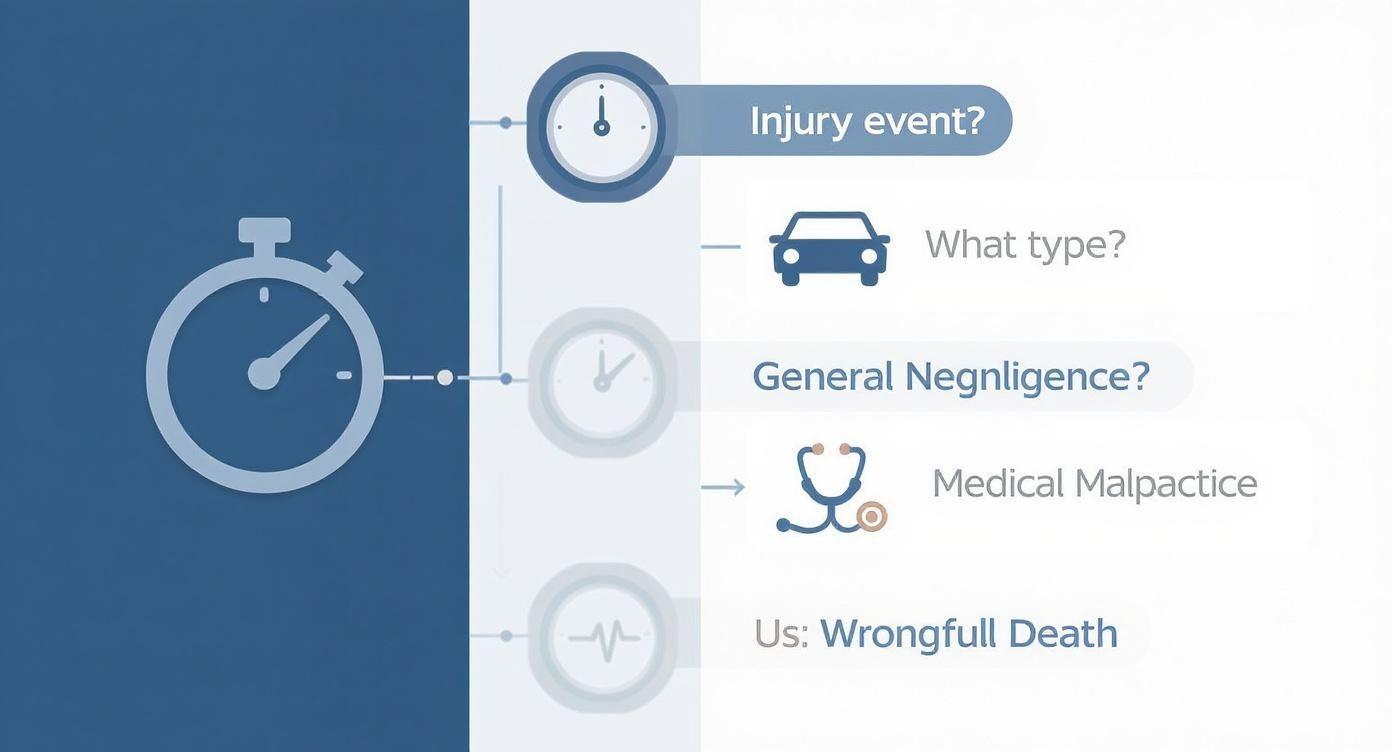
As the chart shows, the date of the incident is the usual trigger. But other factors, like when you discover medical negligence, can create a much later start date for that legal countdown.
When the Injured Person Is a Minor
The law also has special protections in place for children who are hurt because of someone else’s carelessness. A minor can’t legally file a lawsuit for themselves, so the statute of limitations is often paused until they are old enough to act on their own behalf.
- Tolling for Minors: In Florida, the clock on a child’s personal injury claim can be paused until their 18th birthday. This gives them the chance to decide for themselves whether to take legal action once they are a legal adult.
This means if a 10-year-old is injured in a car crash, the deadline to file their claim could be years away, well beyond the standard time limit. The rules here can get tricky, so getting legal advice is absolutely essential. The challenges have only become more complex recently, as we’ve detailed in our guide on how COVID-19 can affect your ability to seek justice after an injury.
Additional Tolling Circumstances
Beyond hidden injuries and a victim’s age, Florida law recognizes a few other scenarios that can pause the statute of limitations clock. These are meant to handle situations where the at-fault person’s actions or the victim’s own condition prevent them from filing on time.
The whole idea behind tolling is fairness. The law works to make sure a person’s right to seek compensation isn’t lost due to circumstances completely out of their control.
Here are a few other key exceptions to be aware of:
- Mental Incapacity: If an injury leaves a person mentally incompetent, the statute of limitations can be paused until their competency is restored. This protects those who don’t have the mental capacity to understand their rights or manage legal affairs.
- Defendant Leaves Florida: If the person responsible for your injury leaves the state of Florida after the incident, the clock may be paused. It can start ticking again once they return.
- Defendant Hides Their Identity: In the same vein, if the at-fault party actively hides who they are or where they are to avoid a lawsuit, the deadline can be extended. This stops a wrongdoer from simply “running out the clock” by playing games.
Every one of these exceptions has its own set of strict legal requirements. Proving that one applies to your case takes a thorough investigation and solid evidence, which is why it’s so important to speak with an experienced attorney right away.
The Consequences of Missing Your Filing Deadline

Knowing the statute of limitations for a personal injury claim isn’t just a good idea—it’s absolutely critical. Missing this deadline isn’t a minor slip-up you can fix later. It’s a permanent, fatal blow to your case.
Think of your right to seek justice as being behind a heavy gate. For a set amount of time after your injury, that gate is open, allowing you to step through and file your claim. The statute of limitations is the moment that gate slams shut, the lock clicks, and the key is thrown away for good.
Once that gate is locked, the strength of your case becomes irrelevant. It doesn’t matter if you have video footage of the accident or ten witnesses lined up. The deadline is final.
The Court’s Final Decision
If you try to file a lawsuit even one day late, the outcome is predictable. The defendant’s lawyer will immediately file a motion to dismiss your case, and they will win.
Under Florida law, the judge has no discretion here. They are legally required to throw out any personal injury lawsuit filed after the deadline has passed, no matter how severe your injuries are or how clear the fault is.
This means you lose your right to recover any compensation—forever. Your chance to hold the negligent party accountable for what they did is gone.
This is known in legal terms as being “statute-barred.” It doesn’t mean you didn’t have a valid claim; it means the clock has run out, legally preventing you from ever pursuing it. The court won’t even look at the details of your case.
What You Lose by Waiting Too Long
The cost of inaction is steep and irreversible. When you miss the filing deadline, you give up the right to seek financial recovery for all your losses, including:
- All Past and Future Medical Expenses: This covers everything from the ambulance ride and ER visit to future surgeries, physical therapy, and prescriptions.
- Lost Income and Earning Capacity: You can’t get back the wages you lost while out of work or compensation if your injuries keep you from your old job.
- Pain and Suffering: The physical pain, emotional trauma, and the impact on your quality of life will go completely uncompensated.
- Accountability: The person or company that caused your injuries will face zero legal or financial responsibility for the harm they caused.
Simply put, the entire financial weight of the accident falls squarely on you and your family. The statute of limitations isn’t a suggestion; it’s a hard-and-fast rule with devastating consequences. The only way to protect your rights is to understand this deadline and act long before it arrives.
How to Protect Your Personal Injury Claim
After you’ve been hurt, that statute of limitations clock starts ticking right away. This means the first few choices you make are absolutely critical. Protecting your right to compensation isn’t about one single action; it’s about a series of smart, deliberate steps you need to take as soon as possible. Your main goal here is to build a rock-solid record of what happened and how it has impacted your life.
This whole process kicks off the very moment the injury occurs. The aftermath of an accident is always chaotic, but what you do in those initial hours and days lays the foundation for your entire claim.
Take Immediate and Decisive Action
Your top priority should be your health, but you also need to preserve crucial evidence at the same time. Waiting even a few hours can seriously weaken your case and, more importantly, put your well-being at risk.
Here are the first three things you absolutely must do:
- Seek Immediate Medical Attention: Get to an ER or an urgent care clinic right away. Do this even if you think your injuries are minor. This creates an official medical record that connects your injuries to the accident—powerful evidence that shuts down any claims you were hurt some other time.
- Preserve All Evidence: Your smartphone is your best friend here. Snap photos and take videos of everything: the accident scene, your injuries, any property damage, and anything else that seems relevant. Get the names and phone numbers of any witnesses and make sure you get a copy of the official police or incident report.
- Be Cautious with Insurance Adjusters: You’ll likely get a call from the other party’s insurance adjuster very quickly. Be polite, but firmly decline to give a recorded statement or sign anything until you’ve spoken to a lawyer. They are trained to use your own words against you.
Document Everything Meticulously
From the day you get hurt, you need to become a thorough record-keeper. This detailed log will be the backbone of your claim when it comes to proving the full extent of your damages. Keep everything together in one folder, whether it’s a physical one or a digital one on your computer.
A well-documented claim leaves little room for doubt. Every receipt, every photo, and every journal entry helps build a solid foundation, making it harder for insurance companies to downplay your losses.
Your file should include all medical bills, pharmacy receipts, and records of any other out-of-pocket costs. It’s also a great idea to keep a simple daily journal. Note your pain levels, physical struggles, and how the injuries are affecting your everyday life. Eventually, you will need to outline all these damages in a formal demand letter, and using a solid personal injury demand letter template can be a huge help.
The Most Important Step: Contact an Attorney
While all the steps above are vital, the single most effective way to protect your claim is to contact an experienced personal injury attorney right away. A good lawyer makes sure every deadline is identified and met, preventing you from accidentally giving up your rights. They’ll handle the insurance companies, launch a proper investigation, and start building your case for you.
Bringing in legal help early gives you the breathing room to focus on what really matters—your recovery—while a professional navigates the legal maze. For a more detailed look at what’s involved, check out our guide on how to file a personal injury claim. Speaking with an attorney early on is truly the best defense against common mistakes and the surest way to position your claim for success.
Common Questions About Florida Injury Deadlines
Even when you know the rules, figuring out how the statute of limitations for personal injury applies to your specific situation can be tricky. It’s only natural to have questions. Most people we talk to are wrestling with the same concerns, and getting clear answers is the first step toward protecting your right to compensation.
Let’s walk through some of the most frequent questions we hear from clients to help you understand how these critical deadlines work in the real world.
Does The Deadline Apply To Insurance Claims or Lawsuits?
This is a huge point of confusion, and the answer is critical. The official statute of limitations is a hard deadline that applies only to filing a formal lawsuit in court. It doesn’t directly govern the timeline for opening a claim with an insurance company.
But—and this is a big but—the two are completely intertwined.
Think of the right to sue as your ultimate bargaining chip. It’s the only real power you have over the insurance company. If you can’t get a fair settlement offer through negotiation, your only recourse is to take them to court.
If that deadline passes while you’re still talking to the adjuster, you lose all your leverage. Instantly. The insurance company knows you can no longer sue them, so they have zero incentive to offer you a fair settlement. They can deny your claim or throw a ridiculously low offer on the table, and there’s absolutely nothing you can do about it. This is why you must either settle your claim or file a lawsuit before that clock runs out.
How Does The Deadline Work If My Child Was Injured?
Florida law recognizes that children can’t file lawsuits for themselves, so it provides special rules to protect their rights. For injured minors, the statute of limitations clock is often “tolled,” which is a legal term for paused.
In many situations, the time limit for a child’s injury claim can be suspended until they turn 18. This gives them the chance to decide for themselves whether to pursue a case once they become a legal adult.
However, parents or legal guardians have the right—and usually the responsibility—to file a claim on behalf of their child much sooner. Waiting for years is almost never a good idea. Evidence gets lost, witnesses move away, and memories fade.
While the law provides this extension, acting quickly is almost always in the child’s best interest. An experienced attorney can guide parents through filing a claim on their child’s behalf, making sure crucial evidence is locked down and the child’s right to compensation is protected from day one.
This exception exists to make sure a child doesn’t lose their rights simply because they were too young to take action when the injury happened.
What If I Was Partly At Fault For My Accident?
This is a big one. So many people hesitate to call a lawyer because they worry they might share some of the blame. Don’t let that stop you. Florida has a system designed specifically for these scenarios.
Florida uses a modified comparative fault rule. In simple terms, this means you can still recover money for your injuries even if you were partially at fault, as long as you were not more than 50% responsible.
If a jury finds you were, say, 20% at fault, your final compensation award is just reduced by that percentage. So, if your damages totaled $100,000, your award would be reduced by $20,000, and you would receive $80,000.
The important thing to remember is that being partly at fault has no impact on the statute of limitations. The deadline to file your lawsuit is exactly the same. Your right to take legal action isn’t erased just because you might share a small piece of the blame.
Why Do Different Injury Cases Have Different Deadlines?
It definitely seems strange that a car accident case has a different timeline than a medical malpractice case. These differences aren’t random; they’re designed to balance fairness for the victim with the practical realities of each type of injury.
- General Negligence (Two Years): For things like car wrecks or a slip and fall, the injury is usually obvious right away. A two-year deadline pushes everyone to act while the evidence and memories are still fresh.
- Medical Malpractice (Two Years from Discovery): Here, the damage from a medical error might not show up for months or even years. The “discovery rule” starts the clock when you realize—or should have realized—you were harmed, giving patients a fair shot at justice.
- Wrongful Death (Two Years from Death): This clock doesn’t start on the date of the accident, but on the day the loved one passes away. It’s a compassionate rule that gives grieving families a clear and defined starting point.
Each deadline is tailored to the unique nature of the claim. Knowing which one applies to you is the first step in building a strong case and setting realistic expectations. To get a better sense of the overall timeline, you can learn more about how long a personal injury claim can take in our detailed guide.
Navigating Florida’s statute of limitations is complex, and a single misstep can permanently close the door on your right to compensation. Don’t risk your future by guessing about deadlines. The experienced team at Martin Hernandez, P.A. is here to provide the clarity and aggressive advocacy you need. We prepare every case for trial from day one to ensure you are in the strongest possible position. Contact us today for a free, no-obligation consultation to protect your rights and start your path to recovery at https://injurylawyersoftampa.com.