
After a serious auto, truck, or motorcycle accident in Florida, the path to fair compensation can seem overwhelming. The legal system is complex, and insurance companies often prioritize their profits over your recovery. Understanding the typical steps in a personal injury lawsuit demystifies the process and empowers you to make informed decisions. This guide breaks down the essential stages, from the initial consultation to a potential jury trial, providing a clear roadmap for your journey.
We will explore the specific procedures in Florida, particularly in the Tampa Bay area, and highlight how a trial-ready approach from the very beginning can significantly impact your outcome. Whether you’re dealing with a rideshare incident in Hillsborough County, a catastrophic truck collision on I-4, or an uninsured motorist claim, knowing these steps is the first move toward reclaiming your financial stability and securing justice.
This article provides a comprehensive, sequential walkthrough of the entire legal process. You will learn what happens at each stage, what evidence is crucial, and what to expect when communicating with your attorney and the opposing side. For anyone injured in the Tampa area, including Spanish-speaking residents or out-of-state visitors, this information is vital for navigating the challenges ahead. We will detail everything from the initial investigation and evidence gathering to the intricacies of discovery, settlement negotiations, and, if necessary, trial. Our goal is to equip you with the knowledge needed to confidently pursue the compensation you deserve.
1. Case Evaluation and Intake
The first and most critical of all the steps in a personal injury lawsuit is the initial case evaluation and intake. This is the foundational meeting, typically a free consultation, where you discuss the specifics of your accident and injuries with an experienced attorney. The primary goal is to determine if you have a viable claim and if our firm is the right fit to represent you.
During this confidential meeting, we will gather comprehensive details about your incident. Whether you were rear-ended on I-275 in Tampa, injured as a passenger in a Lyft on Dale Mabry, or hurt in a motorcycle crash in Hillsborough County, the specifics matter. We will ask about the date, time, and location of the accident, how it happened, the injuries you sustained, and the medical treatment you have received so far. This initial discussion establishes the factual basis of your potential case.
What to Bring to Your Initial Consultation
To make this first meeting as productive as possible, it is essential to come prepared. Bringing organized documentation allows our attorneys at Martin Hernandez, P.A. to conduct a more thorough and accurate initial assessment.
Key documents and information to gather include:
- Accident Report: A copy of the official police or crash report.
- Photographs & Videos: Any photos or videos you took of the accident scene, vehicle damage, and your injuries.
- Insurance Information: Your own auto insurance policy and any information you have for the at-fault party.
- Medical Records: Names of doctors, hospitals, or clinics you have visited, along with any bills or records you have received.
- Witness Information: Names and contact details for anyone who saw the accident.
Pro-Tip: Create a simple timeline of events from the moment of the accident. Note every doctor’s appointment, conversation with an insurance adjuster, and any days you missed from work. This detailed record is invaluable.
This intake process is also your opportunity to evaluate us. We will explain our contingency fee structure, meaning you pay no attorney’s fees unless we win your case. We encourage you to ask questions about our experience, communication style, and the potential timeline for a case like yours in the local Tampa courts. Making an informed decision is crucial, and you can learn more about the benefits of legal representation and what to look for by reading about whether you should hire a personal injury attorney. This first step sets the stage for the entire legal journey ahead.
2. Investigation and Evidence Gathering
Once you have formally retained our firm, the next of the critical steps in a personal injury lawsuit is the comprehensive investigation and evidence gathering phase. This is where we move beyond your initial account to build a fact-based, compelling narrative of what happened and who is legally responsible. Our team, often working with professional investigators and specialists, meticulously examines every facet of the accident to uncover the evidence needed to establish liability.
This proactive stage is essential for building a strong foundation for your claim. For instance, in a complex truck accident on I-4, we might investigate the trucking company’s compliance with federal Hours of Service (HOS) regulations to prove driver fatigue. For a motorcycle collision at a busy Tampa intersection, we may hire an accident reconstruction expert to analyze skid marks and vehicle damage to definitively show the other driver was at fault. The goal is to leave no stone unturned in our pursuit of the truth.

What We Collect During the Investigation
The evidence needed varies with each case, but our objective is always to construct an undeniable picture of negligence. We methodically collect and analyze all relevant information to support your claim against the at-fault party and their insurer.
Key evidence we typically gather includes:
- Official Reports: Securing the finalized Florida Traffic Crash Report and any supplemental reports from law enforcement like the Tampa Police Department or Hillsborough County Sheriff’s Office.
- Witness Statements: Locating and interviewing anyone who witnessed the accident to obtain recorded statements that corroborate your version of events.
- Scene Documentation: Obtaining traffic camera footage, surveillance video from nearby businesses, and dispatch records. We may also send investigators to the scene to document current conditions.
- Vehicle & Property Evidence: Documenting all vehicle damage through photographs and repair estimates. We also issue spoliation letters to preserve the vehicles for expert inspection if necessary.
- Medical Documentation: Gathering all your medical records, bills, and reports to prove the extent of your injuries and link them directly to the accident.
Pro-Tip: Preserve any physical evidence you have, such as damaged personal property from the accident (a broken helmet, torn clothing, a damaged cell phone). Do not repair or discard these items, as they can be powerful evidence.
This investigative work is what separates a weak claim from a strong one. By gathering objective, powerful evidence from the outset, we position your case for success, whether through a negotiated settlement or a trial verdict. The thoroughness of this step directly impacts the leverage we have with insurance companies. To understand more about what to do immediately after an incident, you can read our guide on what evidence you should preserve after a car accident in Tampa, FL.
3. Medical Evaluation and Documentation
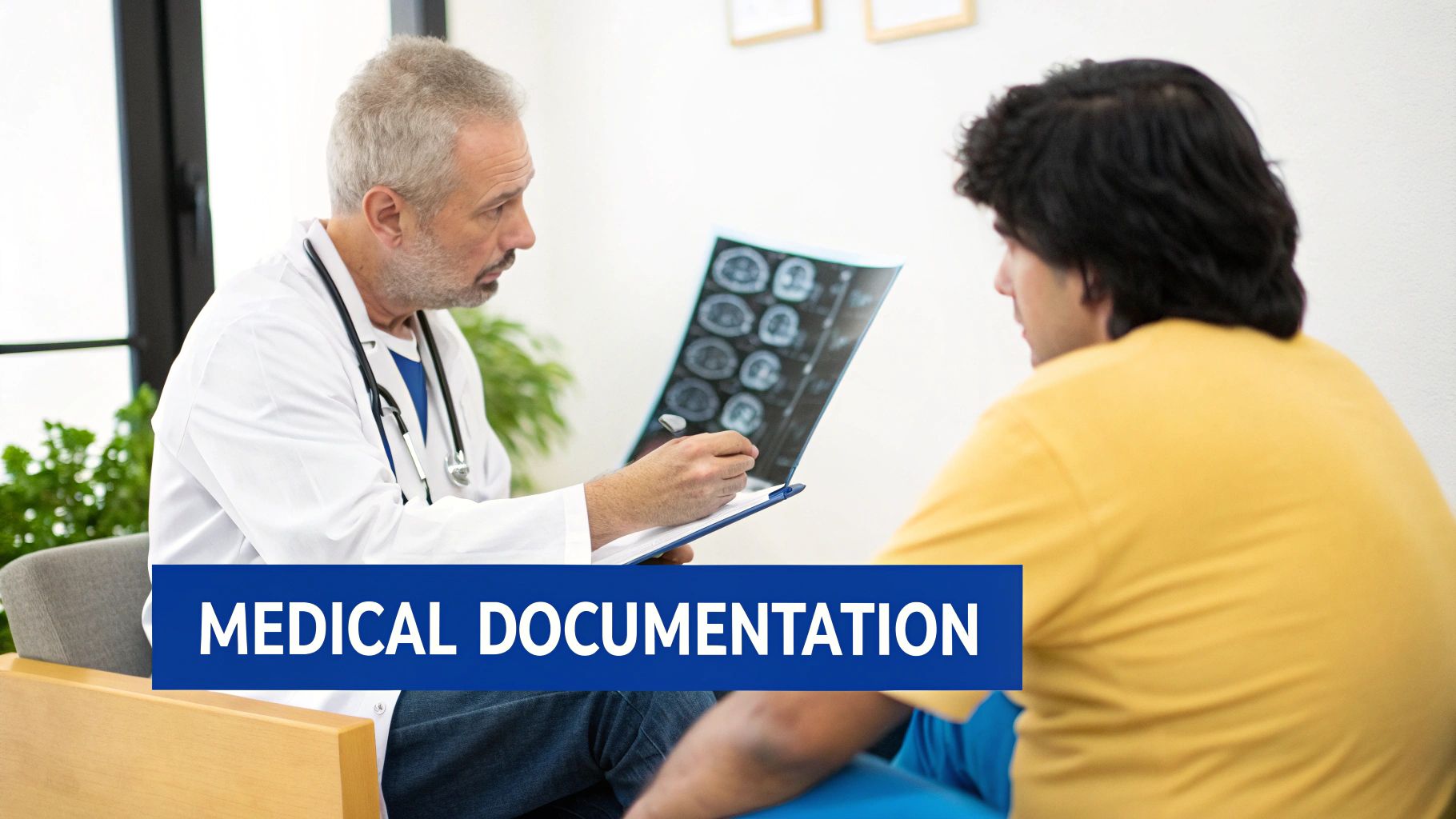
Immediately following an accident, your health is the top priority. The third step in a personal injury lawsuit, medical evaluation and documentation, runs parallel to the initial legal steps and is crucial for both your physical recovery and the strength of your legal claim. This phase involves seeking consistent medical care to treat your injuries and meticulously documenting every aspect of your treatment and its impact on your life.
The core purpose of this step is to create an undeniable, comprehensive medical record that proves the full extent of your injuries. For instance, a victim of a truck accident on I-4 may have immediate injuries like broken bones, but also develop latent symptoms like chronic back pain weeks later. Thorough documentation captures this entire journey, from the emergency room visit at Tampa General Hospital to ongoing physical therapy sessions in Brandon. This detailed record becomes the primary evidence we use to demonstrate the value of your damages to insurance companies and, if necessary, a jury.
How to Build a Strong Medical Record
To construct a powerful case, consistent and detailed medical documentation is non-negotiable. At Martin Hernandez, P.A., we guide our clients through this process to ensure nothing is overlooked, which is vital for calculating both current and future medical needs.
Key actions for medical documentation include:
- Follow All Medical Advice: Adhere strictly to your doctor’s treatment plan, including attending all follow-up appointments, physical therapy sessions, and specialist consultations. Gaps in treatment can be used by insurance companies to argue your injuries are not severe.
- Keep a Pain and Symptom Journal: Document your daily pain levels, physical limitations, and how the injuries affect your daily activities, such as work, family life, and hobbies.
- Preserve All Paperwork: Maintain an organized file of every medical bill, prescription receipt, and Explanation of Benefits (EOB) statement from your insurance provider.
- Report Everything: Communicate all symptoms to your healthcare providers, no matter how minor they seem. What feels like a small ache could be a sign of a more significant underlying issue.
Pro-Tip: Ask your primary treating physician to make notes in your medical records about the necessity of any future treatments, therapies, or potential surgeries. This professional opinion is critical for recovering compensation for future medical expenses.
This meticulous process of documentation continues until you reach what is known in Florida as “Maximum Medical Improvement,” or MMI. This is the point where your condition has stabilized, and further significant recovery is not expected. Understanding this concept is key, as it heavily influences the timing of settlement negotiations. You can learn more by reading about what Maximum Medical Improvement is. Properly documenting your journey to MMI provides the concrete evidence needed to demand fair compensation for everything you have endured.
4. Demand Letter and Settlement Negotiation
Once the investigation is complete and you have reached Maximum Medical Improvement (MMI), the next of the critical steps in a personal injury lawsuit is preparing and sending a formal demand letter. This comprehensive document is our opening move in settlement negotiations. It meticulously outlines the facts of your case, establishes the other party’s liability, details your injuries and medical treatment, and calculates the full extent of your damages, culminating in a specific monetary demand for settlement.
This isn’t just a letter; it’s a persuasive legal argument backed by all the evidence we have gathered. For example, after a client’s rideshare accident on Kennedy Blvd, the initial insurance offer was a mere $25,000. Our demand package, however, included detailed medical reports and expert analysis, leading to a settlement of over $150,000. This pre-litigation phase is designed to present your case so compellingly that the insurance company is motivated to offer a fair settlement to avoid a costly trial.
What Goes into a Powerful Demand Package
A strong demand is more than a request for money; it’s a narrative of your experience supported by irrefutable proof. Our attorneys at Martin Hernandez, P.A. assemble a robust package to give us the strongest possible negotiating position.
Key components of the demand package include:
- Liability Analysis: A clear explanation of how the at-fault party was negligent, referencing Florida statutes and the evidence from the crash report.
- Medical Summary: A complete narrative of your injuries, treatment, recovery process, and any prognosis for future medical needs.
- Itemized Damages: This includes all medical bills, lost wages (past and future), property damage, and a calculated amount for non-economic damages like pain and suffering.
- Supporting Documents: All relevant evidence is attached, such as medical records, bills, expert reports, witness statements, and photos.
Pro-Tip: Don’t rush this step. Sending a demand before your medical treatment is complete can lead to undervaluing your claim, as you won’t know the full cost of future care. Patience here ensures we demand the full compensation you deserve.
The insurance adjuster will review our demand and respond, usually with a counteroffer. This begins a back-and-forth negotiation process where we advocate fiercely on your behalf, countering lowball offers with facts and legal precedent. As you move towards finalizing a settlement, it’s essential to confirm the legally binding nature of electronic signatures on any agreement. We will guide you through this entire process, and you can learn more about our strategies for how to negotiate with insurance companies to maximize your recovery.
5. Pleadings and Case Filing
When pre-suit negotiations with the insurance company fail to produce a fair settlement offer, the next of the critical steps in a personal injury lawsuit is to initiate formal litigation. This is achieved through the filing of official legal documents, known as pleadings, with the appropriate Florida court. This step transitions your claim from an informal insurance matter into a formal lawsuit, triggering strict court-mandated rules and deadlines.
The primary document filed is the Complaint. This legal pleading formally outlines our case against the at-fault parties. For instance, if you were injured in a commercial truck accident on I-4, the complaint would detail how the truck driver’s negligence caused the crash, name both the driver and their employer as defendants, and specify the damages you are seeking for medical expenses, lost wages, and pain and suffering. This filing officially puts the defendants on notice and compels them to respond within a specific timeframe.
Key Elements of a Formal Complaint
Filing a lawsuit is a precise process where every detail matters. Our team at Martin Hernandez, P.A. meticulously drafts the complaint to ensure it is legally sound and effectively positions your case for success within the Hillsborough County court system.
A well-drafted complaint will clearly state:
- Jurisdiction: Why the case is being filed in a specific court, such as the Thirteenth Judicial Circuit Court in Tampa.
- Parties: Clearly identifying you as the Plaintiff and all responsible parties as Defendants (e.g., the negligent driver and the corporate entity for Uber/Lyft).
- Factual Allegations: A concise, chronological narrative of how the accident occurred and the resulting harm.
- Causes of Action: The legal grounds for the lawsuit, such as negligence, which is the failure to use reasonable care.
- Damages: A formal request for compensation, known as the “prayer for relief,” covering all economic and non-economic losses.
Pro-Tip: One of the most critical aspects of filing is adhering to the statute of limitations. In Florida, you generally have a limited time to file a personal injury lawsuit. Failing to file within this window will permanently bar your claim, regardless of its merit.
Once the complaint is filed, the defendants are formally served with a copy, along with a Summons, which is a court order requiring them to file a formal response. This step officially begins the litigation phase and sets the stage for the discovery process. Understanding these deadlines is paramount, and you can read more about the strict time limits by learning about Florida’s statute of limitations for personal injury. This careful and strategic filing is fundamental to moving your case toward a just resolution.
6. Discovery and Disclosure Exchange
Once your lawsuit is filed, the legal process moves into the discovery phase, which is a formal, court-supervised exchange of information. This is one of the most vital steps in a personal injury lawsuit, as it allows both sides to see the evidence the other possesses. The primary goal is to prevent surprises at trial and give each party the facts needed to evaluate the case, identify strengths and weaknesses, and potentially negotiate a settlement.
During discovery, we will formally request documents and information from the defense, and they will do the same from us. This mutual exchange is mandated by the Florida Rules of Civil Procedure and includes written questions (interrogatories), requests for documents, and oral testimony under oath (depositions). For instance, in a trucking accident case in Hillsborough County, we might use discovery to uncover the trucking company’s maintenance logs, driver qualification files, and records of safety violations, which can be crucial for proving negligence.
Key Components of the Discovery Process
To navigate this intensive stage effectively, it is important to understand its main tools. Our legal team at Martin Hernandez, P.A. will guide you through each part, ensuring we gather the necessary evidence while protecting your rights.
Common discovery methods include:
- Interrogatories: These are written questions sent to the opposing party, which they must answer in writing and under oath.
- Requests for Production: We will request specific documents, such as maintenance records from a commercial trucking company, or the at-fault driver’s cell phone records from the time of the crash.
- Depositions: This is sworn testimony given out of court. We will question the defendant and other key witnesses, and their attorneys will question you. This helps lock in testimony and assess witness credibility.
- Requests for Admissions: These are written statements that the other party must either admit or deny, which helps to narrow down the issues in dispute before trial.
Pro-Tip: Your deposition is critical. Before you give testimony, we will conduct extensive preparation sessions to review the facts, anticipate questions, and ensure you answer truthfully and concisely. Never guess or volunteer extra information; stick to what you know.
The discovery process is where the true picture of the case comes into focus. It’s where a defendant’s deposition might contradict their initial statement to the insurance company or where medical records fully document the extent of your injuries. This evidence-gathering stage is foundational for building a powerful argument, whether we are negotiating a settlement or preparing for a trial in a Tampa courtroom.
7. Motion Practice and Pre-Trial Litigation
After discovery is complete, the case enters a phase dominated by legal arguments known as motion practice. This stage is one of the more technical steps in a personal injury lawsuit, where both our attorneys and the defense file formal requests, or “motions,” asking the court to rule on specific legal issues before a trial ever begins. The goal is to resolve disputes, narrow the scope of the trial, and sometimes even win the case outright without a jury.
This pre-trial litigation involves drafting persuasive legal briefs, citing Florida statutes and relevant case law, and arguing these points before a judge in a Hillsborough County courtroom. For example, if a defendant in a Clearwater car accident case clearly ran a red light, we might file a “motion for summary judgment” on the issue of liability, asking the judge to rule that the defendant was negligent as a matter of law. This strategic maneuver can significantly streamline the path to securing your compensation.
Common Types of Pre-Trial Motions
The motions filed can address a wide range of procedural and substantive issues. Understanding these helps clarify how we use the law to strengthen your position before trial.
Key motions we might file or defend against include:
- Motion for Summary Judgment: Asks the court to rule in our favor on certain issues, or the entire case, because the undisputed facts and the law are so clearly on our side.
- Motion to Compel: If the defense refuses to provide crucial evidence during discovery, we file this motion to ask the judge to order them to produce it.
- Motion to Exclude Evidence (in Limine): This is a request to prevent the other side from presenting irrelevant or unfairly prejudicial evidence to the jury, such as a prior speeding ticket that has no bearing on your current Tampa motorcycle accident.
- Motion to Dismiss: Typically filed by the defense, this motion argues that our lawsuit has a legal deficiency and should be thrown out. We vigorously oppose these to protect your right to a trial.
Pro-Tip: The outcomes of pre-trial motions are powerful. A favorable ruling from a judge can dramatically increase the settlement value of your case, as it signals to the insurance company that they are likely to lose on that issue at trial, prompting them to negotiate more seriously.
This phase is a legal chess match where experience and preparation are paramount. At Martin Hernandez, P.A., our deep familiarity with local judges and court procedures gives our clients an advantage. We use motion practice not just to respond to the defense, but to proactively shape the battlefield for a potential trial, ensuring every legal tool is used to advance your claim toward a successful resolution.
8. Trial Preparation and Trial
When all attempts at a fair settlement have been exhausted and the insurance company refuses to offer just compensation, the next of the steps in a personal injury lawsuit is taking your case to trial. This is the culmination of all prior efforts, where we present your story and evidence to a judge or jury in a formal courtroom setting. The objective is to persuade the jury that the defendant was negligent and that you are entitled to damages for your injuries, pain, and suffering.
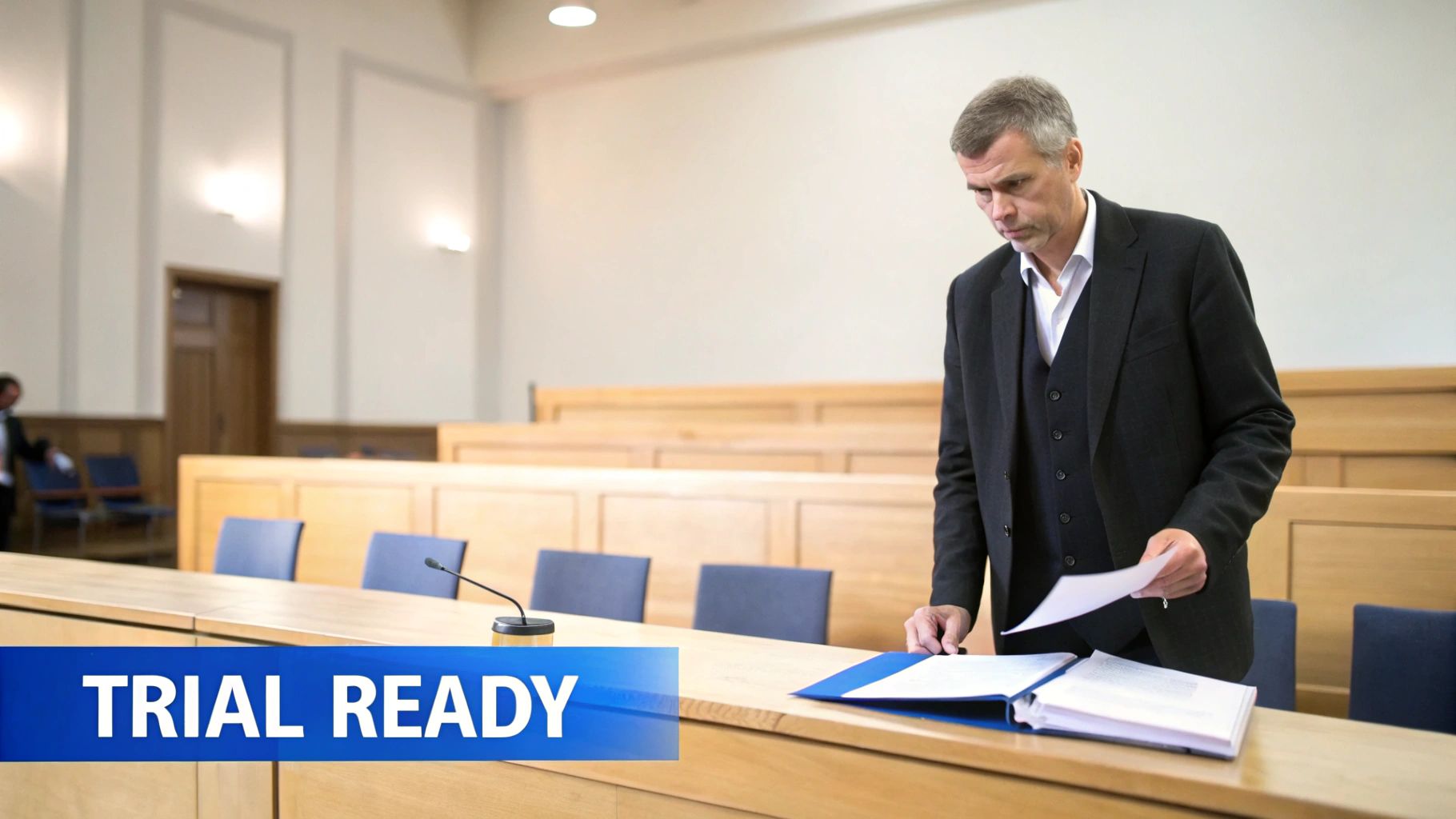
This phase is intensive and requires meticulous preparation. Our team at Martin Hernandez, P.A. will develop a compelling case theme, prepare opening and closing statements, and organize all evidence for presentation. We will prepare you and any witnesses to testify, ensuring you understand the process and what to expect during direct and cross-examination. Whether your case involves a truck accident with catastrophic injuries on I-4 or a wrongful death claim in Hillsborough County, our focus is on presenting a clear, persuasive narrative to the jury.
What to Expect During the Trial Phase
A trial is a structured legal proceeding with distinct stages. Understanding this process helps alleviate stress and allows you to participate more effectively in your own case. We guide you through every moment.
Key stages and our preparation strategy include:
- Jury Selection (Voir Dire): We carefully question potential jurors to select a fair and impartial panel that is receptive to the facts of your case.
- Opening Statements: We present a roadmap of your case, outlining what the evidence will show and why it proves the defendant’s liability.
- Witness Testimony & Evidence Presentation: We call witnesses, including you, medical experts, and accident reconstructionists, to testify. We also present all physical evidence, such as medical records and accident scene photos.
- Cross-Examination: We will challenge the defendant’s witnesses and experts to expose inconsistencies or weaknesses in their arguments.
- Closing Arguments: We summarize all the evidence presented and deliver a final, powerful argument to the jury, connecting the facts to the law and requesting a specific verdict.
- Jury Deliberation & Verdict: The jury deliberates in private to reach a decision on liability and the amount of damages to award.
Pro-Tip: Your appearance and demeanor in the courtroom are critical. We will advise you on appropriate attire and conduct. Remaining calm, respectful, and honest, even during intense cross-examination, significantly impacts how the jury perceives you and your credibility.
Preparing for a trial is a significant undertaking that requires an experienced trial attorney. Unlike firms that only seek quick settlements, we are always prepared to litigate in a Tampa courtroom to secure the full compensation you deserve. This readiness to go to trial often strengthens our negotiating position and demonstrates to the insurance company that we will not back down from a fight.
Partnering with a Trial-Ready Tampa Firm for Your Personal Injury Case
Navigating the intricate landscape of a Florida personal injury claim can feel overwhelming. The journey from the initial shock of an accident to a potential courtroom verdict is a marathon, not a sprint, composed of distinct and demanding stages. As we’ve detailed, each of the steps in a personal injury lawsuit requires strategic precision, from the immediate evidence gathering and meticulous medical documentation to the aggressive negotiations and, if necessary, the formidable challenge of a trial.
Understanding this process is the first step toward empowerment. You now know that what happens in the first 48 hours can set the foundation for your entire case. You recognize the critical role of consistent medical treatment and the power of a well-crafted demand letter. You are aware of the intense discovery phase, where both sides exchange information under oath, and the strategic importance of pre-trial motions. This knowledge transforms you from a passive victim into an active, informed participant in your own fight for justice.
The Decisive Advantage: A Trial-Focused Approach
The most crucial takeaway is this: the best way to secure a fair settlement is to prepare for a vigorous trial from day one. Insurance companies are sophisticated entities with one primary goal, to minimize their financial liability. They assess your claim not just on its merits but on the strength and reputation of your legal representation. When they see a law firm known for its thorough preparation and willingness to go to court, their risk calculation changes dramatically.
This is where the philosophy of a trial-ready firm becomes your greatest asset.
- Meticulous Investigation: A trial-ready attorney assumes every piece of evidence will be scrutinized by a jury, leading to a more comprehensive investigation from the outset.
- Strategic Leverage: The credible threat of litigation provides powerful leverage during settlement negotiations. Insurers are more likely to offer a fair settlement to avoid the time, expense, and uncertainty of a trial against a formidable opponent.
- No Stone Unturned: From retaining top-tier expert witnesses to preparing compelling trial exhibits, every action is taken with the end goal of persuading a judge and jury.
Choosing the right legal partner is paramount, and in today’s digital age, a firm’s public standing can be a significant indicator of its success and client satisfaction. A strong online presence and positive public perception are vital, making online reputation management for lawyers a critical factor in how firms connect with and serve their communities. It reflects a commitment to transparency and excellence that you should look for in your advocate.
Your Path Forward: Taking Control of Your Recovery
The road to recovery after a serious accident in Tampa is not one you should travel alone. The legal system, with its specific Florida Statutes and local Hillsborough County court rules, is complex. An experienced personal injury attorney acts as your guide, advocate, and shield, managing the legal burdens so you can focus on what truly matters: your health and your family.
By understanding the steps in a personal injury lawsuit, you are better equipped to partner with your legal team, ask insightful questions, and make informed decisions about your future. You can appreciate why certain documents are requested, why depositions are necessary, and why a settlement offer may or may not be in your best interest. This collaboration is the key to building a powerful, undeniable claim for the compensation you deserve.
Don’t let an insurance company dictate the terms of your recovery. The dedicated team at Martin Hernandez, P.A. prepares every case as if it will go to trial, ensuring you have maximum leverage at every stage of the process. If you’ve been injured in the Tampa area, contact Martin Hernandez, P.A. for a free, no-obligation consultation and let us fight for you on a contingency fee basis.