
It’s a scenario no one wants to face: you pay your premiums on time, every time, only to have your insurance company deny your claim when you need them most. It feels like a betrayal, and frankly, it often is.
Insurance companies are businesses, and their primary goal is to protect their bottom line. This means that every claim is scrutinized for reasons to deny it, whether it’s a specific policy exclusion, a dispute over who was at fault, or even simple mistakes in your paperwork. Understanding their playbook is the first step toward successfully fighting back.
Your Insurance Claim Was Denied What Happens Now

That denial letter can feel like a final verdict, a door slammed shut. After going through the stress of an accident or dealing with damage to your home, you’re counting on that financial safety net. When it’s pulled out from under you, it’s easy to feel angry, lost, and completely overwhelmed.
But here’s something the insurance company hopes you don’t realize: a denial is not the end of the road. It’s just their opening move.
Think of it as the start of a negotiation. They’ve made their position clear, and now it’s your turn to respond. Remember, they are for-profit corporations built to manage risk and, ultimately, minimize what they pay out. They’re banking on you giving up.
Understanding the Insurer’s Playbook
While it might feel personal, the adjuster reviewing your file is simply following a script. They’re trained to hunt for any loophole or inconsistency that gives them a legal basis to reject your claim. Knowing what they’re looking for is your biggest advantage.
Here’s what’s usually on their checklist:
- Policy Loopholes: Does your policy explicitly cover this specific event? For example, a standard homeowner’s policy in Florida almost never covers flood damage; that requires a separate policy. They will comb through the fine print to find an out.
- Shifting the Blame: In a car wreck, they’ll look for any reason to argue you were partially or even entirely at fault. In Florida, this can drastically reduce what they owe you.
- Paperwork Problems: Did you miss a deadline? Are your medical records or repair estimates missing details? Any gap in your documentation is an opportunity for them to deny the claim.
This guide is designed to pull back the curtain on why insurers deny claims and give you a clear, step-by-step plan to fight back. Getting a handle on how the claims process works in general is a great starting point; this guide to navigating home insurance claims provides some excellent background.
Your initial interactions with the adjuster are also critical. What you say can be used against you, which is why it’s so important to understand what to say to an insurance adjuster.
Top Reasons Your Florida Insurance Claim Was Rejected
Getting that denial letter in the mail can feel like a punch to the gut. It’s shocking and frustrating, but it almost always comes down to a handful of predictable reasons. Think of it this way: your insurance policy is the rulebook, and the insurance company is the referee. If they can point to any rule you supposedly broke or a situation the book doesn’t cover, they’ll use it to deny your claim and protect their bottom line.
These reasons aren’t always fair, and they’re rarely spelled out in plain English. But once you see the patterns, you can start fighting back. From a fender-bender on Dale Mabry Highway to storm damage in a Carrollwood home, the core arguments they use are often the same.
Policy Exclusions and Coverage Gaps
The number one reason for an instant denial? A policy exclusion. This is the fine print buried deep in your policy that clearly lists what the insurance company will not pay for, no matter what. It’s their ultimate trump card, and most people don’t even know these exclusions exist until they’re filing a claim.
A perfect Florida example is flood damage. Your standard homeowner’s policy almost never covers damage from rising water or a storm surge. So, when a hurricane pushes the Hillsborough River into your home, your claim will be denied unless you bought a separate flood insurance policy. It’s a harsh reality many discover far too late.
Other common exclusions you’ll find include:
- Wear and Tear: The insurer argues the damage is your fault due to poor maintenance or just old age. Think of an old roof that finally gives out during a thunderstorm—they’ll say it was bound to happen anyway.
- Intentional Acts: If you or someone living in your home caused the damage on purpose, forget it. The policy won’t cover it.
- Specific Perils: Some policies are very specific about what they cover. They might exclude damage from things like mold, sinkholes, or even earthquakes unless you paid extra for that specific coverage.
Disputes Over Fault and Liability
When an accident involves more than one person, get ready for a fight over who was at fault. If the insurance company can pin even a little bit of the blame on you, they can slash your payout or deny the claim completely. We see this constantly in Tampa car accident claims.
Now, Florida is a “no-fault” state for the first chunk of medical bills covered by your Personal Injury Protection (PIP). This makes a lot of people think fault doesn’t matter, but that’s a huge mistake. Once you move past PIP to cover serious injuries or property damage, fault becomes the only thing that matters.
Insurers will dig for anything they can find—a small inconsistency in your story, a lack of clear witnesses—to push the blame your way. For a deeper dive into this, you can learn more about how Florida no-fault insurance works from our detailed guide.
Imagine this scenario: The insurer gets a vague police report and uses it to argue you were 50% at fault for a crash. Just like that, they’ve cut the potential value of your injury and vehicle damage claim in half, saving themselves a ton of money.
Lapsed Policies and Late Reporting
Sometimes, a denial has nothing to do with the accident itself. It all comes down to timing. An insurer can reject your claim for two simple procedural slip-ups: letting your policy lapse or waiting too long to report the incident.
A lapsed policy is simple—you missed a payment. Even if you were only a few days late, if the damage happened during that little gap in coverage, the insurance company owes you nothing. It’s a strict and unforgiving rule.
On top of that, every policy has a clause that says you must report an incident promptly. If you wait weeks or even months to file a claim for roof damage or a car accident, you’re handing the insurer a golden excuse to deny it. They’ll argue the delay made it impossible for them to investigate properly, so they can’t confirm if the claim is legitimate. This is exactly why you should report any incident the moment it happens.
How Simple Paperwork Mistakes Can Sink Your Claim

It’s not always the complicated policy language or a massive liability debate that gets a claim denied. Sometimes, the most frustrating denials come from something that seems incredibly small: a simple paperwork mistake.
Your claim could be completely legitimate, but if your documentation is missing key details, contains inaccuracies, or tells conflicting stories, you’re essentially giving the insurance company a free pass to reject it.
Think of it this way: you have to build a rock-solid case for the adjuster. They aren’t going to fill in the blanks or connect the dots for you. It’s your responsibility to hand them a complete, organized file that leaves them with no questions and no reason to doubt your claim.
The Devil Is in the Documentation
Your most powerful weapon in this fight is meticulous record-keeping. From the moment the incident happens, you need to act like an archivist, saving every piece of paper and every digital file related to your claim. Something as minor as a small inconsistency between the police report and what you first told the adjuster can be enough for them to question your entire story.
The principles of proper evidence collection, often highlighted in a guide on navigating storm damage roof insurance claims, apply to every type of insurance claim, not just property damage.
Here’s a checklist of the absolute must-haves:
- Official Reports: For any car crash, no matter how small, get a copy of the official police report.
- Photo and Video Evidence: Immediately after the incident, take clear photos and videos from every possible angle. Document vehicle damage, property damage, and any visible injuries.
- Medical Records: This is non-negotiable. Hold onto every single medical bill, doctor’s note, prescription receipt, and test result. These documents are the proof that connects your injuries to the accident.
- Repair Estimates and Receipts: Get detailed, itemized estimates from a couple of different reputable body shops or contractors.
Missing a Deadline Can Be a Fatal Mistake
In Florida, the clock is always ticking, especially with car accident claims. The state has incredibly strict deadlines, and missing one can trigger an automatic denial, no matter how strong your case is. For example, you have a very narrow window to get medical treatment to even qualify for your own PIP benefits.
A common pitfall we see with clients here in Tampa is simply not knowing about these tight deadlines. Missing one gives the insurance company a technicality to stand on, letting them deny your claim without ever looking at the facts.
This is precisely why you need to know the specific timelines. For instance, our guide on what is the Florida PIP 14-day rule breaks down one of the most important deadlines you absolutely cannot miss. Overlooking a rule like that is an easy mistake that can end up costing you everything.
Recognizing an Unfair Denial or Bad Faith

Let’s be clear: not every denied claim is a sign of something sinister. Sometimes, an insurance company has a legitimate reason for saying no, and it’s right there in the fine print of your policy. But there’s a huge difference between a valid denial and an insurer acting in bad faith.
Knowing how to spot that difference is your single most powerful tool for protecting your rights here in Florida.
Think of your insurance policy as a contract. You do your part by paying your premiums month after month. In return, the insurer has a legal duty to handle your claim fairly and promptly when you need them. When they don’t—when they act unreasonably or dishonestly to avoid paying what they rightfully owe—that’s bad faith. It’s not just bad customer service; it’s a violation of the law.
What Does Bad Faith Look Like in Florida?
Bad faith isn’t about the denial itself; it’s about the insurer’s behavior leading up to it. It’s a pattern of conduct designed to delay, devalue, or dismiss a valid claim without a good reason.
You might notice the adjuster is impossible to get on the phone. Or maybe they keep asking for documents you’ve already sent three times. These aren’t just frustrating inconveniences. Often, they are deliberate tactics designed to wear you down until you give up.
Here are some of the most common red flags we see:
- Failing to Investigate: The adjuster barely looks into your claim, ignores key evidence you provide, or takes an unreasonable amount of time to even start.
- Misrepresenting the Policy: They twist the language of your policy to their advantage, telling you something isn’t covered when a plain reading says it is.
- Unreasonable Delays: Your claim sits in limbo for months with no communication, no updates, and no end in sight, leaving you to deal with the financial fallout.
- Lowball Settlement Offers: The company makes a settlement offer that is so low it’s insulting, and they can’t provide any real evidence to justify it.
The Consequences of an Unfair Denial
When an insurance company is caught acting in bad faith, the stakes get much higher for them. Suddenly, it’s not just about paying for your original damages anymore.
A bad faith finding in Florida can entitle you to seek damages beyond your original policy limits. This can include compensation for the financial distress, attorney’s fees, and emotional turmoil the insurer’s unfair denial caused you and your family.
Imagine your home in Hillsborough County suffers roof damage in a storm. The insurer’s adjuster spends ten minutes at your property, ignores your roofer’s detailed report, and then denies the claim by saying the damage was just “wear and tear.” They are not investigating fairly. This isn’t just a disagreement; it’s a potential act of bad faith.
Recognizing these tactics is the first step toward justice. If you believe your claim was denied unfairly, you have powerful options to fight back and hold the insurance company accountable for breaking their promise to you.
A Step-by-Step Guide to Challenging a Claim Denial
That denial letter from the insurance company can feel like a punch to the gut. It’s easy to feel defeated, but I can tell you from experience: their first “no” is rarely the final answer.
You have every right to fight their decision. The key is to channel that initial frustration into a calm, methodical strategy. Think of it less as a fight and more as building a solid, undeniable case that dismantles their reasons for saying no. Here’s how you do it.
Step 1: Formally Request a Written Explanation
Your first move is to get everything in writing. A vague phone call or a one-line email from the adjuster won’t cut it.
You need to send a formal request for a detailed, written explanation of the denial. This letter forces them to go on the record and cite the exact policy language or exclusion they’re hiding behind. This is a critical step because it pins them down to a specific reason, making it much harder for them to shift their argument later.
Step 2: Organize Your Evidence for Review
Once you have their official reason, it’s time to build your counter-attack. Go back and gather every single piece of paper, every photo, and every email related to your claim. Your mission is to find the evidence that pokes holes in their story.
Create a master claim file. This isn’t just a pile of papers; it’s your case file.
- The Denial Letter: Put this right on top. It’s the argument you need to beat.
- Your Insurance Policy: Find the exact section they quoted and read it—and the paragraphs around it—very carefully.
- All Supporting Documents: This means police reports, all your medical bills and records, photos of the accident scene or damage, repair estimates, and a log of every conversation you’ve had with the insurer.
Laying it all out like this helps you see the whole picture and spot the weak links in their logic. This prep work is often where these battles are won.
Step 3: Craft a Professional Appeal Letter
Now it’s time to write your official rebuttal. This letter needs to be firm, professional, and built on facts, not emotion.
Go through their denial letter point by point. For every reason they gave, you’ll provide a direct counter-argument backed up by your evidence. For instance, if they claimed a “pre-existing condition,” you’ll attach the medical records from before the accident that prove you were fine. This is where you have to present a strong, evidence-backed case, much like when you learn how to negotiate with insurance companies.
Key Takeaway: Your appeal letter is a formal legal dispute, not just a complaint. Clearly state that you are officially appealing their decision. Make copies of all your supporting documents to include with the letter and always, always send it via certified mail with a return receipt. That’s your proof they got it.
Step 4: Escalate to the Florida Office of Financial Regulation
What if they deny your appeal or just ignore you? Don’t give up. It’s time to bring in a third party.
You can file an official complaint against the insurance company with the Florida Office of Financial Regulation (OFR). This is the state agency that polices insurance companies in Florida. While the OFR can’t legally force the company to pay your claim, they will launch an investigation into your complaint. A letter from a state regulator has a funny way of getting an insurance company’s immediate attention and can often push them to take a second, more serious look at your claim.
When to Hire an Attorney for a Denied Claim
You can certainly handle the first few steps of an appeal yourself, but there’s a tipping point where the fight gets too big to go it alone. Knowing when to bring in professional backup is key.
Hiring an experienced attorney completely changes the dynamic. It levels the playing field, making it clear to the insurance company that they can’t just use their size and resources to push you around anymore.
Think about it this way: the insurance company has a whole team of adjusters and lawyers whose entire job is to protect the company’s profits. Trying to take them on by yourself is like stepping into a courtroom without ever reading a law book. An attorney is your dedicated advocate who knows every tactic in their playbook.
Key Triggers for Legal Action
Some situations are immediate red flags. They’re clear signals that it’s time to stop talking to the adjuster and start talking to a lawyer. Your own advocacy can only take you so far, particularly when the stakes are high.
You should seriously think about getting legal help if:
- Your Claim Involves Serious Injuries: The more your medical bills pile up, the harder the insurance company will fight to avoid paying. A big potential settlement means a big fight is coming.
- The Insurer Is Acting in Bad Faith: Are they ghosting your calls? Dragging their feet for no good reason? Twisting the words of your policy? You need an expert to hold them accountable.
- The Liability Dispute Is Complex: When it’s not obvious who’s at fault—especially in those messy multi-car pile-ups we see on Hillsborough County roads—an attorney can bring in accident reconstruction experts to build an undeniable case.
- The Settlement Offer Is Insultingly Low: A lowball offer is the insurer’s way of saying they don’t take you seriously. They’re hoping you’re desperate enough to take pennies on the dollar.
This flowchart shows the general path forward after you get that dreaded denial letter, from getting your paperwork in order to filing a formal complaint.
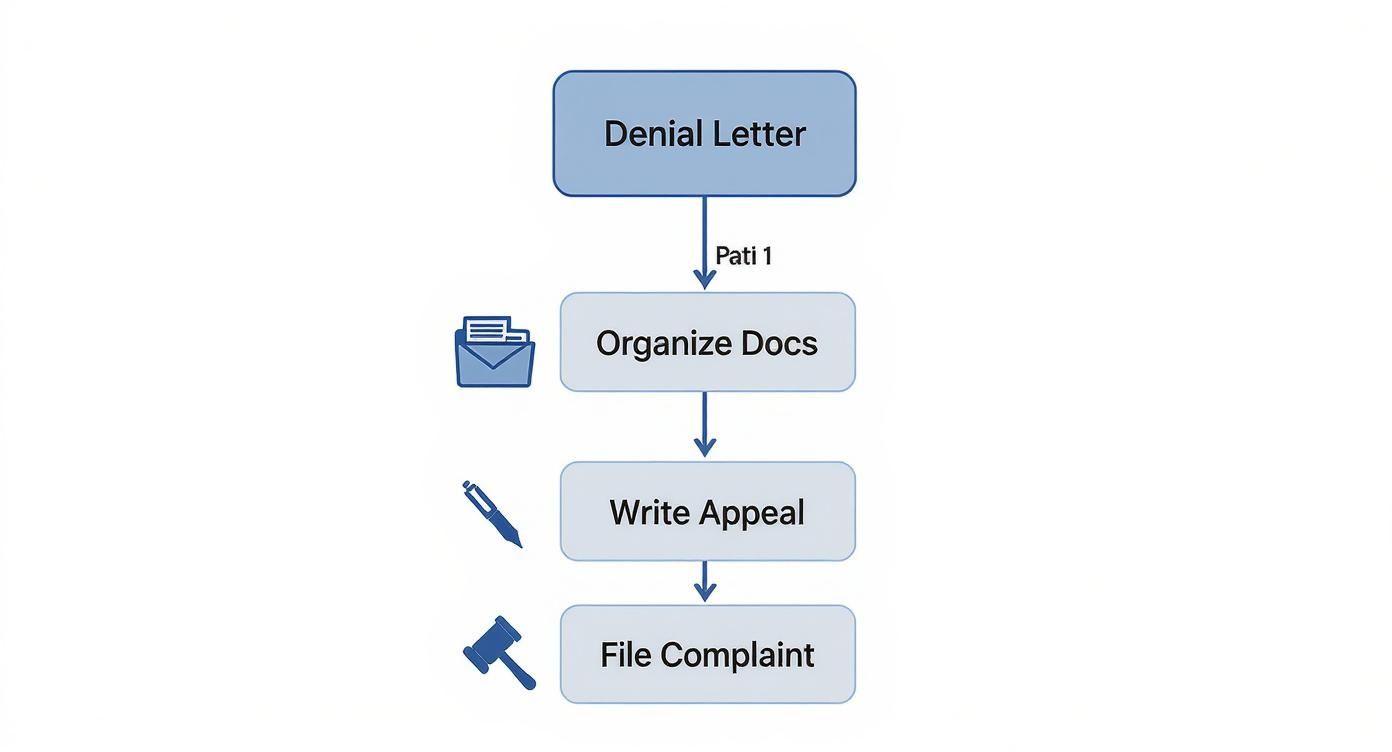
As you can see, while you can kick off the process, things can escalate quickly to a point where you need more formal, professional intervention.
How an Attorney Strengthens Your Case
Once you hire an attorney, they take over all communication. This is huge, as it stops you from accidentally saying something the adjuster could use against you. They will systematically build your case, line up expert testimony if needed, and start applying real legal pressure.
A well-managed appeal has a strong chance of success, but going up against a large insurer requires expertise. An attorney ensures you’re prepared for every step.
Making the decision to get legal help is a big step. For a deeper dive, you can learn more about when to hire a personal injury attorney in our complete guide. At the end of the day, a good lawyer makes sure you don’t leave money on the table that is rightfully yours.
Frequently Asked Questions About Claim Denials
Getting that denial letter in the mail can be a gut punch. Suddenly, your head is swimming with questions, and the whole process feels rigged against you. But don’t get discouraged—getting clear on your rights is the first step to turning things around. Let’s tackle some of the most common questions we hear from policyholders here in Florida.
Can an Insurance Company in Florida Deny a Claim Without Giving a Reason?
Absolutely not. Florida law is very clear on this: your insurance company must provide a written explanation that spells out exactly why they denied your claim. Think of this denial letter as a crucial piece of evidence.
It’s not enough for them to just say “denied.” The letter has to point to the specific language in your policy—the exact clause or exclusion—they’re using to justify their decision. If you get a vague denial with no real reason, your first move should be to fire back a formal written request demanding a complete explanation.
How Long Do I Have to File an Appeal in Florida?
This is where you need to act fast, because the clock starts ticking immediately. The deadline to appeal a denied claim isn’t set by a universal law; it’s usually buried in the fine print of your insurance policy.
Read your denial letter very, very carefully. It should tell you how much time you have to submit an appeal. If it doesn’t, or if the language is confusing, don’t wait. Contact your insurer in writing right away to get a firm deadline. These timelines are often strict, and procrastination can kill your case before it even starts.
Important Note: If you miss the appeal deadline, the insurance company can legally refuse to even look at your claim again, no matter how strong your evidence is. After a denial, time is your enemy.
Will My Premiums Go Up if I Appeal a Denied Claim?
This is a common fear, but you can put it to rest. Simply appealing a denial should not make your premiums go up. In Florida, insurance rates are based on your overall risk profile and claims history, not on whether you challenge a decision.
The original incident that led to the claim might impact your rates down the road, but the act of appealing is just you exercising your contractual rights. You shouldn’t be penalized for asking the insurer to do the right thing. Frankly, the real risk is doing nothing—just accepting a wrongful denial means you’re left holding the bag for all the costs yourself.
If you’re in the Tampa area and stuck fighting an insurance company that won’t play fair, you don’t have to go it alone. The experienced legal team at Martin Hernandez, P.A. is here to help. Contact us for a free consultation to figure out your next steps and protect your rights. Visit us at https://injurylawyersoftampa.com.