
When your family is reeling from an unexpected loss, the last thing on your mind is a legal calendar. Yet, Florida’s laws have a strict, non-negotiable deadline for taking legal action, and understanding it is the most critical first step in protecting your family’s rights.
The Critical Two-Year Deadline for Florida Wrongful death Claims
In Florida, the standard time limit, or statute of limitations, to file a wrongful death lawsuit is two years from the date of the person’s death. Missing this window can permanently close the door on your family’s ability to seek justice and financial compensation through the court system.

Think of the statute of limitations as the official window of opportunity granted by the state. This timeframe exists for a reason—it ensures that claims move forward while evidence is still available and witness memories are reliable. It brings a sense of finality and encourages a timely resolution for everyone involved.
Why This Timeline Matters So Much
The consequences for missing this two-year deadline are absolute. If you don’t file a formal lawsuit within that period, the court will almost certainly throw your case out. It doesn’t matter how clear the negligence was or how strong your evidence is.
Your family would lose its one and only chance to hold the at-fault party accountable and recover damages for devastating losses, including:
- Lost financial support and the income your loved one would have earned
- Mounting medical bills and funeral expenses
- The profound loss of companionship, guidance, and parental instruction
- The mental pain and suffering of the surviving family members
This strict two-year rule is laid out in Florida Statutes section 95.11 (2019). It applies to most wrongful death cases, whether they stem from a car accident, a dangerous property condition, or another act of negligence.
A crucial point many people miss: negotiating with an insurance company does not stop this legal clock. Only filing a lawsuit in the proper court officially satisfies the statute of limitations.
Building a strong wrongful death claim isn’t something that happens overnight. It requires a thorough investigation, gathering evidence, interviewing witnesses, and often consulting with experts to prove fault and calculate damages. All of this takes time.
That’s why it’s so important to connect with an experienced attorney well before that two-year window starts to close. By understanding the key elements of a wrongful death lawsuit in Florida, you can see why prompt action is necessary to give your legal team the time they need to build the strongest possible case for your family.
When the Two-Year Clock Officially Begins

When you’re dealing with the loss of a family member, legal deadlines are the last thing on your mind. But knowing exactly when the clock starts on your right to file a claim is absolutely critical. It’s one of the most common—and devastating—misunderstandings in wrongful death statute of limitations Florida law.
Many people assume the two-year deadline starts on the day of the accident or incident that caused the fatal injuries. That’s a logical assumption, but it’s incorrect. Under Florida law, the clock starts ticking on the date of your loved one’s death. This is a crucial distinction, especially in cases where a person courageously fights for their life for days, weeks, or even months after a catastrophic event.
The Date of Death Versus the Date of Injury
The time that passes between the initial injury and your loved one’s death doesn’t count against your two-year deadline. Think of it this way: a wrongful death claim can’t exist until a death has actually occurred. So, the law uses that final, tragic moment as the official starting point.
Here’s a clear example of how this works in a real-world situation:
- Date of the Accident: A construction worker in Tampa falls from unsafe scaffolding on January 10, 2024, suffering a traumatic brain injury.
- Date of Death: After a long fight in the hospital, he sadly passes away from his injuries on March 5, 2024.
- Filing Deadline: The two-year statute of limitations for the family to file a wrongful death lawsuit begins on the date of death, March 5, 2024. They must file their claim by March 5, 2026.
The details of the January 10th accident are the foundation for proving negligence, but the legal calendar is tied directly to the date of passing. This rule removes any ambiguity and sets a firm, clear timeline for everyone involved.
Why This Distinction Is Crucial for Your Case
This specific timing rule is designed with grieving families in mind. The period between a terrible accident and a loved one’s passing is an emotional rollercoaster, filled with hospital visits, difficult medical choices, and clinging to hope. It’s certainly not a time when anyone is thinking about legal paperwork.
By pinning the start date to the day of death, the law gives families a moment to breathe and begin to process their loss before the legal countdown begins. But don’t let that create a false sense of security—that two-year window closes much faster than you’d think.
A wrongful death lawsuit is legally distinct from a personal injury claim. For example, the rules are different for how long you have to file a suit after a Florida auto accident if the person survives. Once a death occurs, the specific wrongful death clock takes over.
Building a strong wrongful death case is a complex and time-consuming process. A skilled attorney needs time to conduct a meticulous investigation, which involves much more than just filing a form. Key steps include:
- Gathering and analyzing every medical record from the moment of injury to the time of death.
- Obtaining the official death certificate to formally establish the cause of death.
- Collecting police reports, accident reconstructions, witness statements, and other evidence.
- Appointing a personal representative for the deceased’s estate—a formal legal step that must happen before a lawsuit can even be filed.
Each one of these tasks takes time. Waiting too long to get started puts your entire case at risk. Evidence can disappear, witnesses’ memories can fade, and you may simply run out of time. For families in Hillsborough County, taking prompt action is the single best way to protect your legal rights and give your attorney the time needed to fight for the justice your family deserves.
Exceptions That Can Change the Filing Deadline
While Florida’s two-year deadline for wrongful death claims is a hard and fast rule, the law does account for the complexities of real life. Some circumstances can make it practically impossible for a family to file a lawsuit within that narrow window. For these specific situations, the legal system allows for exceptions that can “toll” or pause the wrongful death statute of limitations in Florida, essentially hitting a pause button on the legal clock.
It’s important to understand that these aren’t loopholes. They’re specific safeguards built into the law to ensure fairness when factors far outside a family’s control get in the way of their pursuit of justice. Figuring out if one of these rare situations applies to your case is one of the most important conversations you can have with an experienced attorney.
Tolling the Clock for Minors or Incapacitated Survivors
One of the most common and vital exceptions involves surviving family members who are minors (under 18) or are legally incapacitated. The law recognizes that a child, or an adult who lacks the mental capacity to manage their own legal affairs, can’t be expected to hire a lawyer and file a lawsuit.
In these instances, the statute of limitations can be paused. This gives the survivor additional time, often until after they turn 18 or regain legal capacity, ensuring their right to seek justice isn’t forfeited simply because of their age or condition when the tragedy occurred.
Concealment and Fraud by the At-Fault Party
Justice demands honesty. So, what happens if the person or company responsible for a death actively tries to hide what they did? This is known as fraudulent concealment, and it can completely change the timeline.
Imagine a manufacturing company learns its product has a fatal defect but intentionally buries the internal reports. If a family has no way of knowing the true cause of death because of this deliberate deception, the clock may not start ticking until that cover-up is discovered. This crucial rule prevents wrongdoers from getting away with it by simply hiding the evidence until the deadline passes.
The core principle here is simple fairness. A defendant should never be rewarded for actively misleading the very people they have harmed.
The Jeffrey Klee Memorial Act: A Major Exception for Homicide
Perhaps the most dramatic exception to the two-year rule applies when a death was caused by a criminal act. In 2010, Florida passed the Jeffrey Klee Memorial Act, which removes the time limit for wrongful death suits if the death was the result of a homicide. This law acknowledges a difficult reality: murder investigations can take years, even decades, to solve. You can discover more about the nuances of this act and other legal deadlines on bencrump.com.
This powerful act means that if your loved one was a victim of murder or manslaughter, the civil claim for wrongful death isn’t stuck to that two-year clock. The estate’s personal representative can bring a lawsuit at any time after the death. This is absolutely critical, as criminal cases often unearth the key evidence needed for a civil claim long after the initial two years have passed.
Navigating Complex Liability and Deadlines
Exceptions can also come into play in cases where figuring out who is at fault is a major challenge. Pinpointing legal responsibility can require a deep investigation, especially when multiple parties might share the blame. Think of a fatal pile-up on the highway—it takes time and expert analysis to sort out who did what. You can learn more about what happens when more than one party is negligent in a car crash from our detailed guide.
While a complicated investigation doesn’t automatically stop the clock, an exception could apply if a defendant wrongfully hides key facts that prove their liability. This is why it’s so urgent to get a legal team on board right away. They can start preserving evidence and uncovering the truth long before the standard deadline becomes a problem. Every exception is highly specific to the facts of the case, and only a detailed legal review can determine if your family’s situation qualifies.
Special Deadlines for Medical Malpractice and Government Claims
While the standard two-year deadline covers many wrongful death situations, it’s not a one-size-fits-all rule. Things get much more complicated when a death is caused by medical malpractice or the negligence of a government entity. In these cases, Florida law brings in a different playbook with unique requirements and much tighter timelines that can easily trip up a grieving family.
Getting these rules right is everything. One misstep can unfortunately mean the end of your case before it even gets off the ground. For families in Tampa facing these specific circumstances, the clock is ticking even faster, and getting experienced legal advice right away is absolutely critical.
This timeline shows some key concepts that can alter filing deadlines.
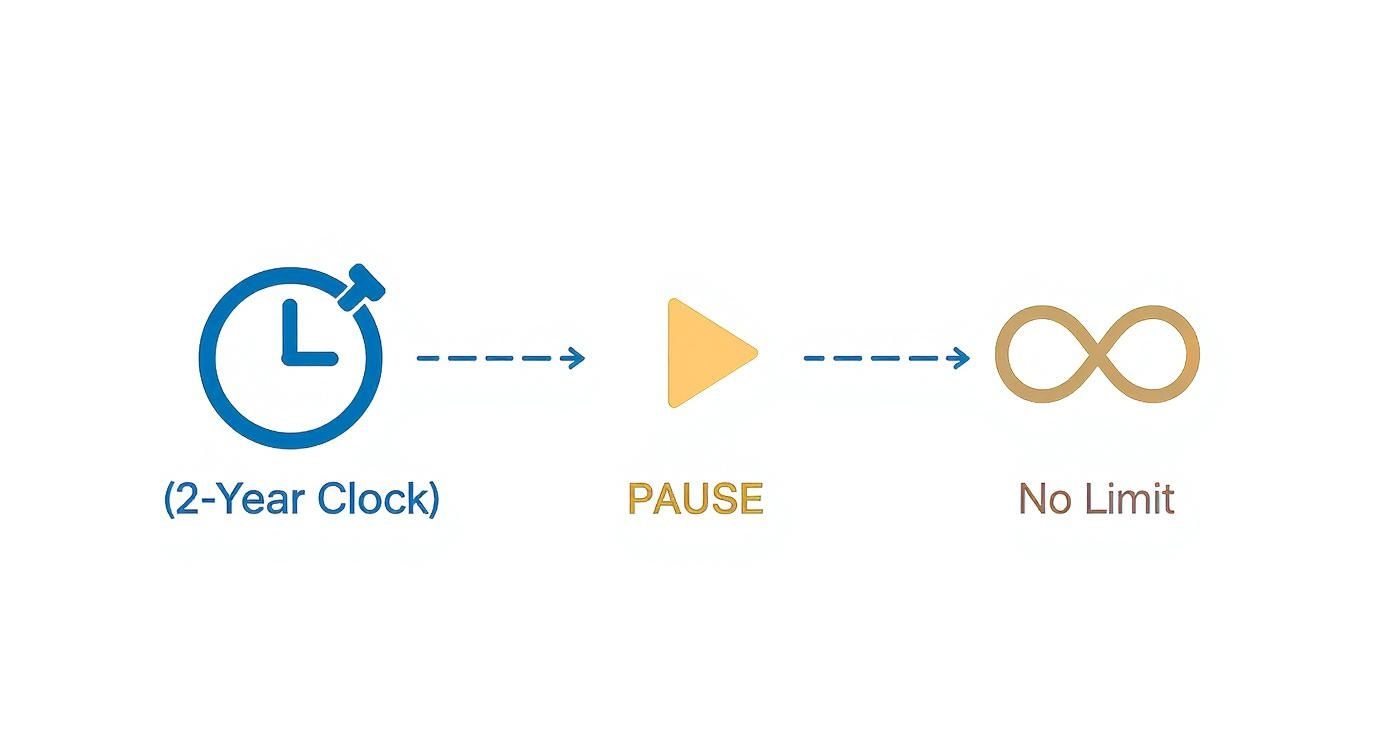
The infographic illustrates a crucial point: while there’s a standard clock, the law has ways to pause it—or even remove time limits entirely—depending on the specific facts of the case.
Medical Malpractice Wrongful Death Claims
When a medical error leads to a death, the timeline is governed by a unique “discovery rule.” This is a major departure from the standard rule. Instead of the clock starting on the date of death, it begins when the family knew or reasonably should have known that malpractice was the probable cause.
Let’s use an example. Say a loved one passes away following what everyone believed was a routine surgery. A year later, another doctor reviews the records and finds a clear, fatal surgical error. In this scenario, the two-year clock might start from the date that error was discovered, not the original date of death.
But this flexibility has a hard stop. Florida also has a four-year “statute of repose” for these cases. Think of this as an absolute, final deadline. No matter when the malpractice was discovered, a lawsuit cannot be filed more than four years after the medical incident itself occurred. This rule is in place to protect healthcare providers from the threat of endless liability.
This creates a dual-timeline system: a two-year deadline from the date of discovery that is capped by an absolute four-year deadline from the date of the incident. Figuring out which deadline applies is incredibly complex and requires a deep dive into the specific facts of your case.
On top of all that, you can’t just file a lawsuit. Florida’s Medical Malpractice Act requires families to complete a demanding pre-suit investigation first. This involves getting a sworn affidavit from a qualified medical expert who confirms that negligence occurred. This process alone can eat up months, which is why it’s so important to get started long before any deadline is on the horizon.
Wrongful Death Claims Against Government Entities
Trying to get justice when a government body is at fault is a whole different ballgame, with an even more demanding and accelerated timeline. Whether the responsible party is a city, county, or state agency, you have to navigate the strict rules of sovereign immunity.
Before you can even think about filing a lawsuit, you must first provide a formal Notice of Claim to the correct government agency. This isn’t the lawsuit itself—it’s a mandatory first step you cannot skip.
The deadlines for this notice are incredibly tight and unforgiving:
- You must give formal notice to the agency and the Florida Department of Financial Services within three years of the incident.
- After sending the notice, you are legally required to wait for a 180-day investigation period to pass before you can file a suit. The government uses this time to review the claim and decide if it will offer a settlement.
This pre-suit requirement effectively shrinks your window of opportunity. You can’t just wait around for a couple of years and then decide to sue. You have to start this notice process much, much sooner to protect your rights. Knowing how to file a wrongful death lawsuit is one thing, but mastering these preliminary steps for government claims is a separate and equally vital challenge.
If you fail to provide this formal notice correctly—to the right agencies, in the right format, and on time—your wrongful death claim will be permanently barred. The courts are incredibly strict about these rules. Given the maze of regulations, the only safe bet is to consult an attorney immediately after a death caused by a government entity to ensure these critical first steps are handled perfectly.
What Happens if You Miss the Filing Deadline?
The consequences of missing the wrongful death statute of limitations in Florida aren’t just severe—they’re final. It’s best to think of the two-year deadline not as a guideline, but as a locked door. Once that door shuts, it almost never reopens, no matter how strong or valid your case might be.
If you don’t file a lawsuit within that time frame, the court will almost certainly throw out your claim. In legal terms, your case becomes “statute-barred.” This is simply a formal way of saying you’ve lost your right to seek justice and compensation through the legal system forever. For a family already dealing with unimaginable grief, this can be a devastating final blow.
The Finality of a Dismissed Case
Courts are incredibly strict about these deadlines. It might seem harsh, but there are important reasons for this rigidity, all aimed at keeping the legal process fair and manageable for everyone involved.
- Evidence Gets Lost: The longer you wait, the harder it is to build a case. Physical evidence degrades, gets misplaced, or is destroyed. Critically, witness memories fade and become less reliable over time.
- Preventing Endless Uncertainty: These deadlines also bring a necessary sense of closure. They prevent people and businesses from living under the constant threat of being sued for something that happened years or even decades ago.
When a judge dismisses a case because the deadline was missed, the family is left with no other legal options. You can’t refile the claim. You can’t pursue compensation for the mountain of medical bills, funeral expenses, lost income, or the profound pain your family has suffered. It’s an irreversible outcome that highlights just how crucial it is to act quickly.
Why You Can’t Afford to Wait
Two years might sound like a long time, but it shrinks quickly when you’re building a wrongful death claim. The process is complex and takes a lot of work upfront—appointing a personal representative for the estate, launching a thorough investigation, gathering all the necessary evidence, and often, consulting with medical or accident reconstruction experts. Waiting until the last few months creates a high-pressure scramble and dramatically increases the risk of making a critical mistake.
Florida’s two-year statute of limitations for wrongful death is fairly common, falling in line with several other states. But it’s by no means a universal standard. Some states have different timelines for filing these types of lawsuits. You can see more about how these laws vary on ledgerlaw.com.
The single most important takeaway is this: the moment you suspect another party’s negligence caused your loved one’s death, the clock is your biggest adversary.
The only way to protect your family’s one chance at justice is to speak with an attorney long before the deadline is even a concern. An experienced lawyer can immediately begin preserving evidence, navigating the complex legal requirements, and ensuring your claim is filed correctly and on time. This single step can make all the difference in securing your family’s future.
When you’re grieving an unimaginable loss, the last thing on your mind is a legal calendar. But in Florida, understanding the wrongful death statute of limitations isn’t just legal jargon—it’s the critical first step in protecting your family’s rights. For families here in Tampa and across Hillsborough County, the path to holding someone accountable starts with one crucial action: talking to an experienced wrongful death attorney.

This isn’t just about hiring a lawyer. It’s about immediately preventing time from becoming your enemy. A seasoned attorney will dive into the specifics of your situation, pinpoint your exact filing deadline, and determine if any exceptions could apply. They’ll also handle the necessary first step of appointing a personal representative for the estate, which is a formal requirement before a lawsuit can even get off the ground.
Your First Move Is Your Best Defense
Think of the two-year deadline as your ticket to the courthouse. You can’t even get in the door without it. Miss that window, and your chance to seek justice is gone forever, no matter how strong your case is.
While the lawsuit must be filed within two years, the entire legal process often takes much longer. A typical wrongful death case in Florida can last anywhere from 18 months to three years, sometimes more, depending on how complex it is and whether it settles out of court. This reality highlights why it’s so important to get started as soon as you can. You can learn more about the timeline and what to expect from AccidentTampa.com.
Your focus should be on your family and healing. Let a legal professional handle the deadlines, the evidence, and the fight. Handing over the legal complexities ensures your rights are protected from the very beginning.
Of course, the legal battle is only one part of the journey. Finding ways to honor the person you lost is just as important for your family’s emotional health. As you move through this time, you might find comfort in exploring some creative ideas for remembering deceased loved ones.
Your Next Steps in Hillsborough County
For families here in the Tampa area, the path forward is clear. The priority is to secure your legal standing and begin the process of holding the negligent party accountable. It’s about making sure your fight for justice is built on a solid foundation.
Here’s a simple, actionable plan to get you started:
- Gather Your Paperwork: Collect any documents you can find—the death certificate, police or accident reports, and any medical bills. Don’t worry if it’s not perfectly organized.
- Don’t Talk to Insurers: Avoid giving any recorded statements to the other party’s insurance company. Their goal is to minimize their payout, not to help you.
- Call an Attorney Immediately: The most important step. Schedule a consultation with a Tampa wrongful death lawyer who knows the local court system and can guide you from day one.
Taking these steps shifts the heavy legal burden onto a skilled professional. This gives your family the space you need to grieve, knowing that the pursuit of justice is already in motion.
Answering Your Questions About Florida’s Wrongful Death Deadline
When you’re grieving, the last thing you want to deal with is a maze of legal rules and deadlines. We get it. Here are some straightforward answers to the questions we hear most often from families trying to understand the wrongful death statute of limitations in Florida.
Does Talking to the Insurance Company Pause the Clock?
This is a critical point: No, it does not.
Simply negotiating with an insurance company does absolutely nothing to stop or extend Florida’s two-year statute of limitations. Many families have unfortunately learned this the hard way. Even if the adjuster seems friendly and a settlement feels close, the legal clock is still ticking.
You have to file a formal lawsuit in court before that deadline runs out. If you don’t, you lose your right to seek compensation forever, no matter how productive your talks with the insurer seem to be.
Who Actually Files the Lawsuit?
In Florida, the process isn’t as simple as a family member filing a claim directly. Instead, the lawsuit must be filed by the personal representative of the deceased’s estate.
This is a person—or sometimes an institution—officially appointed by the court to act on behalf of the estate and all survivors (like a spouse, children, or parents). Getting a personal representative appointed involves formal legal steps and takes time, which is another reason you can’t afford to wait. For a deeper dive into how this works, check out our guide on who can file a wrongful death lawsuit in Florida.
What if the Death Was Caused by a Defective Product?
Cases involving a faulty product that led to a death typically fall under the same two-year deadline. But these situations can get murky fast.
Sometimes, the connection between the defective product and the person’s death isn’t discovered right away. This is where a “discovery rule” could potentially apply, but relying on it is risky. Product liability claims are a beast of their own, and it’s essential to have an experienced attorney analyze the facts to pinpoint your true filing deadline.
That legal clock is unforgiving. Your family only gets one shot at holding the responsible party accountable, and it all hinges on taking action in time.
At Martin Hernandez, P.A., we understand the stakes and the stress you’re under. We’re here to guide you through this with compassion and strength. Contact us today for a free, no-obligation consultation to make sure your rights are protected. https://injurylawyersoftampa.com